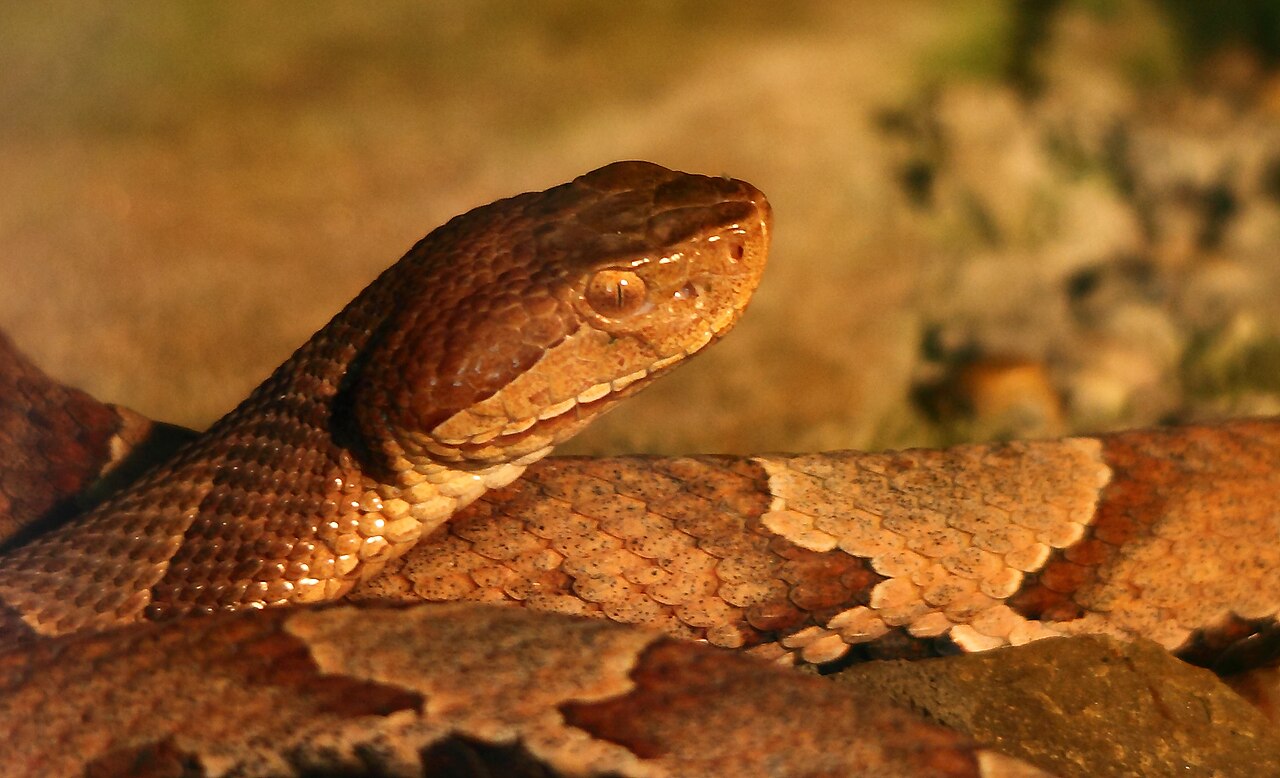
Baby Rat Snake vs Baby Copperhead: How to Tell Them Apart
To tell a baby rat snake from a baby copperhead, look at the pattern and the tail. A typical young eastern or central rat snake has dark blotches on a gray body and round pupils. A baby eastern copperhead (Agkistrodon contortrix) has hourglass bands and a yellow-green tail tip. Its pupils look like vertical slits in bright light. This comparison focuses on these commonly confused snakes; other rat snake species can have different colors. Rat snakes are nonvenomous, while copperheads are venomous.
Young rat snakes hatch from eggs, while copperheads are born live. Both can turn up in yards, garages and woodpiles in late summer. Young rat snakes can look very different from adults, whose colors vary by species and region. Check visible marks without approaching the snake. If you cannot see them clearly, treat the snake as venomous and leave it alone.
A baby rat snake has squarish dark blotches on a gray body, round pupils, a slim head and a plain tail. A baby copperhead has tan hourglass bands that are wide on the sides and narrow on the spine, vertical pupils, a heat pit and a yellow-green tail tip. When unsure, step back.
Baby Rat Snake vs Baby Copperhead: Quick Answer
| Feature | Baby rat snake | Baby copperhead |
|---|---|---|
| Pattern | Squarish dark blotches on gray | Hourglass bands on tan or pinkish brown |
| Tail tip | Same color as body | Bright yellow-green |
| Head | Slim, barely wider than neck | Broad, triangular, with a pit |
| Pupils | Round | Vertical slits |
| Body | Slender, long | Short and thick |
| Birth | Hatches from an egg | Born live |
| Venom | None | Venomous |
No single mark is foolproof on a moving snake in dim light. Matching features can support identification, but a few apparent matches do not establish that an unfamiliar snake is safe to handle. If identification remains uncertain, keep your distance.
Pattern: Hourglass Bands vs Blotches
Copperhead bands are hourglass shaped: wide on the sides and pinched thin over the spine.
Baby rat snakes carry dark gray or brown saddles that are wider along the spine. The belly is checkered black and white.
A baby corn snake (Pantherophis guttatus) is a rat snake too. Compared with a baby copperhead, it has separate dark-bordered blotches rather than hourglass bands, round pupils and no yellow-green tail lure. Young corn snakes may have muted brownish blotches rather than bright red or orange ones. Their bellies are usually checkered, but never handle a snake to inspect its underside.
Head Shape and Pupils
A copperhead has a broad, triangular head, a heat-sensing pit and vertical pupils. A rat snake has a narrow head and round pupils.
Head shape alone misleads. Many harmless snakes flatten the head when threatened, which makes it look triangular. Copperhead pupils can dilate and appear round in low light, so round-looking pupils do not rule out a copperhead. Do not approach to inspect pupils or facial pits.
The Yellow Tail Tip
A baby copperhead has a bright yellow or greenish yellow tail tip, and a baby rat snake does not.
The young copperhead wiggles that tip to lure frogs and lizards within reach. Biologists call this caudal luring. The bright tip can help distinguish it from a young rat snake.
The color fades as the copperhead grows, so a dull tail does not rule out a copperhead. Young cottonmouths also have yellow tail tips. A bright tail alone does not identify the species; leave an unfamiliar snake alone.
Size, Body Build and Birth
A newborn copperhead is typically 7 to 10 inches (18 to 25 cm) long and noticeably thick. A hatchling rat snake is typically 10 to 16 inches (25 to 41 cm) long and slender.
Copperheads typically give birth to live young in late summer or early fall rather than laying eggs. Rat snakes lay eggs in sheltered places such as rotting logs or compost, and their young hatch later.
Copperhead Bite Risk and What to Do
A copperhead bite needs emergency medical evaluation right away. In the United States, call 911 immediately; Poison Control at 1-800-222-1222 can also advise. Pain, swelling and bruising can develop, but symptoms may initially be absent. Do not wait for symptoms or drive yourself to the hospital, as the CDC advises. Copperhead bites are rarely fatal, but still require prompt medical assessment.
Stay calm and move away from the snake. Remove rings, watches and tight clothing near the bite before swelling starts. Keep the limb still. Do not cut the wound, suck out venom, apply ice, use a tourniquet or drink alcohol. Do not try to catch or kill the snake.
Baby copperheads are venomous from birth and can bite defensively when stepped on or grabbed. Avoid reaching blindly into leaf litter, firewood or garden beds. Wear boots and gloves when clearing brush, and check where you place your hands and feet.
A confirmed rat snake bite is nonvenomous, but it can break the skin. Rat snakes may bite and release musk when grabbed. Wash the wound with soap and water. If you are unsure which snake bit you, seek emergency medical care. Reptiles often carry Salmonella, so wash your hands after contact with them or their surroundings. If soap and water are unavailable, use hand sanitizer with at least 60% alcohol, as the CDC advises.
Other Harmless Snakes Mistaken for Copperheads
The eastern milk snake, the fox snake, the eastern hognose and young water snakes are the harmless snakes most often confused with copperheads.
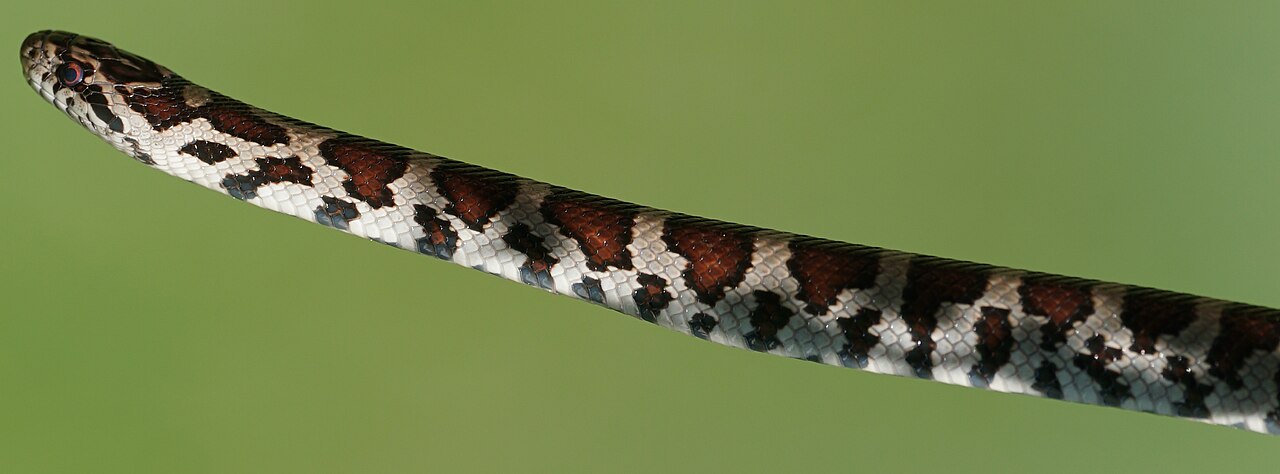
The eastern milk snake (Lampropeltis triangulum) has reddish brown blotches outlined in black. Fox snakes (Pantherophis vulpinus) have brown blotches on a yellowish body. The eastern hognose (Heterodon platirhinos) has an upturned snout and often plays dead.
Young northern water snakes (Nerodia sipedon) have bands near the head that break into blotches toward the tail. Their bands are generally wider over the back, unlike the pinched hourglass bands of eastern copperheads.
Baby copperheads have a combination of body markings, facial pits and a bright tail tip that helps distinguish them from harmless lookalikes.
Copperhead vs Cottonmouth and Rattlesnake
Cottonmouths (Agkistrodon species) are venomous, heavy-bodied snakes with facial pits; rat snakes are nonvenomous, have round pupils and lack facial pits. Young cottonmouths can have conspicuous brown crossbands and yellow tail tips rather than the dark appearance of adults. Cottonmouths may gape to reveal a white mouth lining when threatened, but do not provoke this display to identify one.
A copperhead differs from a rattlesnake in its tail and its pattern. The timber rattlesnake (Crotalus horridus) has a rattle, dark chevron bands and a black tail.
Copperheads live in wooded edges, rocky hillsides and suburban yards. Cottonmouths typically use wet habitats such as swamps, creeks and ponds, but can wander far from water.
Rat Snake Behavior Around Homes and Yards
A rat snake in the yard eats mice and rats, often hunting in barns and sheds. It also takes bird eggs and nestlings.
Rat snakes are less likely to find food and shelter around a home when rodent attractants and hiding places are removed. Clear woodpiles and brush away from walls, keep feed and birdseed in sealed bins, and seal gaps around doors, vents and foundations. These measures reduce opportunities for visits without guaranteeing that snakes will leave. Sprays and home remedies have little evidence behind them.
Texas rat snakes and other rat snakes do not prey on dogs, though a dog that grabs one may get a defensive bite. Hamsters, chicks and other small pets in open cages can be prey. Leave wild snakes alone and keep pets away. If removal is necessary, contact a wildlife professional and check local wildlife rules rather than handling, relocating or killing the snake yourself.
Frequently Asked Questions
Is it good to have a rat snake in your yard?
Yes, for most homeowners. Rat snakes eat mice and rats, and they are not venomous. They also raid chicken coops for eggs and chicks, so poultry keepers need predator-proof housing.
What scares rat snakes away?
Removing food sources and cover can make your yard less attractive to rat snakes. Control rodents, store feed in sealed bins, clear brush and woodpiles near the house, and seal gaps in walls and foundations. These steps cannot guarantee that a snake will leave. Repellent sprays, mothballs and other home remedies have little evidence that they work.
Will rat snakes eat small dogs?
No, rat snakes do not eat dogs of any size. A dog that grabs one may get a nonvenomous defensive bite. Hamsters, gerbils and chicks in open cages are at real risk.
How long do you have if a copperhead snake bites you?
There is no safe waiting period after a copperhead bite. Call 911 immediately and seek emergency medical evaluation, even if you have no symptoms. Do not drive yourself. Poison Control can also advise. Symptoms can develop or worsen after the bite; their absence does not make waiting safe.
What is the difference between a copperhead snake and a rattlesnake?
A rattlesnake has a rattle on its tail and is often larger, while a copperhead has no rattle and wears tan hourglass bands. Both are venomous pit vipers with heat pits.
Sources