Polyphemus Moth Spiritual Meaning: Signs and Symbolism
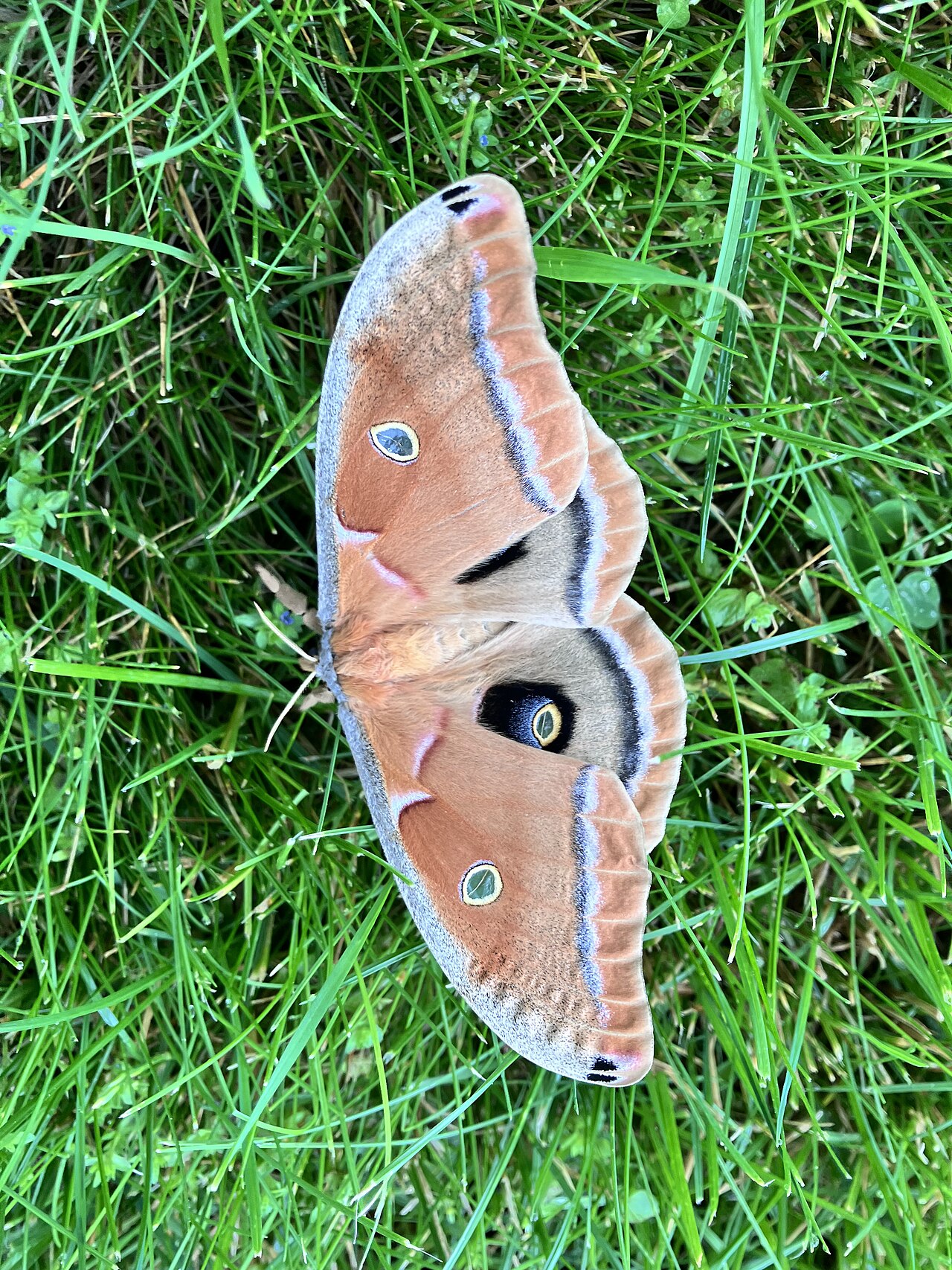
The Polyphemus moth spiritual meaning centers on transformation, new beginnings and watchfulness, three ideas drawn straight from the animal itself. Spiritually, this large tan silk moth (Antheraea polyphemus) stands for a change that has already happened in the dark, since it spends months sealed in a cocoon before it opens its wings for a few short nights. The two blue-ringed eyespots on its hindwings add a second layer, the sense of being seen and of seeing clearly.
Most encounters happen at a porch light or a window screen in late spring and summer. Light pulls the moth in, and the timing still makes the meeting feel personal. The moth itself is harmless, short-lived as an adult and far more common than its rare sightings suggest.
As a sign, a Polyphemus moth at your window or door points to a transformation that is nearly complete and asks you to stay alert to it. Its eyespots stand for watchfulness, its cocoon for patient change, and its brief adult life for acting in the present. Porch light explains why it lands there.
What Does a Polyphemus Moth Represent Spiritually?
A Polyphemus moth represents transformation, new beginnings and watchfulness. Each meaning comes from a trait you can see. The cocoon carries the idea of change, the fresh adult carries the new start, and the eyespots carry the steady gaze. Reading the moth trait by trait keeps the symbolism tied to the animal instead of to a generic list.
Transformation is the core. The caterpillar eats oak or maple leaves for weeks, spins a silk cocoon and comes out as an animal with wings and no ability to eat at all. Nothing of the old body survives in recognizable form. That is change at its most complete, and it fits moments when a job, a home or a relationship has already ended and the next shape is not visible yet.
Watchfulness comes from the eyespots, and presence comes from the short adult life. General moth symbolism leans on night, light and the hidden, and it covers every species from clothes moths to sphinx moths. The Polyphemus adds size and those two staring eyes. Its message is less about being drawn to a flame and more about seeing what is already in front of you.
| Trait | What happens in nature | What it symbolizes |
|---|---|---|
| Four-stage life cycle | Egg, caterpillar, cocoon, winged adult | Complete transformation |
| Cocoon over winter | Pupa rests sealed in silk until spring | Patience before a new start |
| Hindwing eyespots | Flashed open to startle birds | Watchfulness and quiet strength |
| No working mouthparts | Adult cannot feed and lives only days | Living in the present |
| Night flight to lights | Drawn to porch lights and windows | Seeking clarity |
| Name from Homer | Named for the one-eyed Cyclops | Vision and its limits |
Transformation and New Beginnings: The Life Cycle
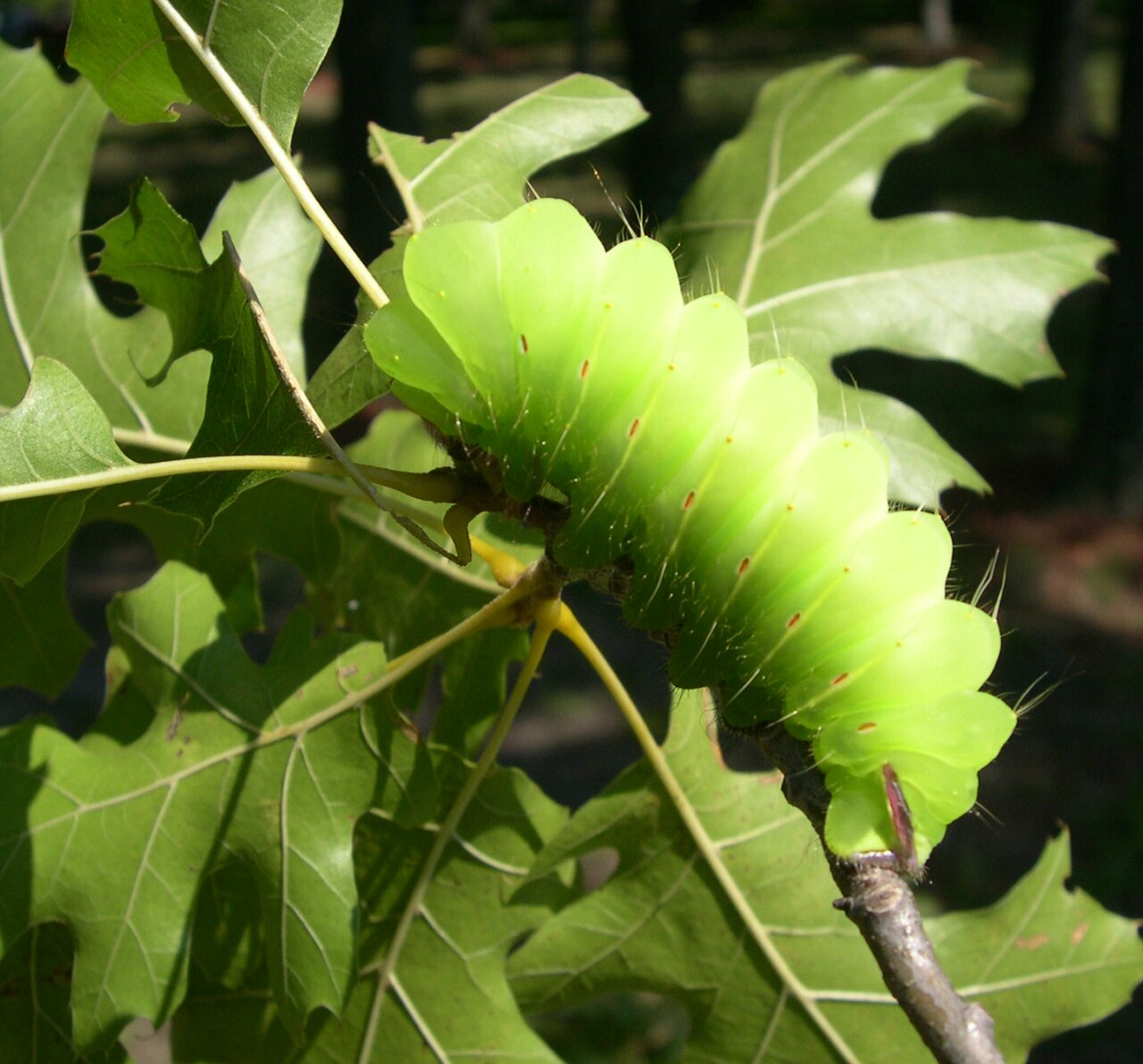
The Polyphemus moth moves through four stages, egg, caterpillar, cocoon and winged adult, and each one marks a fresh start. A female lays flat, round eggs singly or in small groups on the leaves of host trees. The bright green caterpillar grows through several molts before it stops eating. Each molt sheds a skin that no longer fits, a small rehearsal for the larger change ahead.
The cocoon is where the turning point happens. The caterpillar wraps itself in silk and a leaf, and in the northern part of the range the pupa stays sealed through the whole winter. Many cocoons drop to the ground with the leaves in fall and spend the cold months in leaf litter. That long wait is the part of the symbol people tend to skip. A new beginning here includes months of stillness that look like nothing from outside.
Black and white butterflies pass through the same four stages, so the metamorphosis behind butterfly and moth symbolism is the same process. The difference is the casing. A butterfly forms a bare chrysalis, while the Polyphemus spins a tough silk cocoon around itself first. That extra layer points to protected change, growth that needs shelter before it can show.
What Does It Mean When a Polyphemus Moth Visits You?
A Polyphemus moth that visits you points to a change arriving quietly and asks you to pay attention to it. Most visits happen at night or early morning, at a window, a screen door or a porch wall near a light. A moth that lands on your skin or sleeve adds a closer reading, the sense that the change concerns you directly rather than the household. Its stillness is part of the message, since a resting adult can stay in one spot for hours.
The everyday reason is light. Like many night-flying moths, the Polyphemus is drawn to porch lights and lit windows, and a male searching for a female can cover long distances in a night. Black and white moths gather at the same porch lights, so a lit doorway in summer often hosts several species at once. The light brings the moth to your door, and what you make of the meeting is yours to decide.
A second sighting and the time of day sharpen the reading. A moth that returns on another night points to a change you keep postponing. A daytime find, resting motionless on a wall, points to rest and recovery before action. White moths carry a related message of clarity and protection, though without the eyespots that make the Polyphemus a symbol of being watched.
What Do the Eyespots of a Polyphemus Moth Mean?
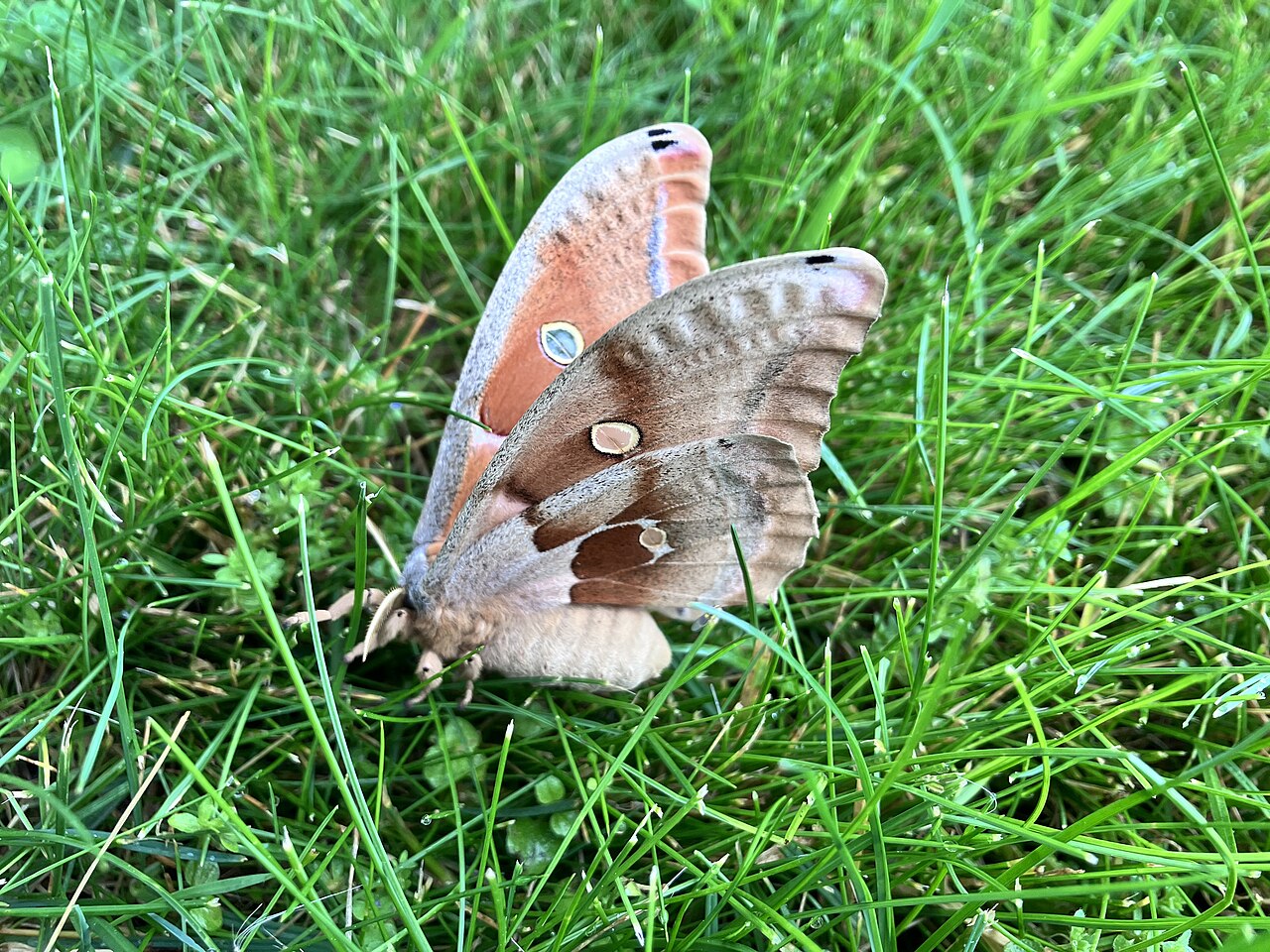
The eyespots of a Polyphemus moth mean protection in the wild and watchfulness as a symbol. Each hindwing carries one large, round spot ringed in yellow, blue and black around a clear center. A resting moth keeps them hidden under its forewings. When disturbed, it flashes its wings open and shows two staring eyes, a display that can startle a bird long enough for the moth to escape.
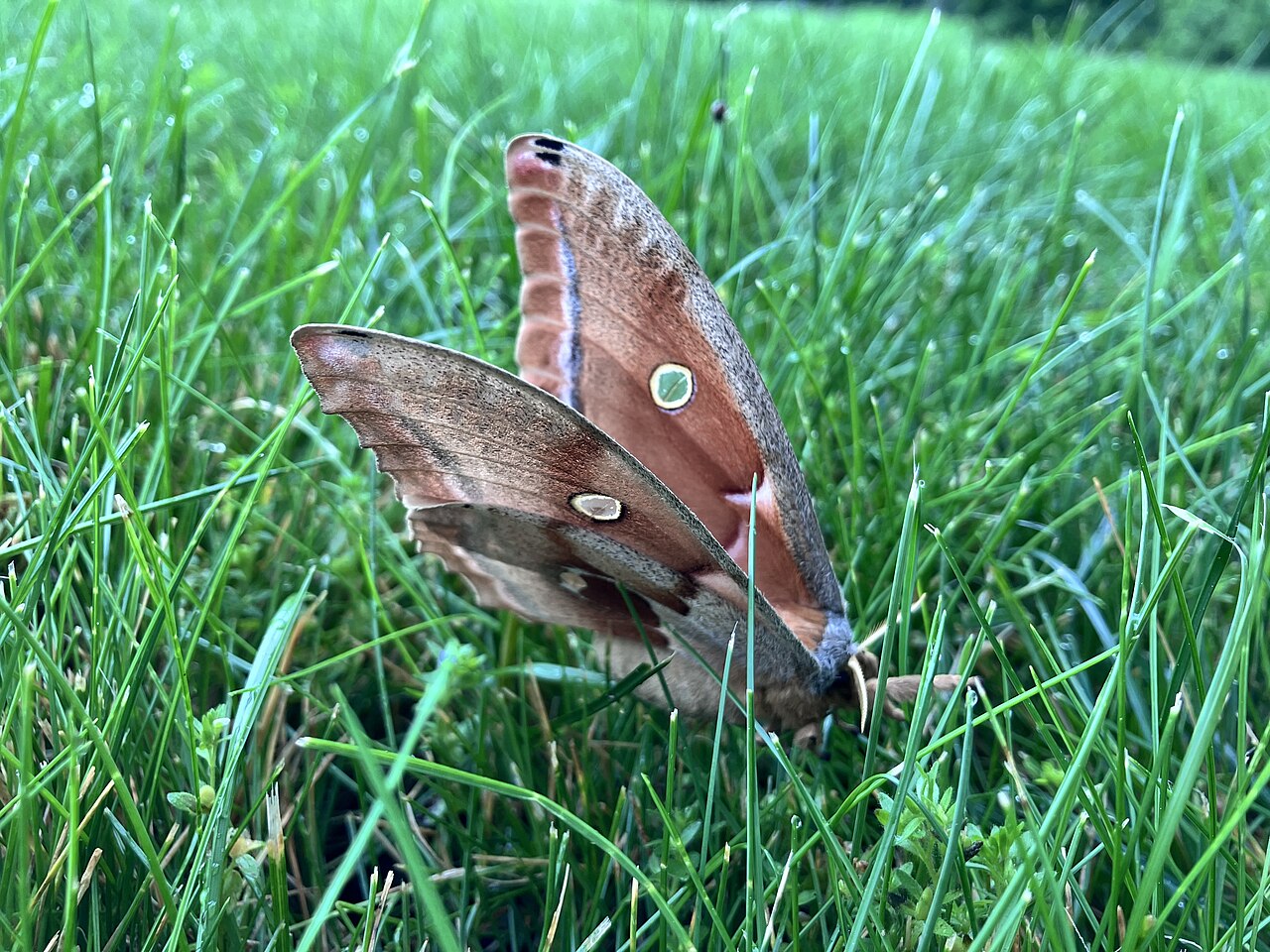
The name comes from the same feature. Polyphemus is the one-eyed Cyclops of Homer’s Odyssey, and the large hindwing spots recalled that single giant eye to the naturalist who named the moth. Each wing carries one spot, so the reference fits each wing more than the whole animal. The comparison stuck, and the moth has carried the giant’s name ever since.
As an image, the eyespot is an open eye that never blinks. It stands for awareness of your surroundings, for seeing through a bluff, and for a strength you show only when pressed. The moth does not fight. It simply reveals what it carries, and that is often enough to make a predator back off.
Why Do Polyphemus Moths Only Live a Few Days?
Polyphemus moths live only a few days as adults because they cannot eat. Their mouthparts are reduced and do not work, so the adult runs entirely on fat stored during the caterpillar stage. The Missouri Department of Conservation field guide notes that adult Polyphemus moths do not eat at all and survive only a few weeks at most. Sources give the adult life span as a few days to a couple of weeks, and the number shifts with temperature and how quickly a moth finds a mate. The often repeated figure of four days sits inside that range rather than being a fixed rule.
The short adult life has one job, reproduction. Females release a scent that males detect with their broad, feathery antennae, sometimes from far away. After mating, the female lays her eggs on host trees over the following nights. Once that work is done, the moth’s reserves run out and it dies, often within days of emerging from the cocoon.
A life of a few nights speaks to presence. The moth spends months preparing and only a handful of nights acting, and it does not waste any of them looking for food. That points to finishing what matters now instead of waiting for a better season. The brevity also looks different from this angle. The moth is not cut short, because most of its life simply took place out of sight.
Is It Rare to See a Polyphemus Moth?
No, it is not rare to see a Polyphemus moth in most of the United States, but it is uncommon to notice one. The species ranges across most of North America, from southern Canada into Mexico, and lives in woodlands, suburbs and city parks with oaks, maples and other host trees. Adults fly at night and rest motionless by day, so many people live near them for years without seeing one. A porch light is the likeliest meeting place.
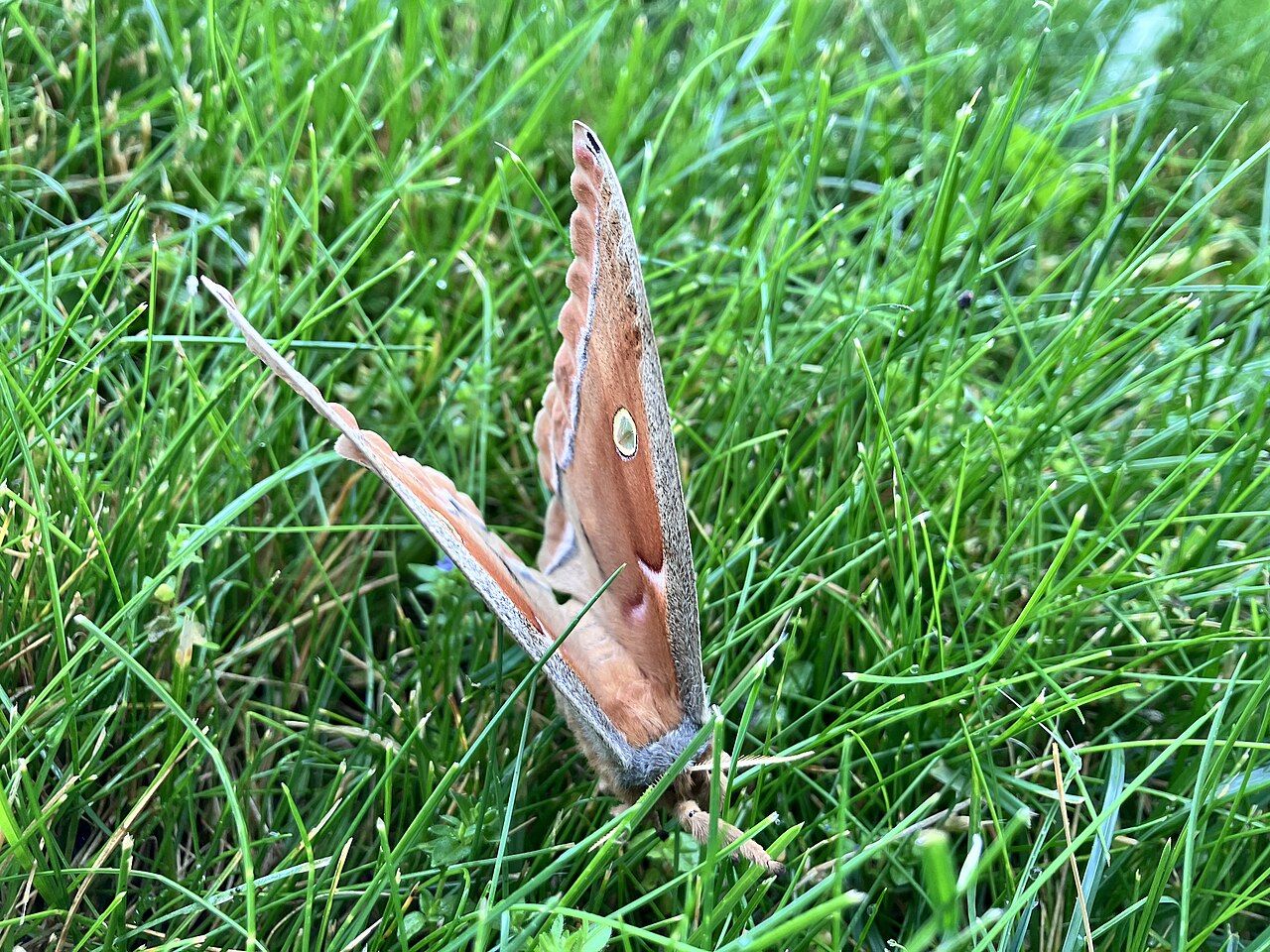
Polyphemus moths have declined in parts of the Northeast, and research on related giant silk moths points to an introduced fly as one possible cause. The tachinid fly Compsilura concinnata was released in the early 1900s to fight the invasive spongy moth (Lymantria dispar), but it also parasitizes the caterpillars of native giant silk moths. Studies in New England linked it to heavy losses among Cecropia and Promethea caterpillars, two close relatives of the Polyphemus. The species is still widespread, so the decline is regional and not a sign of extinction.
Similar moths cause many mistaken sightings. The Cecropia moth (Hyalophora cecropia) is reddish brown with white crescent marks, the luna moth (Actias luna) is pale green with long tails, and the Io moth (Automeris io) is smaller and yellow with one dark eyespot on each hindwing. The Polyphemus is tan to brown with one large clear-centered eyespot on each hindwing. White moths are mostly much smaller and lack large eyespots.
Is It Safe to Touch a Polyphemus Moth, and Does It Bite?
Yes, it is safe to touch a Polyphemus moth, and it does not bite or sting. The adult has no working mouthparts, so it cannot bite, and it has no stinger and no venom. The green caterpillar has no stinging spines either. Handling a Polyphemus at any stage poses no known risk to people.
The risk runs the other way. Moth wings are covered in tiny scales that rub off on fingers, and a moth that loses many scales or tears a wing can fly poorly. Do not pinch the wings or hold the body tightly. A struggling moth can damage itself faster than you can damage it, so slow movements matter more than a careful grip.
If one lands on your skin, let it walk onto a twig or a leaf. Hold the stick in front of its legs and give it a moment, and it will climb. Set it on a branch out of direct sun and away from busy paths. Moving it at dusk, when it would fly anyway, gives it a good start.
Where Does the Polyphemus Name Come From, and Which Traditions Matter?
The Polyphemus name comes from Homer’s Odyssey, where Book 9 tells how Odysseus and his men are trapped in the cave of the Cyclops Polyphemus. The giant has a single eye and eats several of the crew. Odysseus tells him his name is Nobody, gets him drunk on wine, blinds him with a sharpened stake and escapes by hiding his men under the giant’s sheep. The moth borrows the name for its eye-like hindwing spots.
The Odyssey is the one tradition with a documented tie to this moth, because the name rests on it. The story adds a twist to the symbolism. The Cyclops is huge and watchful yet still loses to wit, so the moth’s eyes carry both vigilance and a warning against relying on size or force. Every other meaning attached to the Polyphemus is interpretation built from its life cycle, not an inherited belief.
The moth also has a place in American silk history. It belongs to the same genus as the Chinese tussah silk moth (Antheraea pernyi), whose wild silk is spun commercially. In the 1860s the amateur naturalist Étienne Léopold Trouvelot raised Polyphemus caterpillars in Medford, Massachusetts, hoping to build a silk industry, and the spongy moths he imported for the same project escaped and spread. The Polyphemus silk venture failed, but it ties the moth to the long human hope of turning a cocoon into cloth.
Frequently Asked Questions
How long can a Polyphemus moth live?
A Polyphemus moth completes its life in about a year in the north, where one generation develops each year and the pupa spends winter in its cocoon. The South supports two or more generations a year. Adults live only a few days to a couple of weeks, since they cannot feed.
Can moths get attached to humans?
No, moths do not form attachments to people. A moth that lands on you is reacting to warmth, a pale surface or a calm place to rest, and a Polyphemus that stays on a sleeve has simply settled. It does not seek you out and will leave when it is ready to fly, often at dusk.
What does it mean spiritually when a moth visits you?
A moth visit points to quiet change and a reminder to look closely at what is already near you. The timing helps the reading. Polyphemus adults fly from late spring through summer depending on region, so a visit in those months fits the animal’s season of transformation and short, purposeful life.
What do Polyphemus caterpillars eat?
Polyphemus caterpillars eat the leaves of many trees and shrubs, including oak, maple, birch, willow and hickory. They feed for several weeks and grow large before spinning a cocoon. Damage to a healthy tree stays minor, because the caterpillars feed alone or in small numbers rather than in swarms.
Where do Polyphemus moths go in winter?
Polyphemus moths spend the winter as pupae sealed inside silk cocoons. Many cocoons are wrapped in a leaf and fall to the ground with it in autumn, so they rest in the leaf litter under host trees. Leaving fallen leaves in place gives overwintering pupae a safer spot until spring.
Are Polyphemus moths endangered?
No, Polyphemus moths are not endangered. They remain widespread across most of North America and turn up in suburbs as well as forests. Some northeastern populations have declined, and research on related giant silk moths links part of that loss to the introduced parasitic fly Compsilura concinnata, so local numbers can be lower than they once were.
Explore more: Insect Spiritual Meanings: 15 Bugs and What They Signal