Barred Owl Call: What It Sounds Like and What It Means
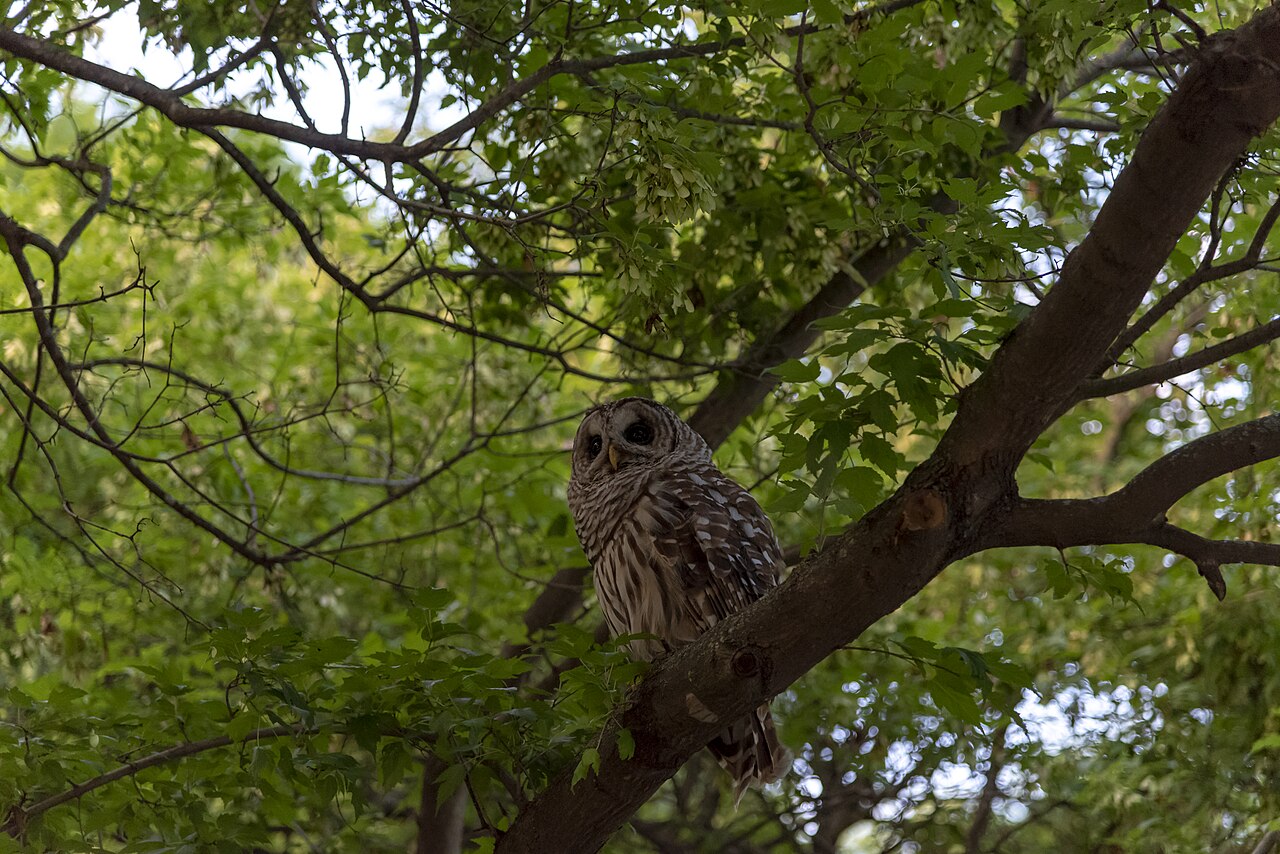
The Barred Owl call is one of the most recognizable sounds in North American woodlands, a rhythmic, carrying hoot that sounds uncannily like the phrase “Who cooks for you? Who cooks for you-all?” Of all our owls, the Barred Owl is among the most vocal, calling readily at dusk, through the night, and even on overcast days, which is why so many people hear it without ever seeing the bird. Beyond the classic hoot, Barred Owls produce a startling range of cackles, hoots, and wild caterwauling duets. This guide explains exactly what a Barred Owl sounds like, what each call means, when and where you will hear it, and how to tell it apart from other owls.
| Call | Sounds like | Meaning |
|---|---|---|
| Classic hoot | “Who cooks for you? Who cooks for you-all?” | Territory and contact |
| Caterwauling duet | Wild monkey-like hoots and cackles | Pair bonding, courtship |
| Single hoots | Gruff, spaced barks and hoots | Agitation or contact |
| Ascending “ooo-aw” | Drawn-out hoot trailing down | Emphasis, close contact |
The Barred Owl call is a rhythmic nine-note hoot that sounds like the phrase who cooks for you, who cooks for you all. Pairs also produce a wild cackling duet known as caterwauling, and fledged young give a rasping hiss through late summer.
What the Barred Owl call sounds like
The signature Barred Owl call is a series of eight or nine hoots delivered in two phrases, classically rendered as “Who cooks for you? Who cooks for you-all?” with the final note dropping and trailing off. It is loud, resonant, and rhythmic, carrying well through forest, and it is delivered so distinctly that once you learn the cadence you will recognize it instantly. Both males and females give this call, with the male’s voice slightly deeper.
This hoot is the owl’s main territorial and contact call, announcing its presence and its claim to a patch of woods. Because Barred Owls often begin calling well before full dark, and sometimes call during the day, it is one of the easiest owl sounds to catch. If you hear that unmistakable “who cooks for you” phrasing from wet woodland, you have found a Barred Owl.
Caterwauling duets and other sounds
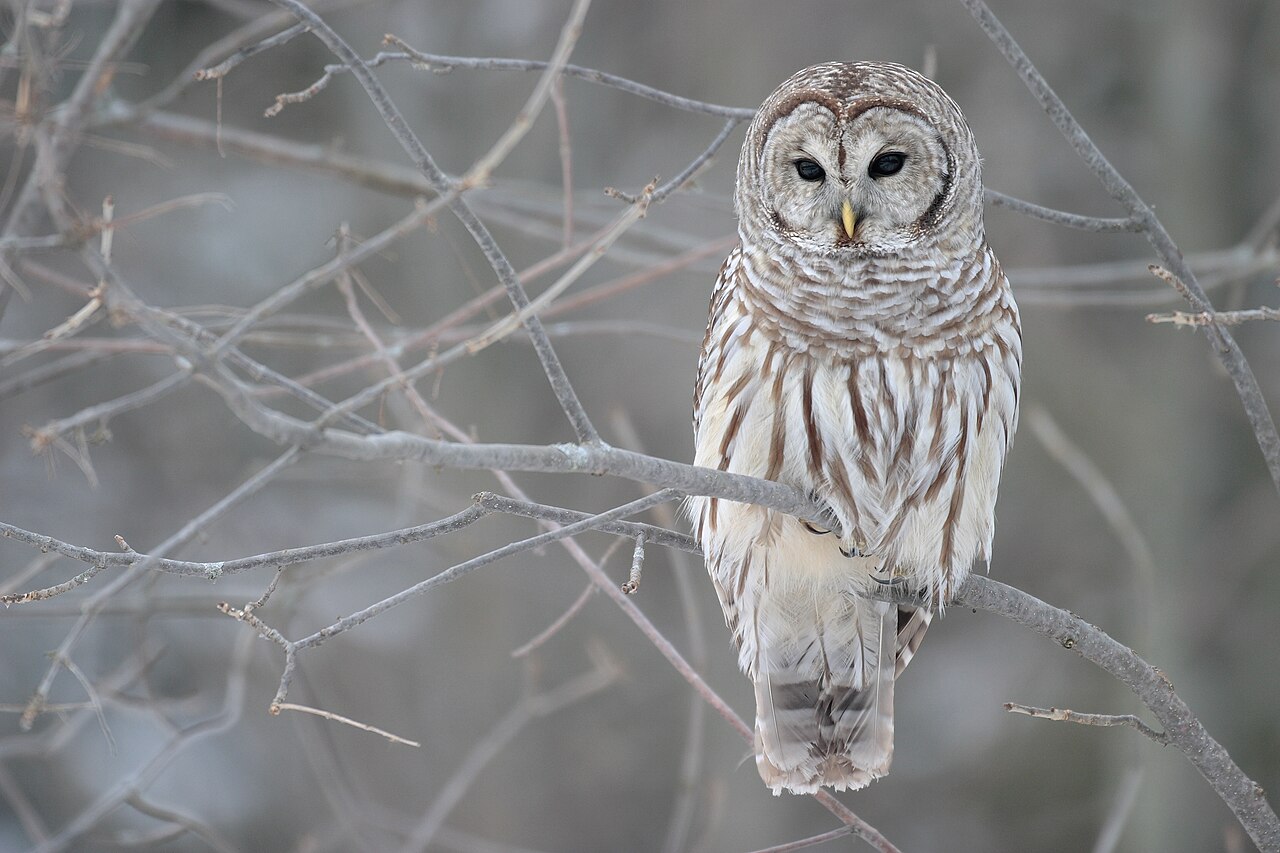
Barred Owls are famous for a second, far wilder vocalization: the caterwauling duet. When a pair interacts, especially during courtship, they launch into a raucous exchange of hoots, cackles, gurgles, and monkey-like whoops that can sound almost unhinged to a first-time listener. These duets are unearthly, carrying through the dark and often startling people who have no idea an owl could make such a racket.
Between these extremes, Barred Owls give a variety of single hoots, gruff barks, and a drawn-out ooo-aw that slides downward, used in closer contact and agitation. Young Barred Owls give raspy, hissing begging calls at the nest. This broad vocabulary makes the Barred Owl one of the most vocally expressive owls in North America, and part of why it is heard so much more often than it is seen.
What Barred Owl calls mean
Most Barred Owl calling is about territory and pair bonds. The classic “who cooks for you” hoot advertises ownership of a territory and keeps mates in contact, while the wild caterwauling duets strengthen the bond between a pair and peak during courtship in late winter and early spring, so a burst of frenzied hooting often signals birds pairing up. Single gruff hoots and barks tend to express agitation, such as when an intruder, a person, or another owl comes too close.
Because Barred Owls hold the same territory year-round and often for life, their calling is a running commentary on the ownership of a patch of forest. A Barred Owl answering your imitation is defending its ground, which is why any call-and-response should be kept brief and occasional so as not to stress the bird. Recordings from the Cornell Lab of Ornithology and Audubon help you learn these calls. The meanings behind owl encounters more broadly appear in our guide to what it means to see or hear an owl.
When and where you will hear it
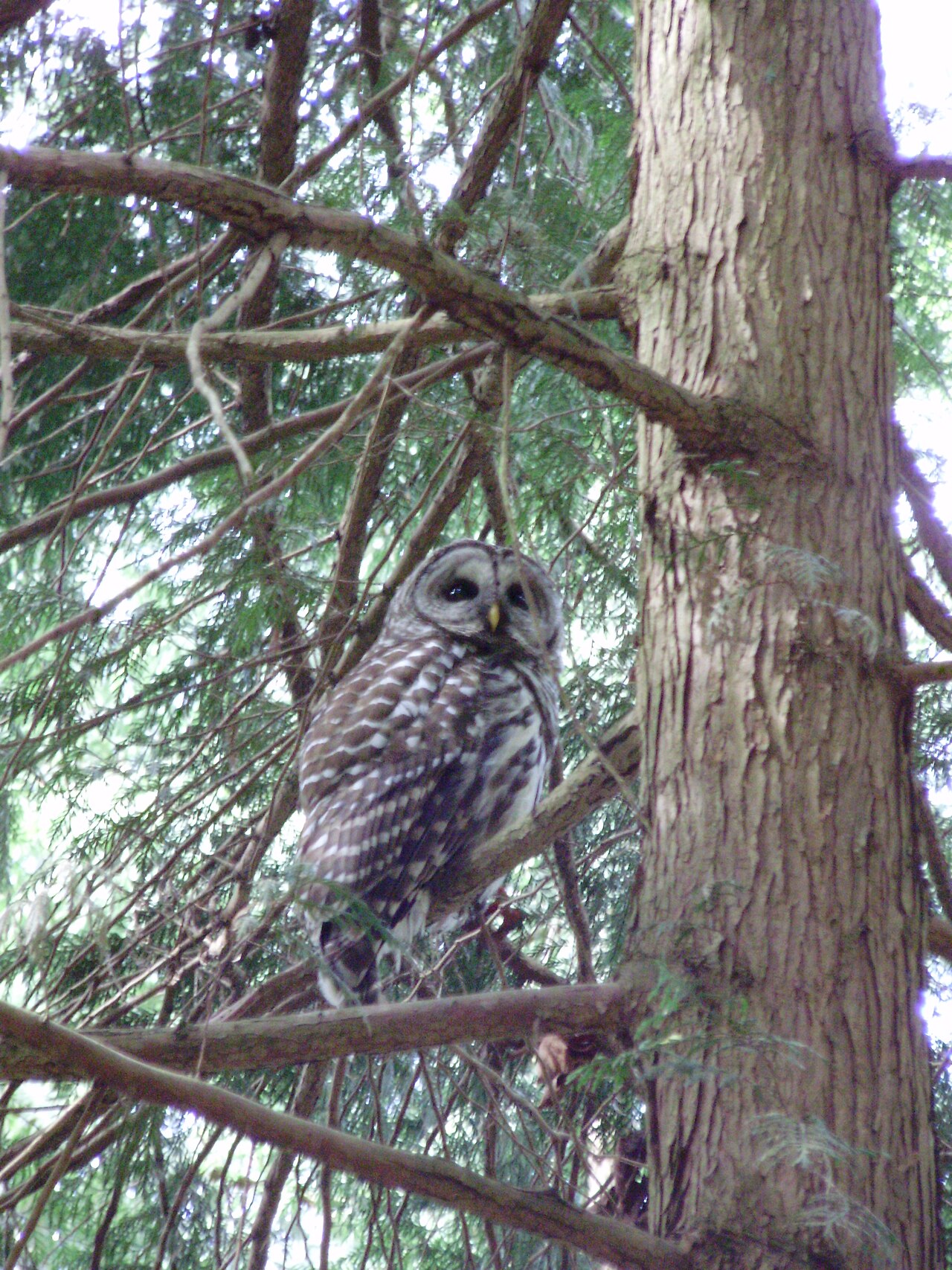
Barred Owls call throughout the year rather than only in the breeding season, though they are most vocal from late winter into spring as pairs court and nest. They are creatures of mature, moist woodland, wooded swamps, and forest along rivers and lakes, so that is where their calls ring out. Unlike many owls, they frequently begin calling at dusk, well before the sky is fully dark, and may hoot at intervals all night.
You are especially likely to hear Barred Owls on still evenings, when sound travels well, and during the pairing season when duets erupt. Their habit of calling in low light, and sometimes by day, makes them the owl most people first learn by ear. If a hooting owl in wet eastern or northwestern woods starts before dark, it is almost certainly a Barred Owl.
How to tell it apart from other owls
The Barred Owl’s rhythmic, phrase-like “who cooks for you” is quite different from the calls of other common owls. The Great Horned Owl gives a series of deep, soft, evenly spaced hoots without the phrase-like cadence, and its voice is lower and more muffled. The Eastern Screech-Owl gives a soft descending whinny or a steady trill, nothing like a hoot at all. The Barn Owl does not hoot but screeches.
The best clue is the cadence: the Barred Owl’s call has a clear, repeating, question-like rhythm, and it often calls before dark and gives those wild caterwauling duets that no other North American owl produces. For a side-by-side of every species’ voice, see our guide to owl calls by species.
Barred Owl mating calls and the breeding season
Barred Owl calling ramps up noticeably in late winter and early spring, the heart of the breeding season, when the wild caterwauling duets reach their peak. During courtship a pair may trade an escalating series of hoots, cackles, and monkey-like whoops for minutes at a time, cementing their bond before nesting. So a sudden outbreak of frenzied, almost hysterical hooting in February or March is usually the sound of Barred Owls pairing up rather than any cause for alarm.
These birds are among the few owls whose westward spread can be tracked partly by ear, as their loud, unmistakable calls announce their arrival in new forests, including the old-growth ranges of the threatened Spotted Owl. Learning the Barred Owl’s voice therefore has a conservation dimension in the West. For the meanings people have long attached to hearing owls, see our guide to what an owl visit means.
Listening for Barred Owls: practical tips
Because Barred Owls are so vocal, a little strategy makes them easy to hear. Head to mature, moist woodland, wooded swamps, or forest along rivers and lakes, and listen on a still, calm evening when sound carries well. Unlike strictly nocturnal owls, Barred Owls often start calling at dusk before full dark, so you rarely need to stay out late, and they call year-round rather than only in spring.
A phone recording of a calling owl lets you confirm the identification later and, if you wish, contribute the observation to citizen-science projects that track owl distribution. Keep any imitation of the “who cooks for you” phrase brief, since repeatedly calling in an owl can distract it from hunting. With patience and the right habitat, the Barred Owl is often the very first owl a new birder learns to recognize by ear.
Related reading: Barn Owl Sounds.
What Time of Day Do Barred Owls Call?
Barred Owls call most in the hours right after dusk and again before dawn, but they are among the most likely North American owls to call in broad daylight. A hoot at two in the afternoon from deep woodland is entirely normal for this species and does not mean anything is wrong with the bird.
Season shifts the pattern more than time of day does. Calling peaks from late winter into early spring as pairs establish territory and court, which is when caterwauling duets are most likely. A second peak comes in late summer when fledged young beg persistently, and a third in autumn when young birds disperse and call while moving through unfamiliar territory.
Daytime calling also spikes when something intrudes. Barred Owls respond to other owls, to recordings, and to mobbing crows, and a daytime commotion of crows in one tree very often has a Barred Owl at the centre of it. The Cornell Lab’s Barred Owl sound library has recordings of the standard hoot, the caterwauling duet and the juvenile begging call.
Frequently Asked Questions
What does a Barred Owl call sound like?
Its signature call is a rhythmic series of hoots that sounds like ‘Who cooks for you? Who cooks for you-all?’ with the last note trailing down. Pairs also give wild, monkey-like caterwauling duets.
What does it mean when a Barred Owl calls?
The classic hoot advertises territory and keeps mates in contact, while caterwauling duets strengthen pair bonds during courtship. Gruff single hoots usually signal agitation at an intruder.
Why do Barred Owls call at night?
They call to defend territory and stay in contact with their mate. Barred Owls are highly vocal, often starting at dusk before full dark and hooting at intervals all night, especially in the pairing season.
Do Barred Owls call during the day?
Yes, more than most owls. Barred Owls often call at dawn, dusk, and on overcast days, which is one reason people hear them so frequently compared with strictly nocturnal owls.
What is the wild screaming sound Barred Owls make?
That is the caterwauling duet, a raucous exchange of hoots, cackles, and monkey-like whoops given by a pair, especially during courtship. It sounds almost unhinged but is normal pair-bonding behavior.
When are Barred Owls most vocal?
They call year-round but peak from late winter into spring during courtship and nesting. Still evenings are especially good for hearing both the classic hoot and the wild duets.
How do I tell a Barred Owl call from a Great Horned Owl?
The Barred Owl gives a rhythmic, phrase-like ‘who cooks for you,’ while the Great Horned Owl gives deeper, softer, evenly spaced hoots with no phrase-like cadence. The Barred Owl also often calls before dark.
Should I call back to a Barred Owl?
An occasional imitation can bring a response, but keep it brief. Repeatedly calling in any owl can stress it and distract it from hunting and defending its territory, so stop if it approaches or seems agitated.