Albino Ball Python: Genetics, Care, Size, and Morphs
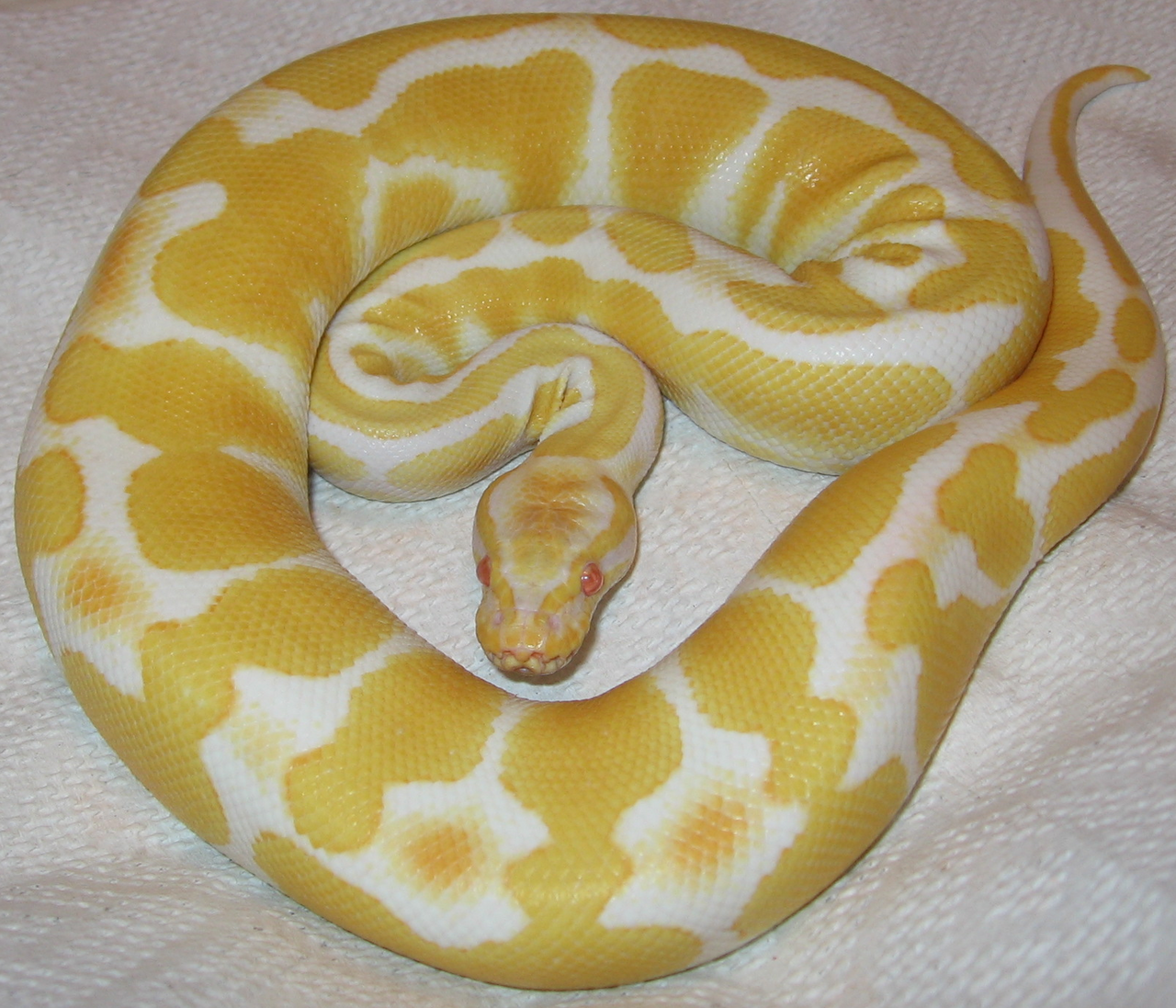
An albino ball python is a Python regius carrying a recessive mutation that removes all melanin, producing a snake patterned in white and bright yellow with pink or red eyes. Adults reach 3 to 5 ft depending on sex, live 20 to 30 years in captivity, and have the same calm disposition that made the species the most widely kept snake in the world.
It was also the mutation that started the entire ball python morph industry. The first albinos were bred in the United States in the early 1990s, and the market that grew from them now includes thousands of named combinations. This guide covers what the genetics actually mean, size and lifespan, the combo morphs built on the albino gene, realistic pricing, full care requirements, and the feeding strikes that alarm every new keeper.
| Quick Facts | Albino Ball Python |
|---|---|
| Species | Python regius |
| Genetics | Amelanistic, simple recessive |
| Adult size | Females 4 to 5 ft, males 3 to 3.5 ft |
| Lifespan | 20 to 30 years, record over 60 |
| Enclosure | 40 gallon minimum for an adult |
| Temperament | Docile, among the calmest pet snakes |
What Is an Albino Ball Python?
Ball pythons are stocky, medium-sized constrictors native to the grasslands and open forests of West and Central Africa. They get the name from their defensive habit of curling into a tight ball with the head tucked in the middle rather than striking, which is also why they are so manageable in captivity.
The albino form carries a recessive mutation that blocks melanin production entirely. Without melanin the normal brown and black pattern disappears, leaving the underlying yellow pigment against a white background, so the familiar ball python blotches are still visible as bright yellow shapes on white rather than as brown on black.
The eyes are the immediate tell. With no melanin in the iris, blood vessels show through, producing pink to red eyes that distinguish a true albino from the many pale morphs that are not. The technically correct term is amelanistic, and breeders use it interchangeably with albino for this trait. Our guide to the albino corn snake explains why the same mutation produces an orange snake in that species rather than a yellow one.
Albino, Leucistic, and Piebald
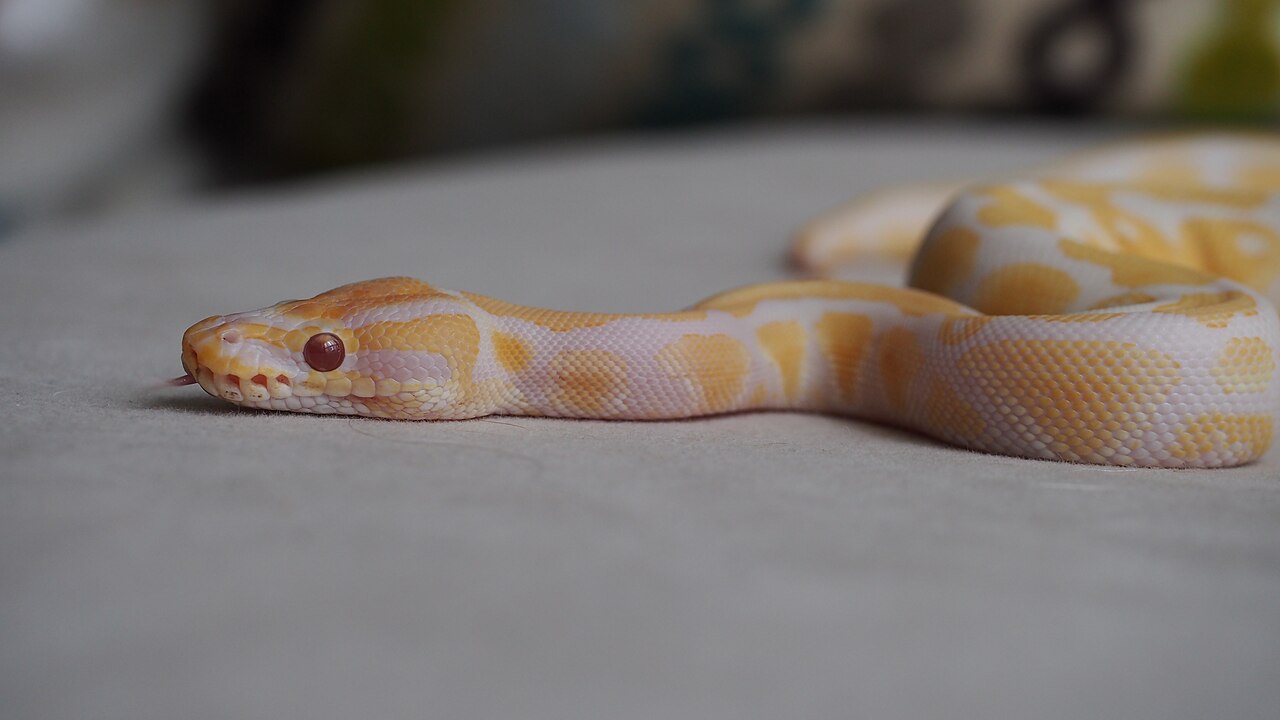
Three types of white ball python get confused constantly, and the differences are genetic rather than cosmetic. Albino animals lack melanin, retain yellow pigment, and have pink or red eyes.
Leucistic ball pythons are a different thing entirely. The blue-eyed leucistic, produced by combining certain other genes, is pure white with no yellow at all and has striking blue eyes, because leucism suppresses pigment cell development rather than melanin synthesis specifically. A pure white snake with blue eyes is not an albino.
Piebald ball pythons carry a recessive mutation that produces irregular patches of unpigmented white skin alongside areas of completely normal pattern, so a single snake looks like two snakes stitched together. Piebald is unrelated to albinism and can be combined with it, which produces the albino piebald combination that sits high on many keepers’ lists.
Size, Growth, and Lifespan
Hatchlings emerge at 10 to 17 in and grow quickly for the first two years on a regular rodent diet. Adult females reach 4 to 5 ft and occasionally 6 ft, while males stay smaller at 3 to 3.5 ft, and this sex difference is more pronounced than in most snakes kept as pets.
They are heavy for their length. A ball python is a thick-bodied snake, and an adult female can weigh 3 to 5 lb, which makes them feel substantial in hand compared with a corn snake or a king snake of similar length. Sexual maturity arrives at 2 to 3 years for males and 3 to 5 for females, driven by weight rather than age.
Lifespan is the number prospective keepers most often underestimate. Captive ball pythons routinely reach 20 to 30 years with good husbandry, and the record for the species is over 60 years, held by an animal at the Saint Louis Zoo that laid eggs at 62. Acquiring one is a multi-decade commitment closer to a parrot than to a hamster.
Popular Albino Combo Morphs
The albino gene is recessive, so combining it with other genes requires breeding through carriers, which is why combination morphs cost more. The lavender albino is one of the most sought after, pairing albinism with a separate recessive gene to produce a snake with a soft lavender to pinkish background instead of white.
Albino piebald combines the two recessives for an animal with albino patterning broken by patches of pure unpigmented white, and it is among the most visually dramatic morphs available. Albino banana, albino black pastel, albino pastel, and albino pinstripe all layer the albino base with dominant or co-dominant pattern genes that change how the yellow is distributed.
Trade names deserve caution. Breeders name combinations freely, the same combination sometimes carries different names from different sellers, and a name alone tells you nothing reliable about genetics. Ask which specific genes an animal carries and get it in writing, particularly if you ever intend to breed, since a mislabeled animal produces unexpected results years later. Our guide to the banana ball python covers one of the genes most often paired with albino.
Price and What Drives It
Single-gene albinos are affordable and have been for years. Prices commonly run from around 150 to 400 US dollars depending on quality, sex, and season, which is a fraction of what they cost in the 1990s when the morph was new.
Combinations climb quickly. Lavender albinos typically run into four figures, albino piebalds higher still, and animals combining three or four recessive genes can reach several thousand dollars. Female animals cost more than males, because females are the limiting factor in any breeding project.
The purchase price is the smallest part of the total. An appropriate enclosure, thermostat, heat source, hides, substrate, and a reptile veterinarian visit exceed the cost of a single-gene albino on their own, and twenty-plus years of feeding and equipment replacement follow. Buying a cheap snake and an inadequate setup is the most common expensive mistake in this hobby.
Are Albino Ball Pythons Blind?
No. The pink or red eye color comes from blood vessels visible through an unpigmented iris, not from any defect in the eye itself, and an albino ball python sees essentially as well as a normal one.
Light sensitivity is genuine but modest. Without pigment to absorb stray light, bright illumination is uncomfortable, and albinos tend to be more reluctant to emerge under strong lighting. The practical answer is ambient room lighting rather than bright direct lamps, plus hides on both the warm and cool sides so the animal always has a dark option.
Ball pythons hunt primarily by heat and scent regardless of morph. They have heat-sensing pits along the upper lip that detect the infrared signature of warm-blooded prey, and a flicking tongue delivering scent to the vomeronasal organ, so vision is a secondary sense. Albinism affects it very little in practice.
Albino Ball Python Care
An adult needs a minimum of a 40 gallon enclosure, with 4 by 2 ft floor space being a better target, and a securely locking lid. Ball pythons are strong and persistent, and a lid that merely rests in place will eventually be pushed open.
Temperature and humidity matter more in this species than in most beginner snakes. Provide a warm side around 88 to 92 F with a cool side near 78 F, regulated by a thermostat without exception, and maintain humidity at 55 to 65 percent, raising it toward 70 percent during a shed. Unregulated heat mats cause severe burns, and low humidity causes retained shed on the eyes and tail tip.
Provide two snug hides, one on each side, so the snake never has to choose between security and correct temperature. A hide that feels too small is usually right, since ball pythons prefer tight contact on all sides. Use aspen, cypress mulch, coconut husk, or paper towel, never cedar or pine, add a water bowl large enough to soak in, and spot clean as needed. The husbandry logic parallels our guide to the crested gecko, though the specific numbers differ.
Feeding and the Famous Hunger Strikes
Appropriately sized frozen-thawed rodents are the whole diet. Hatchlings start on small mice or rat pups, and adults typically take a medium to large rat every 10 to 14 days, following the rule that prey should be roughly the width of the snake at its thickest point. Never feed live rodents, which routinely injure snakes that hesitate.
Then there is the behavior that generates more panic than any other in the hobby. Ball pythons refuse food for extended periods, and a healthy adult can go two to six months without eating, particularly in winter and during breeding season. This is normal for the species, not a symptom.
The response is to monitor rather than intervene. Weigh the snake every two weeks and record it, since a snake losing less than about 10 percent of its body weight during a fast is fine. Check that temperatures and humidity are correct, that the hides are snug, and that the animal is not being handled too often, because husbandry problems cause most genuine refusals. If a snake loses substantial weight, becomes lethargic, or shows a sunken appearance, that is when a reptile veterinarian is warranted.
Handling, Temperament, and Morph Ethics
Ball pythons are among the most tolerant snakes in captivity, which is the main reason they dominate the pet trade. Most individuals accept regular handling within weeks, bites are rare and trivial, and the defensive response is to ball up rather than to strike.
Support the body rather than gripping. Let the snake move through your hands with its weight supported at several points, keep sessions to 10 or 15 minutes a few times a week, and leave a new animal alone for a week or two to settle. Skip handling for 48 hours after a meal and during a shed, when vision is impaired and temperament is worst.
One aspect of the morph trade deserves honest mention. Albinism itself carries no known health defect, but some other popular ball python genes do. The spider gene is associated with a neurological wobble that affects head position and coordination, and several other morphs carry documented issues, including lethal combinations that produce non-viable offspring. Buying an albino is uncomplicated on this front, and asking breeders about the genetics behind any morph is a reasonable question rather than a rude one. Our guides to the king snake and the hognose snake cover alternatives for anyone wanting a smaller or more active species.
Related reading: Pied Ball Python.
Related reading: Spider Ball Python.
Related reading: Pastel Ball Python.
Frequently Asked Questions
What is an albino ball python?
A ball python carrying a recessive mutation that removes all melanin, leaving a white and bright yellow snake with pink or red eyes. The correct term is amelanistic. Adults reach 3 to 5 ft depending on sex and live 20 to 30 years in captivity.
Are albino ball pythons blind?
No. The red eye color comes from blood vessels visible through an unpigmented iris rather than any defect. They are somewhat more sensitive to bright light and should have hides on both sides of the enclosure, but ball pythons hunt mainly by heat and scent anyway.
How much does an albino ball python cost?
Single-gene albinos typically run 150 to 400 US dollars. Combination morphs cost far more, with lavender albinos reaching four figures and albino piebalds higher. Equipment and two decades of care exceed the purchase price regardless of which you choose.
How big do albino ball pythons get?
Females reach 4 to 5 ft and occasionally 6 ft, males 3 to 3.5 ft. They are heavy-bodied, with adult females weighing 3 to 5 lb. Hatchlings emerge at 10 to 17 in and most growth happens in the first two years.
Why won’t my ball python eat?
Extended fasting is normal for the species, and a healthy adult can refuse food for two to six months, especially in winter. Weigh the snake every two weeks, verify temperatures, humidity, and snug hides, and consult a reptile veterinarian if it loses substantial weight or becomes lethargic.
What is the difference between albino and leucistic?
Albinos lack melanin but keep yellow pigment and have pink or red eyes. Blue-eyed leucistics are pure white with no yellow and blue eyes, because leucism suppresses pigment cell development rather than melanin synthesis. Piebald is a third, unrelated mutation producing patches of white.
Are albino ball pythons good for beginners?
Yes, provided you can meet the humidity and temperature requirements, which are stricter than for corn snakes. They are docile, tolerate handling, and feed on frozen-thawed rodents. The real caveat is the 20 to 30 year commitment.