Opossum Sounds: Hisses, Clicks, and the Bluff Behind Them
Opossums make five main sounds: a loud hiss when threatened, a low growl at close range, a metallic clicking used in courtship and between mother and young, a screech during fights, and a sneeze-like sound that people frequently mistake for a cat. They are far quieter than raccoons or foxes and often make no sound at all, which is why most people living alongside them never hear one.
The hiss is the sound that matters practically. An opossum that hisses and opens its mouth wide, showing all 50 teeth, looks genuinely alarming and is almost always bluffing. Virginia opossums are among the least aggressive wild mammals in North America, and the display is what they use instead of fighting. If the bluff fails, the animal collapses into an involuntary catatonic state, the behaviour known as playing possum.
| Sound | Meaning |
|---|---|
| Hiss | Threat display, almost always bluff |
| Growl | Close range warning, precedes retreat |
| Metallic click | Courtship, and mother calling young |
| Screech | Fighting or genuine distress |
| Sneeze or choo | Contact between young and mother |
| Teeth clacking | Part of the bluff display |
| Overall volume | Quiet, far below raccoon or fox |
Every Sound an Opossum Makes
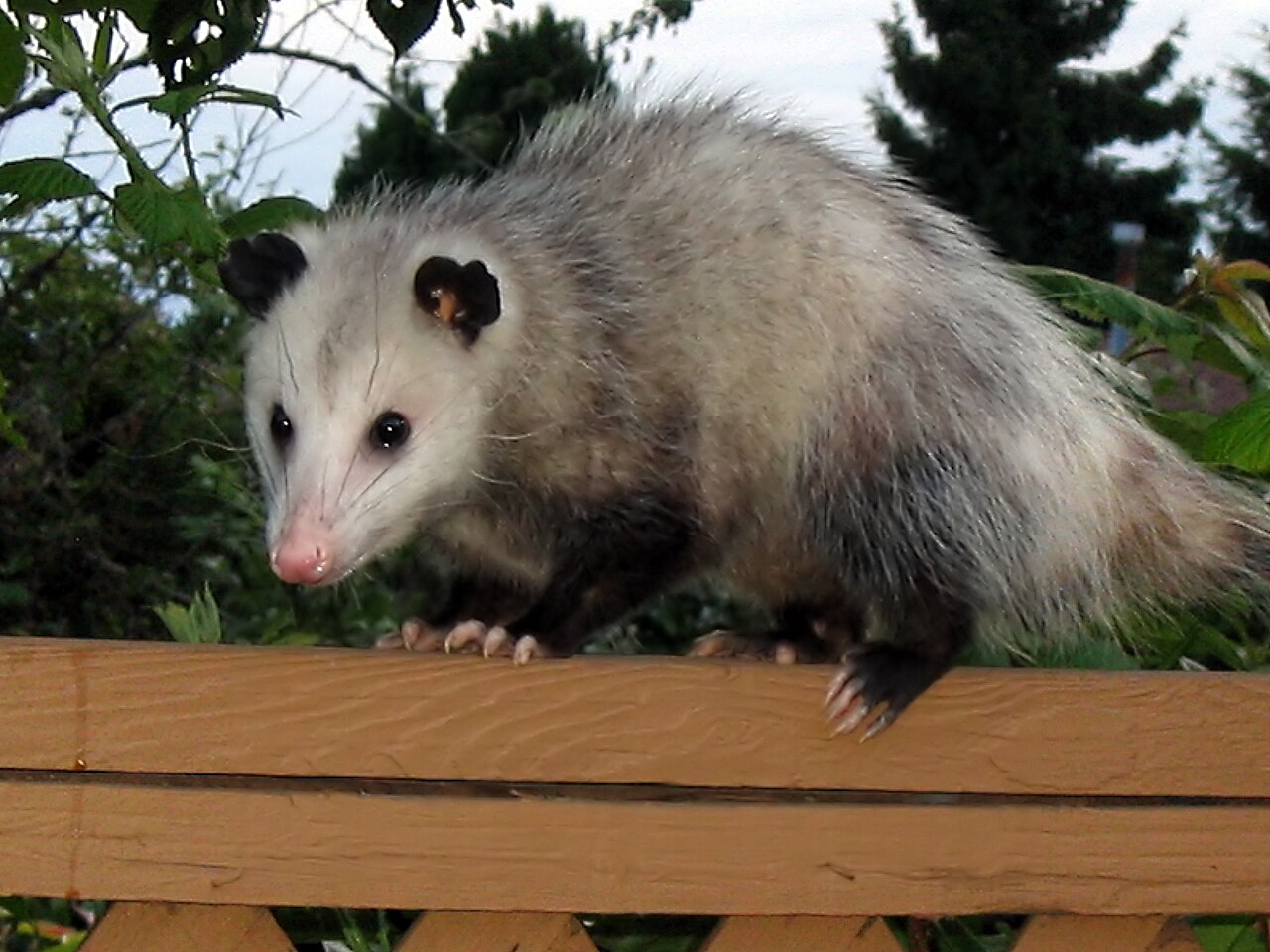
The Virginia opossum, Didelphis virginiana, is North America’s only marsupial and its vocal repertoire reflects a solitary animal that avoids confrontation. Most sounds are defensive or reproductive, and there is no long-distance advertisement call comparable to a fox scream or a coyote howl.
The hiss is a sustained open-mouthed exhalation, often combined with drooling, teeth clacking, and a wide gape. It is loud at close range but carries poorly, so hearing it means you are within a few metres. The growl is lower and shorter and usually precedes retreat rather than attack.
The clicking is the most interesting sound and the one least often heard. Males produce a metallic clicking during courtship, described as sounding like a small motor or a fingernail on a comb, and females use a similar click to call scattered young back to them. It is quiet and easily missed. Our guide to the baby possum covers the young that respond to it.
The Hiss and the Bluff
An opossum’s threat display is theatre. The animal faces the threat, opens its mouth to the fullest extent, hisses continuously, drools heavily, and clacks its teeth. With 50 teeth, more than any other North American land mammal, the effect is convincing enough that most predators reconsider.
Almost none of it is backed by a willingness to fight. Opossums are slow, poorly armed for their size, and have no defensive strategy beyond display and collapse. Bites are rare and generally happen only when an animal is cornered and handled, and even then the bite force is modest.
The right response to a hissing opossum is to give it a clear escape route and step back. It will leave within a minute if it can, and no further intervention is needed. Our guide to whether possums are dangerous covers the risk assessment in full, including the rabies question.
Playing Possum
Thanatosis, the technical name, is not a decision the animal makes. When the bluff fails and the threat continues, the opossum enters an involuntary physiological state: it collapses onto its side, the eyes glaze or close, the mouth hangs open, breathing slows dramatically, and the anal glands release a foul greenish fluid that smells like a rotting carcass.
The state can last from a few minutes to several hours and the animal cannot break out of it voluntarily. This is why moving a supposedly dead opossum sometimes results in a very much alive one walking away twenty minutes later, and why people who find one at a roadside frequently misjudge the situation.
The strategy works because most predators reject carrion they did not kill. Combined with the smell, an opossum in this state stops registering as prey. It is also why a genuinely comatose opossum should simply be left somewhere safe rather than handled, since interference prolongs the episode.
What Sound Do Possums Make at Night?
Usually none. Opossums are nocturnal and forage quietly, and the sounds people attribute to them at night are almost always something else. Screaming, chittering, and prolonged fighting noises from a yard after dark are far more likely to be raccoons or foxes.
What opossums do produce at night is mechanical rather than vocal. Rustling in leaf litter, scratching under a deck or shed, and the sound of an animal moving slowly through undergrowth are all typical, and a bin being worked over produces plenty of noise without any vocalisation at all.
When opossums do vocalise at night it is usually a brief hiss when two animals meet or when a cat approaches. These are short and end quickly. Our guides to raccoon sounds and fox sounds cover the two animals responsible for most nocturnal screaming reports.
The Sneeze and the Click
Young opossums produce a distinctive sound usually described as a sneeze or a soft choo, given when they become separated from the mother. She responds with clicking, and the exchange lets scattered young relocate her in dense cover.
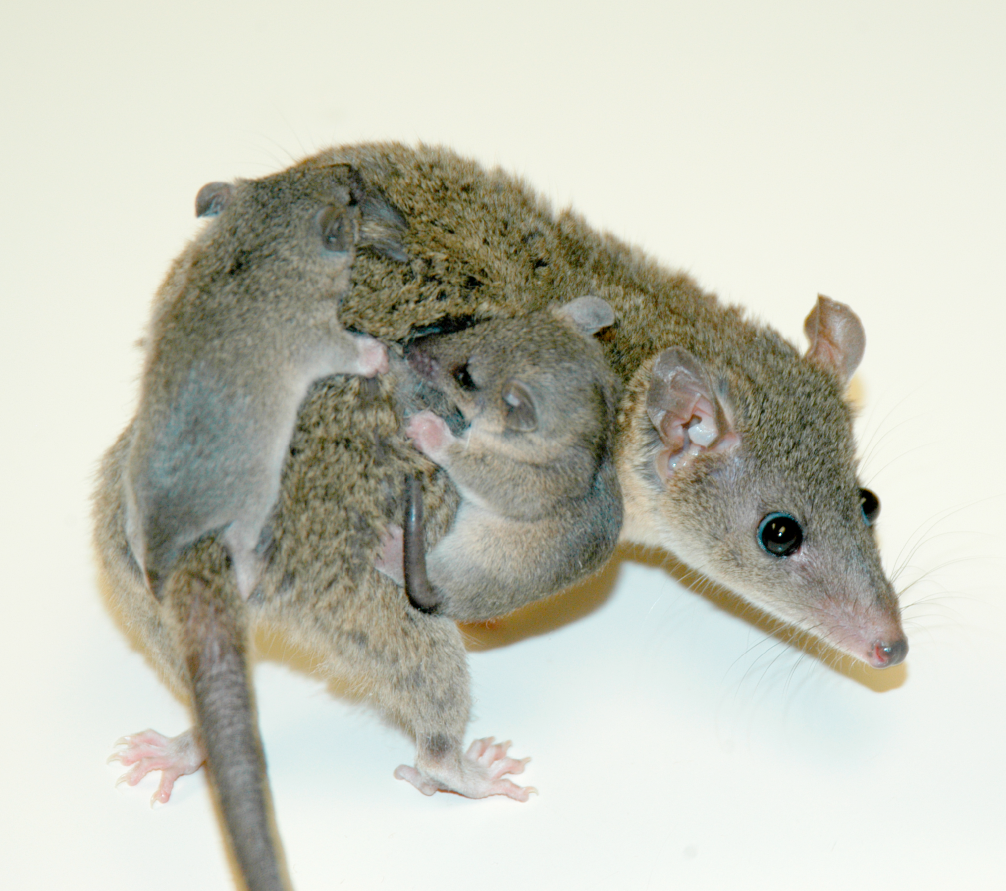
This is the sound most often reported by people who find opossums under a deck or in a shed. It is quiet, repeated, and does not resemble any adult sound, so it frequently gets attributed to birds or to something in distress. Hearing it means a female with dependent young is nearby.
The right response is to leave the area alone for a few weeks. Young opossums ride on the mother’s back and become independent at around four to five months, and a family under a deck will move on without intervention. Blocking access while young are present traps them, which is both inhumane and creates a worse problem.
How Loud Are They Really?
Quieter than almost any comparable mammal. An opossum hiss registers as loud at arm’s length and is inaudible from twenty metres, and the clicking used in courtship carries perhaps five metres in still air. There is nothing in the repertoire designed to travel.
That is a consequence of how they live. Opossums are solitary, hold no territory, and do not defend resources against each other, so there is no reason to advertise position. Foxes and coyotes call across distance because they maintain social structures that require it, and opossums maintain none.
The practical result is that opossums are usually detected by evidence rather than by ear. Droppings, disturbed bins, tracks in mud, and the distinctive five-toed handlike print of the hind foot all show up long before anyone hears a sound. Our guide to raccoon versus possum poop covers separating the two most common yard visitors by sign.
Opossum Sounds vs Other Backyard Animals
Raccoons are by far the most vocal and produce chitters, growls, screams, and a wide range of purring and trilling sounds, often in extended exchanges between two animals. Anything that sounds like an argument lasting more than a few seconds is raccoons.
Foxes produce the scream that generates most emergency calls, a drawn-out shriek used in winter breeding season that sounds disturbingly human. Coyotes howl and yip in patterned sequences audible across a neighbourhood. No opossum sound carries anything like that distance.
Rabbits are the other night screamer, producing a piercing distress call when caught by a predator. Rabbit distress screams account for a share of the nighttime reports as well. Against all of these, opossums are the quiet neighbour, and their presence is usually detected through droppings and disturbed bins rather than through sound.
What It Means to Have an Opossum Around
Broadly, it is good news. Opossums eat carrion, rodents, snails, slugs, beetles, cockroaches, and fallen fruit, and they clean up material that would otherwise attract other animals. They are also remarkably resistant to snake venom and will kill and eat venomous snakes.
The widely repeated claim that a single opossum eats 5,000 ticks per season came from a study whose methodology has since been questioned, and more recent work suggests wild opossums eat far fewer ticks than that figure implies. They do groom heavily and remove ticks from themselves, but the pest control benefit is real rather than spectacular.
Rabies is unusually rare in opossums. Their body temperature runs lower than that of most mammals, around 94 to 97 degrees Fahrenheit, which appears to make it difficult for the rabies virus to establish. This is one of the few genuinely reassuring facts about wildlife in a suburban yard.
Should You Get Rid of an Opossum?
Usually not, and usually you do not need to. Opossums are nomadic, rarely staying in one place more than a few nights, and an animal under a deck in October will typically be gone within a week or two of its own accord unless there is a food source holding it.
Removing food access is the effective intervention. Secured bins, no pet food left outdoors, fallen fruit cleared, and compost enclosed all reduce the appeal quickly. Trapping and relocating is illegal in many jurisdictions, frequently fatal to the animal, and simply creates a vacancy another opossum fills.
If an animal must be excluded from under a structure, do it outside the spring and summer months when young may be present, and use a one-way door rather than sealing the space. Our guides to possum poop and what possums eat cover confirming what is actually using the space and why.
Frequently Asked Questions
What noises do opossums make?
Five main ones: a loud hiss when threatened, a low growl at close range, a metallic clicking used in courtship and by mothers calling young, a screech during fights, and a sneeze-like sound from separated juveniles. They also clack their teeth as part of the bluff display.
What sound do possums make at night?
Usually nothing vocal. Opossums forage quietly, and most nocturnal noise attributed to them is rustling in leaf litter or scratching under a deck. Screaming, chittering, and extended fighting sounds after dark are far more likely to be raccoons or foxes.
Why do possums hiss?
It is a bluff. The hiss comes with a wide open mouth showing all 50 teeth, heavy drooling, and teeth clacking, and it is meant to convince a predator to leave. Opossums are among the least aggressive North American mammals and rarely back the display with a bite.
What does it mean when a possum is around your house?
Almost always that there is food nearby, usually accessible bins, pet food, fallen fruit, or compost. Opossums are nomadic and rarely stay more than a few nights unless something holds them. Their presence generally reduces rodents, slugs, and carrion rather than causing problems.
Do opossums play dead on purpose?
No. Thanatosis is an involuntary physiological collapse triggered by extreme stress. The animal cannot break out of it voluntarily, and it lasts from minutes to several hours. The anal glands release a foul fluid at the same time, completing the impression of a rotting carcass.
Should I get rid of a possum in my backyard?
Rarely necessary. They move on within days once food access is removed, and they eat rodents, slugs, beetles, and carrion while they are there. Trapping and relocating is illegal in many places, often fatal to the animal, and simply creates a vacancy another opossum fills.
Do opossums carry rabies?
Very rarely. Their body temperature runs around 94 to 97 degrees Fahrenheit, lower than most mammals, which appears to make it difficult for the rabies virus to establish. An opossum behaving oddly is far more likely to be bluffing or in thanatosis than infected.