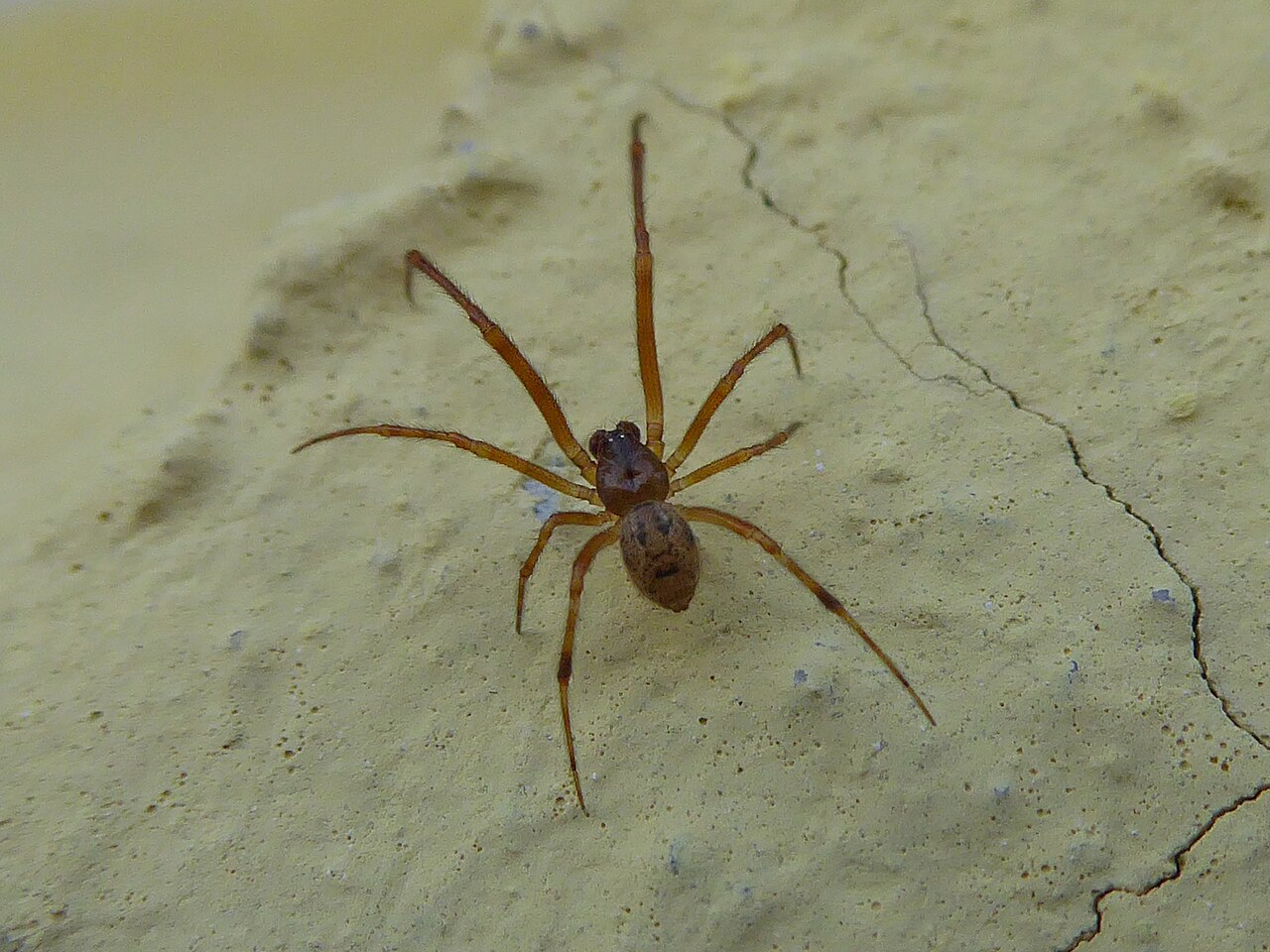
Spider Poop: What It Looks Like and How to Clean It
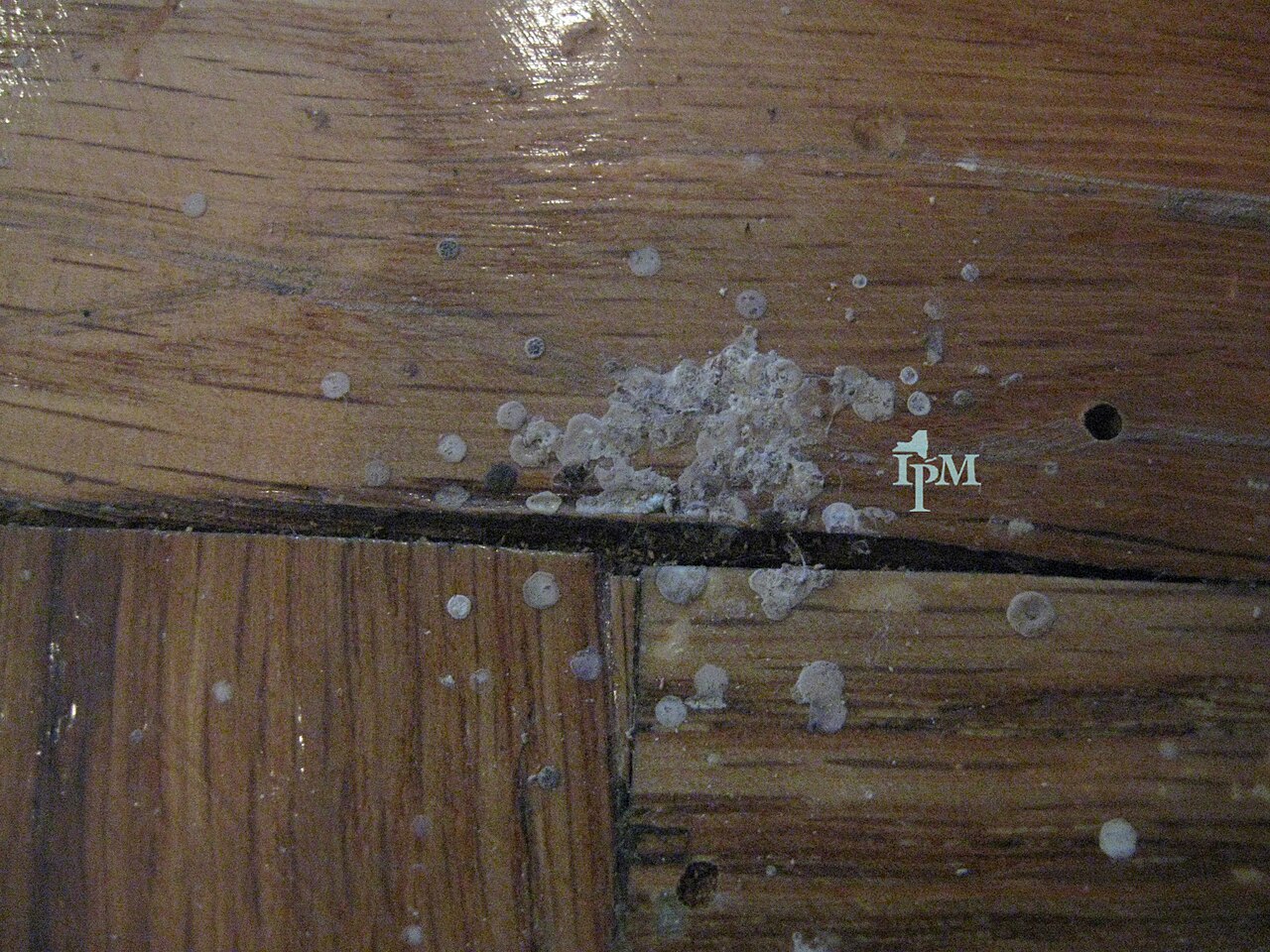
Spider poop looks like small dark specks or splatters, typically white, gray, or black, that appear on walls, windowsills, and floors directly beneath a web or a resting spot. It is not solid like mammal droppings; spiders excrete a semi-liquid paste that lands as a drip and then dries into a hard spot resembling a splash of ink or a drop of paint. Individual marks are usually a millimeter or two across, though they build into visible clusters and streaks over weeks in a spot a spider uses regularly.
Most people discover spider droppings without knowing what they are, noticing a scatter of dark flecks in a corner, along a baseboard, or on a white windowsill and assuming it is dirt, mold, or the work of a much larger animal. This guide covers what spider poop actually looks like, why it is the color it is, how to tell it from mouse droppings and mold, whether it stains or poses a health risk, how to clean it off different surfaces, and what its presence says about the spiders in your house.
Spider poop is a semi-liquid excretion that dries into small dark specks or splatters, usually white, gray, or black, about one to two millimeters across. It accumulates on walls, windowsills, and floors directly below a web. Unlike mouse droppings it is flat and splattered rather than solid and pellet-shaped, and it can permanently stain painted surfaces and fabric.
| Feature | Spider Poop |
|---|---|
| Form | Semi-liquid drip that dries flat |
| Size | About 1 to 2 mm per mark |
| Color | White, gray, brown, or black |
| Where found | Directly below webs and resting spots |
| Texture when dry | Hard, crusty, adheres firmly |
| Vs mouse droppings | Flat splatter, not solid pellets |
| Health risk | Very low; can stain surfaces |
What Does Spider Poop Look Like?
Spider poop looks like a small splattered drop rather than a solid pellet, because spiders excrete a paste-like mixture of waste and water that falls and spreads on impact. A single mark is usually one to two millimeters across with an irregular outline, sometimes with a small tail or radiating splash where it struck a hard surface at an angle. Fresh droppings are slightly wet and glossy; dried ones are hard, crusty, and firmly stuck.
Color varies with diet and with the individual spider, ranging from chalky white through gray and brown to nearly black. The white component is guanine, the nitrogen waste compound spiders excrete instead of urea, which is the same substance that makes bird droppings white. Darker material is digested insect remains. Many spider droppings show both, appearing as a dark spot with a pale halo or as a mottled speck.
Placement is the strongest identification clue. Spiders excrete from wherever they sit, so the droppings appear in a scatter directly beneath a web, a corner, a light fixture, or a ceiling beam. A web-building spider that occupies one spot for weeks produces a visible cluster or vertical streak on the wall below it, sometimes a foot or more long. If you find dark specks on a wall and can locate a web directly above them, the identification is essentially settled.
Do Spiders Actually Poop?
Yes, spiders excrete waste, though the process differs from mammal digestion in important ways. Spiders cannot eat solid food. They inject digestive enzymes into prey, liquefy the tissue outside their own bodies, and then suck up the resulting fluid, leaving behind the drained husk. This means spider waste contains far less indigestible material than the droppings of an animal that swallows its food whole.
What remains is excreted through the anus as a combined waste product, mixing solid residue from digestion with nitrogenous waste processed by organs called Malpighian tubules. Spiders excrete guanine rather than urea because it requires very little water to eliminate, an important adaptation for small terrestrial animals that cannot afford to lose moisture. This is why spider droppings dry into a hard crust rather than staying soft.
The quantity is small. A house spider produces droppings only every few days, and the individual marks are tiny, so an accumulation visible from across a room represents weeks or months of occupation by one spider or by several using the same spot. Feeding frequency drives output, and a spider in a productive location near a light that draws insects will produce noticeably more than one in a dry corner.
Spider Poop vs Mouse Poop
Spider poop and mouse poop are confused frequently, and the difference is fundamental: spider droppings are flat splatters and mouse droppings are solid three-dimensional pellets. A mouse dropping is about a quarter inch long, dark, shaped like a grain of rice with pointed ends, and it can be picked up and rolled between gloved fingers. A spider dropping is a stain fused to the surface and cannot be picked up at all without scraping.
Quantity and distribution differ too. A single mouse produces 50 to 75 droppings a day, so a mouse problem means dozens of pellets appearing along walls, in drawers, under sinks, and near food within days. Spider droppings appear in a small localized cluster under a web and accumulate slowly. Finding forty pellets in a kitchen cabinet overnight is a rodent; finding a dozen specks on a bathroom wall over a month is a spider.
Getting this right matters for health reasons. Mouse and rat droppings can carry hantavirus, which is transmitted by inhaling dust from disturbed dry droppings, so rodent waste must never be swept or vacuumed dry. Spider droppings carry no comparable risk. The mouse poop guide covers rodent identification and the wet-cleanup method, and the bat poop vs mouse poop comparison covers the other dropping commonly mistaken for rodent sign.
Spider Poop vs Mold and Other Marks
Dark specks on a wall are often assumed to be mold, and the two do look similar at a glance in a bathroom or basement. The distinctions are texture and pattern. Mold grows outward as a fuzzy or powdery colony that spreads in an irregular patch and often has a musty smell, and it appears where moisture is present, on grout, damp drywall, and window frames with condensation. Spider droppings are discrete hard dots with clear boundaries between them, they do not spread, and they have no smell.
Cockroach droppings are another lookalike and are more important to identify correctly. Small roach species leave dark specks that can genuinely resemble spider marks, but roach droppings are solid, roughly cylindrical with ridges along the sides, and they are found in kitchens, behind appliances, and inside cabinets rather than on open wall surfaces below webs. A roach infestation also produces a distinctive musty odor.
Other candidates include fly specks, which look nearly identical to spider droppings and are found around windows and light fixtures, and are essentially impossible to tell apart without seeing the source. Bed bug fecal marks are small dark spots that smear into a rust-colored stain when wiped with a damp cloth, and they appear on mattress seams and headboards. The bed bug poop guide and the carpet beetle poop guide cover those household droppings in detail.
Does Spider Poop Stain?
Yes, spider droppings can stain permanently, and this is the main practical reason to remove them promptly. The guanine and digestive residue are mildly acidic and bond strongly to porous surfaces, so on flat or matte paint, unsealed wood, wallpaper, and fabric the mark can remain even after the physical deposit is scraped away. On light-colored walls the residual stain shows as a faint yellow or brown dot.
Hard, non-porous surfaces are far more forgiving. Glass, tile, sealed stone, gloss and semi-gloss paint, and metal release spider droppings cleanly with warm soapy water and a little patience. The dried deposit needs softening first; scrubbing a hard dry speck often scratches the finish before it lifts the mark. A few minutes with a damp cloth laid over the spot does most of the work.
Outdoor surfaces present the biggest problem. Spiders that build under eaves, on porch ceilings, on light fixtures, and around window frames produce persistent staining on siding and soffits, and the accumulation of droppings plus captured debris and old webs is what makes porch ceilings look grimy. Pressure washing handles it on durable surfaces, but on painted wood a soft brush with a mild detergent solution avoids stripping the finish.
How to Clean Spider Poop
To clean spider poop, soften the dried deposit first rather than scrubbing it dry. Dampen a cloth with warm water and a few drops of dish soap, hold it against the marks for a minute or two, then wipe with light pressure. Most droppings release once hydrated. For stubborn spots on hard surfaces, a plastic scraper or an old credit card lifts the deposit without scratching, and a magic eraser sponge works well on gloss paint and tile.
Painted walls need a gentler approach because aggressive scrubbing removes paint along with the mark, leaving a shiny patch that is more noticeable than the original spot. Work from the outside of the stain inward, use minimal pressure, and accept that on flat paint a faint mark may remain. For heavily marked areas, spot-priming and repainting is often less work than trying to restore the surface.
Fabric and upholstery respond to an enzymatic cleaner of the type sold for pet stains, applied and left to work before blotting. Do not rub, which spreads the residue into the fibers. For outdoor light fixtures and window frames, remove the old webs first with a brush or vacuum, then wash. Cleaning removes the scent and silk cues that lead spiders back to the same spot, so it also reduces recurrence.
What Does Spider Poop in Your House Mean?
Spider droppings in a house mean a spider has been living in that spot long enough to feed repeatedly there, which in turn means there are insects to catch. Spiders go where prey is, and a heavy accumulation of droppings in one area usually indicates a good hunting position: near a window that lets in light, around an outdoor fixture that draws moths, close to a door that admits flying insects, or in a basement with a damp-loving insect population.
The presence of spiders is generally beneficial. A single house spider consumes hundreds of insects a year, including flies, mosquitoes, and other pests, and common indoor species such as the American house spider and cellar spider are harmless to people. Removing spiders often produces a noticeable increase in flying insects. Most homes contain far more spiders than the occupants realize, hidden in basements, crawl spaces, attics, and behind furniture.
If you want fewer of them, address the insects rather than the spiders. Switch outdoor lights to yellow bug bulbs or motion sensors, repair torn screens, seal gaps around doors and windows, and reduce moisture in basements with a dehumidifier. Regular removal of webs discourages rebuilding in the same place. The University of California Statewide Integrated Pest Management Program (ipm.ucanr.edu) recommends exactly this exclusion-first approach over spraying, since insecticides do little against spiders and remove the predators keeping other pests down. The black house spider guide covers the common indoor species.
Is Spider Poop Dangerous?
Spider poop poses a very low health risk to humans. There is no known disease transmitted from spider droppings to people, no airborne hazard comparable to hantavirus in rodent waste or histoplasmosis in bat guano, and no parasite of concern. The realistic downsides are cosmetic staining and, in rare cases, allergic reaction in people already sensitive to household allergens.
That allergy angle is the one genuine consideration. Dried spider droppings, old webs, and the shed exoskeletons that accumulate in the same areas all break down into fine dust that becomes part of the general household allergen load, alongside dust mite waste and pet dander. For someone with asthma or dust allergies, keeping corners, basements, and window frames free of accumulated spider debris is worthwhile as part of general allergen control.
Basic hygiene is sufficient. Wear gloves if you prefer, wash your hands after cleaning, and use a damp cloth rather than dry sweeping to avoid raising dust, which is good practice for any household cleaning. There is no need for the respirator, disinfectant protocol, and sealed-bag disposal that rodent and bat droppings require.
Which Spiders Leave the Most Noticeable Droppings?
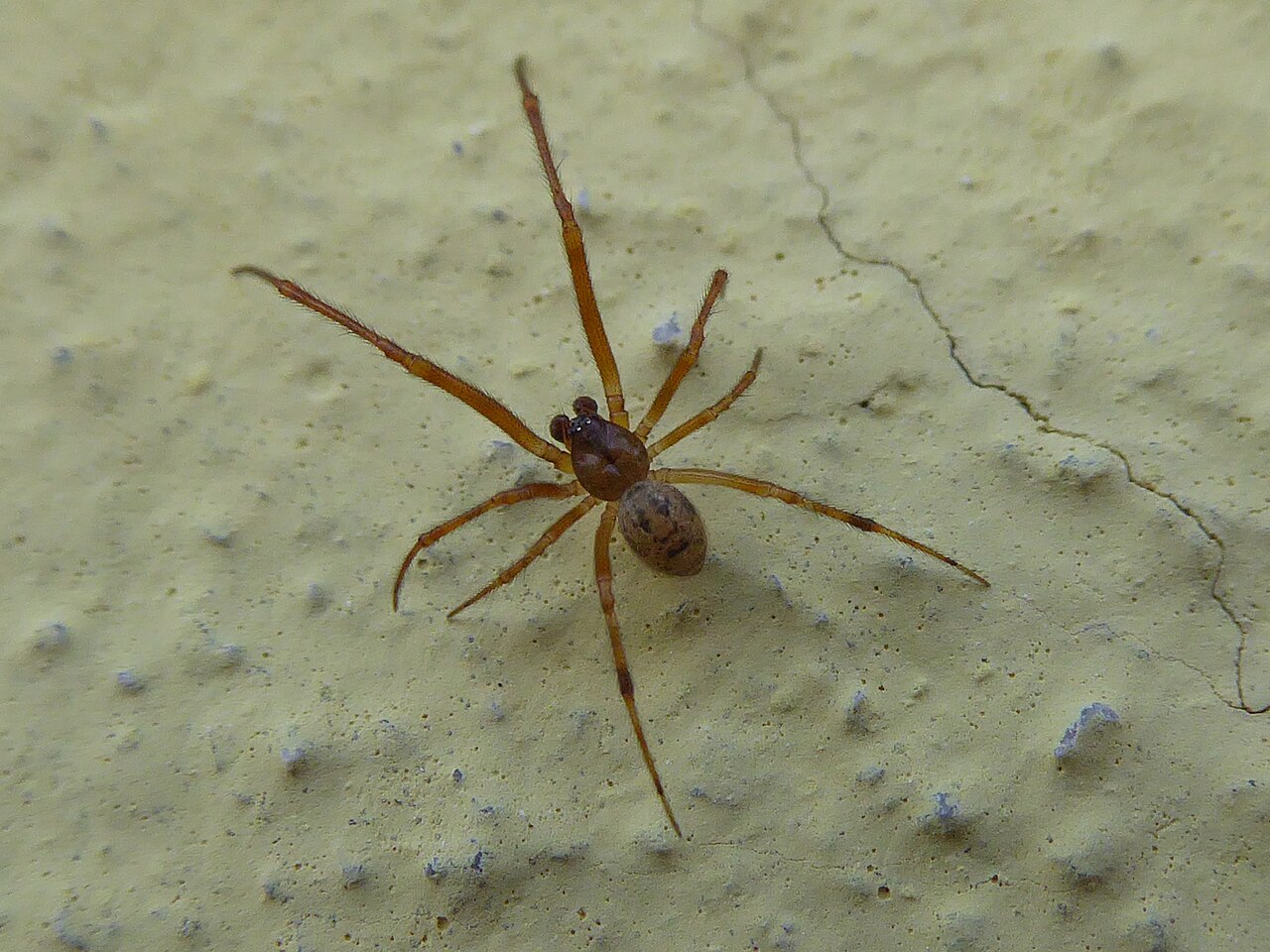
Web-building spiders that stay in one place produce the most visible accumulations, because all their droppings land in a single spot. Cellar spiders, the long-legged spiders that hang in loose tangled webs in basements, garages, and ceiling corners, are among the worst offenders in homes, since they occupy one location for months. The American house spider does the same in window corners and behind furniture.
Orb weavers produce concentrated marks outdoors, particularly the large garden and barn spiders that rebuild a web in the same frame each night on porches and around lights. Their droppings, combined with the wrapped remains of prey, are what makes a porch light area look dirty by late summer. These are also the spiders whose webs are most likely to catch and hold dust and insect debris.
Hunting spiders leave far less obvious sign because they move constantly. Wolf spiders, jumping spiders, and other active hunters do not maintain a fixed position, so their droppings are scattered thinly across a wide area and rarely accumulate visibly. Finding a concentrated cluster of droppings therefore tells you a web-builder is or was present, not a wandering hunter. The jumping spider guide and the grass spider guide cover the behavioral differences between the hunting and web-building groups.
Frequently Asked Questions
What does spider poop look like?
Spider poop is a small splattered mark about one to two millimeters across, white, gray, brown, or black, that dries hard and flat on the surface. It appears in clusters directly below a web or a spider’s resting spot.
Do spiders leave droppings?
Yes. Spiders excrete a semi-liquid waste containing guanine and digested residue, which drips and dries into a hard speck. Because spiders liquefy their prey externally and drink the fluid, their waste contains much less solid material than mammal droppings.
How can you tell spider poop from mouse poop?
Spider droppings are flat splatters fused to the surface. Mouse droppings are solid pellets about a quarter inch long with pointed ends that can be picked up. Mice also produce dozens of droppings daily, while spider marks accumulate slowly.
How big are spider droppings?
Individual marks are typically one to two millimeters across. They appear larger as clusters build up in one spot over weeks, sometimes forming a visible streak on the wall below a long-occupied web.
Is spider poop dangerous?
No known disease is transmitted from spider droppings to humans, and there is no airborne hazard like that from rodent or bat waste. The main issues are permanent staining and a minor contribution to household allergen dust.
Does spider poop stain?
Yes, permanently on porous surfaces such as flat paint, unsealed wood, wallpaper, and fabric. On glass, tile, and gloss paint it removes cleanly with warm soapy water once the deposit has been softened.
How do you remove spider poop?
Soften the mark with a damp soapy cloth held against it for a minute, then wipe gently. Use a plastic scraper for stubborn spots on hard surfaces and an enzymatic cleaner on fabric. Avoid dry scrubbing, which damages paint.