What Is a Group of Butterflies Called? Kaleidoscope and More
A group of butterflies is called a kaleidoscope, and that is the term most people are looking for. A group of butterflies is also called a flutter, a swarm, a rabble, and a flight, and when butterflies gather on wet ground to drink minerals the behavior is called puddling and the group is a puddle club. A cluster of overwintering monarchs hanging together in a tree is called a roost or a colony, which is the only one of these terms scientists actually use.
Kaleidoscope is a modern coinage rather than a medieval one, and it works for an obvious reason: a kaleidoscope produces shifting patterns of color, which is exactly what a group of butterflies in flight looks like. The word kaleidoscope itself was invented in 1817 for the optical toy, so the collective noun cannot be older than that. This guide covers every term for a group of butterflies, sorts the genuine ones from the invented ones, and describes the mass gatherings butterflies really do form.
A group of butterflies is called a kaleidoscope, the most widely cited term. Other names include a flutter, a swarm, a rabble, and a flight. Butterflies gathered on damp ground to drink minerals form a puddle club, and overwintering monarchs clustered in trees form a roost or colony, which is the term scientists use.
| Situation | Term |
|---|---|
| General group | Kaleidoscope |
| Other listed terms | Flutter, swarm, rabble, flight |
| Drinking minerals on wet ground | Puddle club (puddling) |
| Overwintering monarch cluster | Roost or colony |
| Group of caterpillars | Army |
| Group of eggs | Clutch or cluster |
| Origin of kaleidoscope | Modern; the toy was invented in 1817 |
Why Is a Group of Butterflies Called a Kaleidoscope?
A group of butterflies is called a kaleidoscope because a mass of butterflies in flight produces exactly the effect the optical instrument does: shifting, overlapping patterns of bright color that rearrange constantly as the insects move. The word was coined by the Scottish physicist David Brewster in 1817 from Greek roots meaning beautiful form watcher, so the collective noun must postdate that and belongs firmly to the modern tier of these terms.
This puts kaleidoscope alongside a flamboyance of flamingos and a waddle of penguins rather than alongside a murder of crows. The medieval terms of venery covered game animals that English hunters needed to discuss, and butterflies were of no interest to them. Later writers extended the tradition to species the original compilers ignored, and the appealing ones stuck. Kaleidoscope is now in dictionaries and reference works and is the answer expected in a quiz.
A flutter of butterflies is the main alternative and is nearly as common online. It is descriptive in the same way, referring to the irregular, bobbing flight that distinguishes butterflies from the direct flight of bees and flies. That flight pattern is not clumsiness; it makes butterflies far harder for birds to catch than a straight-line flier would be, and species with the most erratic flight tend to be those most exposed to predators.
What Is a Puddle Club?
A puddle club is a group of butterflies gathered on damp soil, mud, sand, or the edge of a puddle to drink, and puddling is the genuine scientific term for the behavior. It is one of the few butterfly aggregations that is real and observable in an ordinary yard or on a woodland trail, and it can involve anywhere from a few individuals to several hundred densely packed insects covering a patch of wet ground.
The butterflies are not drinking water for thirst. They are extracting dissolved sodium and other minerals, which are scarce in nectar and essential for reproduction. Puddle clubs are made up overwhelmingly of males, and the sodium collected is passed to the female during mating as part of a nutrient package called a spermatophore, which she then uses in egg production. This is why a puddling group is nearly all one sex, a detail that surprises most people who watch one.
Butterflies also puddle on less appealing substrates for the same reason, including animal dung, carrion, urine-soaked soil, and sweat, which is why a butterfly will sometimes land on a person on a hot day. Swallowtails, sulphurs, blues, and skippers are the most frequent puddlers in North America. The black swallowtail guide and the eastern tailed blue guide cover two of the species most likely to be in a roadside puddle club.
What Is a Monarch Roost?
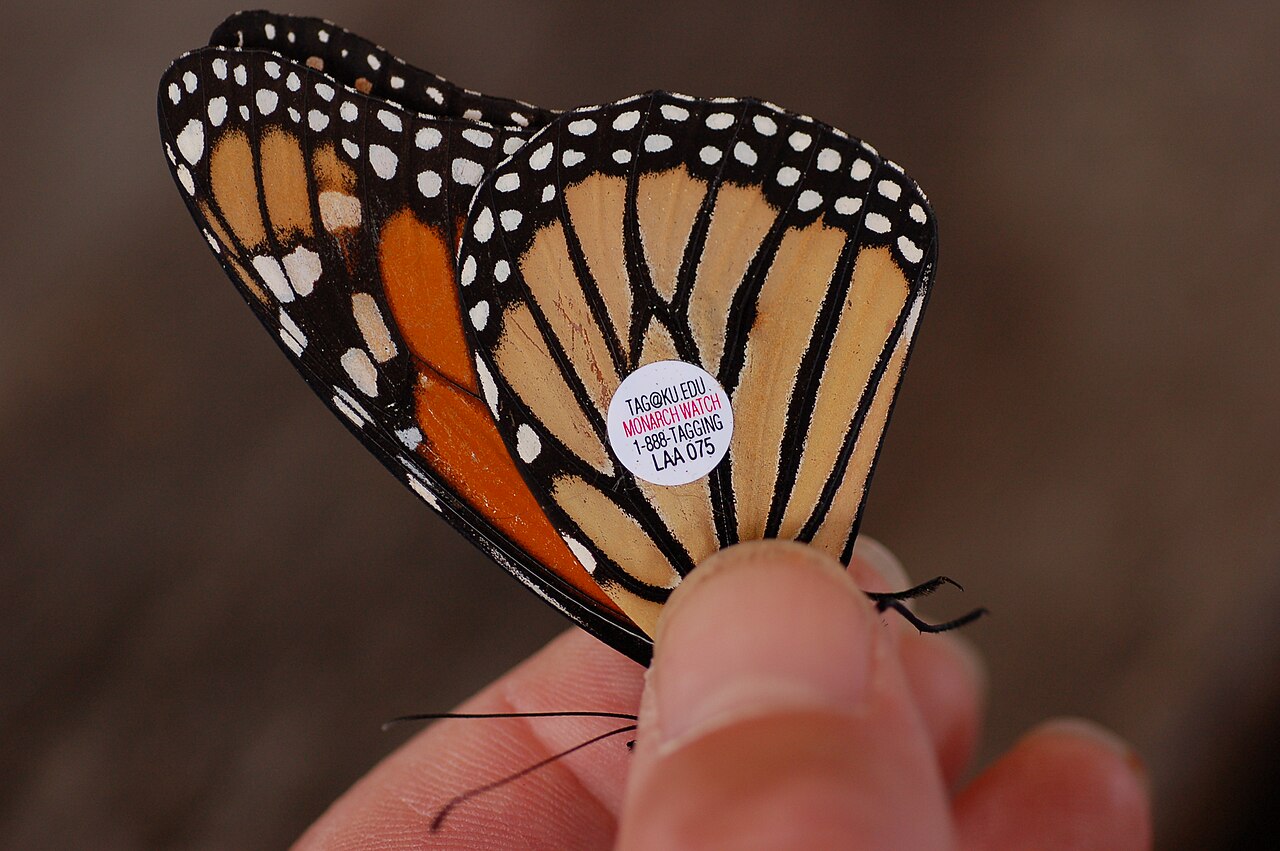
A monarch roost is a cluster of monarch butterflies gathered on a tree, and it is the largest and most famous butterfly aggregation in the world. Eastern monarchs migrate up to 3,000 miles from Canada and the United States to a small area of oyamel fir forest in the mountains of central Mexico, where they spend the winter packed onto tree trunks and branches in densities that can reach tens of millions of butterflies across a few acres.
The clustering is thermoregulation. At the roost sites, at elevations around 10,000 feet, temperatures stay cool enough to keep the butterflies in a low-energy state without freezing them, and the dense clusters buffer temperature swings and shed rain. Branches sag under the weight, and a tree can look brown and dead until the butterflies open their wings in the sun and the whole thing turns orange.
Western monarchs overwinter separately in eucalyptus and pine groves along the California coast, in far smaller numbers. Both populations have declined dramatically: the eastern population is measured in hectares of occupied forest, down from around 18 hectares in the 1996 to 1997 season to figures often below 2 hectares in recent years, and the western population collapsed to under 2,000 individuals in 2020 before partially recovering. Habitat loss, milkweed decline, pesticides, and climate disruption are the main drivers, and the monarch caterpillar guide covers the milkweed dependency at the heart of the problem.
Is a Group of Butterflies Called a Swarm?
Swarm is listed as a collective noun for butterflies and is not wrong, but it carries connotations that fit bees and locusts better than butterflies. A swarm implies a dense, purposeful, and slightly threatening mass, which is a poor description of most butterfly gatherings. That said, migrating butterflies genuinely do move in numbers that justify the word.
Painted lady migrations are the most spectacular example. In good years, painted ladies migrate from North Africa across Europe to Britain and Scandinavia in the hundreds of millions, and the equivalent North American movements from Mexico into the southwestern United States can produce sustained streams of butterflies crossing highways for days. In 2019 European radar studies tracked painted lady movements at altitudes over 1,000 feet, invisible from the ground.
A rabble of butterflies is another listed term and is the least flattering, suggesting a disorderly crowd. Flight of butterflies appears in some sources as well. None of these has any standing in entomology, where the working vocabulary is aggregation, roost, colony, and puddling group. If you want one answer, kaleidoscope; if you want to sound like a scientist, describe what the butterflies are doing instead. The painted lady guide covers the species behind the largest butterfly movements.
What Is a Group of Caterpillars Called?
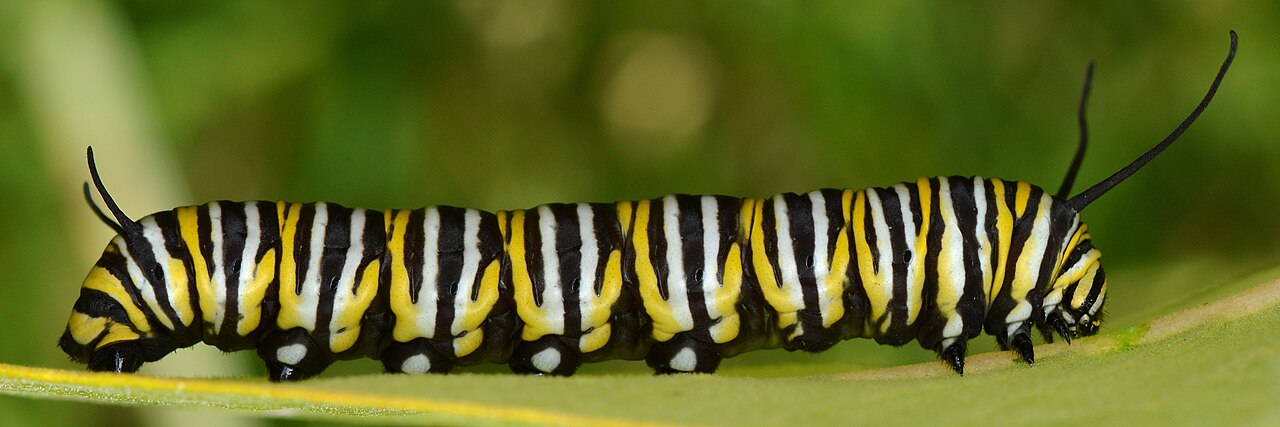
A group of caterpillars is called an army, the same term used for frogs, and it fits several species that genuinely move and feed in coordinated groups. Eastern tent caterpillars build communal silk tents in the forks of cherry and apple trees and emerge together to feed, returning to the tent between meals. Fall webworms enclose entire branch tips in webbing and feed inside it. Both produce visible, sometimes alarming masses in spring and late summer.
Group living gives caterpillars real advantages. A cluster of caterpillars can raise its body temperature above ambient by basking together, speeding development, and mass feeding overwhelms a plant’s chemical defenses more effectively than solitary feeding. Many gregarious caterpillars are also aposematic, meaning brightly colored and distasteful, and a large group makes the warning signal more effective than a lone individual would.
Not all caterpillars group. Monarch, swallowtail, and most large moth caterpillars feed alone, and some are territorial, driving off others that approach their leaf. Processionary caterpillars in Europe take group behavior furthest, moving head to tail in long single-file lines, and their irritating hairs are a genuine health hazard to people and dogs. The fuzzy caterpillar guide covers the hairy species people most often ask about.
Do Butterflies Live in Groups?
No, butterflies are not social insects and do not live in groups. This distinguishes them sharply from bees, wasps, ants, and termites, which have queens, castes, division of labor, and cooperative brood care. A butterfly has no colony, no nest, no shared young, and no relationship with other butterflies except during mating. Adults live a few weeks in most species and spend that time feeding and reproducing alone.
Every butterfly gathering is therefore an aggregation around a resource rather than a society. Puddle clubs form where minerals are available. Roosts form where the microclimate is right. Feeding concentrations form on a flowering shrub or a fallen fruit. Migrating streams form because many individuals are responding to the same cues at the same time, not because they are traveling as a coordinated group. Remove the resource and the group disperses immediately.
Some species do form small overnight communal roosts outside of migration, with heliconians in the tropics being the best studied. These butterflies return to the same perch night after night, sometimes for months, and there is evidence they recognize and follow specific individuals. Heliconians are also unusual in living for months rather than weeks and in feeding on pollen as well as nectar, which is what makes the longer lifespan possible.
How Do Butterfly Aggregations Compare With Moths?
Moths aggregate under different conditions and get their own collective noun, an eclipse of moths, which is a modern invention playing on their attraction to light and the shadow they cast around a lamp. The most familiar moth gathering is the cloud of individuals circling a porch light, which is not social behavior at all but a navigational failure: moths orient using distant light sources such as the moon, and an artificial light close by causes them to spiral inward.
Some moth species form real aggregations. Bogong moths in Australia migrate to alpine caves in the millions and pack the rock walls through summer in a manner similar to monarch roosts, and the aggregations were historically an important seasonal food source for Aboriginal peoples. Their numbers have crashed in recent years, and the species was listed as endangered in 2021.
Male moths also concentrate around a calling female, sometimes in dozens, drawn by pheromones detectable at distances of a mile or more with the feathery antennae that give many male moths their distinctive appearance. This is competition rather than congregation. The moth vs butterfly comparison covers the anatomical and behavioral differences between the two groups, which are less clear-cut than most people assume.
Collective Nouns for Butterflies and Other Insects
Insect collective nouns split cleanly between the genuinely social species and everything else. Bees get a swarm, a hive, and a colony, all of which describe real structures with queens and workers. Ants get a colony or an army, again accurate. Termites get a colony. These are functional terms used by entomologists because the groups genuinely exist as organized units.
The non-social insects get fanciful terms instead. Butterflies get a kaleidoscope, moths an eclipse, dragonflies a flight or a cluster, grasshoppers a cloud, ladybugs a loveliness, and mosquitoes a scourge. None of these describes a social structure, because none exists. Ladybugs are the interesting middle case, since they genuinely form dense overwintering aggregations of thousands in rock crevices and, unhelpfully, in houses.
Kaleidoscope survives because it is a good word applied to something worth naming. Butterfly gatherings are among the most visually striking events in nature, from a roadside puddle club of forty swallowtails to a Mexican hillside holding tens of millions of monarchs, and no functional term captures that. The Xerces Society (xerces.org), which coordinates much of the monitoring behind monarch population figures, uses roost and colony in its work, but kaleidoscope is what the rest of us are going to keep saying. For the folklore side of butterfly encounters, the butterfly lands on you guide covers the symbolism.
Frequently Asked Questions
What is a group of butterflies called?
A group of butterflies is called a kaleidoscope, the most widely cited term. Other names include a flutter, a swarm, a rabble, and a flight. Scientists use aggregation, roost, or colony depending on the situation.
Is a group of butterflies called a flutter?
Yes, flutter is a recognized alternative to kaleidoscope and describes the irregular bobbing flight that distinguishes butterflies from bees and flies. That erratic flight makes them harder for birds to catch.
Why is a group of butterflies called a kaleidoscope?
Because a mass of butterflies in flight creates shifting patterns of overlapping color, exactly like the optical toy. The kaleidoscope was invented in 1817, so the collective noun is modern rather than medieval.
What is a cluster of monarch butterflies called?
A roost or a colony. Eastern monarchs overwinter in oyamel fir forests in central Mexico, where tens of millions cluster on trees for warmth, and western monarchs roost in coastal California groves.
What is it called when butterflies gather on wet ground?
Puddling, and the group is a puddle club. The butterflies are extracting sodium and minerals, not drinking water, and puddle clubs are made up almost entirely of males, who pass the minerals to females during mating.
What is a group of caterpillars called?
An army. Several species genuinely feed in groups, including eastern tent caterpillars and fall webworms, which build communal silk shelters. Grouping helps them raise body temperature and overwhelm plant defenses.
Do butterflies live in groups?
No. Butterflies are not social insects and have no colonies, castes, or cooperative brood care. Every gathering is an aggregation around a resource such as minerals, a roost site, or flowers, and it disperses when the resource is gone.