Should I Kill a Black Widow Spider?
If a black widow spider is somewhere people or pets regularly pass, killing or safely removing it is a reasonable precaution, since its venom is medically significant and worth taking seriously, unlike most household spiders. If it’s in an undisturbed spot like a garage corner, woodpile, or shed rarely used, leaving it alone or relocating it outdoors is also a defensible choice, since black widows are shy and avoid contact.
The decision genuinely depends on location and household risk factors more than any blanket rule, and black widows are unusual among spiders precisely because the “just leave it alone” advice that applies to most house spiders needs real qualification here. This guide covers the actual risk, what attracts them, and how to handle an encounter safely either way.
Whether to kill a black widow depends on location: in high-traffic areas like doorways, closets, or near a bed, removal is a reasonable precaution given its medically significant venom. In undisturbed spots like a garage corner or woodpile, leaving it alone is defensible since black widows are shy and avoid contact. They rarely bite unless directly pressed against skin, and bites, while painful, are very rarely fatal to healthy adults.
| Situation | Reasonable Response |
|---|---|
| In a doorway, closet, or near a bed | Remove or kill |
| Undisturbed garage corner, woodpile, shed | Leave alone or relocate outdoors |
| Home with young children or pets nearby | Lean toward removal |
| Bite risk to healthy adult | Painful, rarely fatal, treatable |
| Behavior when undisturbed | Shy, avoids contact, does not chase |
Should You Kill a Black Widow Spider?
It depends on where it is, not on the species alone. A black widow found in an active, frequently used space, a doorway, a closet you reach into regularly, near a child’s play area, or close to where someone sleeps, is reasonable to remove given the genuine medical significance of its venom.
A black widow in an undisturbed spot, the back corner of a garage, an unused woodpile, a rarely opened shed, poses far less real risk, since these spiders are notably shy and reclusive, building a web and staying near it rather than wandering into living spaces looking for contact with people.
Households with young children, whose reactions to venom can be more severe relative to their smaller body size, or with pets that investigate corners and crevices with their nose or paws, reasonably lean toward removal even in less-trafficked areas, since the risk calculation shifts with who else uses the space.
Does Seeing One Mean There Are More?
Often, yes. Black widows tend to favor similar conditions, dark, undisturbed, cluttered spaces with stable temperatures, and finding one is a reasonable prompt to check nearby areas with similar characteristics, woodpiles, storage boxes, under furniture in a garage, rather than assuming the sighting was an isolated event.
Egg sacs are the more concrete evidence to look for. A single female can produce multiple silk egg sacs over a season, each containing dozens to hundreds of eggs, so finding a web with an attached round, papery sac is a stronger indicator of an established population than a single adult sighting alone.
A thorough check of the immediate area, rather than a single wide search of the whole property, is the more practical approach, since black widows are typically found in clusters around favorable conditions rather than distributed evenly across a space. The spider poop identification guide covers another sign of ongoing spider activity in a space.
What Happens If You Squish a Black Widow?
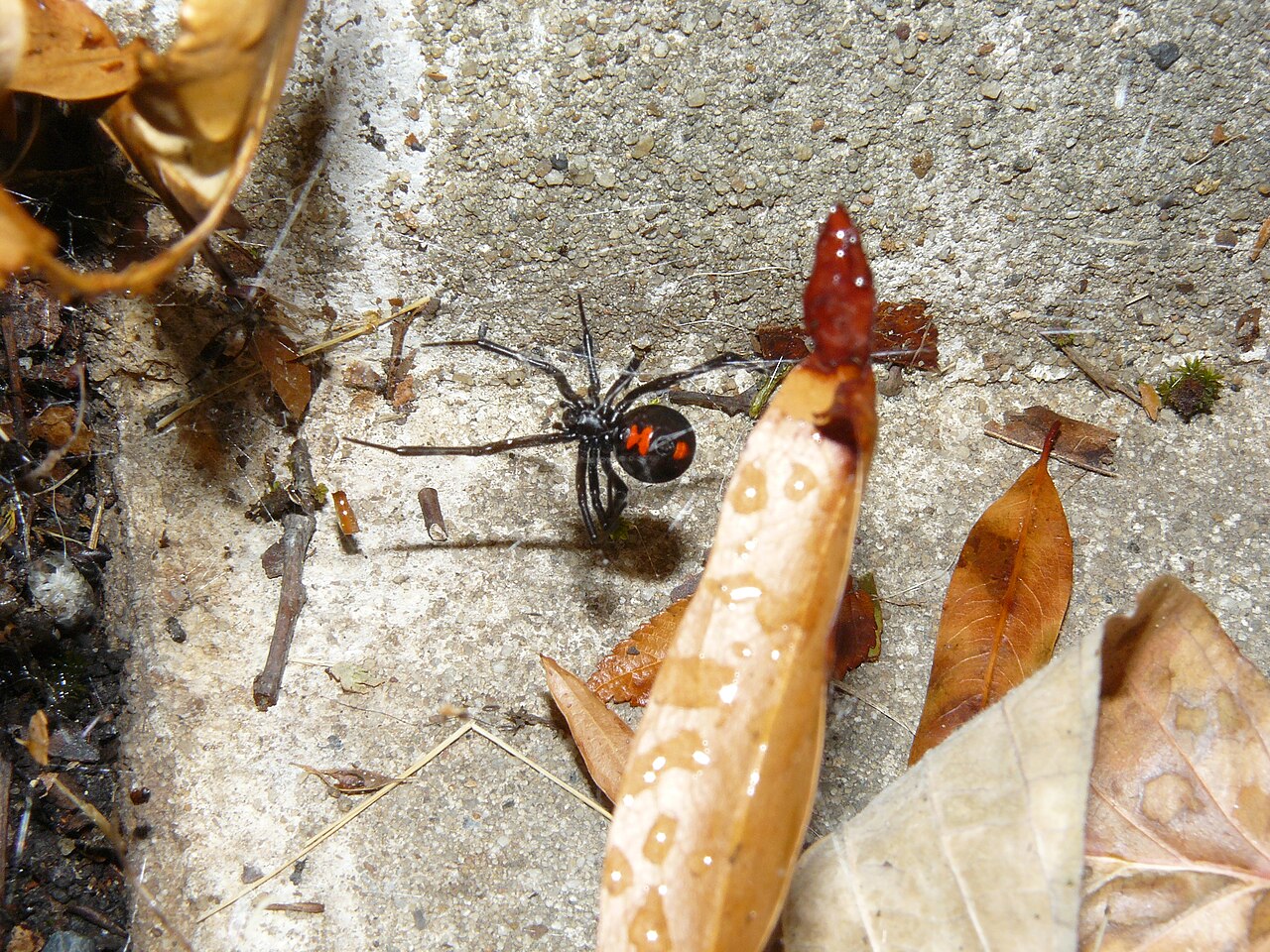
Physically, nothing dangerous happens from squishing one directly, unlike the myth surrounding some other arthropods where crushing supposedly releases something harmful; a black widow’s venom is delivered only through an active bite, not through contact with a crushed body.
The practical risk during the act of squishing comes from proximity rather than the aftermath: getting close enough to strike effectively means being within range of a defensive bite if the spider reacts before being killed, which is why an indirect method, a shoe on a long-handled broom, or a vacuum, is often safer than a direct hand approach.
If squishing by hand feels necessary, using a shoe, book, or other solid object rather than bare skin, and approaching from an angle the spider is not facing, reduces the already-low but real chance of provoking a defensive bite during the attempt.
Will a Black Widow Bite You While You’re Sleeping?
It’s uncommon but not impossible if a spider has taken up residence somewhere near a bed, such as under a bed frame, in bedding stored nearby, or in an adjacent closet, and gets pressed against skin during normal movement in sleep.
Black widows do not seek out sleeping people as prey or targets; bites near a bed happen because a person’s body accidentally traps or presses the spider, triggering a defensive response, the same mechanism behind most black widow bites in any setting.
Checking bedding, shoes, and stored items in a bedroom closet periodically, particularly in regions with an established black widow population, is a reasonable precaution, along with keeping bed frames and nearby storage areas decluttered, since clutter is exactly the kind of undisturbed space black widows favor.
Do Black Widows Go in Beds?
Rarely, and not by preference. Black widows favor dark, undisturbed corners with stable conditions, which describes a cluttered closet or garage far better than an actively used bed that gets moved, sat on, and slept in every night, offering little of the stability this species prefers.
A black widow found in bedding has usually wandered in from an adjacent space, storage under the bed, a nearby closet, or items recently brought in from a garage or shed, rather than choosing the bed itself as an ideal habitat over more typical hiding spots.
Reducing clutter directly around and under a bed, along with inspecting items before bringing them inside from a garage, shed, or outdoor storage area, addresses the actual pathway spiders use to end up near sleeping areas more effectively than treating the bed itself as the primary concern.
Will a Black Widow Spider Chase You?
No, chasing behavior does not occur in this species. Black widows are shy and defensive rather than aggressive, and their typical response to disturbance is to retreat toward their web or a nearby hiding spot rather than pursue whatever disturbed them.
Bites happen almost exclusively when a spider is directly pressed against skin, trapped in clothing, or physically handled, situations where it has no option to retreat and reacts defensively, rather than during casual proximity or after being merely noticed nearby.
This shy, retreat-first behavior is consistent with most spider species generally and is part of why simply giving a spotted black widow space, rather than approaching or attempting to touch it, is enough to avoid an encounter in the vast majority of sightings.
Will a Black Widow Kill a Dog?
It can, particularly a small dog, though fatal outcomes are uncommon with prompt veterinary treatment. Dogs and cats can be more sensitive to black widow venom relative to their body size than an adult human, and symptoms including muscle rigidity, tremors, and difficulty breathing can develop within hours of a bite.
Any pet showing sudden severe pain, muscle stiffness, vomiting, or labored breathing after a suspected spider bite warrants immediate veterinary attention rather than a wait-and-see approach, since antivenom and supportive treatment are considerably more effective when administered promptly.
Outdoor cats and dogs that investigate woodpiles, garages, and dense vegetation with their nose face somewhat higher exposure risk than pets kept strictly indoors, which is worth factoring into how carefully those areas get checked and cleared in households with curious pets.
What Attracts Black Widows to a House?
Clutter and undisturbed storage are the main draw: cardboard boxes, woodpiles, garages, sheds, and rarely moved outdoor furniture all offer the dark, stable, low-disturbance conditions black widows favor for building a web and staying put.
An abundant insect population nearby also matters, since black widows, like most spiders, go where prey is available, and outdoor lighting that attracts flying insects at night can indirectly draw spiders looking to build a web nearby to take advantage of that food source.
Reducing clutter, sealing gaps around foundations and garage doors, and periodically disturbing and inspecting storage areas rather than leaving them completely undisturbed for long stretches all reduce the conditions that make a space attractive in the first place.
How Do You Tell a Black Widow From Other Spiders?
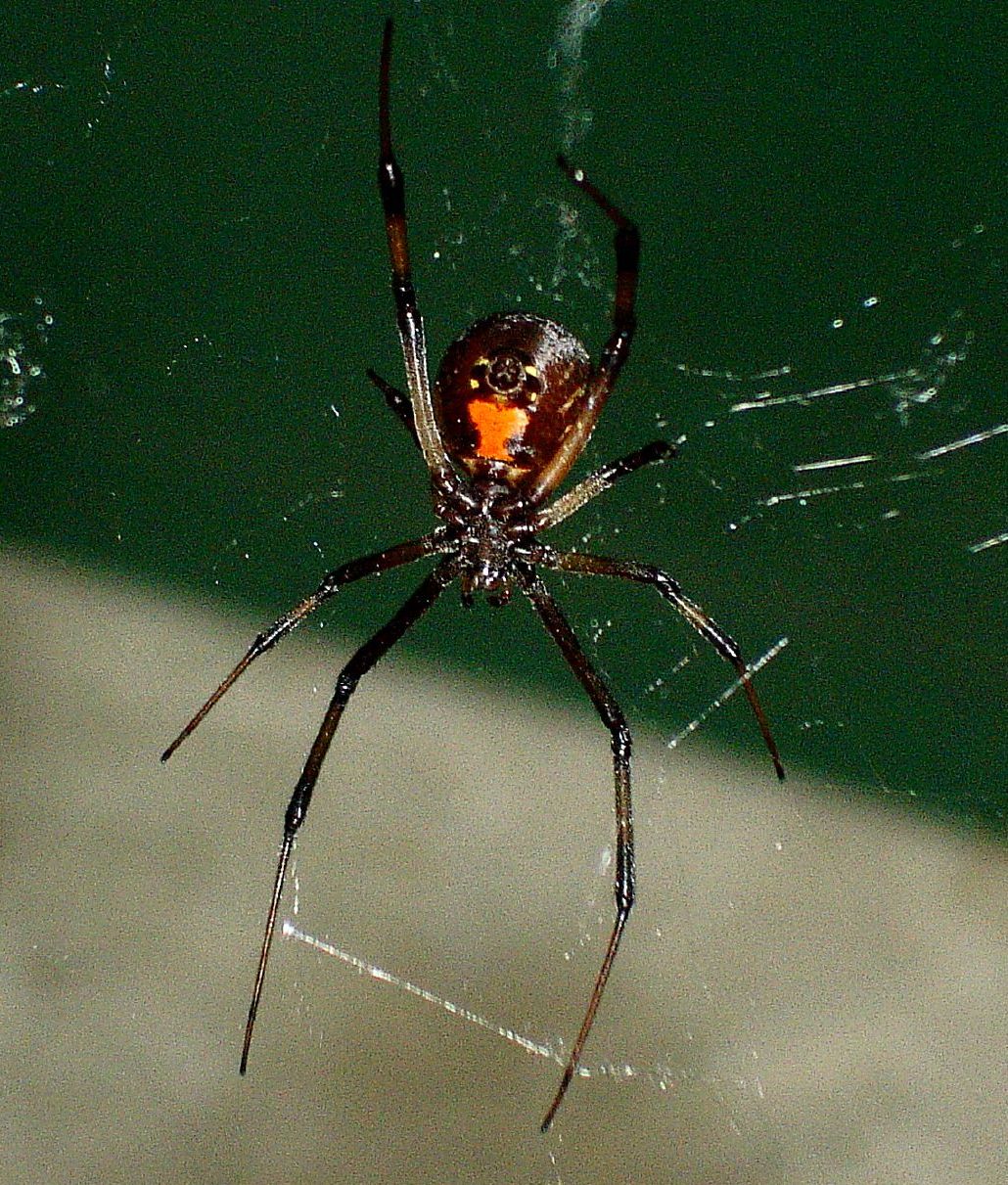
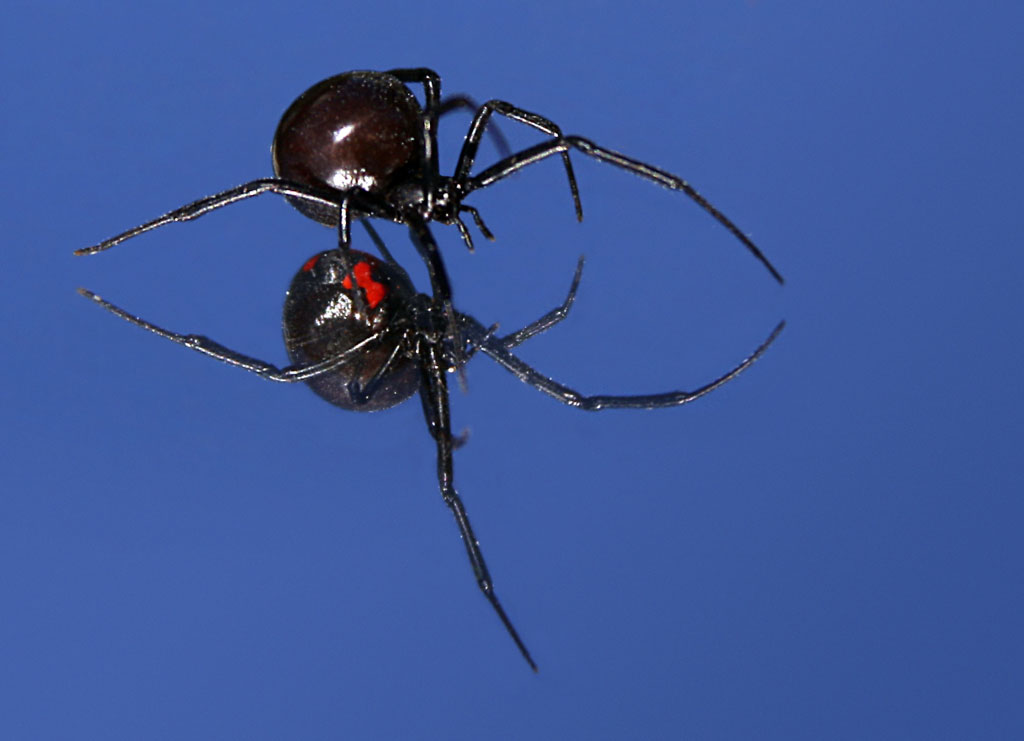
The glossy black body with a red hourglass marking on the underside of the abdomen is the identifying feature, present on adult females, which are the larger, more venomous sex and the one people are almost always referring to when discussing black widow risk.
Males and juveniles look quite different, smaller, lighter in color, and often patterned rather than solid black, which means an unfamiliar small spider found in the same habitat is not automatically a black widow just because of general size or dark coloring alone.
The web itself offers a secondary clue: black widows build irregular, tangled, sticky webs low to the ground in corners and crevices, distinct from the neat orb webs of garden spiders or the funnel-shaped webs of grass spiders. The brown recluse vs house spider guide covers the other medically significant spider commonly confused with harmless house species.
What Should You Do If You Find One?
Assess the location first rather than reacting immediately. A black widow in an undisturbed corner poses low risk and can reasonably be left alone or relocated with an indirect tool; one in an active space warrants prompt removal given the venom’s medical significance.
If removal is the choice, an indirect method, a vacuum, a jar and piece of paper for capture and release outdoors, or a long-handled tool, keeps distance between hands and the spider throughout the process, minimizing already-low bite risk further.
For a household with repeated sightings suggesting an established population rather than a single individual, a pest control professional experienced with black widows can address the broader issue more thoroughly than repeated individual removals, particularly around a foundation or in an attached garage. The guide to what spiders eat, wolf spider vs brown recluse guide, and jumping spider guide cover related spider identification and behavior.
Frequently Asked Questions
Should you kill a black widow spider?
Depends on location. In active living spaces, removal is reasonable given the venom’s significance. In undisturbed corners, leaving it alone or relocating it is defensible.
Are black widow bites usually fatal?
No, rarely, in healthy adults with treatment. Bites are painful and can cause serious symptoms, but fatalities are uncommon with prompt medical care.
Will a black widow chase you?
No. They are shy and defensive, retreating toward their web when disturbed rather than pursuing whatever disturbed them.
Does seeing one black widow mean there are more?
Often, since they favor similar conditions in the same area. Checking nearby dark, cluttered spots and looking for egg sacs is a reasonable next step.
What attracts black widows to a house?
Clutter and undisturbed storage, garages, woodpiles, and sheds, along with a nearby insect population they can feed on.
Can a black widow bite kill a dog?
It can, especially in small dogs, though it’s uncommon with prompt veterinary treatment. Seek immediate care for any suspected bite symptoms.