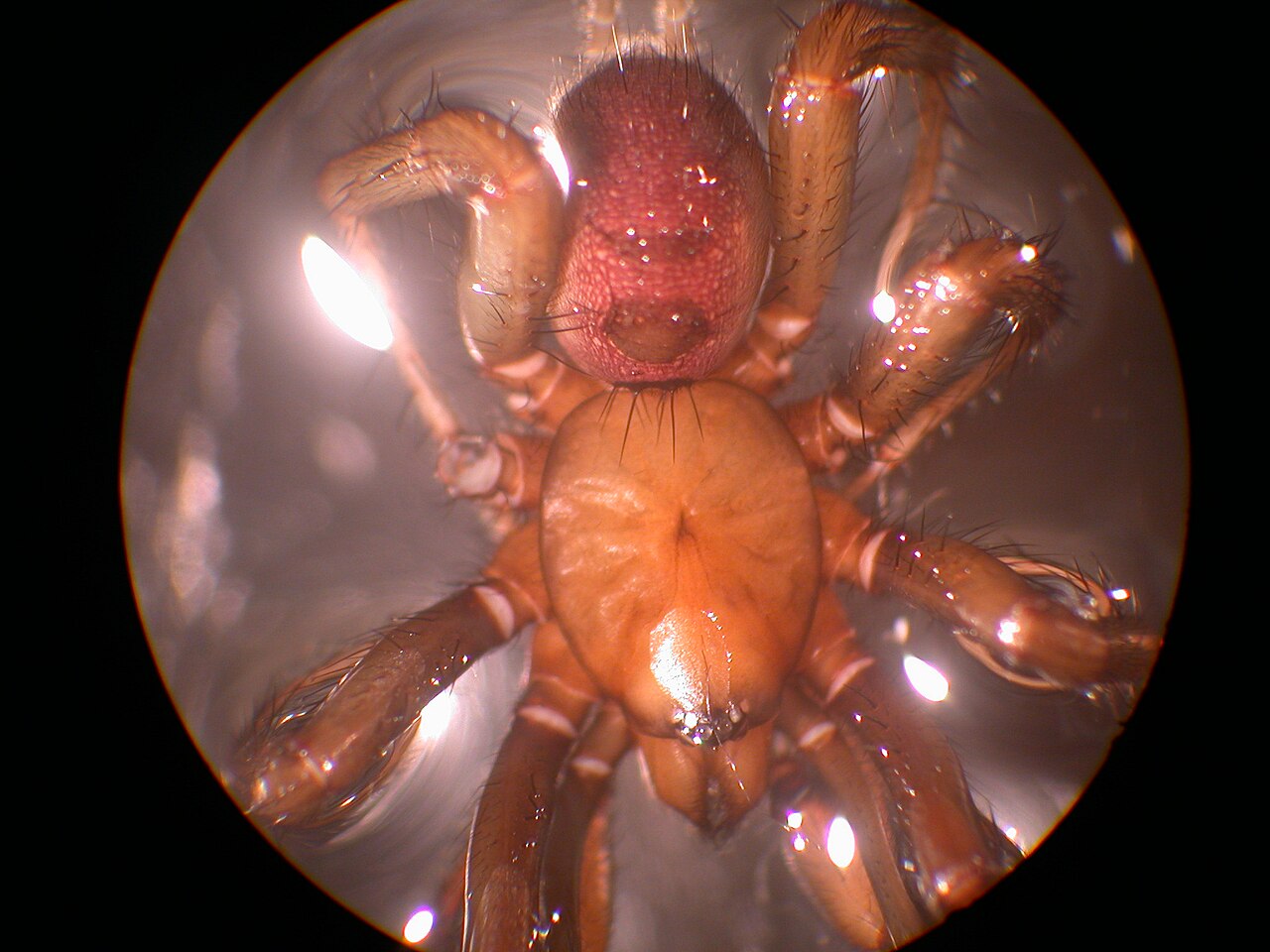
Purple Spider: 6 Species With Violet Bodies and What They Can Do
A purple spider is almost never purple all over. In the United States the handful of species that earn the name are glossy black or dark brown animals that throw a violet sheen when light hits them at the right angle, and the vividly purple spiders in photographs are tropical tarantulas kept as pets. Knowing which of the two you are holding a phone over settles the only question that matters first: whether it can hurt you.
The short answer on danger is reassuring. None of the purple or purple sheened spiders found outdoors in the US is medically significant. The worst outcome from the native species is a bite comparable to a bee sting, and the tropical ones only reach people through the pet trade. What follows works through the species you are most likely to be looking at, how to separate the two confusing US lookalikes, and why purple is such a rare color in spiders to begin with.
True purple spiders are rare. In the US, purple usually means the red legged purseweb spider (Sphodros rufipes) or a folding door spider (Antrodiaetus), both dark bodied with a violet iridescence and both harmless. Solidly purple spiders such as the purple pinktoe tarantula live in the tropics and reach the US only as pets.
| Feature | Red legged purseweb (Sphodros rufipes) | Folding door spider (Antrodiaetus unicolor) |
|---|---|---|
| Body color | Glossy black with a strong purple sheen | Matte purplish brown, no shine |
| Legs | Bright red to orange, unmistakable on males | Same color as the body |
| Body length | Females to about 0.9 in (22 mm), males about 0.5 in (13 mm) | 0.3 to 0.6 in (8 to 15 mm) |
| Range | Southeastern states north to New Jersey and west to Texas | Eastern forests from Alabama to New England |
| Home | Vertical silk tube against a tree trunk | Burrow in soil or moss with a collapsible rim |
| When you see it | Males wandering in daylight, late spring to summer | Males wandering at night in autumn |
| Risk to people | Bite painful, no lasting effect | Bite trivial, rarely attempted |
Are There Spiders That Are Purple?
Yes, but the number is small and the purple is usually structural rather than painted on. Spider cuticle and body hairs carry very few purple pigments, so the color that reaches your eye is produced by layered nanostructures in the hairs that cancel out other wavelengths. Turn the animal, and the purple slides toward blue, bronze or plain black.
That is why a spider can look genuinely violet in a flash photograph and dull brown in your hand ten seconds later. Only a few tarantulas, chiefly in the genera Avicularia, Poecilotheria and Lampropelma, hold their purple under almost any light. None of them is native to North America.
The same optical trick produces the other unusual spider colors people search for, from a blue spider to the iridescent patches on common jumpers. Pigment based colors in spiders run to browns, yellows, reds and greens, which is why a pink spider is also far more often a trick of light than a dye.
Red Legged Purseweb Spider (Sphodros rufipes)

This is the most likely answer to a purple spider sighting in the eastern half of the country. The body is hard, shiny and black with a clear purple cast in sunlight, the legs are bright red orange, and the two forward pointing fangs are large enough to see without a lens. Males wander openly on sidewalks and driveways in late spring, which is when almost all reports come in.
Females live their whole lives inside a silk tube that runs up the base of a tree, camouflaged with bark and soil. Prey walking across the outside of the tube is bitten through the silk wall and pulled in. The species belongs to the mygalomorphs, the same ancient branch as tarantulas and trapdoor spiders, which explains the heavy build.
Bites happen when a wandering male is picked up. They hurt, they can leave two visible puncture points from those long fangs, and they produce no systemic symptoms. Wash the site and leave it alone.
Folding Door Spiders (Antrodiaetus)
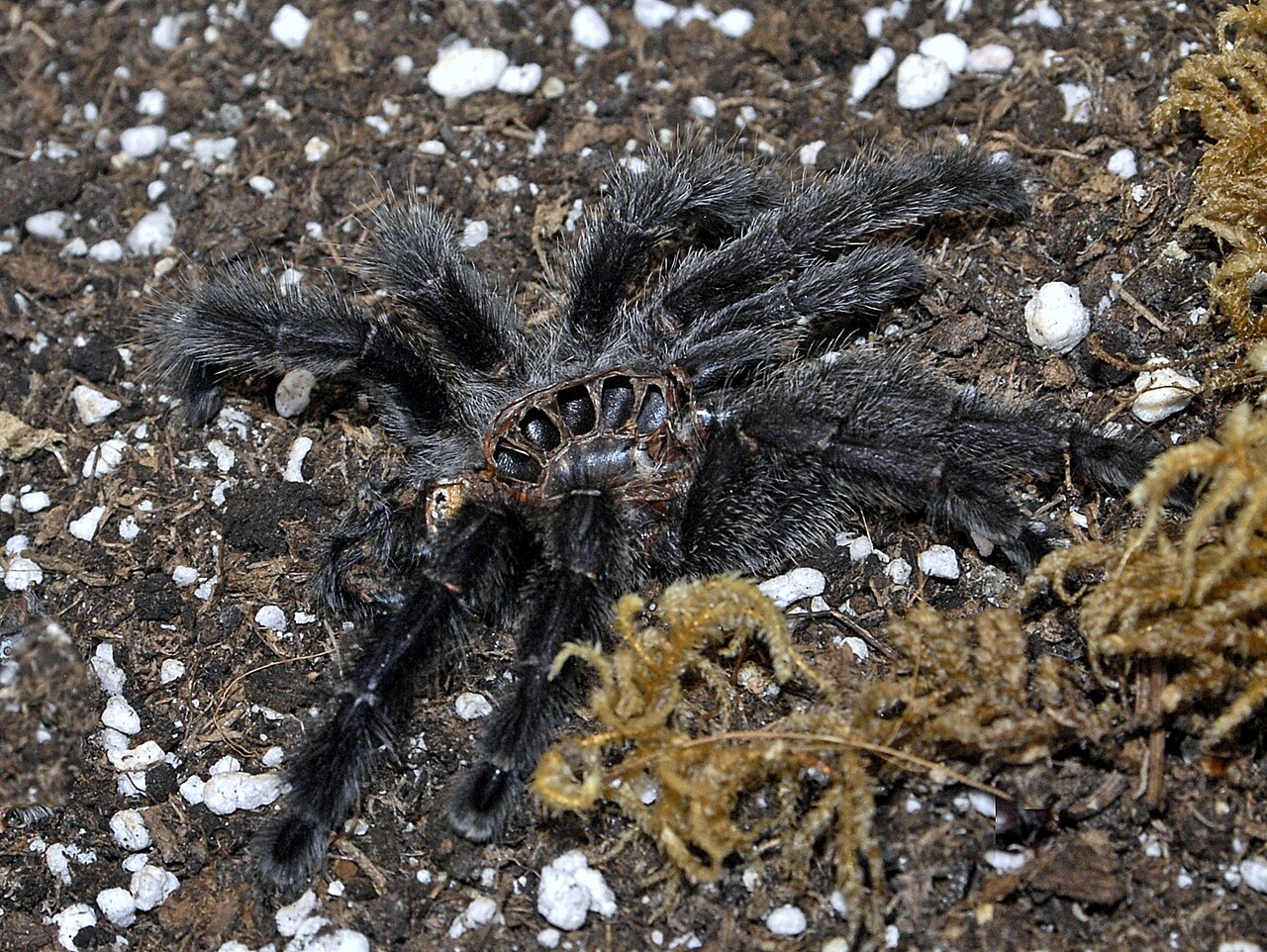
Several Antrodiaetus species across the eastern and Pacific states are plainly purplish brown, with Antrodiaetus unicolor the one most often found. They are stocky, short legged and velvety rather than shiny, and the abdomen carries a few hardened plates on top that no other dark US spider of this size shows.
Their burrows end in a silk rim that the spider pulls shut like a pair of double doors, which is where the name comes from. You will find them under logs, in moss and on shaded forest banks, and the males turn up in basements in autumn when they leave to look for mates.
These are slow, reluctant spiders. They would rather fold up the burrow and wait than bite, and the fangs are short enough that a bite on a fingertip often fails to break skin.
Purple Pinktoe Tarantula (Avicularia purpurea)
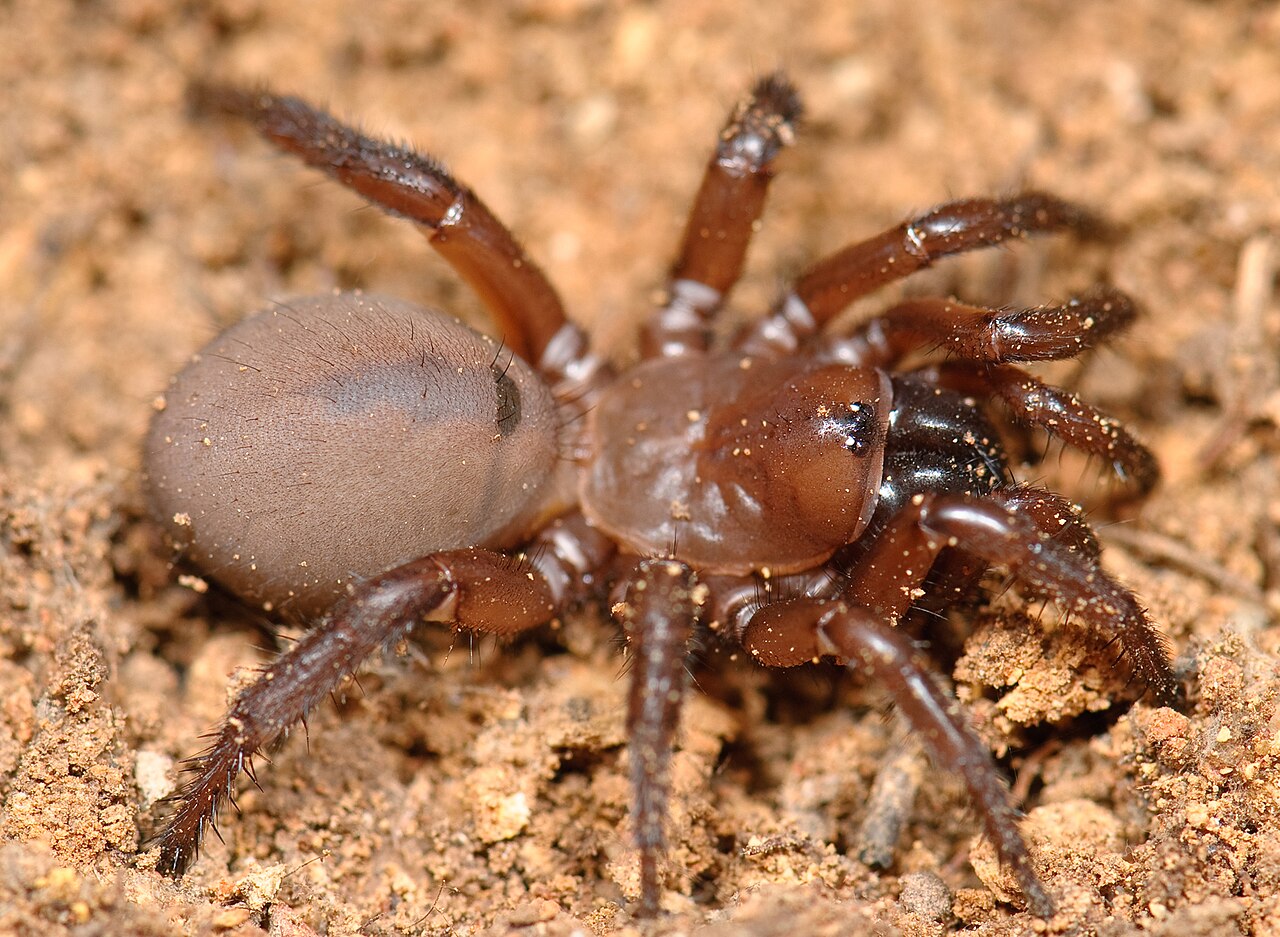
Here is the animal behind most purple spider images online. Native to Ecuador, this arboreal tarantula carries a deep metallic violet over the carapace and legs with pale toe pads, and a leg span of 4 to 5 in (10 to 13 cm). Adults keep the color; spiderlings are darker and develop it with each molt.
In the pet trade it has a reputation for being skittish rather than aggressive. Like other New World tarantulas it defends itself first by flicking urticating hairs from the abdomen, which cause itching and watering eyes rather than any real injury, and by jumping away from a hand.
No Avicularia lives wild in the United States. A purple tarantula loose in an American yard is an escaped or released pet, which is worth reporting to a local nature center rather than relocating yourself.
Gooty Sapphire Ornamental (Poecilotheria metallica)
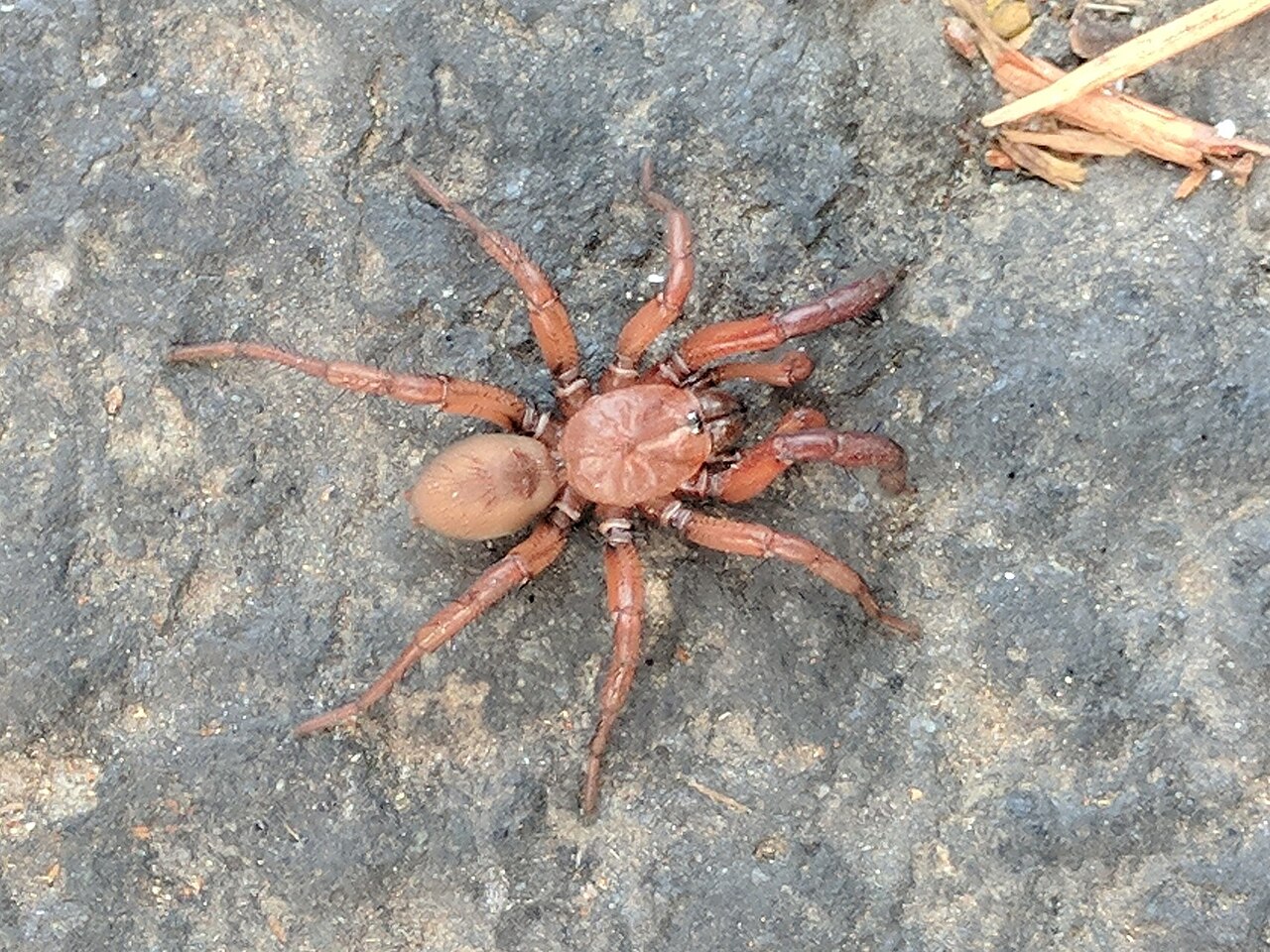
The most spectacular purple blue spider in the world comes from a single small forest patch in central India and is classed as critically endangered in the wild. Leg span reaches 6 to 8 in (15 to 20 cm), and the violet blue is strong enough to look artificially saturated in photographs.
This one deserves a safety caveat the others do not. Poecilotheria venom is considered medically significant among tarantulas, with reports of severe local pain and muscle cramping that can last for days. It is fast, arboreal and defensive, and it is not a beginner animal.
Nearly every specimen in private hands is captive bred, which matters for a species whose wild population sits inside a few square miles of degraded woodland.
Singapore Blue (Lampropelma violaceopes)
Despite the name, mature females of this Southeast Asian tarantula read as violet more often than blue, with males leaning gunmetal. Leg span can approach 9 in (23 cm), making it one of the largest purple toned spiders kept in captivity.
It lives in tree hollows on Singapore and peninsular Malaysia and spends daylight hours out of sight. Keepers describe it as quick to retreat and quick to threaten, with the same cramping bite profile reported across the Asian arboreal tarantulas.
For identification purposes the point is simple. A huge, leggy, uniformly violet tarantula is an Old World species from a terrarium, never something that walked in from an American woodlot.
Bold Jumping Spider (Phidippus audax) and Purple Flash
Look closely at a common bold jumper and the mouthparts gleam green, blue or violet depending on the angle. The body is black with white markings and the animal is only 0.3 to 0.6 in (8 to 15 mm) long, but a macro photo of those chelicerae is one of the most frequent reasons people conclude they have found a purple spider.
Jumping spiders are the best candidates for this confusion because they are diurnal, they sit in the open, and they let photographers get close. Several Phidippus species show the same iridescence, as do a number of the small black and white spiders found on house walls.
They are entirely harmless and worth watching. A bold jumper will turn to track your finger from several inches away, which is unnerving and completely benign.
What Gets Mistaken for a Purple Spider
Dark cobweb spiders in the genus Steatoda sit at the top of the list. They are glossy, rounded and often photographed with a purplish cast indoors, and they are the spiders most often mistaken for black widows as well. Ground spiders in the genus Trachelas have a reddish brown carapace that photographs plum colored under LED light.
The second group is not spiders at all. Velvet mites, harvestmen, purple iridescent beetles and springtails all get submitted to identification forums as purple spiders. Counting legs and body segments sorts most of them in one glance, and the usual suspects are covered under bugs that look like spiders.
Third, background color bleeds. A pale crab spider sitting on a purple aster, or any spider on a dyed fabric, picks up the hue in the photo. Shoot against a neutral surface before deciding on a color.
Are Purple Tarantulas Venomous?
All spiders with functioning fangs are venomous, including every tarantula, but venomous is not the same as dangerous. New World purple species such as Avicularia purpurea cause local pain and swelling at worst. Old World species including Poecilotheria metallica and Lampropelma violaceopes can trigger hours of intense pain and muscle cramps that occasionally lead to a hospital visit.
No tarantula bite has ever been confirmed as the cause of a human death. Fangs can certainly pierce skin, since a large species carries fangs up to 0.4 in (10 mm) long, so the honest risk from a big Asian tarantula is a very bad day rather than a lasting injury.
Urticating hairs cause more trouble in practice than venom. Hairs flicked into an eye have required ophthalmic treatment, which is why keepers of New World species wash their hands and keep their faces back during maintenance.
What Color Is a Poisonous Spider?
There is no color code, and the two US spiders worth respecting are not purple. The black widow (Latrodectus mactans) is glossy black with a red hourglass underneath, and the brown recluse (Loxosceles reclusa) is plain tan with a darker violin shape behind the eyes and only six eyes rather than eight. Both are described in detail by the Smithsonian and by state extension services.
Spiders are also venomous rather than poisonous, since nothing happens if you eat one. Bright warning colors are a strategy used by insects, not by spiders, whose colors serve camouflage and courtship instead. The warning yellow of a black and yellow garden spider is aimed at birds that have already learned the web is not worth flying through.
If a spider bite develops a spreading sore, a blister that darkens, fever or severe cramping, that is a reason to see a clinician regardless of what color the spider was.
Where to Look for Purple Spiders in the US
For Sphodros rufipes, check the lower 3 ft (0.9 m) of hardwood trunks in the Southeast for silk tubes that look like bark gone slightly wrong, and watch open pavement on warm afternoons in May and June for wandering males. For Antrodiaetus, roll logs on a shaded eastern forest slope and look for a burrow rim ringed with moss.
Both are easier to find during the male wandering season, which is why sighting reports cluster so tightly in the calendar. Native tarantulas in the genus Aphonopelma do occur across the southwestern and south central states, from California to Arkansas, but they are brown and black animals with no purple species among them.
Color hunting pays off better with insects, where pigment does the work and holds up in any light. A purple butterfly keeps its color in your hand, while a purple spider usually hands it back to the sun.
Frequently Asked Questions
Are there spiders that are purple?
Yes, though very few. A small number of tropical tarantulas including Avicularia purpurea and Poecilotheria metallica are genuinely violet, and two groups of US spiders, pursewebs and folding door spiders, carry a purple sheen over a dark body. No North American spider is uniformly purple.
Is a purple spider poisonous?
No purple spider is poisonous, and none of the purple toned species found outdoors in the US is dangerous. A red legged purseweb bite hurts and then stops. Bites from the Asian purple tarantulas kept as pets can cause hours of pain and cramping, but they are not life threatening.
Do blue spiders exist?
They do, by the same optical route. Poecilotheria metallica and several peacock jumping spiders in the genus Maratus produce blue from nanostructures in their hairs rather than from pigment. Blue and purple frequently trade places in photographs of the same individual depending on the light and the camera.
Why do spiders stop moving when you look at them?
They are reacting to your shadow and the vibration of your footsteps, not to your gaze. Freezing is a cheap defense that works against predators hunting by motion, and many spiders hold still for a minute or more. Some go further and drop from the web with legs folded.
Can a tarantula penetrate human skin?
Yes. A large adult carries fangs up to about 0.4 in (10 mm) long, enough to leave two clean punctures in a finger. The mechanical injury is usually the lesser problem compared with the venom of Old World species, and no tarantula bite can break bone or tendon.
What is a tarantula’s worst enemy?
The tarantula hawk, a large wasp in the genus Pepsis, which paralyzes a tarantula and seals it in a burrow with an egg. Coatis, skunks, snakes and parasitic flies take a share as well, and in dry country other tarantulas account for a surprising number of deaths.