Wood Frog: The Frog That Freezes Solid Every Winter
The wood frog (Lithobates sylvaticus) is the only frog in North America that lives north of the Arctic Circle, and it survives winter by letting up to 65 percent of the water in its body turn to ice. Its heart stops, its brain activity stops, and weeks later it thaws out and hops away.
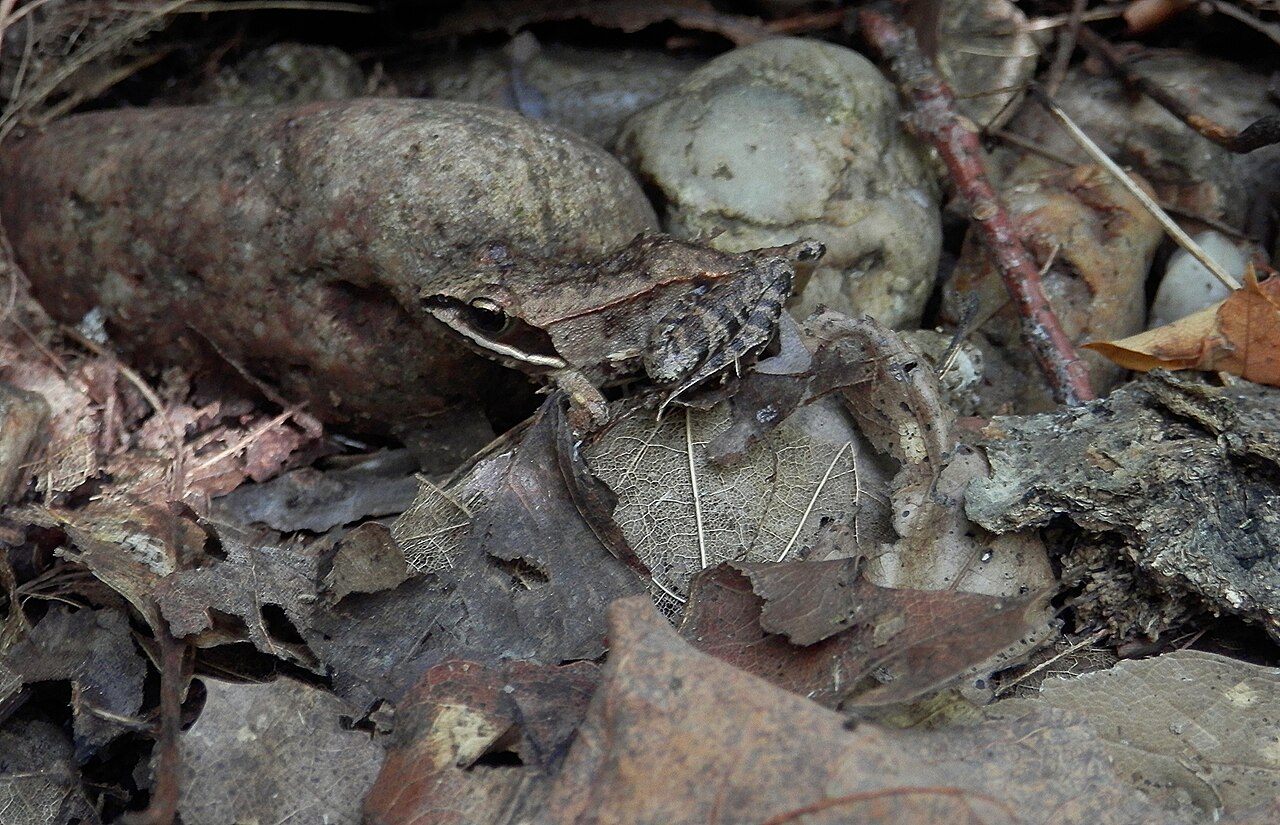
Outside of that single spectacular trick, the wood frog is an ordinary looking brown frog about 2 to 3 inches (5 to 8 cm) long with a dark mask across each eye. It is one of the earliest breeders of the year, and in much of the northern United States the chorus from a snowmelt pool in March is the first real sign of spring.
Wood frogs are 1.5 to 3.25 inch (4 to 8 cm) brown frogs with a black eye mask, found from Georgia to Alaska. They freeze solid each winter, stopping their heart and breathing, then thaw in spring. They are harmless to touch, not venomous, and breed in temporary woodland pools before the ice fully melts.
| Quick fact | Wood frog (Lithobates sylvaticus) |
|---|---|
| Size | 1.5 to 3.25 in (4 to 8 cm), females larger |
| Range | Georgia and Alabama north to Alaska and the Arctic Circle |
| Key marking | Dark robber mask from snout through the eye |
| Winter strategy | Freezes solid, glucose and urea act as antifreeze |
| Call | Clucking quack, often compared to a duck or chicken |
| Lifespan | 3 to 5 years in the wild |
What Is Special About Wood Frogs?
What is special about wood frogs is freeze tolerance: they are one of a handful of vertebrates on Earth that can be frozen solid and come back. Alaskan wood frogs have been recorded surviving body temperatures near 0 F (minus 18 C) for weeks at a time, with no heartbeat, no breathing, and no measurable brain activity.
The second distinction is range. No other North American frog reaches as far north, and no other frog in the continent tolerates as wide a temperature span across its distribution. A population in the Georgia mountains and a population on the Alaskan tundra belong to the same species.
Why Do Wood Frogs Freeze?
Wood frogs freeze because they overwinter on land under leaf litter rather than at the bottom of a pond, and a shallow forest floor offers no protection from hard frost. Most frogs that hibernate underwater avoid ice entirely; the wood frog instead evolved to survive it.
The mechanism is chemical. As ice begins to form in the skin, the liver floods the bloodstream with glucose and urea, which act as cryoprotectants inside the cells. Ice is allowed to fill the body cavity and the spaces between cells, but the sugar loaded cells themselves never crystallize, so the tissue is not shredded from the inside. On thawing, the heart restarts first and the rest of the body follows over several hours. Research summarized by the National Park Service found Alaskan wood frogs cycling through freeze and thaw episodes repeatedly in a single winter.
How to Identify a Wood Frog
Look for the mask. A dark brown or black patch runs from the snout through the eye and past the eardrum, ending abruptly at the shoulder, and it contrasts against a tan, pinkish, rusty, or chocolate body. No other frog in the eastern United States pairs that mask with a plain, unspotted back.
Two pale dorsolateral ridges run down the sides of the back, and a white stripe marks the upper lip. Compare with a leopard frog, which is heavily spotted and has no mask, or a green tree frog, which has toe pads for climbing that the wood frog lacks. Wood frogs are ground animals with long jumping legs and no adhesive discs.
Where Wood Frogs Live
Wood frogs live in moist deciduous and mixed woodland, tundra, muskeg, and willow thickets, spending most of the year away from open water. Adults forage through leaf litter for beetles, spiders, slugs, snails, and flies, and they can turn up hundreds of yards from the nearest pond.
Breeding depends on vernal pools, the temporary woodland ponds that fill with snowmelt and dry out by midsummer. Because these pools hold no fish, the tadpoles escape their main predator, and this is why wood frog populations collapse when small unnamed wetlands are filled or drained even though the surrounding forest is left standing.
Are Wood Frogs Venomous or Safe to Touch?
Wood frogs are not venomous, and they are safe to touch. They produce mild skin secretions that deter some predators, but nothing that injures human skin and nothing comparable to the alkaloid toxins of a blue poison dart frog. There is no species of frog in North America that can poison you by contact.
The caution runs the other way. Amphibian skin absorbs whatever is on your hands, so sunscreen, insect repellent, soap residue, and salt all harm the frog. If you must handle one, wet your hands with pond water first, keep it brief, and wash afterward, since frogs and their water can carry Salmonella.
Wood Frog Sounds and Early Spring Breeding
The wood frog call is a short, rough clucking that sounds more like a duck or a distant chicken than a typical frog, and a full chorus carries a quarter mile. It is one of the first amphibian voices of the year, often starting while snow still lines the edge of the pool.
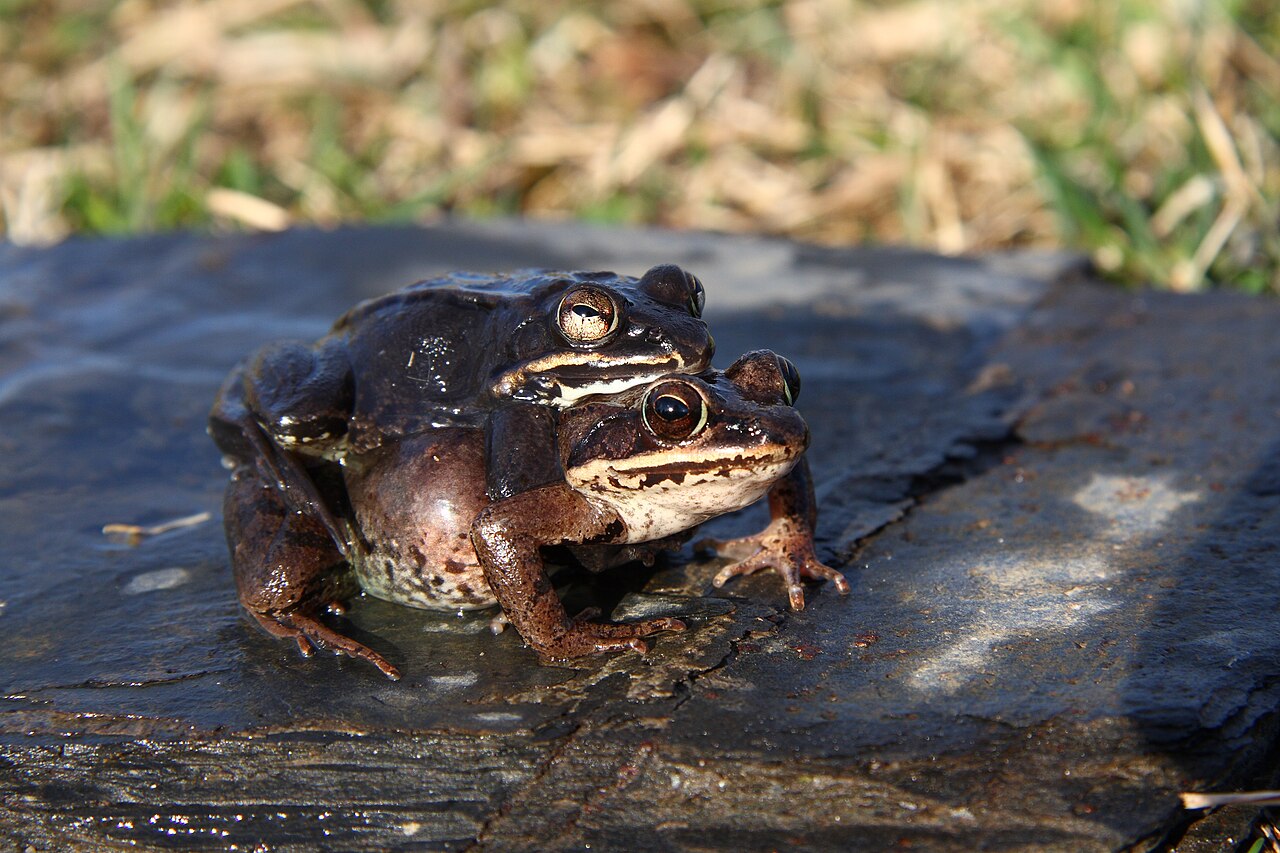
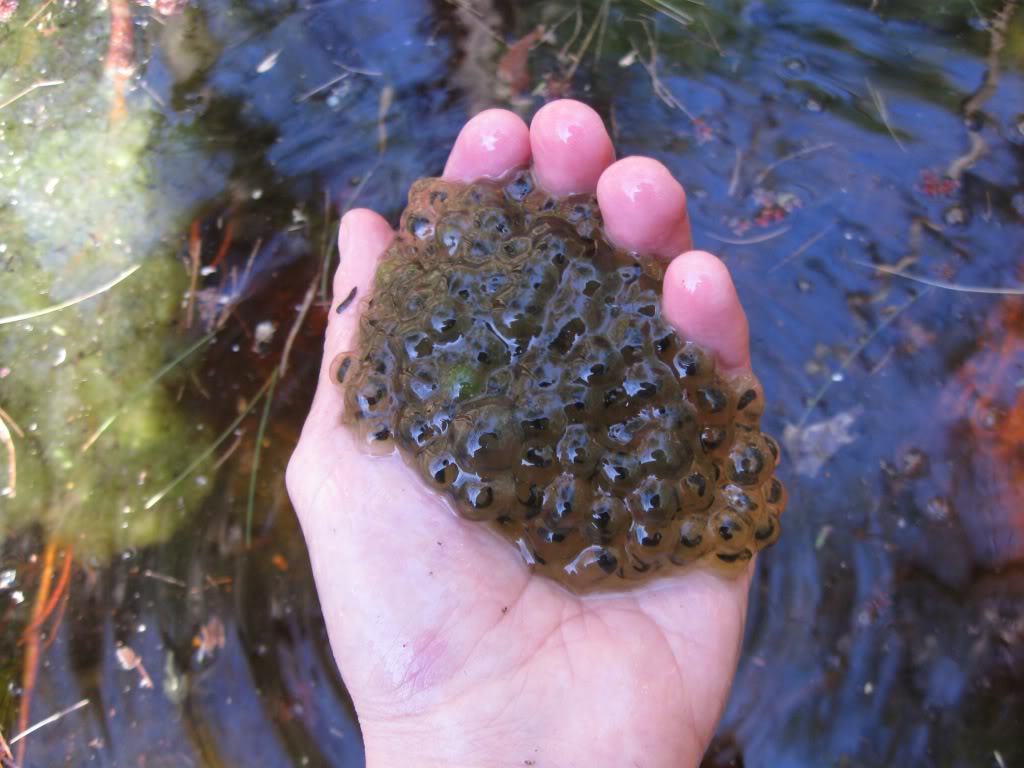
Breeding is explosive and fast. Hundreds of adults converge on a vernal pool for a window of three to seven days, females lay globular masses of 1,000 to 3,000 eggs that are frequently attached in communal rafts, and then the adults leave. Tadpoles transform in roughly 6 to 15 weeks, racing the pool as it shrinks; in a dry spring an entire cohort can be lost.
Can I Keep a Wood Frog as a Pet?
You can, and in most states you legally may, but wood frogs make poor captives. They are nervous, secretive animals that need cool temperatures, deep leaf litter, and a large floor area, and they do not tolerate the warm room conditions that suit a Pacman frog or a tree frog. Many states also regulate the collection of native amphibians, so check your wildlife agency first.
If you want an amphibian to watch rather than to keep, a wood frog pool in March gives you more than a tank ever will. For captive keeping, a captive bred species with a documented care history is the better path, and taking adults from a vernal pool population removes breeders from a system that runs on a narrow annual window. Wild collection also risks spreading chytrid fungus between watersheds, which is a far bigger threat to frogs than any glass frog or wood frog faces from habitat change alone.
Frequently Asked Questions
Why do wood frogs freeze instead of burrowing below the frost line?
Wood frogs are poor diggers and overwinter in shallow leaf litter and under logs, where frost reaches them every year. Rather than evolving a burrowing habit, they evolved cryoprotection with glucose and urea. The tradeoff pays off in the far north, where the ground stays frozen too deep to escape.
Are wood frogs safe to touch?
Yes. Wood frogs have no venom and no toxin dangerous to people. The greater risk is to the frog, since lotions, repellents, and soap residue pass straight through amphibian skin. Wet your hands first, handle briefly, and wash afterward because amphibians can carry Salmonella.
How long do wood frogs live?
Most wood frogs live 3 to 5 years in the wild, and northern populations tend toward the longer end because they grow and breed more slowly. Individuals in captivity have reached 8 years. High tadpole mortality in drying vernal pools means most eggs never produce a breeding adult at all.
What eats wood frogs?
Adults are taken by garter snakes, raccoons, herons, owls, skunks, and mink. Tadpoles are eaten by salamander larvae, diving beetles, and dragonfly nymphs. Breeding in fishless vernal pools removes the single most effective tadpole predator, which is why those temporary ponds matter so much to the species.
Do wood frogs live in every US state?
No. Wood frogs occur across the northeastern and upper midwestern states, through Canada to Alaska, with scattered southern populations in the Appalachians down to Georgia and Alabama. They are absent from most of the Great Plains, the Southwest, and the Pacific coast states south of Alaska.