Hermann Tortoise Care: Size, Diet, Lifespan, and Cost
A Hermann tortoise (Testudo hermanni) is a small Mediterranean species that reaches 5 to 8 in (13 to 20 cm), lives 50 years or longer, and eats nothing but weeds, grasses, and leafy greens. That combination makes it one of the few tortoises that genuinely suits a first time keeper with a sunny backyard.
Two subspecies reach the US pet trade. The eastern form, T. h. boettgeri, is larger and far more common. The western form, T. h. hermanni, stays smaller and carries bolder yellow and black markings on the shell.
Hermann tortoises grow to 5 to 8 in (13 to 20 cm) and 2 to 4 lb (0.9 to 1.8 kg), live 50 to 75 years, and need a dry outdoor pen, UVB light, and a diet of weeds and grasses with no fruit or animal protein. Captive bred hatchlings cost 150 to 400 USD.
| Quick Facts | Hermann Tortoise |
|---|---|
| Adult size | 5 to 8 in (13 to 20 cm) |
| Adult weight | 2 to 4 lb (0.9 to 1.8 kg) |
| Lifespan | 50 to 75 years |
| Native range | Southern Europe, Balkans to Spain |
| Diet | Weeds, grasses, leafy greens |
| Price (captive bred) | 150 to 400 USD |
How Big Do Hermann’s Tortoises Get?
Most adults settle between 5 and 8 in (13 to 20 cm) of shell length. Eastern boettgeri females are the giants of the species and occasionally hit 11 in (28 cm), while western hermanni males often stop at 5 in (13 cm). Females outgrow males in every population.
Growth is slow and should stay slow. A hatchling that doubles in a year has been overfed, and the result is a lumpy, pyramided shell that never smooths out. Compare that with a sulcata tortoise, which can pass 100 lb (45 kg), and the appeal of a species that fits a 4 by 8 ft pen becomes obvious.
Is a Hermann’s Tortoise a Good Pet?
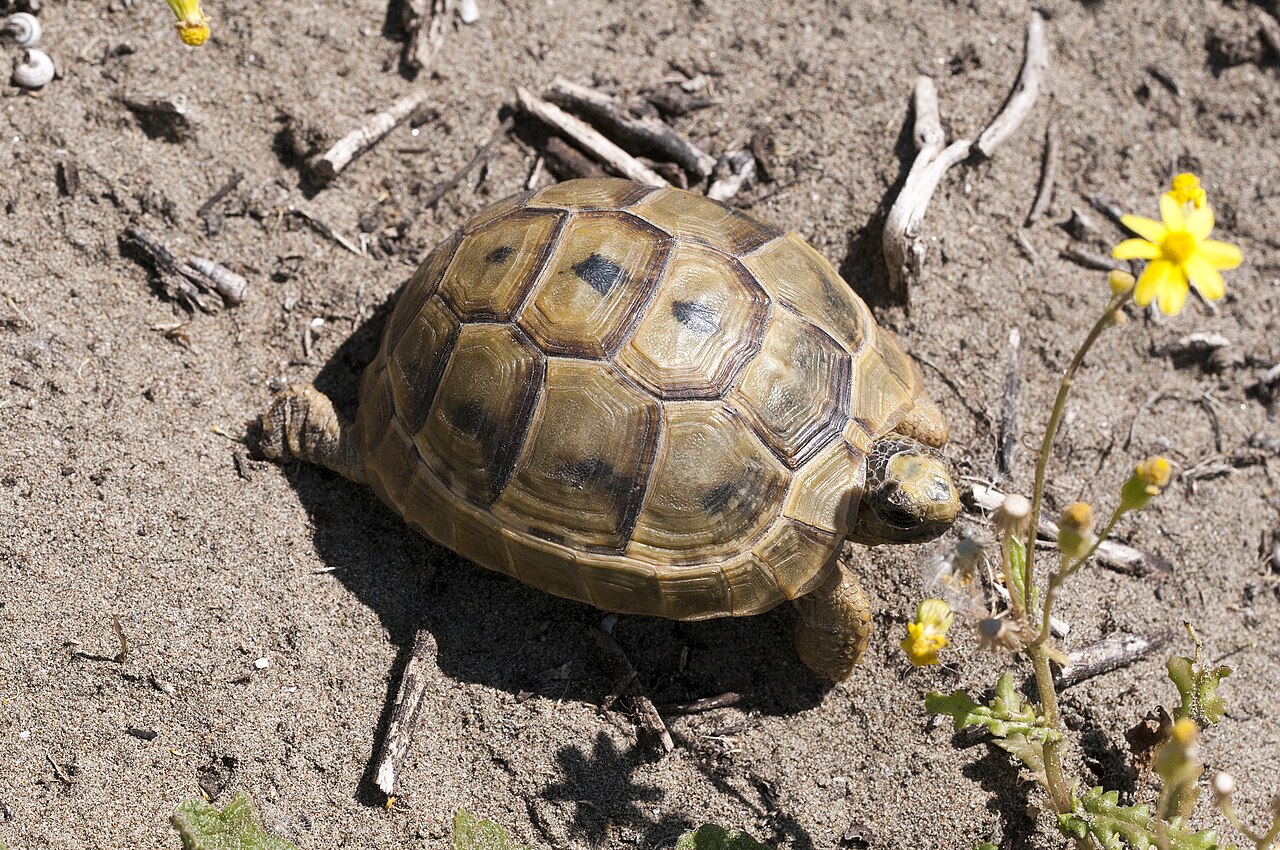
Yes, for a keeper who can offer outdoor time and accepts a 50 year commitment. Hermanns are alert, food motivated, and less shy than a marginated tortoise, so they spend their day grazing in the open rather than hiding. They tolerate brief handling but do not enjoy it.
The honest drawback is the timeline. These tortoises routinely outlive the household that bought them, which is why rescues are full of adults. Buy captive bred stock only. Wild caught imports are restricted under CITES Appendix II, and the paperwork for legal import is documented by the US Fish and Wildlife Service.
What Should a Hermann’s Tortoise Eat?
Feed broadleaf weeds and grasses: dandelion, clover, plantain, chicory, mallow, and dark leafy greens such as endive and escarole. Aim for 80 percent weeds and greens, with the rest split between grass hay and the occasional flower like hibiscus or nasturtium.
Dust food with calcium carbonate two or three times a week and leave a cuttlebone in the pen. The approach mirrors a Russian tortoise diet: high fiber, low protein, low sugar, and no pellets as the main course.
What Not to Feed a Hermann Tortoise
Skip fruit except as a rare treat, since the sugar upsets gut flora. Skip iceberg lettuce, which is close to water with no nutrition. Skip spinach, chard, and rhubarb for their oxalates, which bind the calcium the shell needs.
Never offer dog food, cat food, meat, eggs, dairy, or bread. Animal protein in a herbivore drives shell deformity and kidney damage, and unlike shell pyramiding, the kidney damage is invisible until it is fatal.
Housing, Temperature, and Winter
Outdoors is best: a dry pen with sun, shade, a low shelter, and walls the tortoise cannot see through. Indoors, use an open topped table rather than a glass tank, with a basking spot of 90 to 95 F (32 to 35 C), a cool end near 70 F (21 C), and a UVB tube running the length of the enclosure.
Healthy adults brumate for 8 to 12 weeks at 40 to 50 F (4 to 10 C) in a fridge or cool cellar. A tortoise that has not been weighed, fasted, and vet checked first should stay awake and warm instead. Longevity in Greek tortoises and Hermanns tracks closely with how carefully this cycle is handled.
How Much Does a Hermann’s Tortoise Cost?
Captive bred hatchlings run 150 to 400 USD, and proven adults or well marked western stock reach 600 USD. The purchase is the small number. UVB fixture, table or pen materials, thermostat, and a shelter add 300 to 600 USD before the tortoise arrives.
Budget 100 to 200 USD a year for bulbs, supplements, and winter greens, plus a reptile vet visit. That is still less than the lifetime feed bill of a large species, as anyone comparing sulcata tortoise lifespan costs will notice.
Frequently Asked Questions
How often should I soak Hermann’s tortoise?
Soak hatchlings and yearlings two or three times a week in shallow lukewarm water for 15 to 20 minutes. Adults need a weekly soak, more often in hot dry weather. The water should reach the bottom of the shell, never the head, and the tortoise usually drinks and defecates within the first few minutes.
Should I pour water on my tortoise?
No. Pouring water over a tortoise chills it and can send liquid into the nostrils. Let it stand in a shallow dish instead, which is how these animals rehydrate in the wild after rain collects in depressions. Keep a low water dish in the pen at all times.
Do tortoises recognize their owners?
They learn to associate a person with food and will approach on sight, which is recognition of a routine rather than affection. Hermanns respond to footsteps, the rustle of a greens bag, and feeding times. That learned response is real, but it is not a bond comparable to a dog or cat.
What makes tortoises happy?
Choice makes them settle: sun and shade, warm and cool, open ground and cover, all reachable at once. Add rough terrain to climb and weeds to graze, and the animal spends its day foraging instead of pacing a corner. A pacing tortoise is telling you the enclosure is too small or too bare.