Black Fly: How to Identify It and Why the Bite Bleeds
A black fly is a small, humpbacked biting fly about 1/8 inch (3 mm) long, and in the United States it is the insect responsible for the sudden, bleeding bites people pick up near running water in late spring. Roughly 255 species live in North America, all in the family Simuliidae, and only the females bite.
The name causes constant confusion, because the tiny dark flies swarming a kitchen window are almost never true black flies. Those breed in flowing streams, not indoors. Sorting the two apart takes about ten seconds once you know where each one comes from.
True black flies (Simuliidae) are 1/8 inch (3 mm), stout, humpbacked, and dark, with clear wings and short antennae. Females bite by cutting the skin, leaving an itchy welt that often bleeds. They breed only in clean running water and cannot reproduce indoors, so small black flies in the house are fungus gnats, drain flies, or phorid flies instead.
Are Black Flies Harmful, and What Happens If You Get Bitten?
A black fly bite hurts more than a mosquito bite because the fly does not pierce, it cuts. The female slices a small wound with bladed mouthparts, floods it with anticoagulant saliva, and feeds from the pool, which is why bites keep bleeding and then itch for days. Expect a red welt with a dark center, swelling out of proportion to the wound, and in sensitive people a reaction called black fly fever: headache, nausea, mild fever, and swollen lymph nodes.
In North America black flies do not transmit disease to humans. River blindness, the disease the family is famous for, is carried by African and Latin American species and is not a risk here. Livestock are a different story: large swarms can kill cattle and poultry through blood loss and stress.
How to Identify a True Black Fly
Look at the back. Simuliidae have a pronounced hump behind the head that gives the group its nickname, buffalo gnat, and no other small dark fly has it. Add short, thick antennae, broad clear wings with heavy veins crowded along the leading edge, and a compact body rarely over 1/8 inch (3 mm). Color runs black to dark gray, sometimes with orange legs.
Behavior confirms it. Black flies fly in daylight, cluster around the head and hairline, crawl into collars and sleeves, and are most active at dawn and dusk on calm, humid days. They do not come to lights at night, and they do not sit still on walls.
The Small Black Flies You Actually Find in the House
If dark specks appear indoors, the cause is a breeding site inside, and the real culprits are easy to separate once you see where they land.
| Insect | Size | Where it comes from | Bites? |
|---|---|---|---|
| Black fly (Simuliidae) | 1/8 in (3 mm) | Clean flowing streams, outdoors only | Yes, painful |
| Fungus gnat | 1/8 in (3 mm), slender | Overwatered potted plant soil | No |
| Drain fly | 1/8 in (3 mm), fuzzy | Sink and floor drain film | No |
| Phorid fly | 1/16 in (2 mm) | Rotting organic matter, broken sewer lines | No |
| Fruit fly | 1/8 in (3 mm), tan | Ripe fruit, trash, recycling | No |
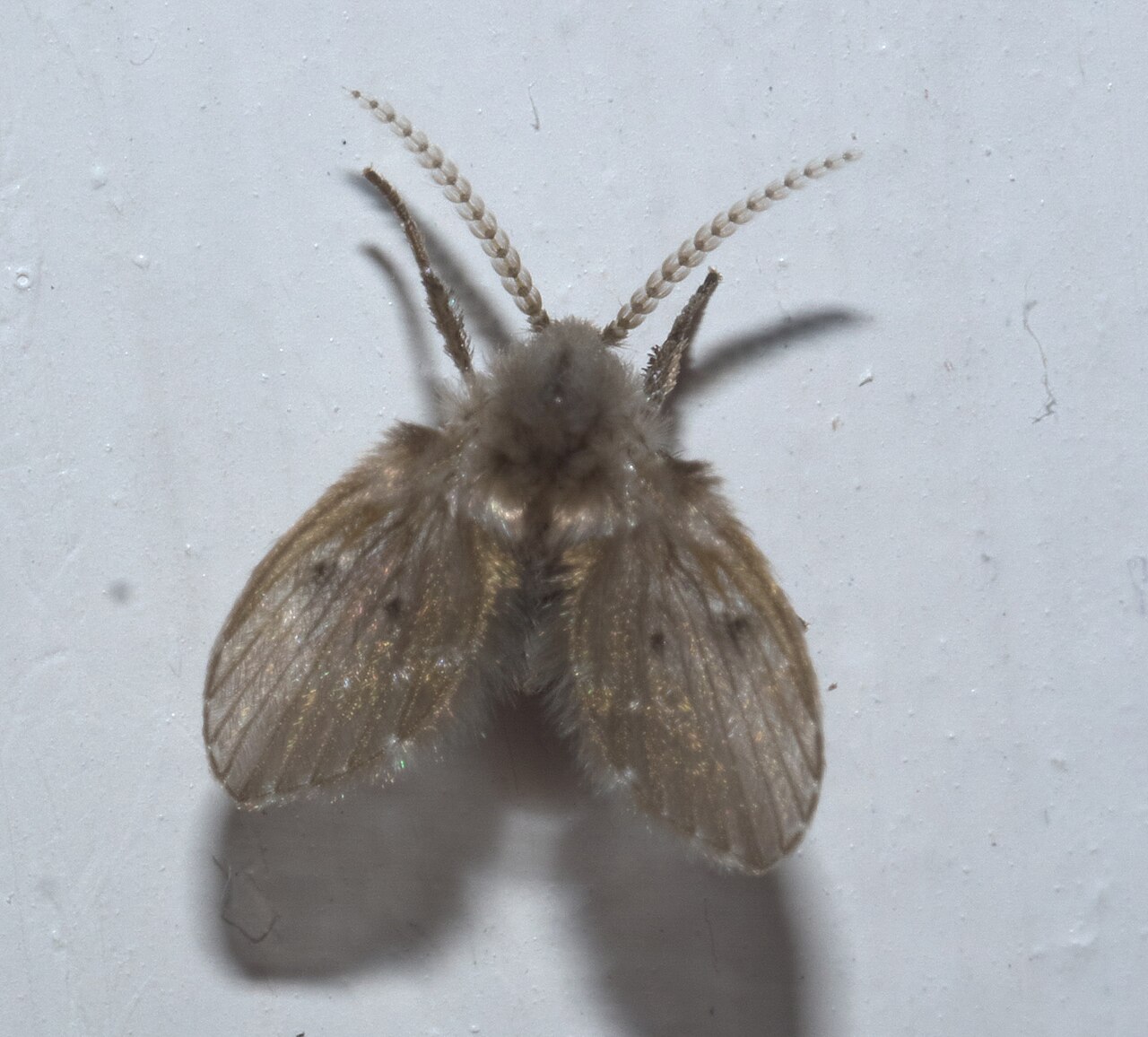
Fungus gnats run up windows in weak, drifting flight. Drain flies sit motionless on tile with wings held like a tiny moth. Phorid flies scuttle across surfaces instead of flying, which is their single best field mark. None of them bite, so if something indoors is biting you, look for fleas or a stinging insect that got inside rather than a black fly.
Black Fly Season and Where They Breed
Larvae live only in clean, fast moving, well oxygenated water, anchored to rocks with silk and a ring of hooks while filtering food from the current. That habitat requirement is why black fly pressure maps onto rivers and streams so neatly, and why a still pond never produces them.
Season runs mid May into late June across most of the northern United States, peaking a few weeks after the spring melt and dropping off sharply in hot, dry weather. Southern populations stay active longer but rarely reach the same density. State extension programs such as UMaine Extension track local peaks each year, and those dates shift with stream flow more than with the calendar.
How to Get Rid of Black Flies
Nothing kills black flies instantly in an open yard, because the biting adults fly in from the nearest stream and replace themselves continuously. What works is personal protection and timing: DEET on skin, permethrin treated clothing, long sleeves, light colors instead of dark, and scheduling outdoor work for midday instead of dawn or dusk. A head net is not overkill during peak week.
Fans help more than people expect. Black flies are weak fliers and will not hold position in moving air, so a box fan on a patio clears the space. For indoor lookalikes, fix the source: let potted soil dry out for fungus gnats, scrub the drain biofilm for drain flies, and find the moisture for phorid flies. Sprays without source removal buy a day.
Frequently Asked Questions
What happens if you get bitten by a black fly?
The bite is a cut rather than a puncture, so it often bleeds, then swells into an itchy welt with a dark center that can last several days. Some people develop black fly fever with headache, nausea, and swollen lymph nodes. North American black flies do not transmit disease to humans.
What kills black flies instantly?
Nothing practical does in an open yard. Adults fly in continuously from nearby streams, so contact sprays only clear the insects in front of you. Repellents with DEET, permethrin treated clothing, and a fan on the patio give far better results than any attempt to kill the local population.
What causes black flies in the house?
True black flies cannot breed indoors, so indoor swarms are something else. Overwatered houseplants produce fungus gnats, drain biofilm produces drain flies, and rotting matter or a cracked drain line produces phorid flies. Find and remove the moist breeding material and the flies disappear within a week or two.
What smell do black flies hate?
Vanilla extract, lavender, and eucalyptus get recommended constantly, but the testing behind them is thin and their effect fades within an hour. DEET and picaridin are the two repellents with consistent field results against Simuliidae. Treat scent based remedies as a supplement, not as the plan.
Dark insects get misidentified more than any other group, which is why the humpback and the stream habitat matter more than color alone. The same two step check, body shape first and habitat second, separates a black and white beetle from a wasp mimic, and sorts black and orange caterpillars and black and white moths that share a yard. If something black is hanging in a web rather than flying, start with the black and yellow garden spider instead.