Blue Spider Identification: 6 Species and Which Ones Bite
A blue spider is almost always a tarantula, and almost never a wild spider in the United States. The brilliant cobalt and sapphire species people search for live in Venezuela, India, Thailand and Yemen and reach North America only through the pet trade. In US yards, blue shows up as a metallic sheen on the fangs or face of a jumping spider, not as a blue body.
None of the blue species is deadly to a healthy adult, though two of them bite hard enough to need a doctor. Here is what each blue spider actually looks like, where it lives, and how to tell a genuinely blue spider from the far more common blue insects people mistake for one.
Blue spiders are mostly tarantulas: the greenbottle blue, the Gooty sapphire ornamental, the Thai electric blue and the cobalt blue. Their color is structural, produced by nanostructures in the hairs rather than pigment. No blue spider is deadly, but Poecilotheria bites cause severe cramping and warrant medical care.
| Species | Legspan | Native range | What is blue | Bite risk |
|---|---|---|---|---|
| Greenbottle blue tarantula | 4.5 to 6 in (11 to 15 cm) | Venezuela | Legs, metallic | Mild, defensive hairs |
| Gooty sapphire ornamental | 6 to 8 in (15 to 20 cm) | India | Whole body | Severe cramping, see a doctor |
| Thai electric blue tarantula | 4 to 5 in (10 to 13 cm) | Thailand | Legs and carapace | Painful, not dangerous |
| Cobalt blue tarantula | 4.5 to 5.5 in (11 to 14 cm) | Myanmar, Thailand | Legs | Painful, highly defensive |
| Socotra island blue baboon | 4 to 5 in (10 to 13 cm) | Yemen | Legs, pale blue | Mild |
| Bold jumper (US native) | 0.3 to 0.6 in (8 to 15 mm) | Across the US | Fangs only | Harmless |
Is blue a type of spider?
No. Blue is a color that appears in several unrelated spider families, not a group of its own. It turns up in tarantulas, in jumping spiders and in a few orb weavers, and the species that share it are not close relatives.
Blue is also the rarest color in spiders, and it is produced differently from every other spider color. Instead of pigment, blue comes from nanoscale structures in the hairs that scatter light, the same mechanism that makes a blue butterfly blue. That is why a blue spider looks dull brown in a bad photograph and electric in good light.
Are blue spiders venomous or dangerous?
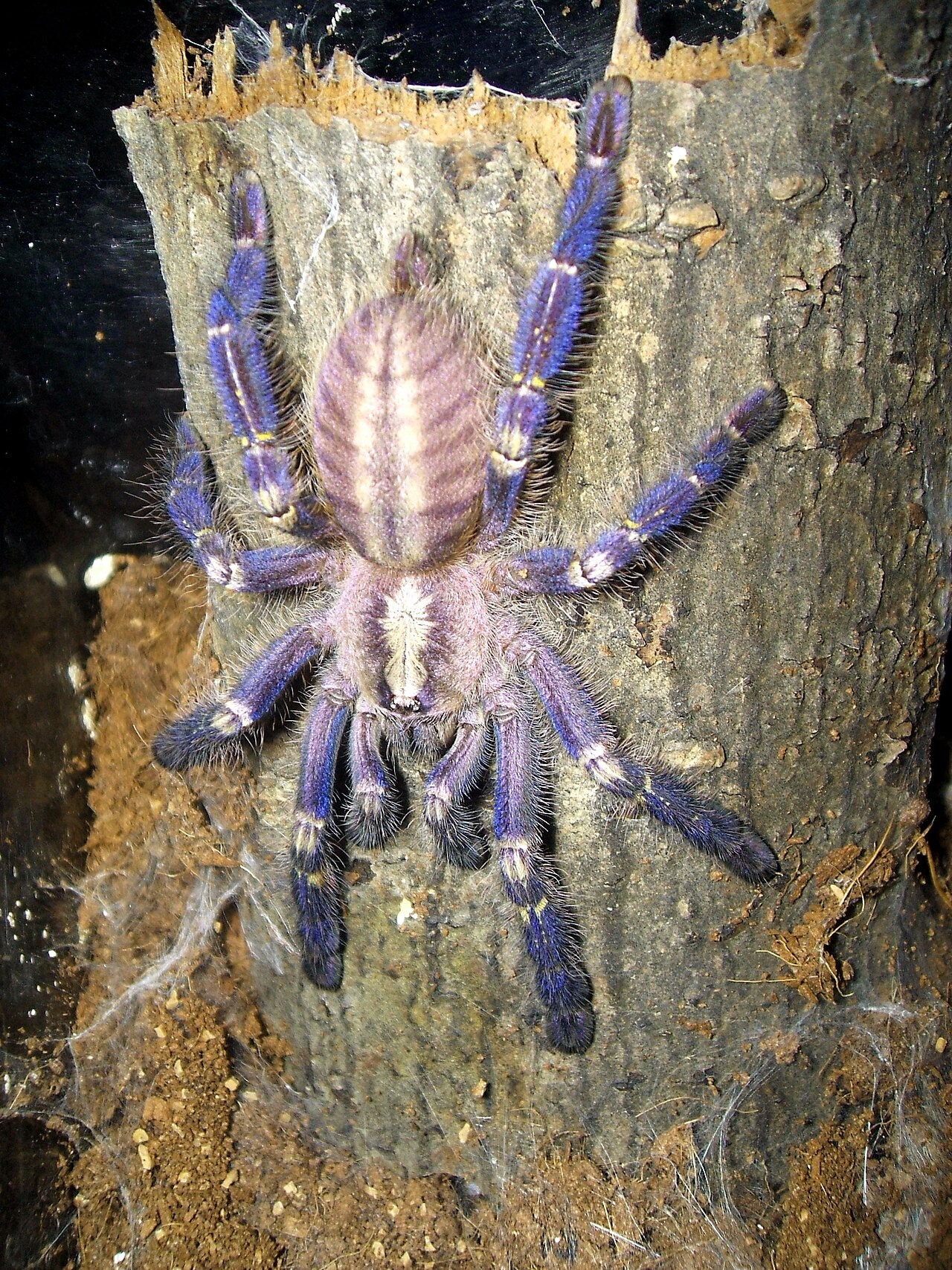
Every blue spider is venomous, like nearly all spiders, but almost none is dangerous to people. The exception worth naming is the genus Poecilotheria, which includes the Gooty sapphire ornamental. Bites from these Indian tarantulas cause intense pain and muscle cramping that can last for days and sometimes needs hospital treatment. No death has ever been recorded from one.
The cobalt blue and Thai electric blue are not medically significant but are quick to defend themselves, and their fangs are long enough to make a bite genuinely painful. New World species such as the greenbottle blue rely on flicking irritating hairs instead, which cause itching and are far worse if they reach your eyes.
Blue tarantulas: the spiders that really are blue
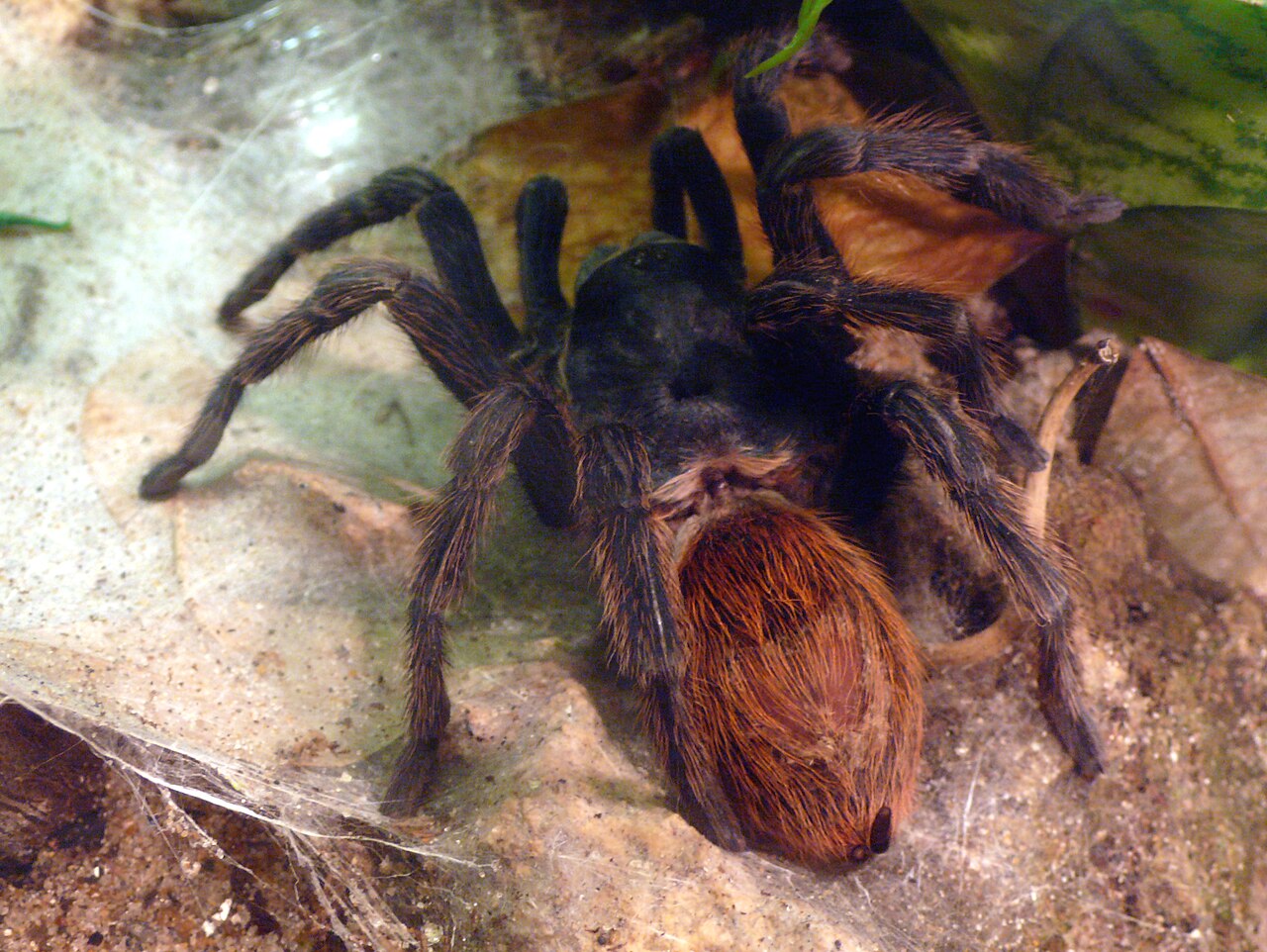
The greenbottle blue tarantula (Chromatopelma cyaneopubescens) is the species most keepers meet first: metallic blue legs, a green carapace and an orange abdomen, from the dry scrubland of northern Venezuela. It is fast but not aggressive, and it builds dense funnel webs.
The Gooty sapphire ornamental (Poecilotheria metallica) is the famous one, an arboreal species with a blue and white fretwork pattern across the whole body, known from a single small forest fragment in India and listed as critically endangered. The Thai electric blue tarantula (Chilobrachys natanicharum), described in 2023, and the long kept cobalt blue (Cyriopagopus lividus) are both Southeast Asian burrowers whose blue only shows when they leave the burrow.
Blue spiders in the United States
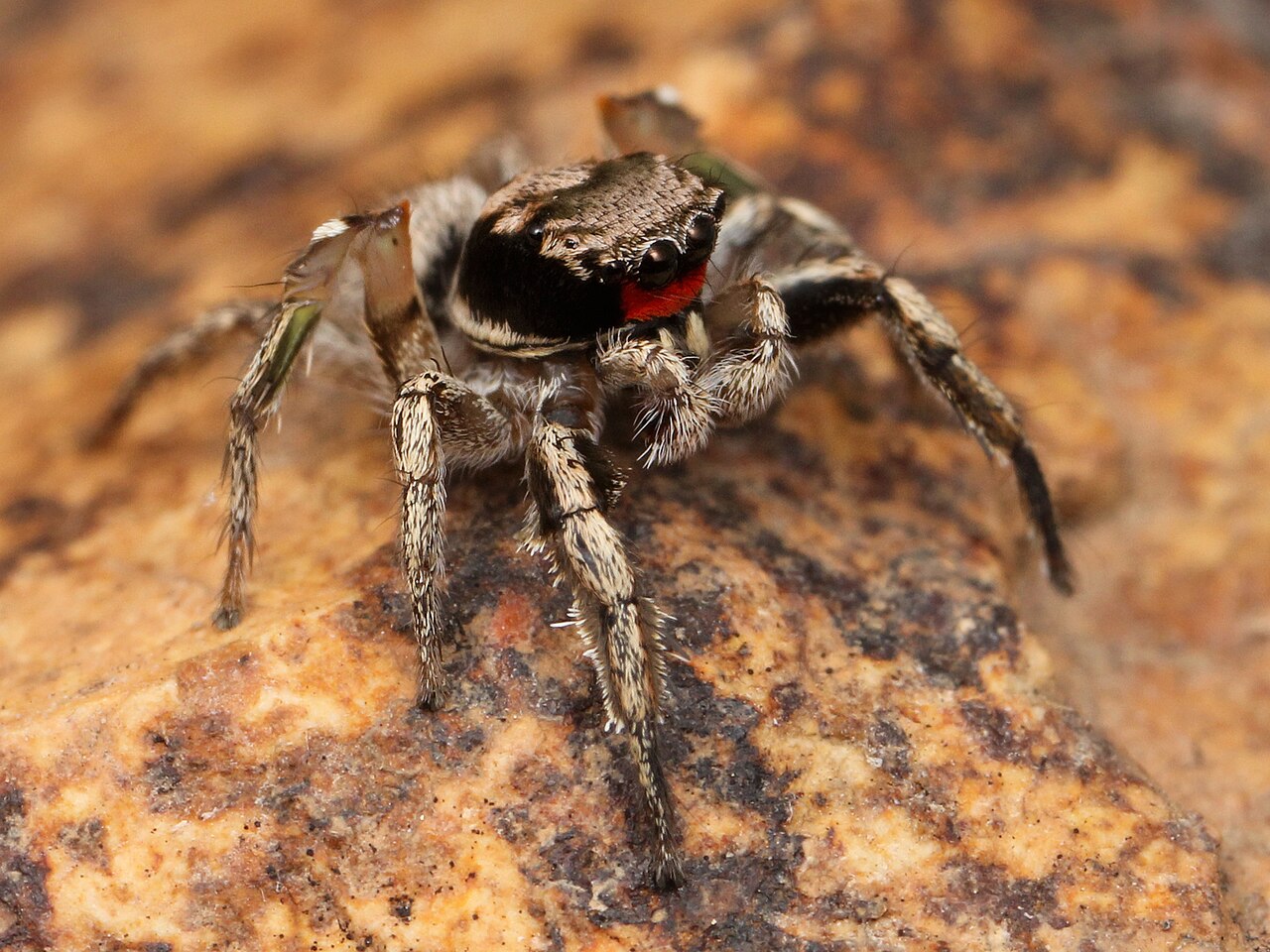
There is no wild spider in the United States with a blue body. What US readers actually photograph is the bold jumper, Phidippus audax, a small black and white jumping spider whose chelicerae, the plates in front of the fangs, flash metallic blue green in sunlight. At 0.3 to 0.6 in (8 to 15 mm) it is harmless and famously curious.
The second group is the paradise jumping spiders, genus Habronattus, where males carry iridescent blue, green and red on the face and front legs for courtship displays. Both are closely related to the black and white spiders people find on fence posts, and both are worth leaving alone: they hunt by sight and keep down flies and small pests, as covered in our guide to what spiders eat.
What is not a blue spider
Most blue spider reports in the US turn out to be something else entirely. The usual culprit is the blue mud dauber, Chalybion californicum, a slender metallic blue wasp that hunts black widows and is often found in garages and sheds. It has a narrow waist and four wings, which no spider has.
Other regular mix ups are blue damselflies and the smaller blue dragonflies, which have six legs instead of eight, and freshly molted spiders of ordinary species, which look pale blue grey for a few hours before hardening. The Xerces Society keeps identification resources for all of these at xerces.org.
What to do if you find a blue spider
Outdoors in the US, photograph it and leave it: it is a jumping spider doing useful work. Indoors, a cup and a sheet of card moves any spider outside without touching it.
If the spider is a genuinely blue tarantula, it escaped from someone’s enclosure, and a local reptile or exotics shop will usually take it. Do not attempt to catch an arboreal Poecilotheria by hand. Other brightly marked spiders worth ruling out first are the black and yellow garden spiders and the black spiders with white spots.
Frequently Asked Questions
Is there a blue spider in the United States?
Not with a blue body. The closest native is the bold jumper, Phidippus audax, whose fangs and chelicerae are iridescent blue green, and the Habronattus jumping spiders, whose males have blue on the face and legs. Any fully blue spider found loose in the US is an escaped pet tarantula from Asia or South America.
Is a tunnel web spider poisonous?
It depends which one. The Australian funnel web spider is genuinely dangerous and has an antivenom. The cobalt blue tarantula, a burrowing tunnel builder sometimes sold under that loose name, is not medically significant: its bite is painful but causes no lasting harm. No spider is poisonous to eat or touch; they are venomous through a bite.
Are blue tarantulas poisonous?
All tarantulas are venomous, none is poisonous. Among the blue species, only Poecilotheria metallica causes a bite worth worrying about, producing severe muscle cramps that can last several days and sometimes need hospital treatment. The greenbottle blue and the Socotra island blue baboon cause little more than a wasp sting level of pain.
What is the #1 deadliest spider?
The Brazilian wandering spider and the Sydney funnel web are usually named as the deadliest, with the funnel web the more consistently lethal before antivenom existed. Neither is blue, and neither occurs in the United States. The only US spiders of medical concern are the black widow and the brown recluse.
Why do some spiders look blue?
Blue in spiders is structural, not pigmented. Layers of nanostructures in the hairs cancel out other wavelengths and reflect blue back, which is why the color shifts with the angle of light and vanishes in flat shade. Researchers think it evolved for courtship signalling in jumping spiders and possibly as camouflage in tarantulas.