Pink Dragonfly: The Real Species and How Rare They Are
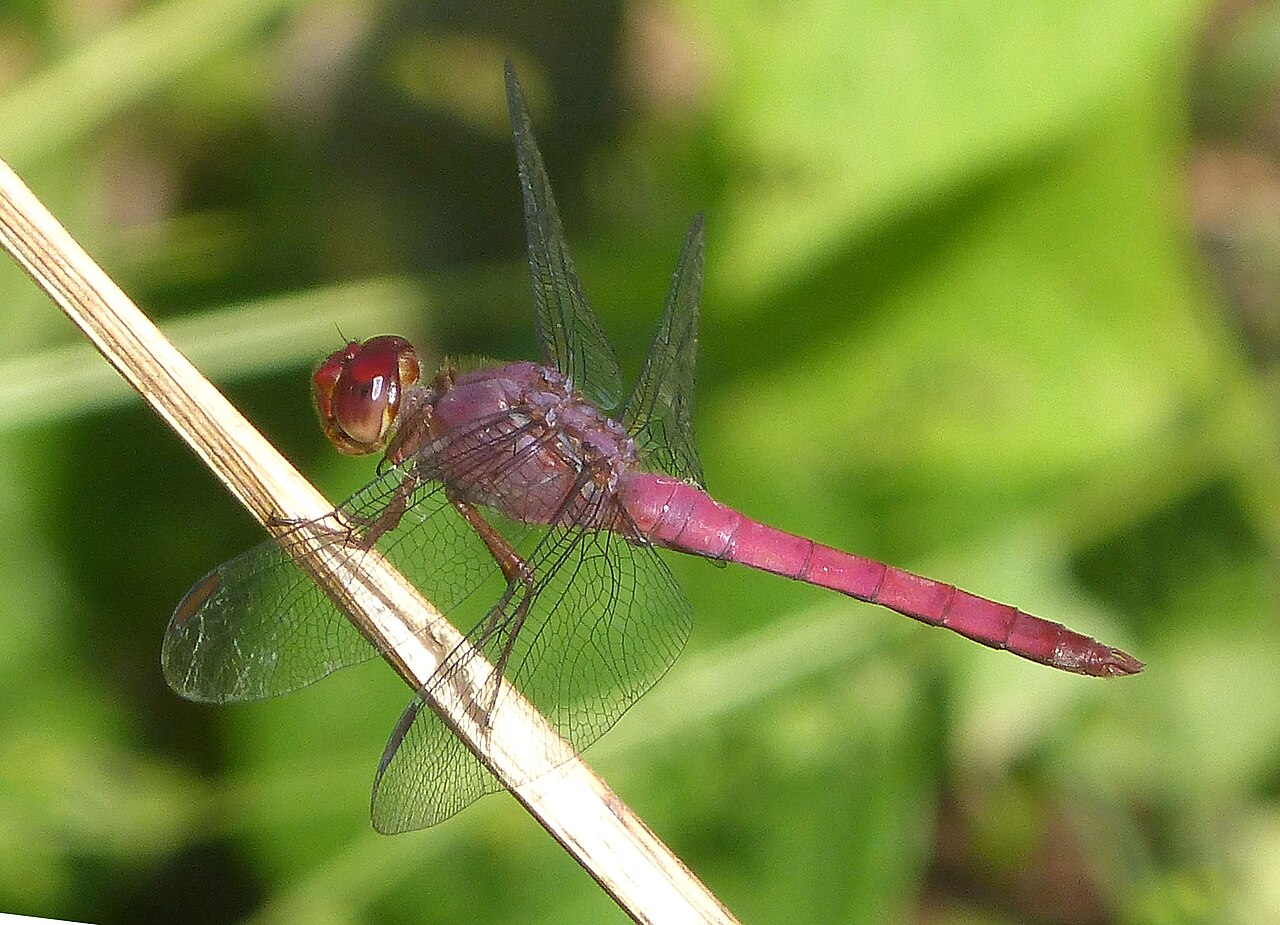
Pink dragonflies are real, and in the southern United States the pink dragonfly you saw is most likely a male roseate skimmer (Orthemis ferruginea). A few other skimmers turn pink or magenta in Asia, but this is the only widespread one at American ponds. The related carmine skimmer (Orthemis discolor) is a carmine red look-alike found in south and central Texas.
Bergenia ‘Pink Dragonfly’ is a garden perennial with pink spring flowers and shares only the name with the insect.
Yes, pink dragonflies are real. The pink belongs to adult males of a few skimmers, chiefly the roseate skimmer (Orthemis ferruginea) of the southern United States. Pink is the rarest dragonfly color in the US. Females are brownish. Elsewhere in the US, a pink-looking one is more likely a red species in odd light.
Which Dragonflies Are Pink?
Three skimmers are commonly described as pink or magenta, and only one of them lives in the United States. The roseate skimmer is the American candidate. Its males carry a pink to magenta body. The species ranges from the southern US south into Central and South America.
The other two, the crimson marsh glider (Trithemis aurora) and the crimson-tailed marsh hawk (Orthetrum pruinosum), live in tropical Asia, and the table below compares all three. The crimson marsh glider male is crimson with a violet tinge and purple dusting on the thorax.
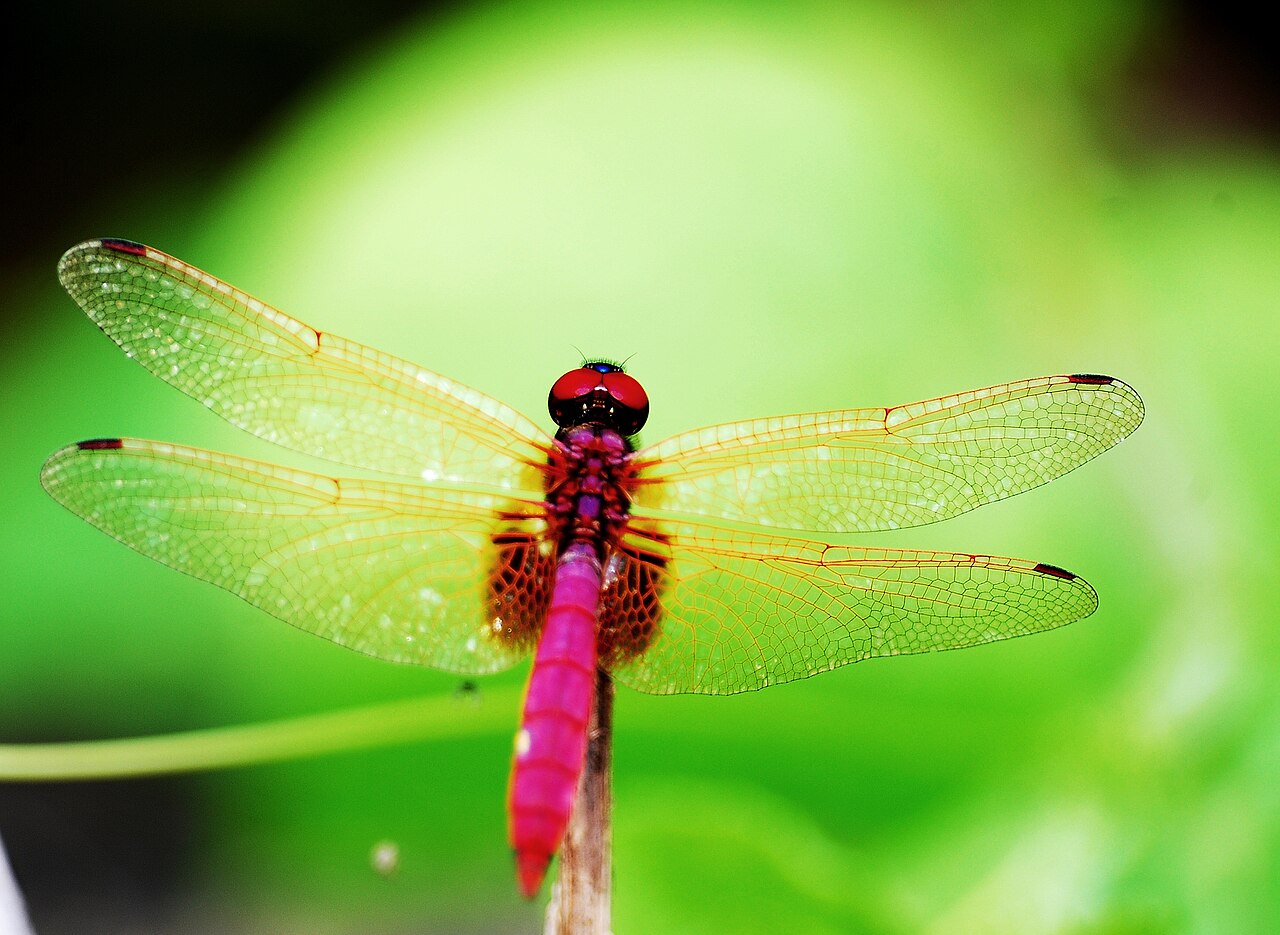
Light changes how a magenta male looks, so judge the color from a sunlit photo. Purple dragonflies and pink ones overlap in photos for this reason.
| Feature | Roseate skimmer | Crimson marsh glider | Crimson-tailed marsh hawk |
|---|---|---|---|
| Scientific name | Orthemis ferruginea | Trithemis aurora | Orthetrum pruinosum |
| Region | Southern US to South America | South and Southeast Asia | India to Japan and Java |
| Adult male | Pink to magenta body | Crimson body with violet tinge | Grey-blue thorax, pink to purple abdomen |
| Female | Brown to dull orange | Olive and reddish brown | Duller than the male |
| Seen in the US | Yes | No | No |
How Rare Is a Pink Dragonfly, and Where Can You See One?
A pink dragonfly is a regular sight in the right region and a rarity everywhere else. In the US, roseate skimmers are seen in Florida, the Gulf states and the Southwest. Inside that belt, a sunny pond in summer can hold several males at once. Baby dragonflies grow underwater as nymphs in the same ponds and show none of the adult’s pink.
Go to sunny ponds, ditches and canals. Males perch on stems and twigs near the water, fly out, and return to the same perch again and again. Pick that perch, stand still a few feet away, and wait for the dragonfly to come back. It is the easiest way to get a sharp photo.
Pink is the rarest dragonfly color in the US. Of more than 300 North American dragonfly species, the roseate skimmer is the only widespread pink one, while red, blue, green and brown each cover dozens of species. Outside the roseate skimmer’s range, a pink sighting is more likely a red species in low sun or an overexposed photo. Dragonfly symbolism in many Native American traditions ties the insect to change and renewal, and a pink one is read the same way.
Male or Female? How to Tell Pink Dragonflies Apart
Pink marks the adult male. The female roseate skimmer is brown to dull orange, with none of the male’s color, and people pass her by as a different insect. A brownish skimmer perched near a pink one can be his mate. Blue dragonflies such as the eastern pondhawk (Erythemis simplicicollis) show the same split, with a powder blue male and a bright green female.
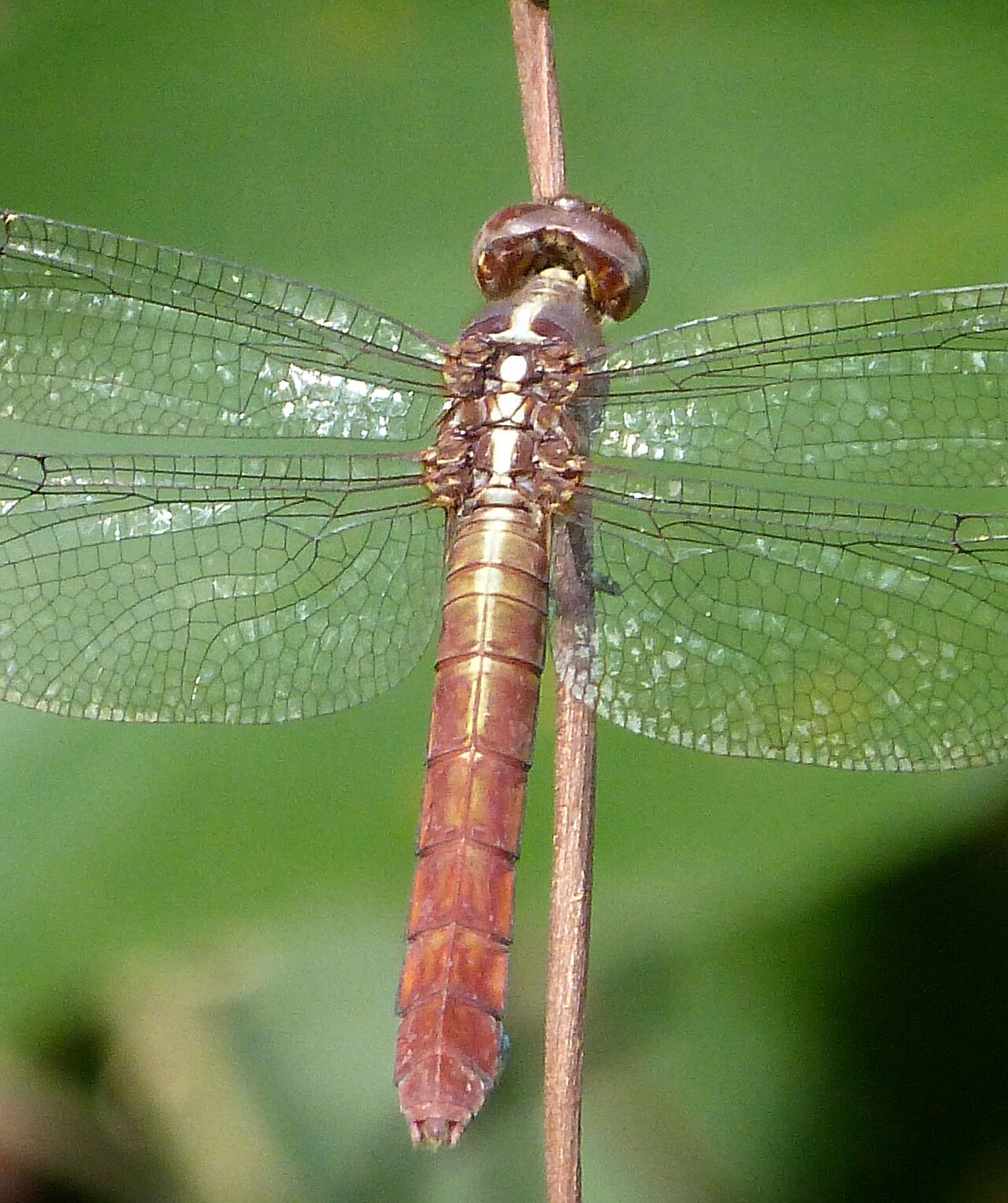
The body itself tells the sexes apart. Look at the tail tip from the side. Males have a pair of upper claspers plus a lower one at the tail tip, and females have only the upper pair (cerci). Then look under the abdomen just behind the wings, where males show a small bump and females a smooth line.
Behavior helps when the photo is unclear. Males guard a perch over the water and chase off rivals. Females typically visit the water only to lay eggs, tapping the tip of the abdomen on the surface. Red dragonflies follow the same rules, with a bright male and a duller female.
Frequently Asked Questions
Are there pink dragonflies in Florida?
Yes. The roseate skimmer is common across the Florida peninsula and flies year-round in South Florida, so a pink sighting there is possible in any month.
Do pink dragonflies change color as they age?
Yes. Freshly emerged males look dull or brownish, much like the females, and turn pink only as they mature. A brownish skimmer with the male’s extra lower clasper is a young male, not a different species.