Black Dragonfly Spiritual Meaning: Message, Rarity and Signs
The black dragonfly spiritual meaning comes down to change that happens in the dark before it shows in the light. Spiritually, a black dragonfly stands for a transformation you are still inside of, the stretch where an old pattern is ending and the new one has not surfaced yet. The insect spends most of its life under water before it ever flies; black adds the symbolic theme of what remains hidden.
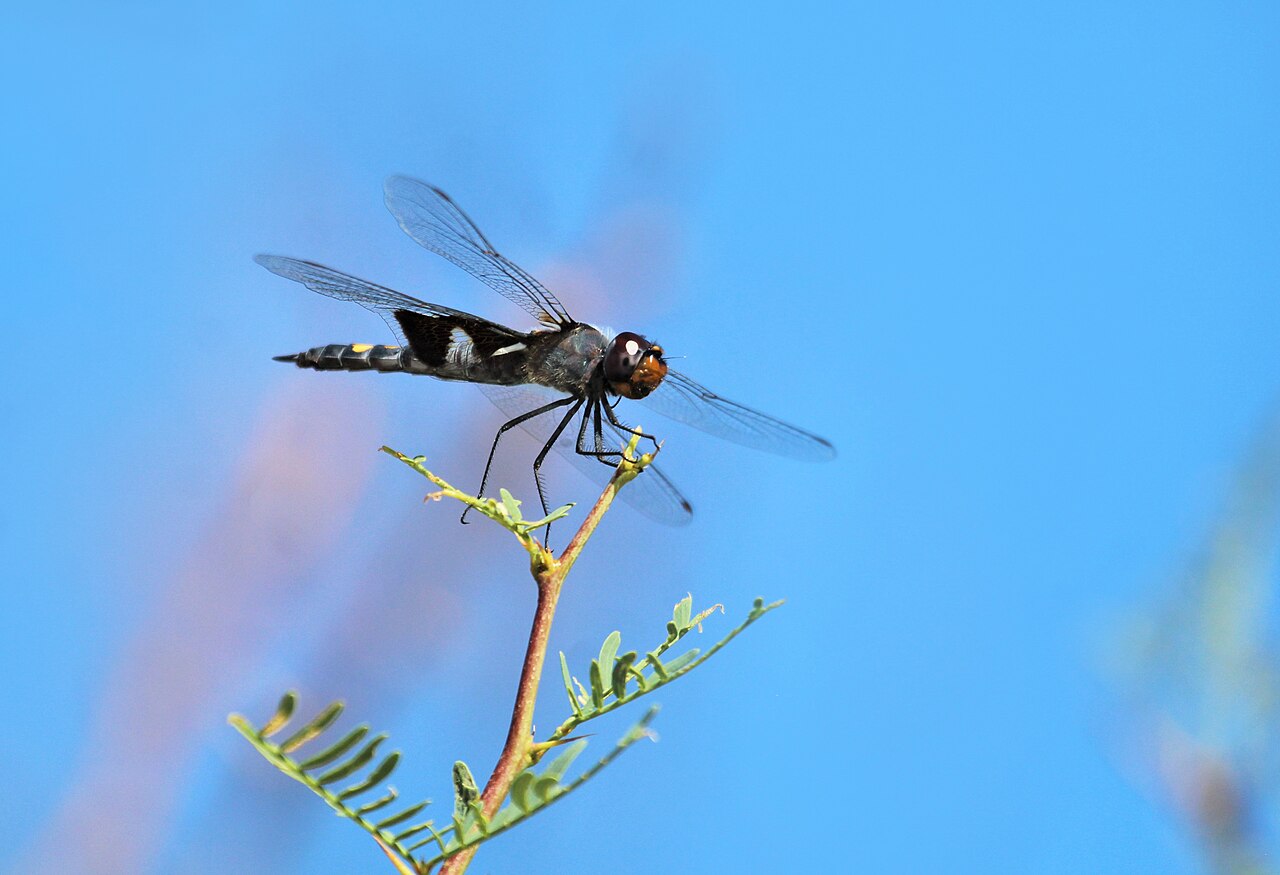
The color adds weight, not doom. A black dragonfly points at the shadow side of a change, the part you would rather not look at, and asks you to keep moving through it. The insect itself is less rare than it looks. North America has several dark species, and a fully black individual of a normally bright species is the unusual find.
As a sign, a black dragonfly points to transformation that is still underway, an ending you have to walk through before the new chapter appears. Black adds depth and shadow work, not bad luck. Dark species like Black Saddlebags are widespread in the US, while a melanistic dragonfly is a rare find.
What Does It Mean to See a Black Dragonfly?
Seeing a black dragonfly means a change in your life is happening below the surface, out of view, and it is further along than you think. Black is the color of shadow, of what sits under the waterline. The dragonfly is the creature that climbs out of that water and dries its wings in the sun. Put together, the sighting points to the last part of a hidden process, just before it becomes visible.
The reading grows out of the general dragonfly symbolism of change, with black adding the shadow layer. That makes the color a matter of tone. A bright red dragonfly feels like energy and action. A black one feels like the quiet work of letting something go, grieving it, or facing a fear you have been stepping around.
A dragonfly crossing your path carries its own reading about timing and direction, and that reading applies to black ones too. Where you see the insect shifts the message. One hovering at eye level asks for attention now. One resting on a reed asks for patience.
A dead dragonfly found on a sill or a porch speaks to a completed cycle rather than a warning. A living black dragonfly is the opposite case. The cycle is still open, and the sighting asks you to finish it rather than fear it.
What Message Does a Black Dragonfly Carry?
The message of a black dragonfly is to trust the part of a change you cannot yet see. It arrives when you are tired of waiting for a result, or when an ending feels heavier than the beginning it promised. The insect does not hurry its emergence. It climbs a stem, splits its old skin, and waits for its wings to harden before it flies.
The setting of the sighting sharpens the message. During grief, a black dragonfly points to grief as a passage you move through, not a place you live. During a job change or a move, it points to the awkward middle, where the old routine is gone and the new one is not built. During a conflict, it asks you to look at your own shadow first, the anger or pride you would rather blame on someone else.
Read the message as a prompt, not a prediction. A black dragonfly does not tell you what will happen next week. It tells you how to carry yourself through what is already happening. Slow down, look honestly, and keep going until your wings are dry.
What Does a Dragonfly Symbolize Spiritually?
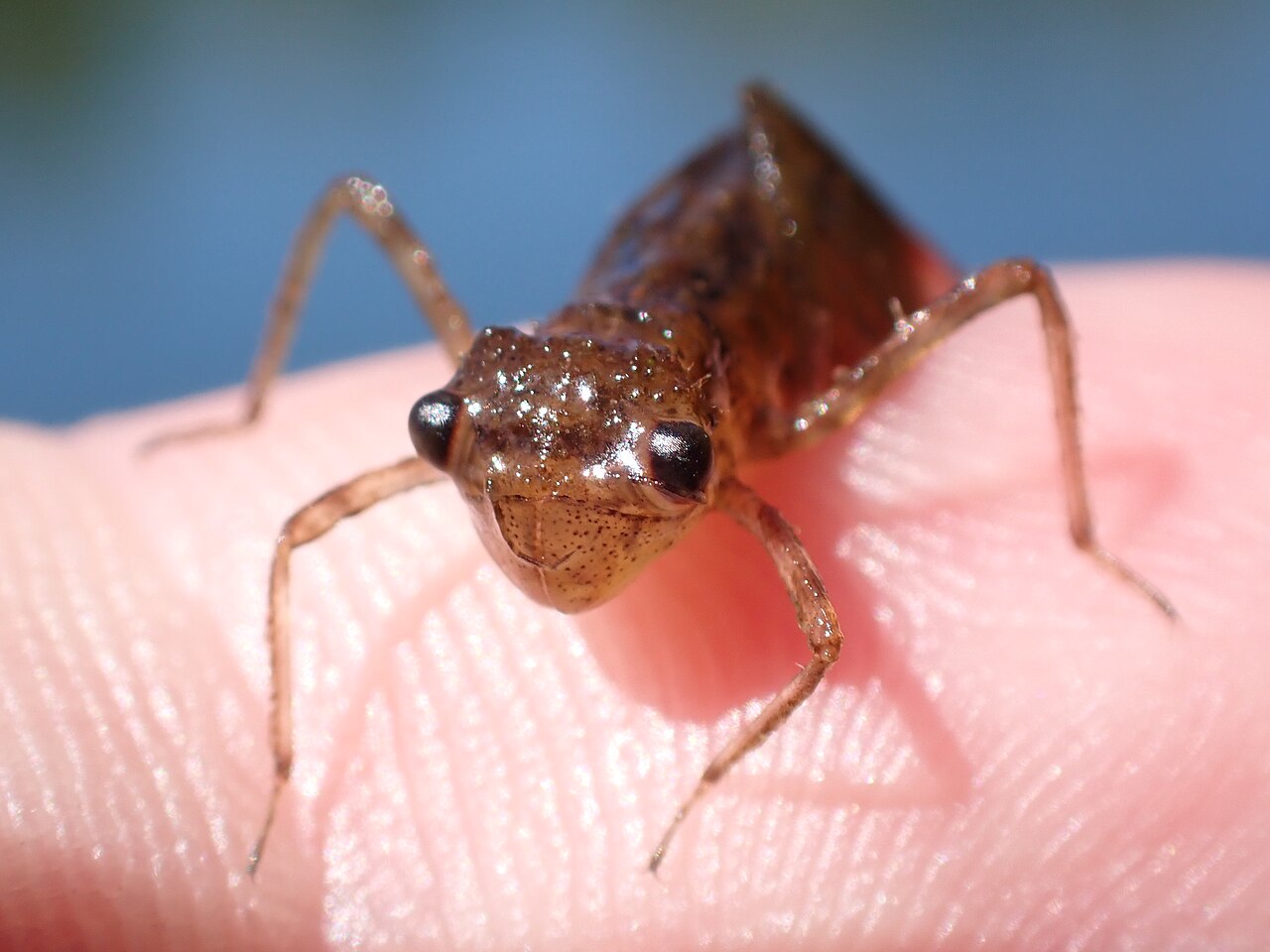
A dragonfly symbolizes transformation, adaptability, and lightness, because its life is a full change of body and world. It begins as an aquatic nymph that hunts under water. It ends as a fast, agile flier that hunts in the air. That shift from water to air makes the dragonfly an image of transformation.
Adaptability follows from the same life cycle. A dragonfly adjusts to two elements and moves in every direction, including backward and sideways while hovering. That control in the air turns the insect into an image of calm agility, of changing course without losing balance. Lightness follows too. The adult rides the air and catches the sun on its wings, and the color play on those wings ties the dragonfly to light and to seeing through illusion.
In Japanese samurai tradition, the dragonfly represents victory and resolve. The Metropolitan Museum of Art describes it as kachi-mushi, the victorious insect, admired for flying directly toward its prey. Dragonfly crests on samurai helmets express that image of determination.
Blue dragonfly symbolism leans toward calm and clear speech, while black leans toward depth and the hidden side of change. The base meaning of transformation stays the same across colors. Only the tone shifts.
Black Dragonfly Meanings at a Glance
The table sets each common sighting next to what it points to and a fitting response.
| Sighting | What it points to | Fitting response |
|---|---|---|
| Black dragonfly hovering in front of you | A change that wants your attention now | Name the change you have been avoiding |
| Black dragonfly resting on a reed or stem | Patience in the middle of a transition | Let a decision wait one more day |
| Black dragonfly during grief | Grief as a passage, not a final state | Allow the feeling without rushing it |
| Black dragonfly that lands on you | Readiness to accept the change | Stay still and notice what you feel |
| Several dark dragonflies over water | Abundance and a full season of change | Look at what is growing, not only what is ending |
| Black dragonfly found dead | A cycle that has closed | Mark the ending and release it |
How Rare Is a Black Dragonfly?
A black dragonfly is not automatically a rare sight, because several species are naturally dark. Its local rarity depends on the species, range, and habitat. Melanism, unusually increased dark pigmentation, is rare in dragonflies, but a black appearance alone does not establish it: normal coloration, maturity, and lighting must be considered first.
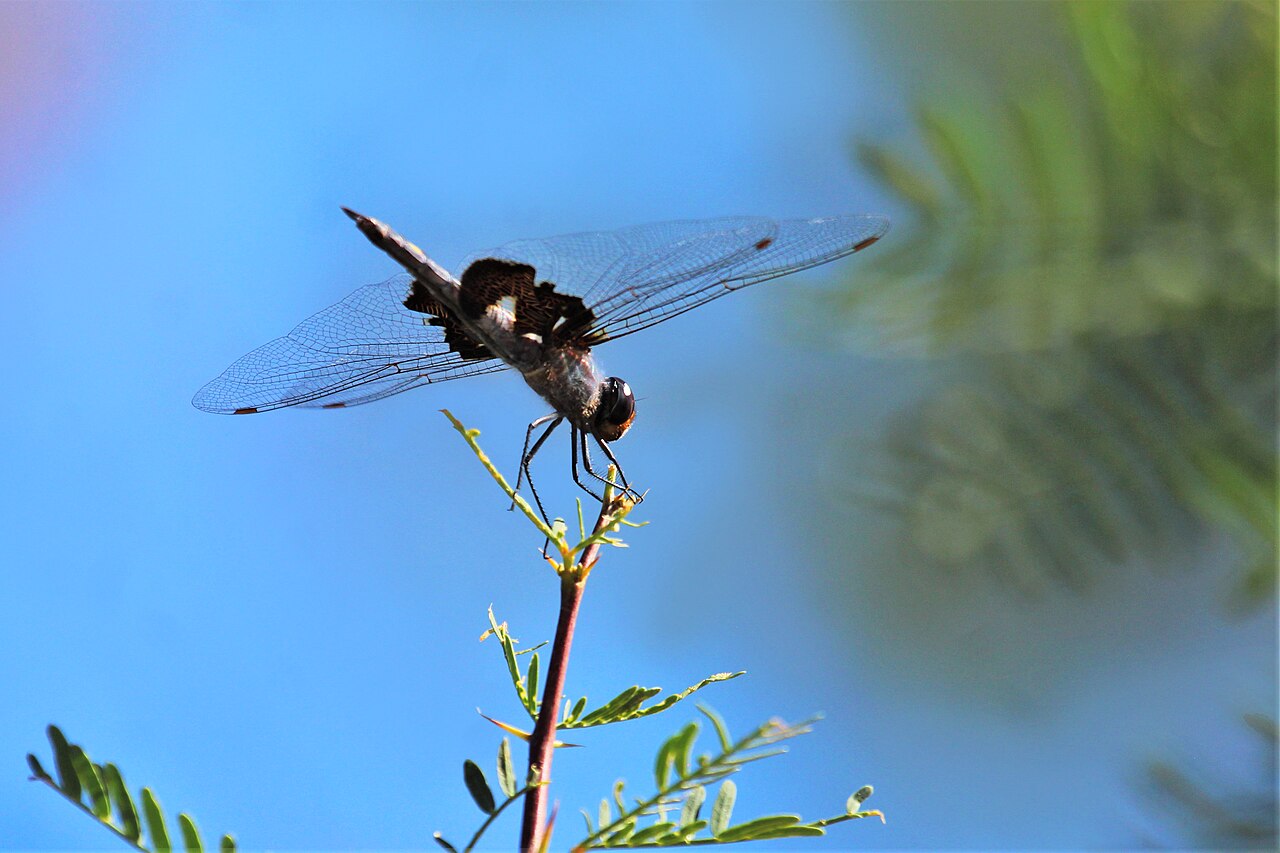
Several dark species occur in North America. Black Saddlebags (Tramea lacerata) is widespread in the US, a black-bodied flier with a dark patch at the base of each hind wing. The patches look like saddlebags when the insect cruises overhead. Black Meadowhawk and Black Setwing are two more dark species, each tied to its own region.
Age and light also make dragonflies look black. Some males darken as they mature, and a backlit insect against a bright sky shows almost no color. Before you call a sighting rare, check the wings, the face, and the pattern on the abdomen.
Black and white dragonflies such as pennants and whitetails share the dark tones but add pale bands or a white abdomen. A clear view of those marks separates a common dark species from a true oddity.
Which Dragonflies Are Actually Black?
US dragonflies with naturally dark bodies or black wing markings include Black Saddlebags, Black Meadowhawk, Black Setwing, and Black Petaltail. Each one lives in a different setting, which helps you sort out what you saw.
Black Meadowhawk (Sympetrum danae) is a small northern species. Mature males turn nearly all black, while females and young males stay yellow and brown. It flies in the northern states and Canada and shows up late in the season. Black Setwing (Dythemis nigrescens) is a dark skimmer of Texas and the Southwest, often perched at the tip of a twig over a stream.
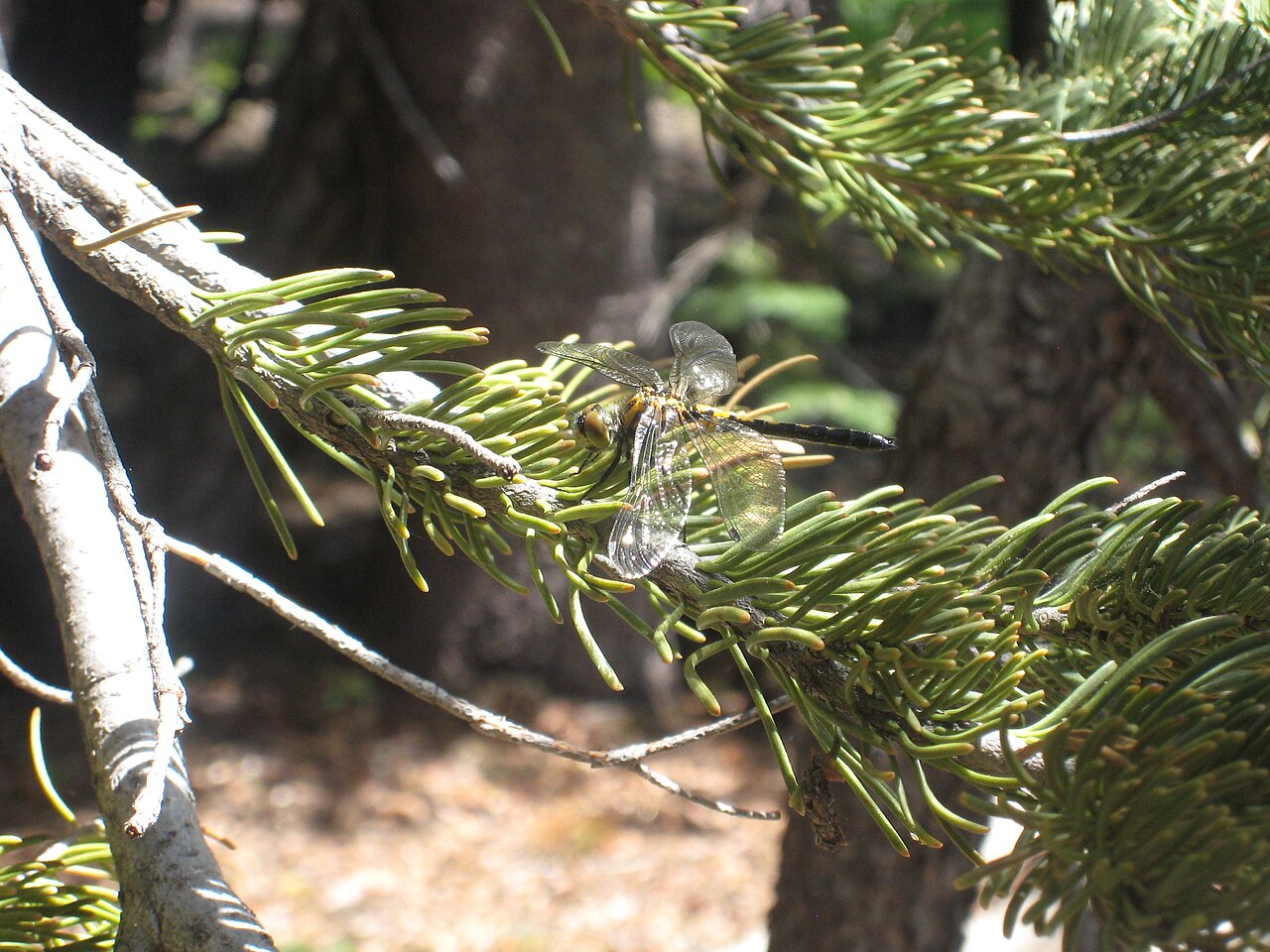
Black Petaltail (Tanypteryx hageni) is the most unusual of the group. It belongs to the petaltail family, an ancient line of dragonflies, and lives at mountain seeps and bogs in the Pacific Northwest and California. Its larvae dig burrows in wet seep mud instead of living in open water. One dark insect does not belong on this list. The Ebony Jewelwing (Calopteryx maculata) has black wings and a metallic green body, but it is a damselfly, not a dragonfly.
Why Do Dragonflies Suddenly Appear?
Dragonflies suddenly appear because a batch of adults has just emerged, a migration is passing through, or a burst of small flying insects has drawn them in to feed. The sudden crowd is a matter of timing and food, and it is visible because dragonflies are large, active fliers.
Some species emerge in a concentrated period, so a quiet shoreline can suddenly fill with new adults. Migration brings another kind of gathering: a passing group may fill a field or a parking lot before moving on. Dragonflies circling a concentration of flying insects form a feeding swarm, hunting prey such as gnats, flying ants, or mosquitoes. Feeding and migration can overlap.
Concentrated prey can explain a swarm after rain. Warm, wet weather can trigger the emergence of small insects, and dragonflies gather where prey is abundant. A yard near water or a meadow with flying insects becomes a hunting ground. The sudden arrival mirrors the message itself. Change gathers out of sight, then shows up all at once.
A dragonfly in the house has most often slipped in through an open door or window while chasing prey or light. Open a window on the bright side of the room, and it finds its way out.
Are Dragonflies Out in October?
Yes, dragonflies can be out in October, depending on the species, region, and weather. Idaho State University’s dragonfly field guide lists several darner species with adult flight seasons extending into October. Frost and falling temperatures help determine the local end of the season, but there is no single cutoff that fits every species and state.
In northern regions, late-season meadowhawks can fly on warm autumn afternoons, while mild southern climates can support longer adult flight seasons. Black Meadowhawk’s autumn flight window varies across its range, so an October sighting should be checked against a regional flight calendar.
Fall is also migration season. Common Green Darner (Anax junius) moves south in autumn, and Black Saddlebags travels as well. Large groups gather along coastlines, ridges, and lakeshores on their way south. A swarm in early fall is often one of these traveling groups rather than a local hatch.
What Does the Bible Say About a Dragonfly?
No verse in the Bible gives the dragonfly a meaning, and a search of the KJV text for “dragonfly” returns no verse at all. The closest passage is Leviticus 11:20-23, the law on flying insects. It calls “all fowls that creep, going upon all four” an abomination, then allows four winged insects with jointed legs for leaping, the locust, the bald locust, the beetle, and the grasshopper.
The dragonfly falls under the general rule in that passage. It is a winged insect, but it does not leap like a locust, so the dietary law groups it with the creatures not to be eaten. That is a food law, not a symbol. Nothing in the text attaches a spiritual message to it.
The KJV text of Leviticus 11:20-23 concerns dietary law. A Christian reading based on 2 Corinthians 5:17 connects the dragonfly’s emergence with renewal in Christ. Paul’s verse describes a person in Christ as a new creature, giving this interpretation its theme of new life.
When God Sends You a Dragonfly
Scripture reports that God made every creeping and winged thing and that creation itself teaches. Job 12:7 says “ask now the beasts, and they shall teach thee,” and Psalm 104:24 says “O Lord, how manifold are thy works!” On that ground, a believer can take a dragonfly as part of a creation that speaks of its maker.
The limit sits in what those verses do and do not say. They speak of creatures in general as a witness to God. No verse promises a dragonfly as a personal message or assigns it a fixed sign. The meaning a believer draws from one sighting rests on prayer and discernment, not on a stated biblical rule.
For a Christian, the dragonfly fits most naturally next to the theme of new creation. The insect leaves its old skin behind and rises into a new life. That image lines up with the biblical language of renewal, as long as you hold it as an image rather than a doctrine.
Dragonfly Folk Beliefs: Darning Needle and Snake Doctor
In England and the US, dragonfly names such as the devil’s darning needle, snake doctor, and horse stinger carry stories about sewing, snakes, and stings.
In parts of Massachusetts, the devil’s darning needle was said to sew shut the mouths of children who lied. Versions recorded in New Hampshire and Pennsylvania included the ears, eyelids, nostrils, and lips. The long, thin abdomen gave the story its shape. Horse stinger is another British name, born of the idea that dragonflies sting horses. They hover around livestock to catch the flies that gather there, and they have no stinger at all.
Snake doctor is a regional name in the American South, reflecting a story in which dragonflies care for snakes. D. A. Sheppard’s account in the Journal of the British Dragonfly Society records American versions in which dragonflies warn snakes of danger and help them find food.
How to Respond When a Black Dragonfly Appears
When a black dragonfly appears, pause, watch what it does, and ask which change in your life it mirrors. A short pause is enough. You do not need a ritual, only a moment of attention.
Watch the insect first. A dragonfly that hunts in loops is following prey, and one that repeatedly returns to the same twig may be hunting from a favored perch or defending a territory. Note where you were and what you were thinking about when it showed up. That thought tends to be the link between the sighting and your situation.
Then act on the message in a small way. Write down the ending you are walking through, take one step that moves it forward, or let go of one thing you have been holding past its time. The black dragonfly works as a reminder to move through the shadow, not to stop inside it.
Frequently Asked Questions
Is a black dragonfly a bad omen?
A black dragonfly points to hidden change rather than bad luck. Black adds the tone of shadow to the dragonfly’s meaning of transformation. In Japanese samurai tradition, the dragonfly represents victory and resolve.
Is a dragonfly the same as a damselfly?
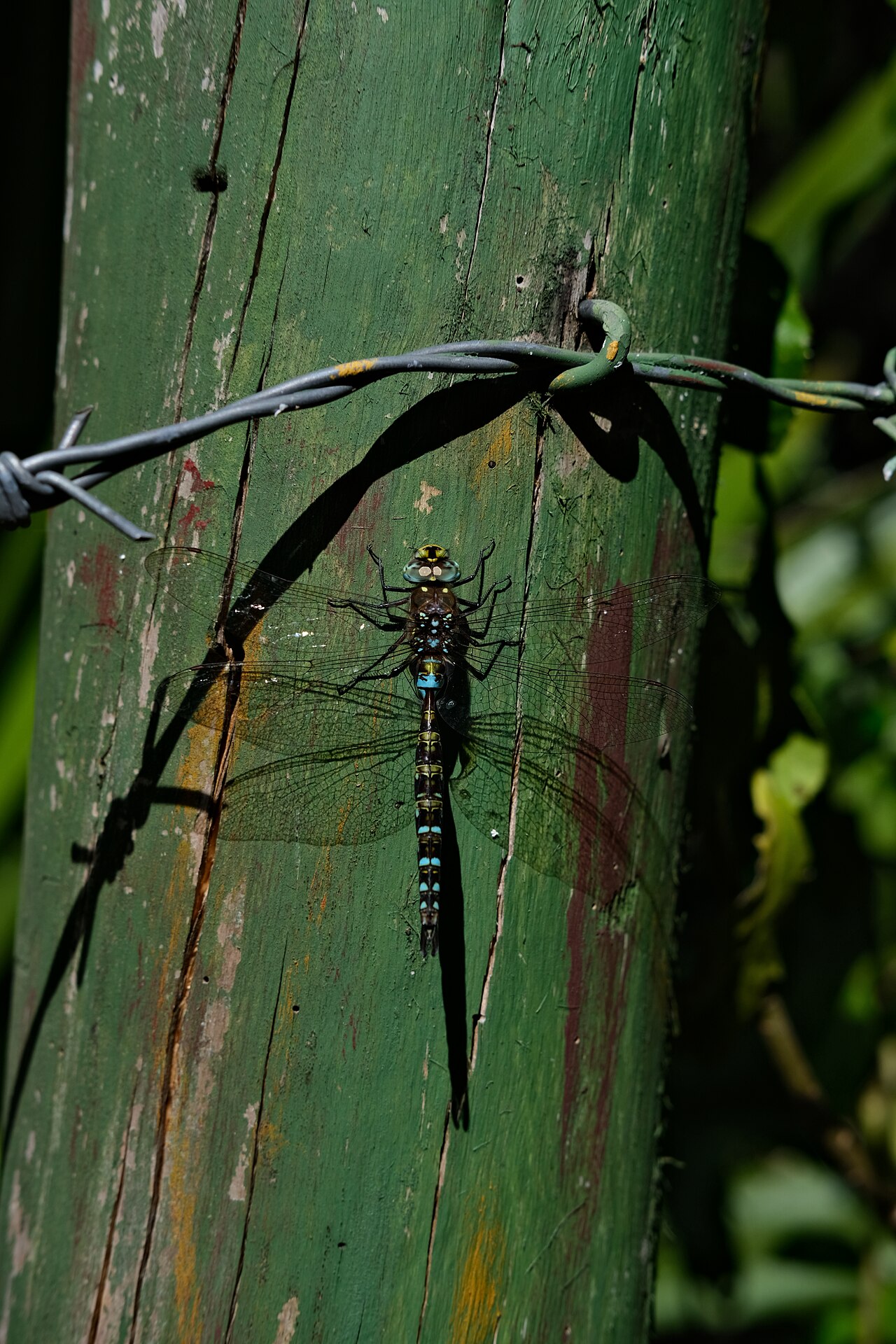
No, a dragonfly is not the same as a damselfly, although both belong to the order Odonata. Dragonflies typically hold their wings spread at rest and have heavier bodies. Most damselflies hold their wings together above the abdomen and are slimmer, but spreadwing damselflies are an exception. The black-winged Ebony Jewelwing is a damselfly.
How long do dragonflies live?
Adult dragonflies live for a few weeks to a few months, depending on the species and the weather. Most of the life cycle happens under water. The nymph stage lasts from several months to a few years in some species, so the flying adult is the short final chapter.
Do dragonflies bite or sting?
Dragonflies can bite if handled, especially larger species, but they cannot sting because they have no stinger. Watch them without grabbing them.
Do dragonflies eat mosquitoes?
Yes, dragonflies eat mosquitoes at both ends of their life. Adults catch flying insects, including mosquitoes, gnats, and midges, in midair. Nymphs live in ponds and streams and feed on aquatic prey, including mosquito larvae. A pond can provide habitat for dragonfly nymphs, while the number of adults nearby varies with species, season, and habitat.
Where do black dragonflies live?
Black dragonflies live near ponds, lakes, marshes, and slow streams across the US, with each dark species in its own range. Black Saddlebags is widespread, Black Meadowhawk flies in the northern states, Black Setwing in Texas and the Southwest, and Black Petaltail at mountain seeps in the Pacific Northwest.
Sources
- Bible Gateway, Leviticus 11:20-23 (KJV)
- Bible Gateway, Job 12:7-10 (KJV)
- Bible Gateway, Psalm 104:24 (KJV)
- Bible Gateway, KJV keyword search for “dragonfly”
Explore more: Insect Spiritual Meanings: 15 Bugs and What They Signal