Orange Butterfly: Species Identification and Meaning
An orange butterfly in a North American yard is most likely one of six species: the monarch, the viceroy, the gulf fritillary, the great spangled fritillary, the painted lady, or the orange sulphur. The fastest way to narrow it down is to look at the black lines on the hindwing. A monarch has none crossing the wing, while a viceroy has a single black band arcing across the hindwing that no monarch ever shows.
Orange is one of the most common butterfly colors in North America precisely because it works so well as a warning signal, and several unrelated species have converged on the same look for the same reason. This guide covers how to identify each of the common orange butterflies, how to separate the monarch from its mimics, what black and orange patterns mean, the symbolism people attach to the color, and how to bring more of them into your garden.
| Species | Key Field Mark |
|---|---|
| Monarch | No black band across hindwing, 3.5 to 4 in wingspan |
| Viceroy | Black band arcing across hindwing, smaller at 2.5 to 3 in |
| Gulf fritillary | Elongated wings, brilliant silver spots underneath |
| Great spangled fritillary | Silver spangles under hindwing, heavy black spotting above |
| Painted lady | Pinkish orange, white bar on forewing tip, 4 eyespots below |
| Orange sulphur | Small, 1.5 to 2.75 in, orange flush with dark border |
What Orange Butterfly Did You See?
Start with size, because it eliminates most of the field instantly. A large orange butterfly with a wingspan of 3.5 in or more gliding across open ground is almost certainly a monarch or a great spangled fritillary. Something noticeably smaller and quicker, bouncing along the edge of a field, is more likely a viceroy, a painted lady, or one of the sulphurs.
Then look at the black. Heavy black veins running through the orange like leading in stained glass point to a monarch or viceroy. Scattered black spots and chevrons on an orange background suggest a fritillary. A clean orange wing with a solid dark border and no interior pattern indicates a sulphur.
Finally note the behavior and habitat. Monarchs cruise slowly and glide often, fritillaries fly fast and low over meadows, painted ladies visit almost any flower and turn up in disturbed ground and gardens, and sulphurs favor clover, alfalfa, and roadside vegetation. Together those three questions resolve the overwhelming majority of sightings, much as our guides to the blue butterfly and the purple butterfly narrow down their own color groups.
The Monarch: The Orange Butterfly Everyone Knows
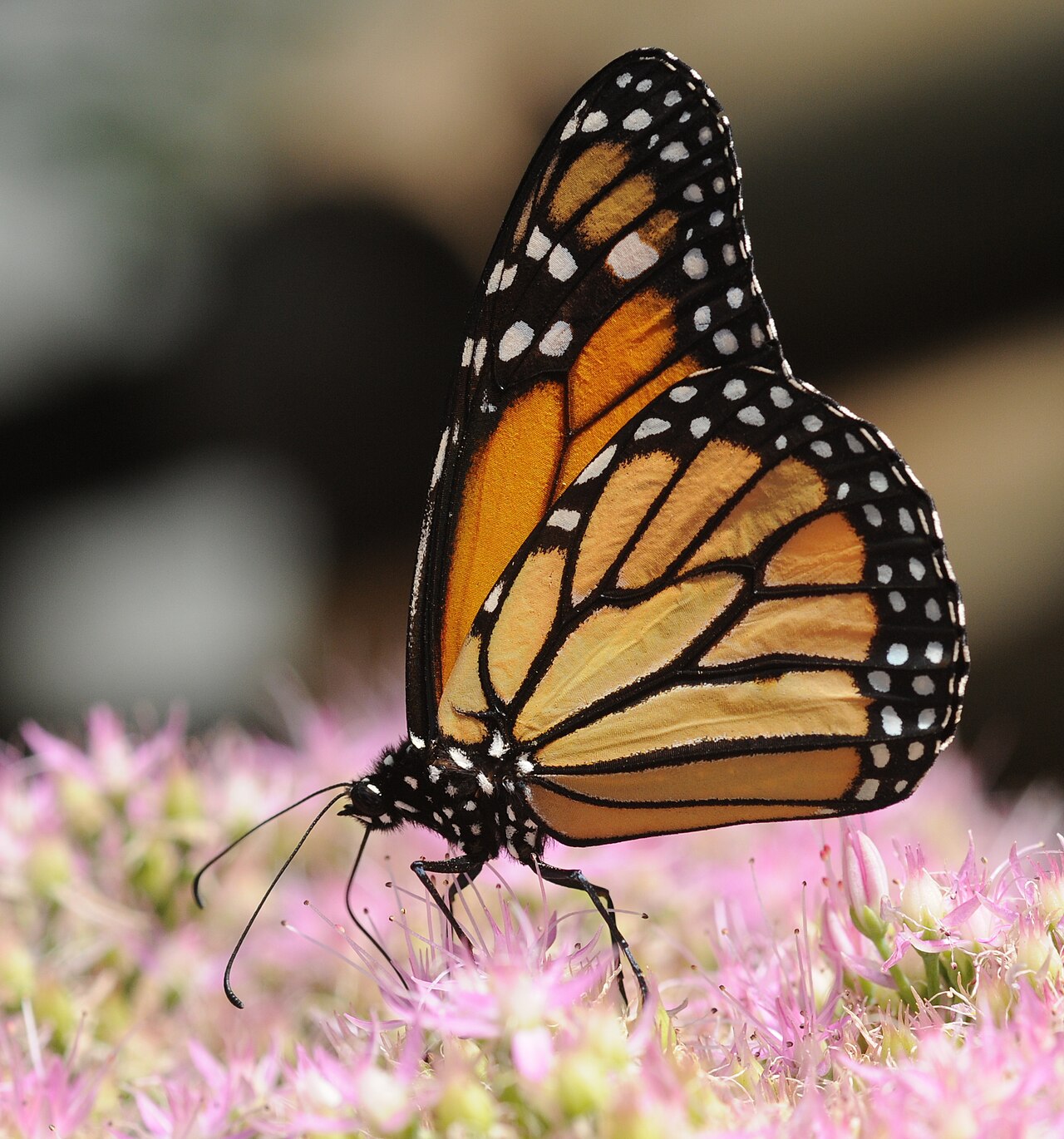
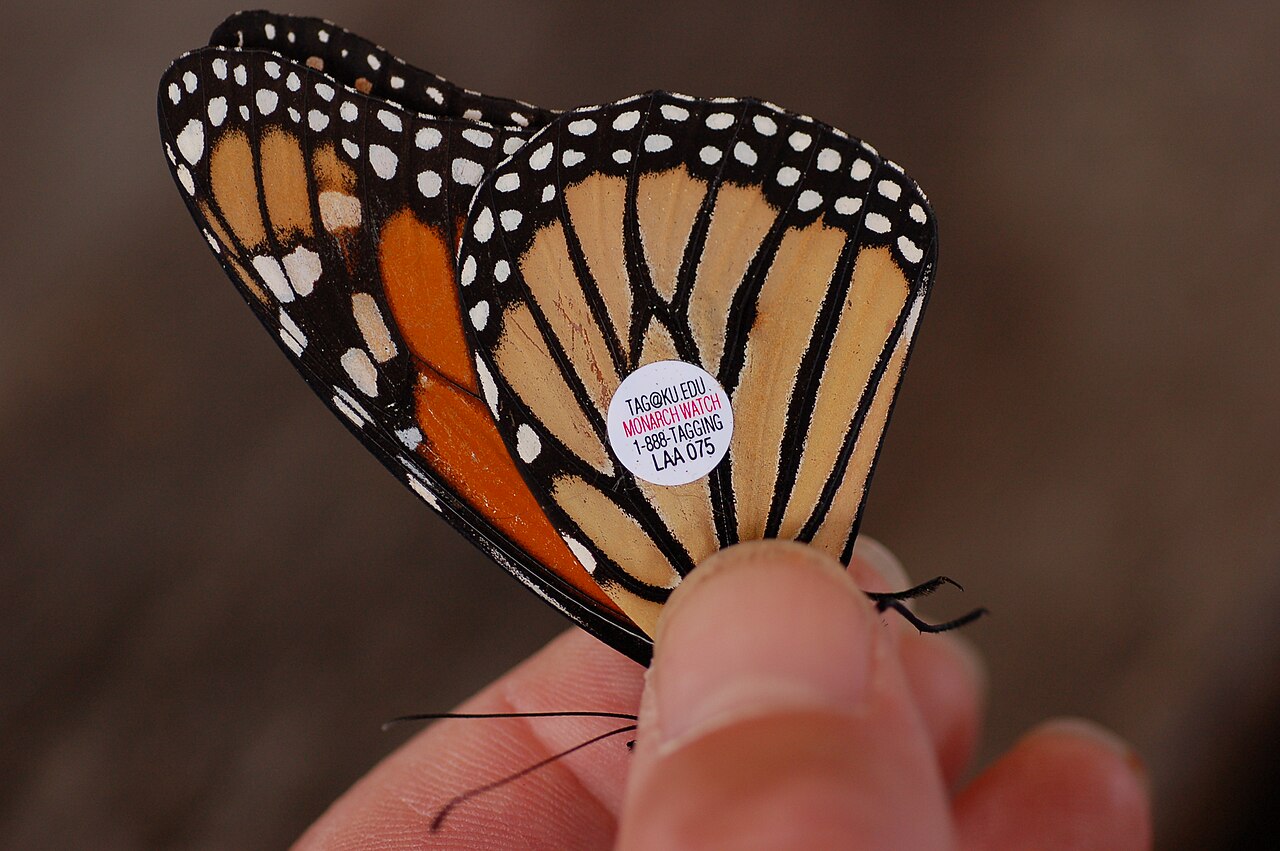
The monarch (Danaus plexippus) is the reference point for orange butterflies in North America. It spans 3.5 to 4 in, with deep orange wings divided by thick black veins and a black border studded with white spots. Males carry a small black scent patch on a vein of each hindwing, which females lack, making the sexes easy to tell apart in a photograph.
The migration is what made the species famous. Monarchs east of the Rockies travel up to 3,000 miles to overwinter in the oyamel fir forests of central Mexico, a journey that takes multiple generations northward in spring and a single long-lived generation southward in autumn. Western populations overwinter along the California coast instead.
Milkweed is the entire foundation of monarch biology. Females lay only on milkweed, caterpillars eat only milkweed, and the cardiac glycosides they absorb from it make both the caterpillar and the adult toxic to predators. The bright orange is a warning that advertises that toxicity, which is exactly why other species copy it. Monarch numbers have declined sharply in recent decades, and the Xerces Society for Invertebrate Conservation tracks western overwintering counts as one of the clearest measures of that trend.
Viceroy vs Monarch: Telling the Mimics Apart
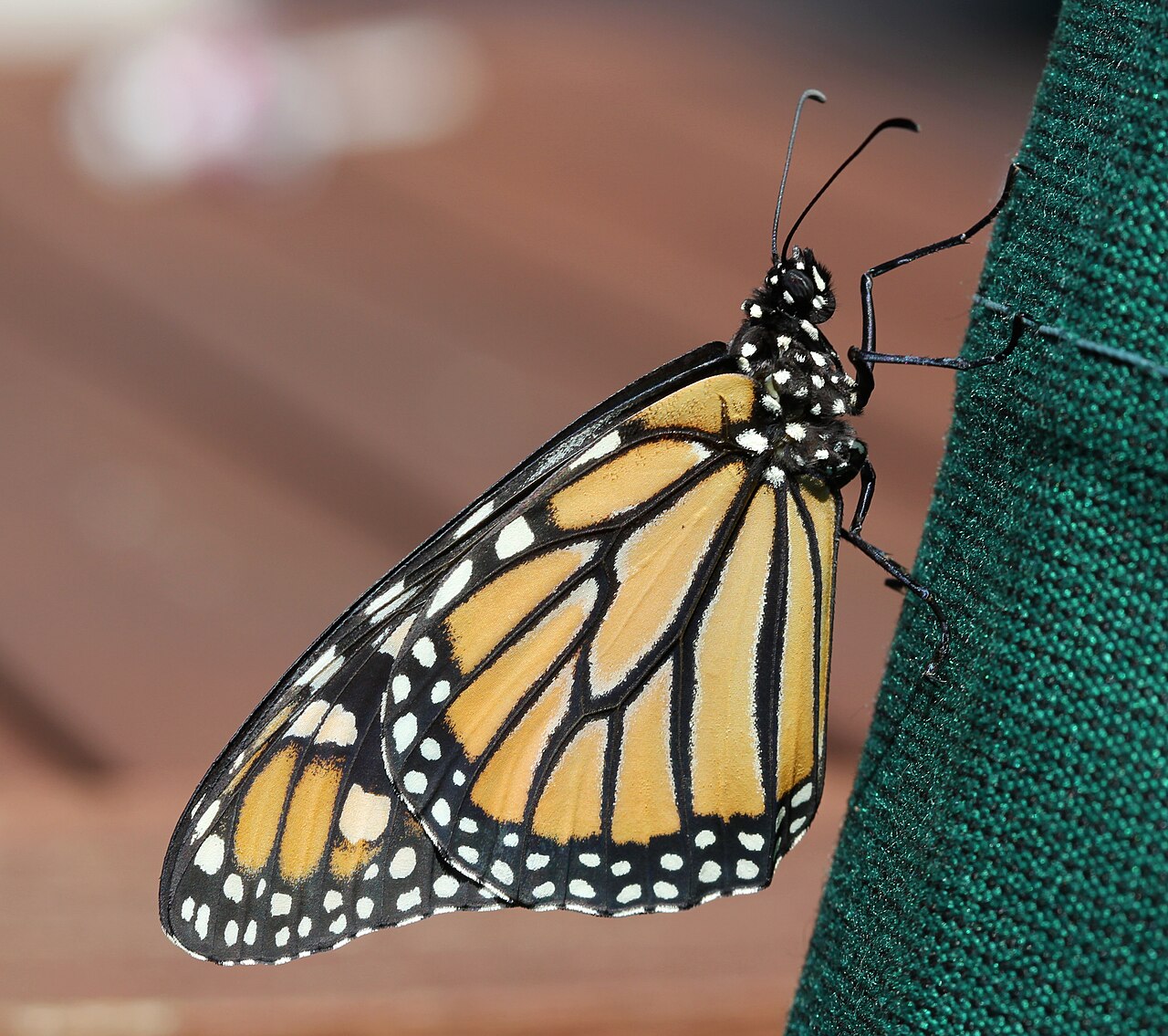
The viceroy (Limenitis archippus) is the classic monarch look-alike, and the difference comes down to one line. Viceroys have a black band that arcs across the hindwing, cutting across the vein pattern. Monarchs never have it. Once you know to look for that band, the two are unmistakable even at a distance.
Size and flight style back it up. Viceroys are smaller at 2.5 to 3 in, and they fly with a distinctive flap-flap-glide rhythm rather than the monarch’s long sailing glides. Their host plants are willows, poplars, and cottonwoods rather than milkweed, so a viceroy is more likely near water and wet woodland edges.
The relationship between them was long taught as Batesian mimicry, meaning a harmless species imitating a toxic one. Later research overturned that. Viceroys accumulate salicylates from willow that make them unpalatable in their own right, so the two species are Mullerian co-mimics, both genuinely defended and both reinforcing the same warning signal. It is one of the more instructive corrections in the history of mimicry research.
Fritillaries: Orange Butterflies With Silver Spots
The great spangled fritillary (Speyeria cybele) is a large meadow butterfly, 2.5 to 4 in across, orange above with dense black spots, chevrons, and dashes. Turn it over and the hindwing carries large metallic silver spots against a warm brown background, which is the field mark that gives the group its name. It flies fast and low over open ground and favors thistle, milkweed, and bergamot.
The gulf fritillary (Agraulis vanillae) is the southern counterpart and looks quite different in flight. Its wings are longer and narrower, the orange is brighter, and the underside carries elongated silver streaks rather than round spots. It is common across the southeastern United States and into Texas and California, and its caterpillars feed on passionflower vines.
Violets are the key to the true fritillaries in the genus Speyeria. Females lay near violet patches in late summer, the tiny caterpillars hatch and overwinter without feeding, then wake in spring to eat violet leaves. That dependency means fritillary numbers track the health of woodland and meadow violet populations, so mowing regimes and habitat loss hit them hard.
Painted Lady, American Lady, and Other Orange Species
The painted lady (Vanessa cardui) is the most widely distributed butterfly in the world, found on every continent except Antarctica and Australia. It is pinkish orange with black and white markings toward the forewing tip, spans 2 to 2.9 in, and shows four small eyespots on the underside of the hindwing. Its caterpillars eat thistles, mallows, and dozens of other plants, which is exactly why it succeeds nearly everywhere.
The American lady (Vanessa virginiensis) is its near twin and is separated by counting eyespots. American ladies have two large eyespots on the hindwing underside, painted ladies have four small ones. It is the single most reliable way to distinguish them, and it works on a photograph of a perched butterfly.
Several smaller species round out the orange group. The orange sulphur (Colias eurytheme) is a 1.5 to 2.75 in butterfly of clover and alfalfa fields, orange flushed with a solid dark border, and it almost never opens its wings at rest. The sleepy orange, the pearl crescent, and the question mark all add to the mix, and the fiery skipper and other orange skippers confuse matters further with their fast darting flight and habit of holding forewings and hindwings at different angles.
Black and Orange Butterflies: How to Sort Them Out
Black and orange is the most searched butterfly pattern in North America, and it covers several unrelated groups. Thick black veins dividing solid orange panels means a monarch or a viceroy, resolved by the hindwing band. Orange with scattered black spots and dashes means a fritillary or a crescent, resolved by size and by whether the underside carries silver.
Orange with bold black patches concentrated toward the wing tips, plus white spots, usually means a painted lady or an American lady. A butterfly that is mostly black with orange bands and blue crescents along the margin is more likely a red admiral, a close relative of the ladies that patrols garden edges and often perches on people.
Two other possibilities deserve mention. The question mark and eastern comma are orange with black spots and ragged wing outlines, and both have a small silvery mark on the hindwing underside that gives them their names. A small orange butterfly with black spots that lands with wings half open and flies in quick darts is probably a skipper rather than a true butterfly, a family that trips up almost everyone at first. Sorting orange insects by pattern is a recurring exercise, as our guides to the orange ladybug and the yellow ladybug demonstrate for beetles.
Orange Butterfly Meaning and Symbolism
Butterflies carry transformation symbolism across most cultures, drawing on the metamorphosis from caterpillar to adult, and orange adds its own associations of warmth, energy, creativity, and joy. An orange butterfly is commonly interpreted as a sign of positive change, renewed passion, or encouragement during a period of transition.
In some traditions the monarch specifically carries a stronger meaning. The species arrives in central Mexico around the beginning of November, coinciding with Dia de los Muertos, and in local tradition the butterflies are understood as the returning souls of the departed. That association is far older than the scientific description of the migration and remains part of how the arrival is marked.
The naturalist reading is different but not smaller. An orange butterfly in your yard means the host plants its caterpillars require are growing somewhere nearby, since no adult appears without a larval food source within range. A monarch means milkweed, a fritillary means violets or passionflower, a painted lady means thistle. The butterfly is evidence that a whole plant community is working.
How to Attract Orange Butterflies to Your Garden
Host plants matter more than nectar plants, and this is the single most common mistake in butterfly gardening. Adults will visit any garden with flowers, but they only stay and reproduce where their caterpillars can eat. Plant native milkweed for monarchs, violets for fritillaries, passionflower for gulf fritillaries, thistles and mallows for painted ladies, and willow for viceroys.
Butterfly weed (Asclepias tuberosa) deserves its own mention because the name causes constant confusion. It is a native milkweed with brilliant orange flower clusters, it is a monarch host plant, and it is drought tolerant and easy to establish in full sun. Butterfly bush (Buddleia) is a different thing entirely, an introduced nectar shrub that feeds adults but hosts no North American caterpillars and is invasive in several regions.
Add nectar sources with staggered bloom times so something is flowering from spring through autumn, including coneflower, bee balm, joe-pye weed, aster, and goldenrod for the late season. Provide a sunny sheltered spot out of the wind, a shallow damp patch of sand or mud for puddling, and skip the insecticides, since neonicotinoids persist in plant tissue and kill caterpillars on plants that look perfectly healthy. Leaving stems and leaf litter standing over winter protects overwintering chrysalises and the caterpillars covered in our guide to the fuzzy caterpillar.
Related reading: Orange and Black Butterfly.
Related reading: Orange Butterfly Meaning.
Frequently Asked Questions
What kind of butterfly is orange?
The most common orange butterflies in North America are the monarch, viceroy, gulf fritillary, great spangled fritillary, painted lady, and orange sulphur. Size, the presence or absence of a hindwing band, and whether the underside carries silver spots separate them quickly.
How do I tell a monarch from a viceroy?
Look for a black band arcing across the hindwing. Viceroys have it, monarchs never do. Viceroys are also smaller at 2.5 to 3 in versus 3.5 to 4 in, and they fly with a flap-flap-glide rhythm rather than long sailing glides.
What does an orange butterfly mean?
Symbolically, orange butterflies are associated with transformation, warmth, creativity, and positive change. Monarchs arriving in central Mexico around Dia de los Muertos are traditionally understood as returning souls. Practically, an orange butterfly means its caterpillar host plants are growing nearby.
What is a black and orange butterfly?
Thick black veins on solid orange means a monarch or viceroy. Scattered black spots on orange means a fritillary or crescent. Bold black at the wing tips with white spots means a painted lady or American lady. Mostly black with orange bands means a red admiral.
Are orange butterflies poisonous?
Monarchs are toxic to predators because their caterpillars absorb cardiac glycosides from milkweed, and viceroys are unpalatable from salicylates in willow. Both are harmless to humans and safe to handle gently. The bright orange is a warning signal aimed at birds, not people.
What plants attract orange butterflies?
Plant host plants, not just nectar. Native milkweed including butterfly weed for monarchs, violets for fritillaries, passionflower for gulf fritillaries, thistle and mallow for painted ladies, and willow for viceroys. Add coneflower, bee balm, and aster for nectar and avoid neonicotinoid insecticides.
Is butterfly weed the same as butterfly bush?
No. Butterfly weed is a native orange-flowered milkweed that monarch caterpillars can eat. Butterfly bush is an introduced shrub that provides nectar for adults but hosts no North American caterpillars and is invasive in several regions. For breeding butterflies, plant the milkweed.