Wolf Spider vs Brown Recluse: The Eye Test and More
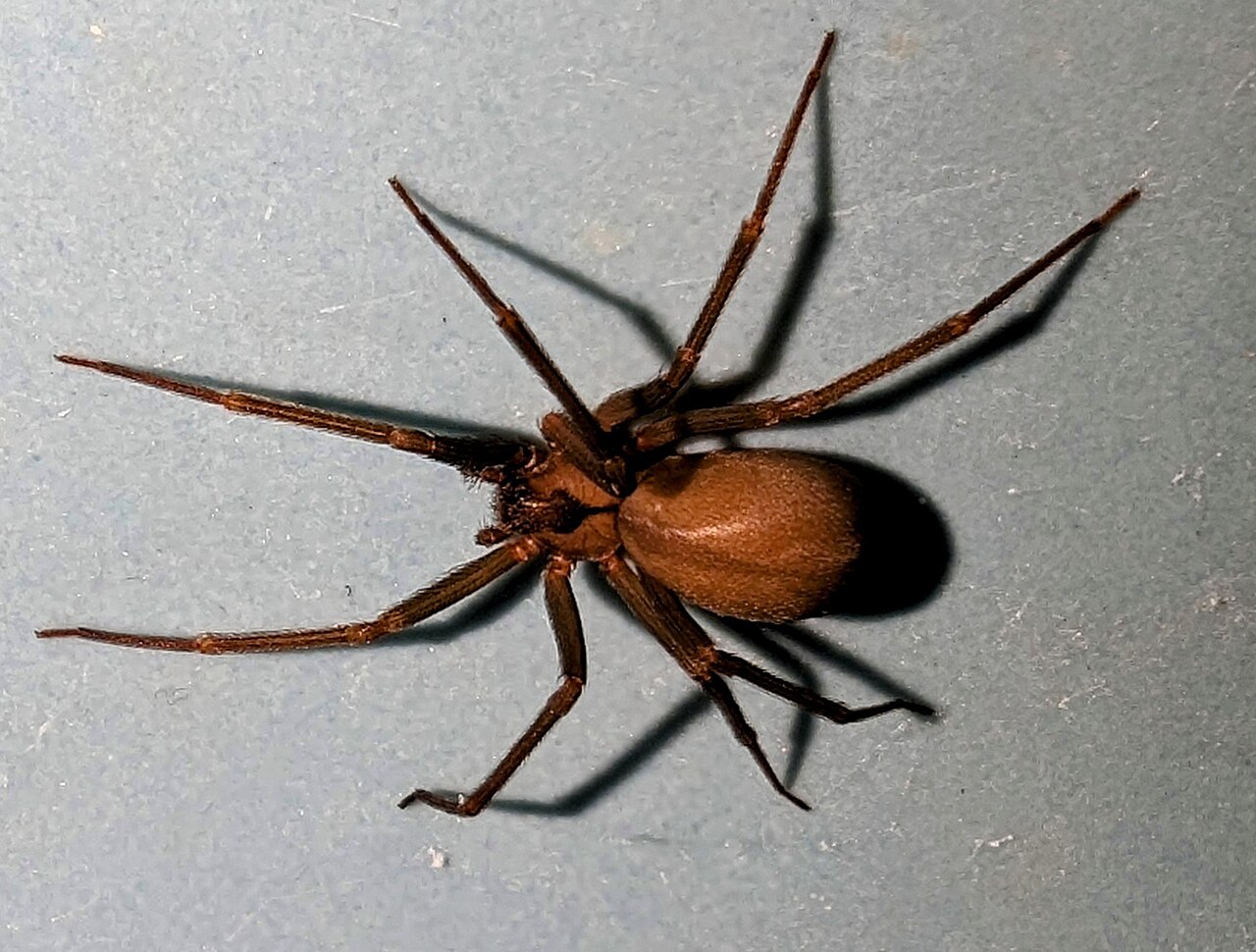
Count the eyes. Brown recluses have six eyes arranged in three pairs, which is unusual among spiders and diagnostic. Wolf spiders have eight, arranged in three rows with two very large forward-facing eyes in the middle that reflect a torch beam brightly. That single check settles the identification more reliably than anything else, and it works from a decent phone photograph.
Almost every large brown spider people fear is a wolf spider, and wolf spiders are harmless. Brown recluses are genuinely medically significant, considerably smaller than most people expect, and restricted to a well-defined range covering the central and southern United States. This guide covers every reliable difference, the violin marking that gets over-trusted, what each bite does, and where recluses actually occur.
| Feature | Wolf Spider | Brown Recluse |
|---|---|---|
| Eyes | 8, in three rows, two very large | 6, in three pairs |
| Body size | 0.4 to 1.4 in, stocky and hairy | Under 0.4 in, slender and smooth |
| Legs | Banded, spiny, thick | Uniform tan, no bands or spines |
| Behavior | Runs fast in the open, may stand ground | Retreats, hides, avoids light |
| Eyeshine | Bright, unmistakable in a torch beam | None noticeable |
| Bite | Harmless, like a bee sting | Medically significant, can cause necrosis |
The Eye Test
Six eyes versus eight is the definitive difference and it is easier to check than it sounds. Take a photograph with a phone, zoom in on the front of the cephalothorax, and count.
Brown recluse eyes sit in three widely separated pairs arranged in a semicircle, and the pattern is distinctive once seen. Very few spider families have six eyes, which is why this is the check arachnologists recommend to the public over any other.
Wolf spider eyes are arranged in three rows: four small ones along the bottom, two very large forward-facing eyes in the middle, and two more on top of the head. Those two large eyes are the most obvious feature at any size and give wolf spiders their excellent vision, which our guide to the baby wolf spider covers in more detail.
Size and Build
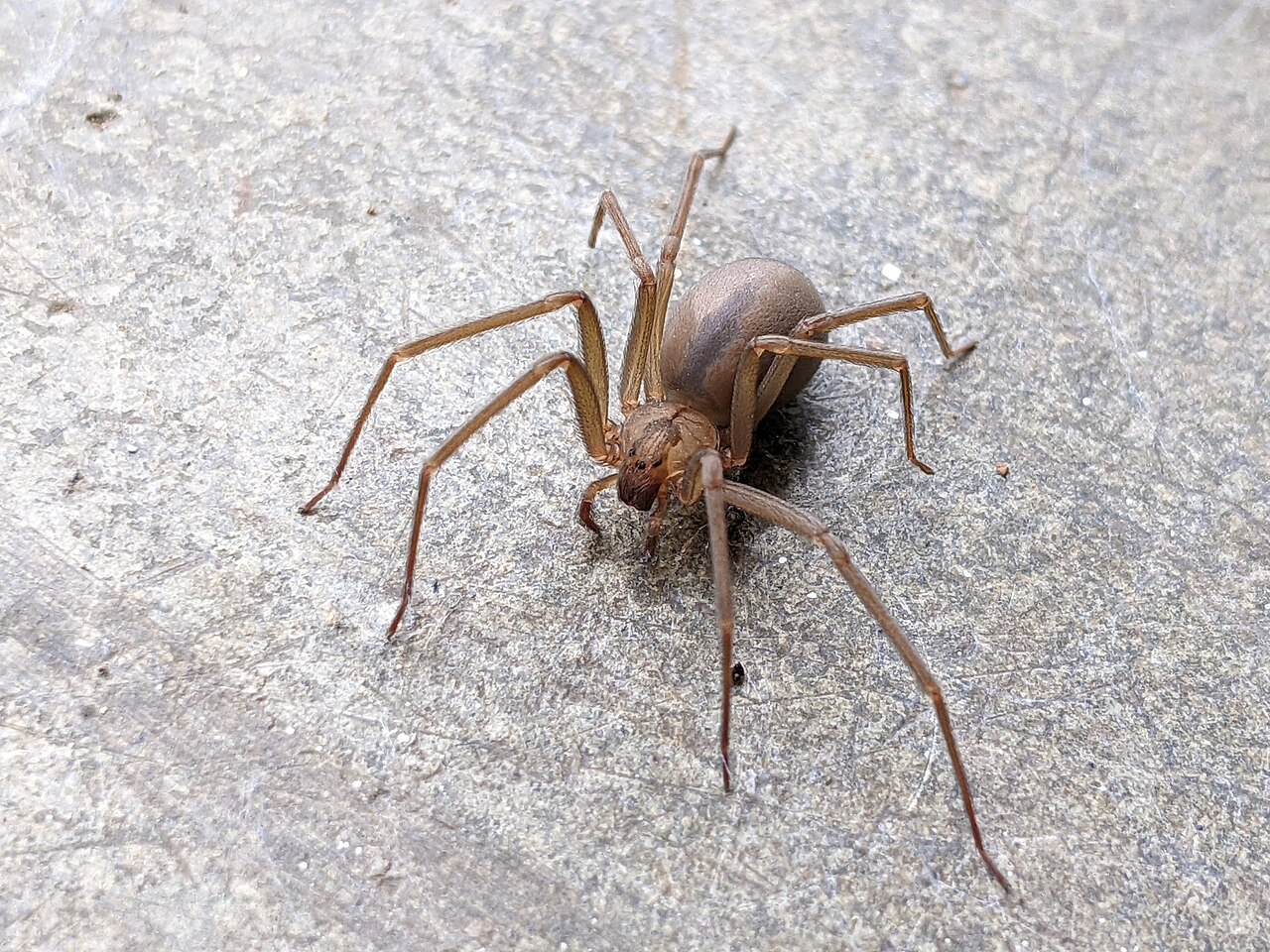
Size alone eliminates most cases. Brown recluses are small, with a body under 0.4 in and a legspan roughly the size of a quarter, and they never approach the bulk of an adult wolf spider.
Wolf spiders range from 0.4 to over 1.4 in of body length with legspans reaching 3 in or more in the largest North American species. They are stocky, densely hairy, and heavy-looking, and a large one is genuinely imposing.
Build differs as much as size. Recluses are slender, smooth, and long-legged with a delicate appearance, while wolf spiders are robust and bristly. If a spider looks substantial and hairy, it is not a recluse, and this rules out the large majority of alarmed reports.
The Violin Marking
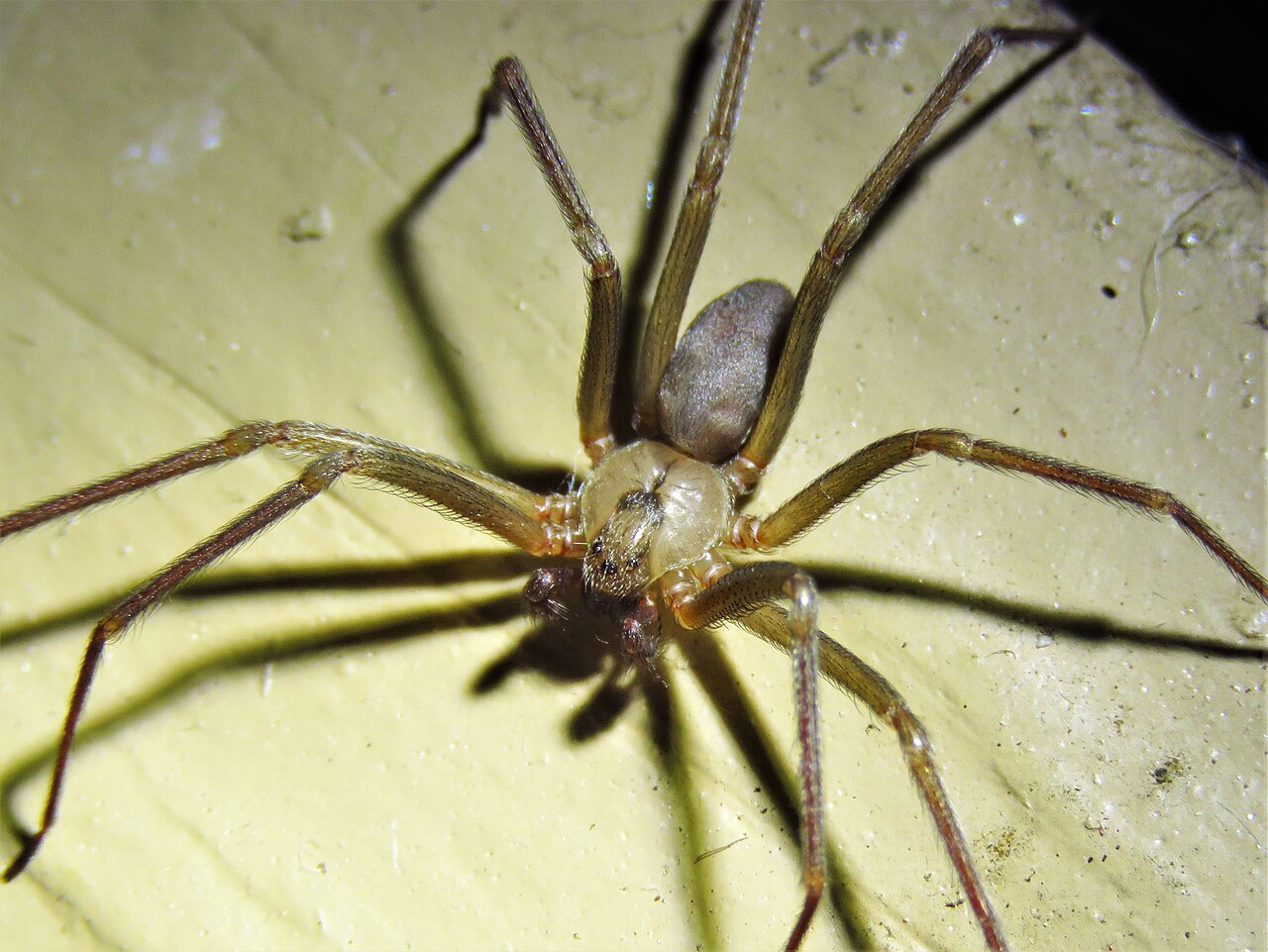
Brown recluses do carry a dark violin-shaped mark on the cephalothorax with the neck pointing backward toward the abdomen, and it is a real feature. It is also over-trusted as a test.
Two problems limit it. Many unrelated spiders have vaguely violin-like or otherwise dark markings in the same area, including several harmless species that get killed on this basis, and the marking on a genuine recluse can be faint or worn on some individuals, particularly juveniles.
Better supporting checks are the legs and the body color. Brown recluse legs are uniformly tan with no bands, no stripes, and no obvious spines, and the abdomen is a single uniform color without patterning. Wolf spiders have banded, spiny legs and a mottled or striped abdomen, so leg appearance alone distinguishes them without needing a magnifier.
Behavior
Wolf spiders hunt actively and build no capture web. They run down prey across open ground, they are fast, and they are frequently found sprinting across floors, driveways, and lawns, which is exactly the behavior that alarms people.
Brown recluses do the opposite. They are secretive, avoid light and open space, and build small irregular sheets of silk in undisturbed dark places as a retreat rather than a trap. A recluse found in the open is usually a wandering male, and even then it flees rather than confronting.
Response to disturbance differs too. A wolf spider may hold its ground briefly, raise its front legs, and appear to face you down, which reads as aggression and is a bluff from an animal that cannot harm you. A recluse retreats immediately. Neither will pursue a person, and neither is aggressive in any meaningful sense.
Where Brown Recluses Actually Live
Range matters enormously and is the check most often skipped. University extension entomology departments in states outside the recluse range publish standing guidance on this precisely because misidentification is so persistent. Brown recluses occupy a well-documented area covering roughly the central and southern United States, centered on Missouri, Arkansas, Kansas, Oklahoma, Louisiana, and Tennessee, extending into surrounding states.
They are absent or vanishingly rare across most of the country. California, the Pacific Northwest, New England, Florida, and most of the northern tier have no established populations, and arachnologists have documented repeatedly that reported recluse bites in these areas overwhelmingly turn out to be something else entirely.
Occasional individuals travel in shipments and turn up outside the range, but they do not establish populations, and the practical consequence is that a spider identified as a recluse in Seattle or Boston is almost certainly misidentified. Wolf spiders, by contrast, occur across the entire continent with around 240 North American species.
What a Wolf Spider Bite Does
Very little. Wolf spider venom is not medically significant to humans, and bites happen only when the animal is pressed against skin or trapped in clothing.
The result is comparable to a bee sting without the stinger: brief sharp pain, local redness and swelling, and itching that resolves within a day or two. Wash the area, apply a cold compress, and monitor it like any minor wound.
There is no tissue damage, no systemic illness, and no antivenom needed. The only realistic complication is secondary bacterial infection from scratching, which applies to any broken skin. Given how many wolf spiders live around and inside houses, the near-total absence of significant medical reports is itself the strongest evidence of their harmlessness.
What a Brown Recluse Bite Does
This is genuinely serious and warrants medical attention, while also being widely over-diagnosed. The bite is often painless initially, with symptoms developing over several hours: increasing pain, redness, and in some cases a blister at the center surrounded by a pale ring and a red outer zone.
A minority of bites progress to necrosis, in which the venom destroys tissue, producing an ulcer that can take weeks or months to heal and occasionally requires surgical treatment. Systemic reactions are rare but documented, particularly in children, and include fever, nausea, and in very rare cases hemolysis.
The over-diagnosis problem is worth knowing. Physicians in areas with no recluse populations regularly attribute skin lesions to recluse bites, and studies examining such cases have found the actual causes to include bacterial infections, particularly MRSA, along with various other conditions. If you are bitten and can safely capture the spider, bring it, since identification changes the diagnosis substantially. Our guide comparing the brown recluse and house spider covers the other frequent misidentification.
Other Spiders in the Mix
Several harmless species account for most misidentifications alongside wolf spiders. Southern house spiders are common across the southern states, and the long-legged brown males are mistaken for recluses constantly, though they have eight eyes and build conspicuous radiating webs from wall crevices.
Grass spiders are fast ground-level hunters with prominent spinnerets projecting behind the abdomen and funnel-shaped webs in lawns and shrubs. Hobo spiders, once widely blamed for necrotic bites in the Pacific Northwest, are now considered by most researchers not to cause them, and current evidence does not support the reputation they acquired.
Cellar spiders, common house spiders, and various orb weavers round out the list, and none of them is dangerous. Our guides to the southern house spider, the grass spider, and the black house spider work through the identification for each.
What to Do About Either
For wolf spiders, catch and release. A container and a piece of stiff card move one outside in seconds, and given that they eat crickets, roaches, and other insects both indoors and in gardens, killing them accomplishes nothing useful.
For confirmed recluses within their range, exclusion and reduction are reasonable. Seal gaps, reduce clutter in basements, garages, and storage areas, store items in sealed plastic rather than cardboard, keep beds away from walls, and shake out clothing and shoes that have been undisturbed. Sticky traps placed along walls are the standard monitoring and control tool and give a realistic sense of population size.
For both, exclusion beats spraying. Spiders walk on hairy leg tips that minimize contact with treated surfaces, many indoor sightings are transient wanderers, and broad-spectrum spraying kills the predators that suppress genuine pests. Door sweeps, sealed gaps, repaired screens, and reduced outdoor lighting near entrances address the cause rather than the symptom.
Frequently Asked Questions
How do I tell a wolf spider from a brown recluse?
Count the eyes. Recluses have six in three pairs, wolf spiders have eight in three rows with two very large forward-facing ones. Wolf spiders are also larger, stocky, and hairy with banded spiny legs, while recluses are under 0.4 in, slender, and uniformly tan.
Is the violin marking reliable?
Less than its reputation suggests. Many unrelated spiders have vaguely violin-like markings, and the mark can be faint on juveniles or worn individuals. Uniform tan legs with no bands or spines and a body under 0.4 in are better supporting checks.
Are wolf spider bites dangerous?
No. The venom is not medically significant, and a bite produces brief pain, local redness, and swelling comparable to a bee sting, resolving within a day or two. Bites happen only when the spider is pressed against skin.
Where do brown recluses live?
The central and southern United States, centered on Missouri, Arkansas, Kansas, Oklahoma, Louisiana, and Tennessee. They are absent from California, the Pacific Northwest, New England, Florida, and most northern states, where reported bites almost always have other causes.
What does a brown recluse bite look like?
Often painless at first, with pain and redness developing over hours, sometimes forming a blister surrounded by a pale ring and a red outer zone. A minority progress to tissue necrosis requiring weeks to heal. Seek medical care and bring the spider if you can capture it safely.
Why do wolf spiders come inside?
Accidentally. They are outdoor ground hunters that enter through gaps around doors, foundations, and utility penetrations, particularly in autumn when temperatures fall and males wander looking for mates. They do not establish indoor populations.
Do wolf spiders chase people?
No. A disturbed wolf spider may briefly hold its ground and raise its front legs, which looks like aggression but is a bluff from an animal that cannot harm you. Neither species pursues people, and both flee given the chance.