What Do Moths Eat? Adults, Caterpillars, and Clothes
What do moths eat? The answer depends entirely on which life stage you mean. Adult moths mostly drink liquids: flower nectar, tree sap, rotting fruit juice, honeydew, and mineral rich moisture from mud and damp soil. Many of the largest and most spectacular species eat nothing at all as adults, because they emerge without functional mouthparts and live only a week or two on fat reserves built up as caterpillars. The eating stage is the caterpillar, and caterpillars are the ones that do essentially all the feeding damage people notice.
The two moths most homeowners meet, clothes moths and pantry moths, follow the same rule. The adults fluttering around a closet or a cupboard are not eating anything. Their larvae are, and they are the ones chewing wool sweaters and infesting flour. Sorting adults from larvae is the key to understanding both moth biology and moth control.
| Question | Quick Answer |
|---|---|
| Adult moth diet | Nectar, sap, fruit juice, honeydew, mud puddle moisture |
| Caterpillar diet | Leaves, and for pest species keratin or stored food |
| Species that never eat | Luna, cecropia, polyphemus, promethea, imperial |
| What damages clothes | Larvae, not adults; wool, silk, fur, feathers |
| What damages pantries | Larvae in grains, flour, nuts, dried fruit, pet food |
| Do moths bite? | No, adults cannot bite or sting people |
What Adult Moths Eat: Nectar, Sap, and Sometimes Nothing
Adult moths are liquid feeders. The majority visit flowers at dusk and through the night, sipping nectar from species that open after dark and release scent to attract them. Evening primrose, night blooming jasmine, moonflower, phlox, and many pale tubular flowers evolved specifically around this partnership. Moths are significant pollinators, and researchers have found that nocturnal moth visits can rival daytime bee activity on some plant species.
Nectar is not the only option. Many moths feed on tree sap oozing from wounds, on fermenting fallen fruit, on honeydew left by aphids and scale insects, and on the sugary residue found on damaged bark. Underwing moths in particular are drawn to fermenting fruit and to the sugar baits that moth watchers paint onto tree trunks. A smaller group visits animal dung and carrion for salts and nitrogen.
Mud puddling is the third feeding behavior worth knowing. Male moths in many families gather on damp soil, riverbanks, and even sweaty skin to extract sodium and other minerals, which they later transfer to females during mating as a nutritional gift. If a moth lands on you and appears to be probing, it is almost certainly after salt in your perspiration rather than showing any interest in biting.
How Do Moths Eat?
Most adult moths feed through a proboscis, a long flexible tube coiled neatly under the head when not in use. The structure forms from two grooved halves that lock together to create a drinking straw, and the moth uncoils it by pumping fluid into the base. Muscles in the head then act as a pump, drawing liquid up the tube and into the gut.
Proboscis length tracks the flowers a species uses. Short tongued moths feed at open shallow blossoms, while hawk moths and sphinx moths carry a proboscis that can exceed the length of the entire body, letting them drink from deep tubular flowers while hovering. Charles Darwin famously predicted a Madagascan moth with an extraordinarily long proboscis based purely on the depth of an orchid’s nectar spur, and the moth was later confirmed. Specimens documenting these relationships sit in collections at institutions such as the Smithsonian Institution.
Then there is the group with no working mouth at all. In the giant silk moth family, the proboscis is vestigial or absent, the gut is nonfunctional, and the adult simply cannot process food. These moths emerge, mate, lay eggs, and die within one to two weeks, running entirely on energy stored during the caterpillar stage. Our profiles of the cecropia moth and the imperial moth cover two of the best known North American examples.
What Do Moth Caterpillars Eat?
The caterpillar is the feeding machine of the moth life cycle, and it is where nearly all the biological and economic impact happens. Most moth caterpillars are leaf eaters with chewing mandibles, and many are highly specialized to a narrow set of host plants. Luna moth caterpillars feed on sweetgum, walnut, hickory, and birch. Cecropia caterpillars take maple, cherry, and birch. Tomato hornworms, which become five spotted hawk moths, feed on tomato, pepper, and other nightshades.
A female moth will not lay eggs on the wrong plant, because her larvae usually cannot digest anything else. This host specificity is why native trees and shrubs support so much more caterpillar biomass than ornamental exotics, and why caterpillars are the single most important food source for nesting songbirds. A chickadee pair may deliver several thousand caterpillars to raise one brood.
Some caterpillars break the leaf eating pattern entirely. Clothes moth larvae digest keratin, the protein in wool, fur, and feathers. Pantry moth larvae feed on stored grain and dried plant products. A few carnivorous species eat scale insects, and one Hawaiian genus catches and consumes small flies. For a look at how a well known caterpillar handles a toxic host plant, see our guide to the monarch caterpillar.
Do Moths Eat Clothes?
Adult clothes moths do not eat clothes. They cannot: like many moths in their family, adults have reduced mouthparts and take little or no food during their short lives. The damage is done entirely by the larvae, which hatch from eggs laid directly on suitable fabric and feed there for anywhere from a month to well over a year depending on temperature and food quality.
Two species cause almost all household damage. The webbing clothes moth spins silken tunnels and patches across the fabric surface as it feeds, leaving irregular holes and matted webbing. The casemaking clothes moth builds a small portable silk case that it drags along, feeding from inside it, so you may find what looks like a grain of rice attached to a sweater. Both adults are small, roughly half an inch across, plain buff or golden, and they avoid light rather than flying toward it. A moth circling a lamp is almost never a clothes moth.
The larvae target soiled fabric preferentially. Sweat, body oils, food spills, and urine supply nutrients that pure clean fiber lacks, which is why damage concentrates at collars, cuffs, underarms, and folded creases. Storing garments clean and sealed removes most of the risk. Carpet beetles cause very similar damage and are frequently mistaken for moths; our guide to carpet beetle problems covers how to tell the two apart.
What Fabrics Do Clothes Moths Eat?
Clothes moth larvae digest keratin, the fibrous protein found in animal derived materials. That puts wool at the top of the list, along with cashmere, mohair, alpaca, angora, silk, fur, felt, feathers, and down. Antique wool rugs, upholstered furniture with horsehair stuffing, taxidermy mounts, and stored blankets are classic infestation sites because they sit undisturbed for long periods.
Plant based and synthetic fibers are not the primary target. Pure cotton, linen, rayon, polyester, nylon, and acrylic contain no keratin and cannot sustain larval development on their own. Larvae will still chew through them, however, when the fabric is blended with wool, when it is heavily soiled with food or sweat, or simply when it lies between the larva and something it wants to reach. This is why people find holes in a cotton shirt stored next to an infested wool coat and reasonably conclude the moths ate cotton.
Leather sits in between. Tanned leather is not a preferred food, but the hair, hide residue, and finishing compounds on some leather goods can support feeding, and larvae will damage suede and fur trim readily. The practical rule for storage is straightforward: anything from an animal needs protection, anything blended needs protection, and everything should go into storage clean. Freezing infested items at zero degrees Fahrenheit for at least 72 hours kills all life stages without chemicals.
What Do Pantry Moths Eat?
Pantry moths, most often the Indianmeal moth, are a completely separate problem from clothes moths despite the similar name. Their larvae feed on stored plant products: flour, cereal, rice, pasta, cornmeal, oats, nuts, seeds, dried fruit, chocolate, spices, birdseed, and dry pet food. Birdseed and pet food are the two most commonly overlooked sources in a home, because they often sit in garage or utility room storage where nobody looks.
The telltale sign is silk. Indianmeal moth larvae spin fine webbing through the food they infest, clumping grains together and leaving strands across container lids and shelf corners. Adults are small with a distinctive two tone forewing, pale toward the head and coppery bronze toward the tip, and they fly weakly around kitchens in the evening.
Infestations almost always arrive in packaging from the store rather than through a window. Control means finding and discarding every infested package, vacuuming shelf cracks and the underside of shelving where larvae crawl to pupate, wiping with soapy water, and transferring everything remaining to airtight glass or hard plastic containers. Thin cardboard and plastic bags do not stop larvae, which chew through both. Pheromone traps help monitor whether the problem is really gone but will not eliminate it on their own.
Moths That Never Eat as Adults
The giant silk moths of the family Saturniidae include the largest and most striking moths in North America, and none of them feed as adults. Luna moths, cecropia moths, polyphemus moths, promethea moths, and imperial moths all emerge with vestigial mouthparts and a nonfunctional digestive system. Their entire adult existence, usually seven to ten days, runs on fat accumulated during months of caterpillar feeding.
This constraint shapes everything about their behavior. Adults do not visit flowers, do not need to defend feeding territory, and spend their brief lives almost entirely on finding a mate. Males detect female pheromones with enormous feathery antennae and can track a female from over a mile away downwind. Once mating and egg laying are complete, the moth dies, which is why finding a fresh luna moth is such a narrow window of opportunity.
It also means these moths cannot be kept alive by offering food. People who find a large moth and want to help it often try sugar water, and it simply does nothing, because there is no proboscis to drink with and no gut to absorb it. The kindest response is to move the moth to a sheltered spot on a tree trunk away from lights and let it get on with its short schedule. Our profiles of the largest moth species and the common white moths of North America cover the species most often found this way.
What Do Hummingbird, Hawk, and Sphinx Moths Eat?
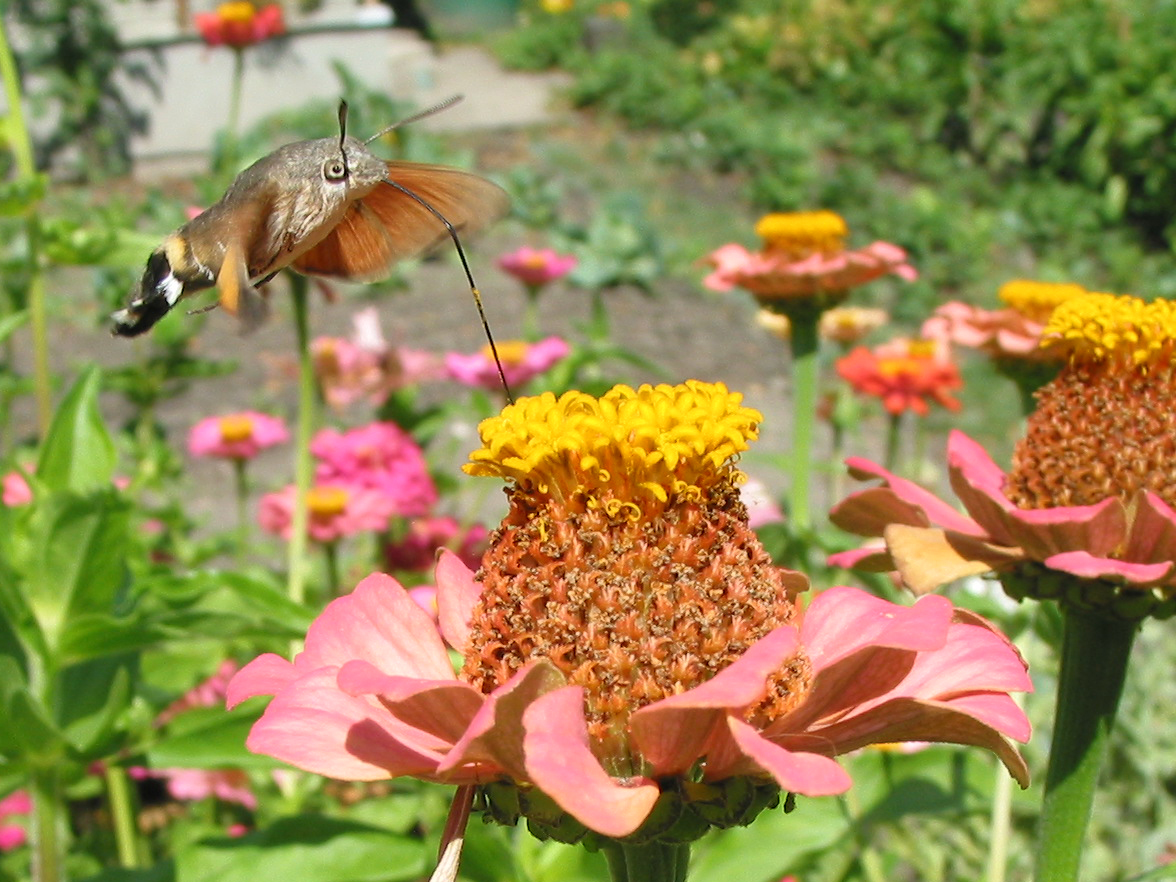
Sphinx moths, also called hawk moths, are the athletes of the moth world and among the few that feed as strongly as any butterfly. They hover in front of flowers with rapid wingbeats and drink nectar through a proboscis that in some species exceeds the body length several times over. Because they can hover and hold position, they exploit deep tubular flowers that most insects cannot reach.
The daytime flying members of this group cause endless identification confusion. Hummingbird clearwing moths hover at bee balm, phlox, and honeysuckle in full daylight, are roughly the size of a large bumblebee, and beat their wings fast enough to hum. People report them as baby hummingbirds constantly. Our guide to the hummingbird moth covers how to tell them apart at a glance.
Their caterpillars are equally notable. Sphinx moth larvae are the large hornworms familiar to vegetable gardeners, including the tomato hornworm and tobacco hornworm, along with the caterpillars that feed on grape, Virginia creeper, catalpa, and willow. Gardeners who tolerate a few hornworms on a spare tomato plant get the adult moths as pollinators later in the season, and the parasitic wasps that attack hornworms usually keep numbers manageable without intervention.
What Do Moths Drink?
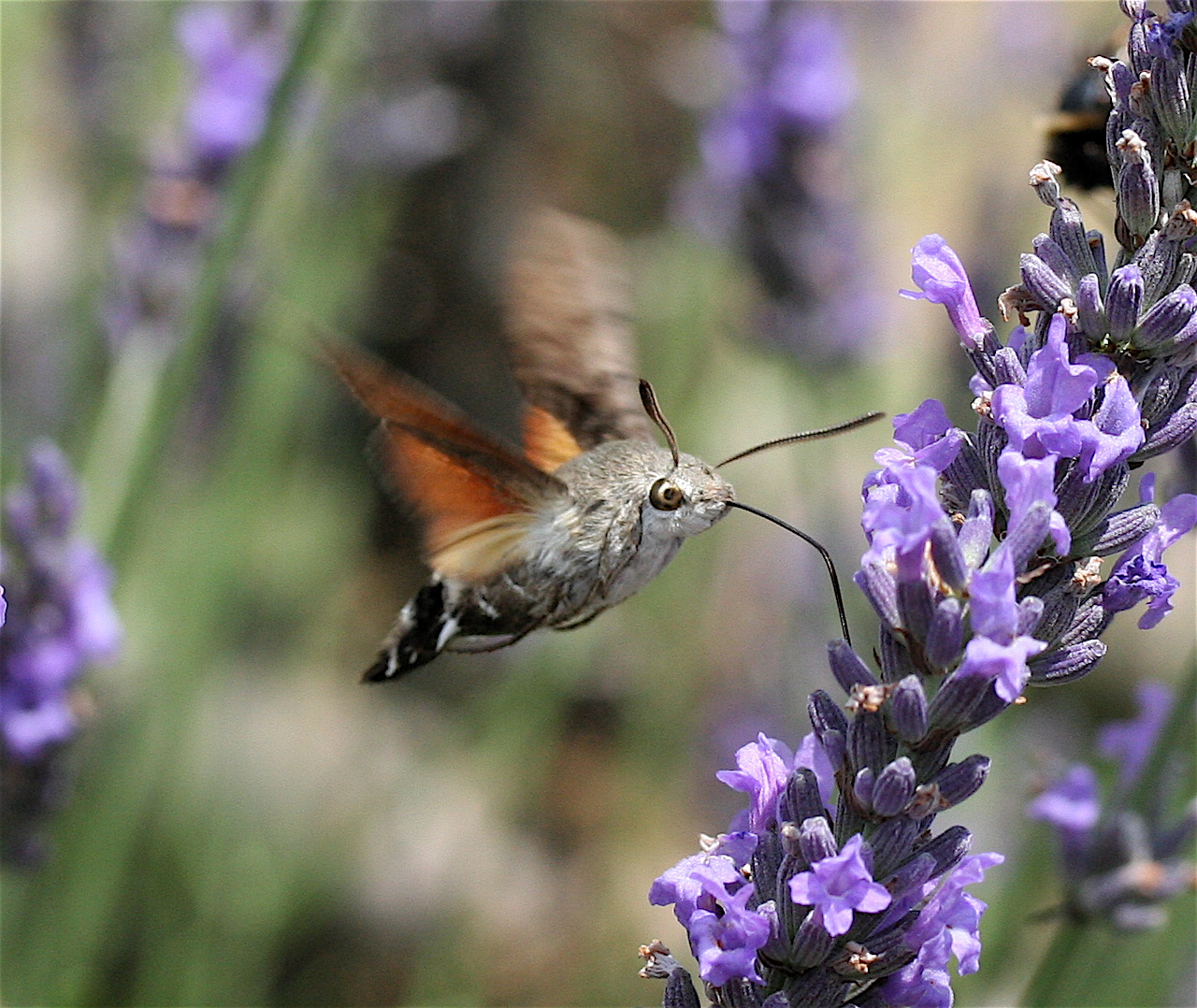
Since nearly all adult moth feeding is liquid, drinking and eating are effectively the same activity. Nectar supplies both water and sugar. Tree sap, fermenting fruit juice, and aphid honeydew do the same. Moths also drink dew from foliage and take water directly from damp soil, puddle margins, and the edges of birdbaths during dry weather.
Mineral seeking adds a second dimension. Males of many species congregate at wet sand, mud, animal urine, dung, and sweat to extract sodium, which is scarce in a nectar only diet. In some tropical species this behavior extends to drinking tears from large mammals, and a few unusual species pierce fruit skin or, in a handful of Asian vampire moth species, even mammal skin to feed. Those are rare specialists, not the moths in a North American backyard.
If you want to see this behavior at home, it is easy to arrange. Keep a shallow dish of wet sand in a sunny spot near night blooming flowers, or paint a mixture of overripe banana, brown sugar, and a splash of beer onto a few tree trunks at dusk. Return with a red filtered flashlight an hour after dark and you will usually find several species feeding, which is by far the best way to learn what the moths in your own yard actually drink.
Frequently Asked Questions
Can moths bite?
No. Adult moths either have a soft coiled proboscis built for drinking liquids or no functional mouthparts at all, and neither can break skin. A moth landing on you is usually after salt in your sweat. Some caterpillars carry irritating hairs or spines that cause a rash, but that is a defensive sting rather than a bite.
Do moths eat cotton or polyester?
Not as a food source. Clothes moth larvae digest keratin, which only occurs in animal fibers such as wool, silk, fur, and feathers. They will chew through cotton, linen, and synthetics when those fabrics are blended with wool, heavily soiled with sweat or food, or simply in the way, which is why holes turn up in cotton shirts stored beside infested woolens.
What do luna moths eat?
Adult luna moths eat nothing. They emerge without functional mouthparts or a working digestive system and survive about a week on fat reserves stored during the caterpillar stage. The caterpillars do all the feeding, mainly on sweetgum, walnut, hickory, persimmon, and white birch depending on the region.
How long do moths live?
Adult lifespan varies enormously. Giant silk moths that cannot feed live roughly one to two weeks. Nectar feeding species commonly live several weeks, and some overwintering adults survive for months. Clothes moth larvae can spend anywhere from a month to more than two years feeding before pupating, depending on temperature and food quality.
Do moths eat bugs?
A small number do. Certain caterpillars in the family Noctuidae feed on scale insects and aphids, and several Hawaiian species in the genus Eupithecia actively ambush small flies. These predatory moths are rare exceptions. The overwhelming majority of moth caterpillars are strict plant feeders, and adults take only liquids.
What attracts moths into the house?
Two very different things. Clothes moths arrive on infested wool items or wander in and settle on soiled animal fiber in dark closets. Pantry moths almost always come home inside packaged grain, birdseed, or pet food. Moths flying at porch lights and windows are typically unrelated outdoor species drawn by artificial light rather than by anything indoors.
What do moths eat in the wild?
Wild adult moths feed on flower nectar, tree sap, fermenting fruit, aphid honeydew, dew, and mineral rich moisture from mud and dung. Caterpillars eat leaves, and most are specialized to a narrow set of native host plants. Native trees such as oak, willow, and cherry support hundreds of moth species each, which is why they matter so much for songbirds.