Birds That Eat Snakes: 12 Snake-Hunting Species
Birds that eat snakes range from familiar backyard raptors like the red-tailed hawk to surprising snake hunters like wild turkeys and great blue herons. In North America, the most dedicated avian snake predators are hawks, owls, and the greater roadrunner, a bird famous for killing rattlesnakes. Worldwide, specialists like Africa’s secretary bird have evolved entire hunting styles around snakes. Most snake-eating birds rely on speed, precision strikes to the head, and armored legs or thick feathers to avoid being bitten.
This guide covers 12 snake-hunting species in detail, explains how each one kills snakes without getting envenomated, and answers the practical questions homeowners ask most, including whether backyard birds can help control snakes and which species handle venomous ones. The short answer: yes, several common birds regularly eat snakes, and a few actively seek them out.
| Top North American snake hunter | Red-tailed hawk |
| Most famous snake killer | Greater roadrunner (rattlesnakes) |
| Nocturnal snake predator | Great horned owl |
| Backyard snake deterrent | Guinea fowl and wild turkeys |
| Global specialist | Secretary bird (Africa) |
| Venomous snakes eaten | Yes, including rattlesnakes and copperheads |
Birds that eat snakes include red-tailed and red-shouldered hawks, great horned owls, roadrunners, wild turkeys, herons and egrets. They avoid being bitten by striking from above, pinning the head with their feet, and killing the snake before any swallowing begins.
Why Some Birds Hunt Snakes
Snakes are an attractive prey item for the right predator. A single snake delivers a large, protein-dense meal compared to a mouse or songbird, and snakes are abundant in most habitats where raptors hunt. Because snakes spend hours basking in open, sunny spots to regulate body temperature, they are exposed and visible from above at exactly the times of day when hawks are soaring. For a bird with sharp eyes and a fast dive, a basking snake is a slow-moving target.
The trade-off is risk. A snake can strike back, and even a nonvenomous species like a large rat snake can inflict deep bites or constrict a careless attacker. Venomous snakes raise the stakes further. That is why snake-hunting birds share a common toolkit: they attack the head first, they use their feet rather than their face, and many have physical armor. Hawks have thick scaled legs called tarsi, roadrunners rely on speed and repeated blows, and secretary birds stomp with force measured at several times their own body weight.
Snake predation also runs both ways, which surprises many people. Large snakes such as rat snakes are notorious nest raiders that climb trees to eat eggs and nestlings. So the relationship between birds and snakes is an ongoing arms race in the food chain, with each side preying on the other depending on size and opportunity. When people ask what animals eat snakes, birds sit near the top of that list alongside mammals like foxes and other snakes such as kingsnakes.
Hawks That Eat Snakes
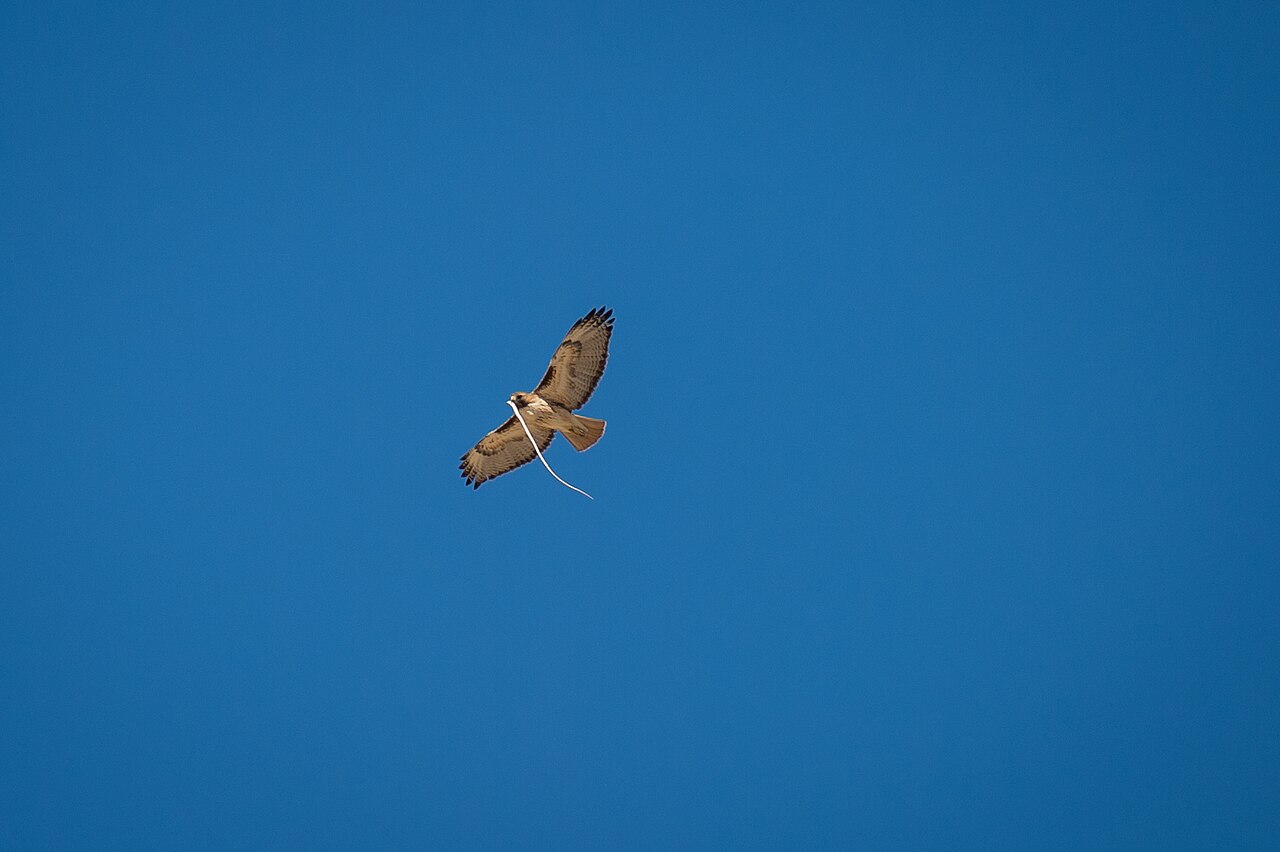
The red-tailed hawk is North America’s most important avian snake predator simply because of its numbers and range. Studies of red-tailed hawk diets consistently find snakes making up a meaningful share of prey, especially in the South and West where snakes are active most of the year. A red-tail hunting a snake dives feet first, drives its talons through the body just behind the head, and either severs the spine with its beak or carries the snake aloft and drops it.
Red-shouldered hawks are even more reptile-focused. These forest and swamp hawks patrol wet woodlands where garter snakes, water snakes, and small rat snakes are common, and reptiles and amphibians dominate their warm-season diet. Swainson’s hawks of the western plains take snakes regularly during breeding season, and the crested caracara of Texas and Florida will eat snakes both freshly killed and as carrion, a flexibility most raptors lack.
Hawks do take venomous snakes, including rattlesnakes and copperheads, though not without occasional cost. According to the Cornell Lab of Ornithology (allaboutbirds.org), red-tailed hawks are documented preying on rattlesnakes as a routine part of their diet in the West. A hawk’s scaled legs deflect many strikes, and its strategy of pinning the head immediately means most attacks end before the snake can land a defensive bite. Birders sometimes witness the aftermath: a hawk on a fence post methodically eating a snake like a strand of spaghetti.
Owls That Hunt Snakes at Night
Snake hunting does not stop at sunset. The great horned owl is a generalist apex predator that takes snakes whenever it encounters them, including species active at dusk like night snakes and juvenile rat snakes moving between hiding spots. With a grip strength estimated around 200 to 500 pounds per square inch and silent flight, a great horned owl often kills a snake before the snake registers the attack.
Barred owls, which favor the same wet woodlands as red-shouldered hawks, eat a steady stream of small snakes, frogs, and crayfish. Burrowing owls of the western grasslands live literally among snakes, nesting in ground burrows, and they take small snakes as prey while famously mimicking a rattlesnake’s buzz to scare predators away from their own burrows. That vocal mimicry is one of the best examples of how deeply snakes shape the lives of ground-dwelling birds.
One owl even has a stranger relationship with snakes. Eastern screech-owls sometimes carry live, slender blind snakes back to their nest cavities without eating them. The tiny snakes live in the nest debris and eat insect larvae, and research has found that owl chicks in nests with resident blind snakes grow faster and survive better. It is a rare case of a bird recruiting a snake as a housekeeper rather than a meal.
The Roadrunner: America’s Most Famous Snake Killer
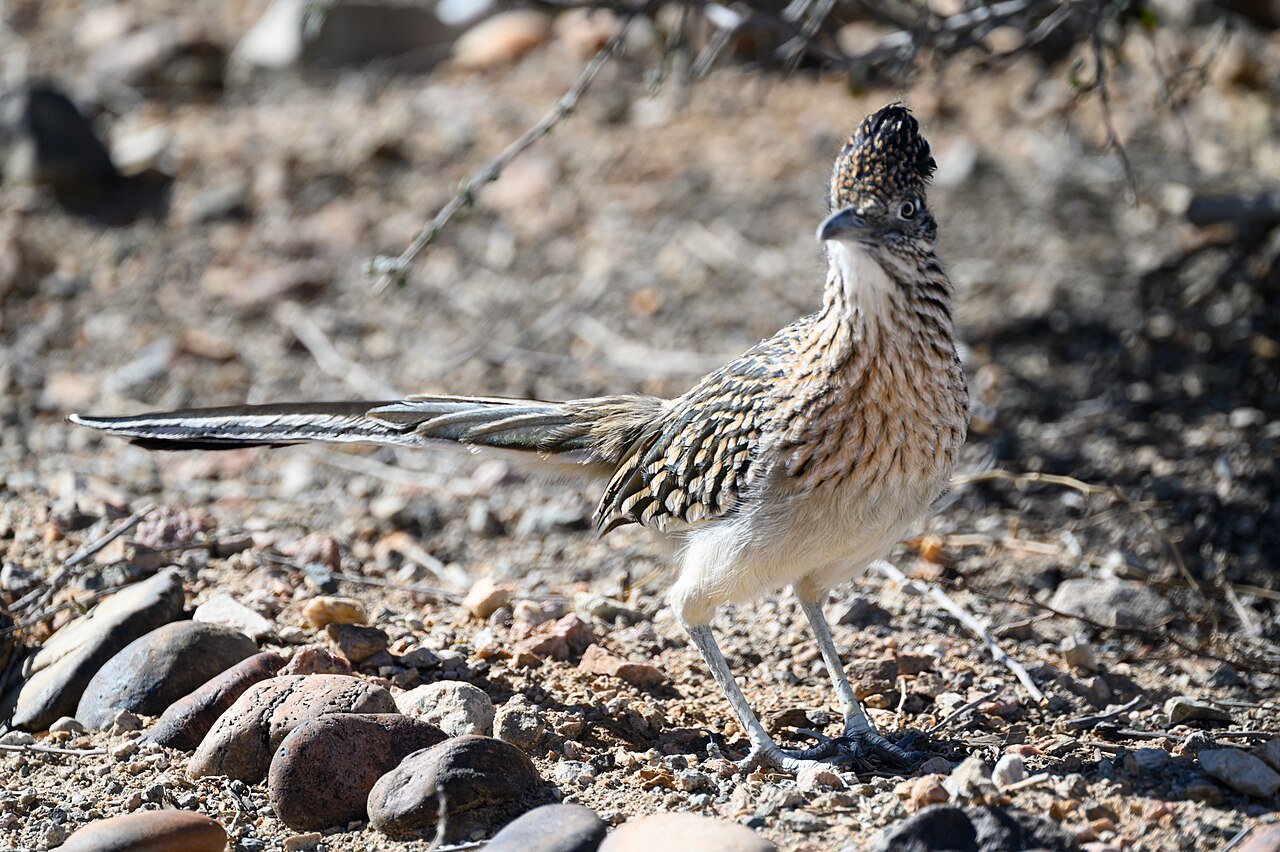
The greater roadrunner of the desert Southwest is the continent’s celebrity snake hunter, and its reputation is earned. Roadrunners kill and eat rattlesnakes, a feat very few animals attempt head-on. A hunting roadrunner circles the snake with wings spread and tail flared as a distraction, provokes strikes, dodges with reaction times faster than the snake’s lunge, and then seizes the snake behind the head with its long, heavy bill.
The kill itself is blunt-force work. The roadrunner slams the snake’s head against a rock or hard ground repeatedly until the snake is dead, then swallows it whole, head first. A snake too long to swallow in one go is simply left partially hanging from the bill and swallowed inch by inch over hours as digestion makes room. Pairs of roadrunners sometimes team up on larger rattlesnakes, with one bird distracting the snake while the other strikes from behind.
Roadrunners are not reckless, and that is worth understanding. They preferentially attack smaller rattlesnakes and rarely tangle with a heavy adult diamondback, because the risk calculus changes with snake size. Most of a roadrunner’s diet is actually lizards, insects, rodents, and small birds. But no other North American bird has built such a specialized, repeatable technique for taking on venomous snakes and winning.
Wild Turkeys, Chickens, and Guinea Fowl
Snake eating is not limited to birds of prey. Wild turkeys are opportunistic omnivores that peck apart and eat small snakes they encounter while foraging, and a flock of turkeys moving through leaf litter puts real pressure on the small snakes in its path. Turkeys will also mob and harass larger snakes, striking with their feet and beaks until the snake retreats, which is one reason properties with resident turkey flocks often report fewer snake sightings.
Backyard chickens behave the same way on a smaller scale. A hen that finds a garter snake or juvenile rat snake will grab it, run from flock mates trying to steal it, and swallow it in pieces. Chickens are not reliable protection against venomous snakes, and a copperhead in a coop is a genuine danger to the birds, but they absolutely do eat small snakes as casual protein.
Guinea fowl are the birds most often kept specifically as snake deterrents, and the folk wisdom holds up reasonably well. Guineas are loud, aggressive, and travel in tight flocks that surround and mob snakes, pecking and screaming until the snake dies or escapes. They kill and eat small snakes outright, and their constant alarm calls alert homeowners to larger ones. A flock of guineas will not clear rattlesnakes off a ranch, but they make a property noticeably less comfortable for snakes.
Herons, Egrets, and Other Wading Birds
Wading birds are underrated snake predators. A great blue heron standing motionless in a wet meadow is hunting anything that moves, and that includes water snakes, garter snakes, and even small venomous cottonmouths in the Southeast. The heron’s technique is a spear-fast strike, a hard grip in the long bill, and vigorous shaking or repeated stabs before the snake is worked around and swallowed head first, exactly like a large fish.
Great egrets and cattle egrets do the same in marshes and pastures, and cattle egrets following livestock pick off small snakes flushed by hooves. In Florida, wading birds and water snakes overlap so heavily that snakes are simply part of the standard menu. Even the wood stork, a filter-feeder by design, takes snakes when its snapping bill contacts one in murky water.
Sandhill cranes deserve a mention here too. These tall omnivores of fields and wetlands stab and eat snakes with their dagger bills, and cranes have been filmed dispatching fairly large snakes with methodical strikes. For anyone tallying which birds keep snake numbers in check around water, the wading bird group quietly does as much work as the raptors overhead. The same opportunism shows up in birds that eat wasps, where risk tolerance separates the specialists from the occasional snackers.
The Secretary Bird and Other Global Specialists
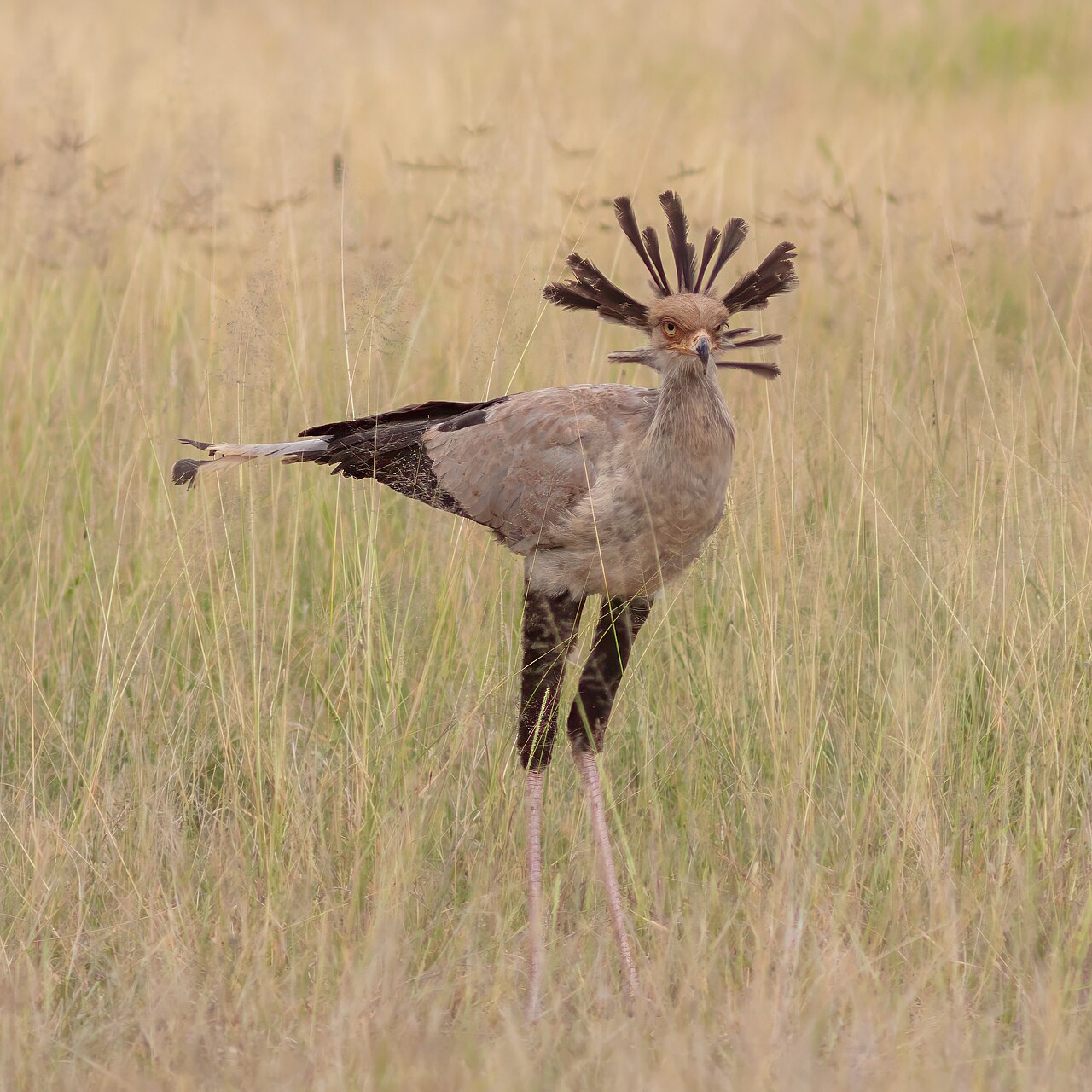
Africa’s secretary bird is the world’s most specialized snake-hunting bird and looks the part: an eagle’s body on crane-like legs, standing about 4 ft tall. Secretary birds hunt on foot, striding through grassland and killing snakes with violent, precisely aimed kicks. Research measuring their strikes found kicks delivering roughly five to six times the bird’s body weight in force, with contact times around 15 milliseconds, fast enough to crush a snake’s skull before it can react. They routinely kill cobras and puff adders, and their long legs are protected by heavy scales.
Do secretary birds eat snakes exclusively? No, and that is a common misconception. Their diet is mostly insects, rodents, and lizards by count, but snakes, including highly venomous species, are the prey they are built to dominate. The species is currently listed as endangered due to habitat loss across sub-Saharan Africa, which has raised concern among conservationists because few predators replace what a secretary bird does.
Other global specialists include the laughing falcon of Central and South America, which eats snakes almost exclusively and announces kills with a loud laughing call, the snake eagles of Africa and Asia, which swallow snakes whole in flight, and Australia’s laughing kookaburra, which famously bashes snakes against branches. Seen worldwide, snake eating has evolved independently in raptors, ground birds, and even kingfisher relatives, proof of how valuable this prey resource is. For the broader family tree of hunters, see our guide to the types of birds of prey.
How Birds Kill Snakes Without Getting Bitten
Every successful snake-hunting bird solves the same problem: neutralize the head before the head reaches you. Raptors solve it with reach and armor. Their first contact is talons, not the vulnerable face, and their scaled tarsi work like greaves that deflect glancing strikes. Most hawk attacks pin or pierce the snake right behind the skull on the first hit, ending the fight instantly.
Ground hunters solve it with speed and blunt force. Roadrunners and secretary birds both operate inside the snake’s strike radius, which sounds suicidal until you compare reaction times. A rattlesnake strike takes roughly 50 to 90 milliseconds to reach a target, and both birds dodge or connect faster than that window. Repeated head trauma, whether kicks or slams against rock, kills the snake without the bird ever gripping a live, mobile head.
Even so, birds lose sometimes. Rattlesnake bites do kill hawks and roadrunners, herons choke on snakes too large to swallow, and large constrictors occasionally wrap and drown a wading bird. Predation is a percentage game. The birds that eat snakes regularly are the ones whose technique wins the overwhelming majority of encounters, and the losses are rare enough that snakes stay firmly on the menu.
Attracting Snake-Eating Birds to Your Property
You cannot order a roadrunner for your backyard, but you can make a property friendlier to the birds that eat snakes. For raptors, the key is hunting infrastructure: tall perches with open sightlines. A single tall dead tree, or a 10 to 15 ft perch pole at the edge of a field or large yard, gives hawks a vantage point they will actually use. Keeping some open, mowed ground near brushy edges creates the basking-versus-cover boundary where hawks intercept snakes.
For ground patrol, poultry is the practical option in rural settings, with guinea fowl the strongest choice and a mixed flock of guineas and chickens covering both alarm duty and cleanup of small snakes. Do not use poison or glue traps hoping to help the birds along, because secondary poisoning kills the very raptors doing the work. And keep identification honest: many harmless species get killed as lookalikes, so learn your local black and white snakes before assuming the worst about a kingsnake that is itself eating venomous species on your behalf.
Related reading: Birds That Eat Bees.
Related reading: Birds That Eat Mice.
Related reading: Birds That Eat Other Birds.
Related reading: birds that eat ants.
Related reading: birds that eat spiders.
Related reading: Birds That Eat Flies.
Related reading: Birds That Eat Japanese Beetles.
Related reading: Birds That Eat Stink Bugs.
Related reading: Birds That Eat Slugs.
Related reading: Birds That Eat Snails.
Which Bird Kills the Most Snakes?
Globally the answer is the secretary bird of Africa, which hunts snakes on foot and kills them with kicks delivered at forces many times its own body weight, fast enough that a venomous snake rarely gets a strike in. No other bird is as specialised.
In North America the honest answer is the red-tailed hawk, not the roadrunner. Roadrunners are the famous snake killers and they do take them, but they are limited to the southwest and to snakes they can physically handle. Red-tailed hawks are abundant across the entire continent, hunt open country where snakes bask, and take snakes as a regular part of a broad diet, which means sheer numbers put them ahead on total snakes killed.
Two others deserve mention for different reasons. Great horned owls take snakes at night, when most snake predators are inactive, which gives them a niche of their own. And wild turkeys and guinea fowl kill small snakes by pecking rather than by any specialised technique, which is where much of the folk reputation for snake control in poultry yards comes from. Audubon’s Greater Roadrunner account covers the hunting behaviour behind the most famous of them.
Related reading: do birds have ears.
Frequently Asked Questions
What bird is best known for eating snakes?
In North America, the greater roadrunner is the most famous snake killer, known for taking on rattlesnakes. Worldwide, Africa’s secretary bird is the ultimate specialist, killing venomous snakes with kicks that deliver several times its body weight in force.
Do hawks really eat rattlesnakes?
Yes. Red-tailed hawks regularly prey on rattlesnakes, especially in the western United States. They strike feet first, pin the snake behind the head with their talons, and their thick scaled legs deflect most defensive strikes.
Do guinea fowl actually keep snakes away?
Guinea fowl kill and eat small snakes and mob larger ones in loud, aggressive flocks, which makes a property less attractive to snakes. They are a real deterrent for small species, but they cannot clear out established venomous snakes and can be hurt attacking a large one.
Do eagles eat snakes?
Yes. Bald eagles take snakes opportunistically, and golden eagles kill snakes including rattlesnakes. Dedicated snake eagles in Africa and Asia eat little else, often swallowing snakes whole while still in flight.
Do birds eat venomous snakes?
Several do. Roadrunners kill rattlesnakes, red-tailed hawks take rattlesnakes and copperheads, great horned owls take venomous species at night, and secretary birds routinely kill cobras. Their techniques target the snake’s head before it can land a bite.
Do wild turkeys eat snakes?
Wild turkeys eat small snakes they find while foraging and will mob larger snakes as a flock, striking with feet and beaks. Properties with regular turkey flocks often report fewer snake encounters.
What animals eat snakes besides birds?
Snakes are eaten by kingsnakes and other snake-eating snakes, foxes, coyotes, raccoons, bobcats, opossums, and in the Southwest by mammals like badgers. Birds of prey remain among the most effective daytime snake predators.