What Is a Female Deer Called? Doe, Hind, and Cow
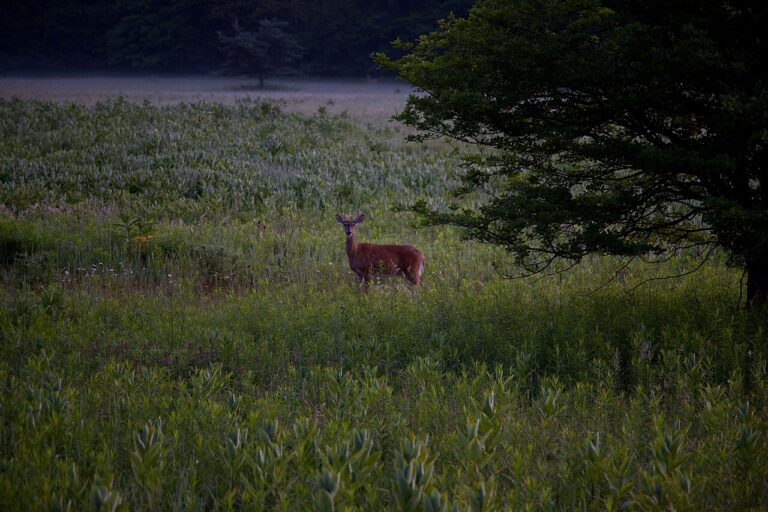
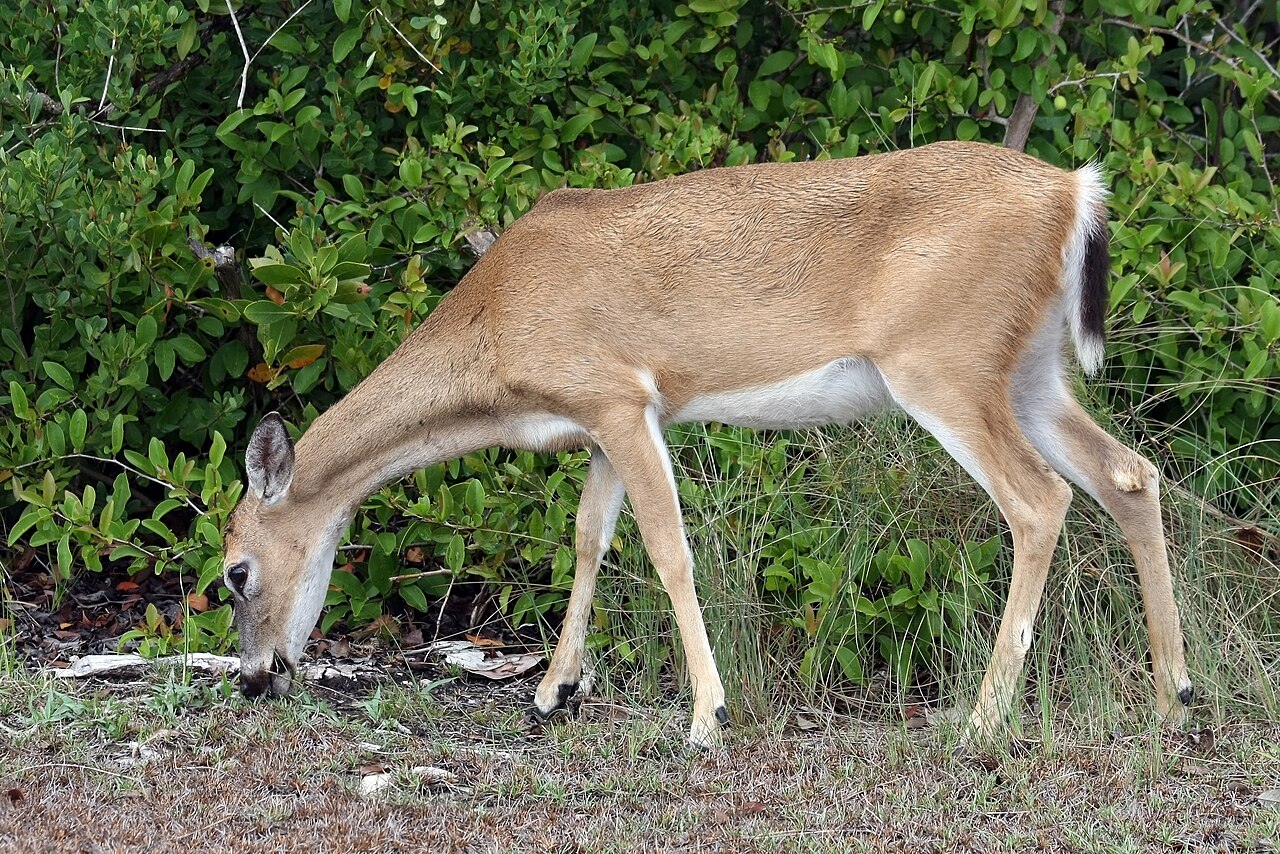
A female deer is called a doe in white-tailed deer, mule deer, roe deer, and most smaller species, and a hind in red deer and other large species. A female elk or moose is called a cow. A young female that has not yet bred is a doe fawn or a yearling doe. The male equivalents are buck for smaller species, stag for large deer, and bull for elk and moose, and a baby of either sex is a fawn or, in elk and moose, a calf.
The reason there are three sets of terms rather than one is size and hunting tradition. British deer hunting distinguished the great deer, red deer, using stag and hind, from the lesser deer, roe and fallow, using buck and doe, and North American usage inherited that split and added cow and bull for the very largest species. This guide covers the full vocabulary by species, how to identify a doe in the field, what a mother deer does with her fawn, and where terms like hind and cow properly apply.
A female deer is called a doe in white-tailed deer, mule deer, and most smaller species, and a hind in red deer and other large species. Female elk and moose are called cows. Males are bucks, stags, or bulls, and young of either sex are fawns, or calves in elk and moose. A mother deer is simply a doe.
| Species | Female / Male / Young |
|---|---|
| White-tailed deer | Doe / buck / fawn |
| Mule deer | Doe / buck / fawn |
| Red deer | Hind / stag / calf |
| Roe and fallow deer | Doe / buck / fawn or kid |
| Elk | Cow / bull / calf |
| Moose | Cow / bull / calf |
| Caribou and reindeer | Cow / bull / calf |
What Is a Female Deer Called by Species?
The term for a female deer depends entirely on the species. Doe covers white-tailed deer, mule deer, black-tailed deer, roe deer, and fallow deer, which is the great majority of the deer people encounter in North America and Europe. Hind is used for red deer, sika deer, and sambar. Cow is used for elk, moose, caribou, and reindeer, the largest members of the family.
The split is a hunting inheritance rather than a biological one. Medieval English hunting law distinguished beasts of the forest, chiefly the red deer, from lesser quarry, and the vocabulary followed. Stag and hind belonged to the noble red deer while buck and doe belonged to the fallow and roe. When Europeans arrived in North America they applied buck and doe to the whitetail because of its size, and later reached for cow and bull when they met elk and moose, which are closer to cattle in bulk.
Cow and bull for elk and moose sometimes strikes people as odd, but it is entirely standard and is what every state wildlife agency uses. A cow elk tag and a bull moose permit are the actual terms on hunting licenses across the West and in Alaska. Nobody in wildlife management would write doe elk. The group of deer guide covers the collective terms that go with these, and the guide to what moose eat uses the cow and bull vocabulary throughout.
Is a Female Deer Called a Hind?
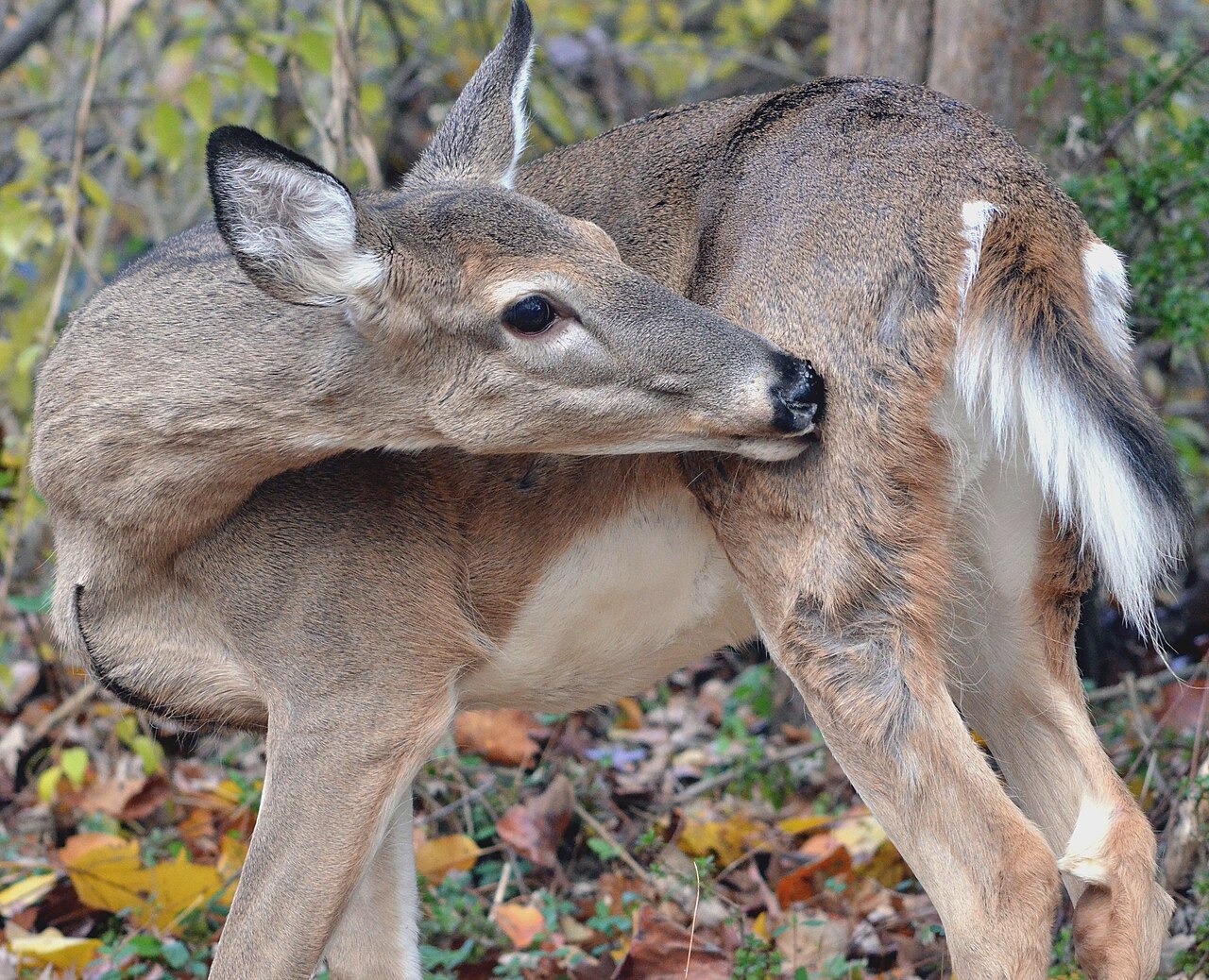
Yes, but only for large deer species, principally the red deer of Europe and its relatives. Hind is a genuine term with a long history, from the Old English hind, and it is standard in British deer management, where hind culls and stag seasons are distinct and legally separate. Using hind for a white-tailed deer would mark someone as unfamiliar with either American usage or the animal.
A related term is calf rather than fawn: red deer produce calves, not fawns, matching the cow and bull vocabulary of elk. This is not a coincidence, since red deer and elk are extremely close relatives and were long considered a single species. American elk are still sometimes called wapiti to avoid confusion with the European elk, which is the animal North Americans call a moose.
Age adds further vocabulary in British usage. A young hind in her first year is a calf, in her second a yearling hind, and older females are simply hinds. On the male side, a young red deer stag is a knobber, then a brocket, spayad, staggard, and finally a hart at six years, one of the more elaborate age vocabularies in English and largely obsolete outside deer estates.
What Is a Mother Deer Called?
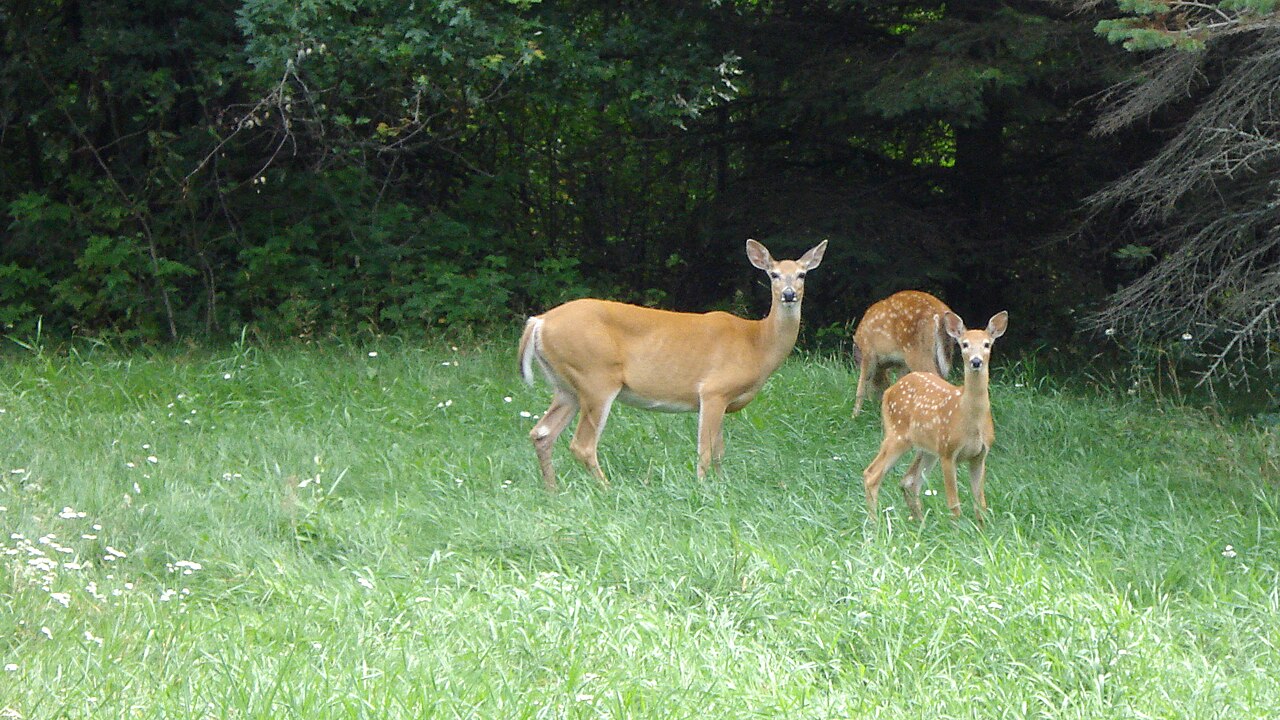
A mother deer is called a doe, and there is no separate term for a female with young comparable to broodmare in horses. In wildlife management, a female with a fawn at her side may be described as a doe with fawn or in survey terms as part of a doe-fawn group, and the ratio of fawns to does is a standard measure of reproductive success used by every state deer program.
The mother’s behavior is the source of the single most common wildlife misunderstanding in North America. A newborn fawn is nearly odorless, spotted for camouflage, and it lies motionless in cover while the doe feeds elsewhere, returning only a few times a day to nurse. She stays away deliberately, because her scent and movement would lead predators to the fawn. A fawn found alone is almost never abandoned.
Thousands of healthy fawns are picked up every spring by people who believe they are orphaned, and most cannot be successfully returned. The correct response is to leave the fawn where it is, keep dogs and children away, and check again the following day; a genuinely orphaned fawn will be crying persistently, covered in flies, or visibly weak and cold. The baby deer guide covers the first months and what actually indicates a fawn in trouble.
How Do You Tell a Doe From a Buck?
Antlers are the obvious answer for much of the year, but they are unreliable in winter and spring. Bucks shed antlers between December and March and regrow them over summer, so a buck in February looks antlerless. Female caribou are the one North American deer where females grow antlers too, which is why the reindeer pulling sleds in December, when males have shed, are almost certainly female.
Body shape works year-round. Bucks have a thicker neck, a more muscular chest, and a blockier head with a shorter, wider snout. Does have a slimmer neck that flows smoothly into the shoulders and a longer, more tapered face. In summer a buck’s antler pedicels are visible as raised bumps on the forehead even after shedding.
Behavior is a further clue. Does move in family groups of related females and their young, led by an older matriarch, while bucks travel alone or in small bachelor groups outside the rut. A group of four or five deer crossing a field in single file in summer is almost always does and fawns. The mule deer vs whitetail comparison covers the physical differences between the two common western and eastern species.
What Is a Baby Deer Called?
A baby deer is called a fawn in white-tailed deer, mule deer, and most smaller species, and a calf in elk, moose, caribou, and red deer. A young female is a doe fawn and a young male a buck fawn or button buck, the latter named for the small antler bumps that appear on male fawns by autumn and are a common source of accidental misidentification during hunting seasons.
Whitetail does typically have one fawn in their first breeding year and twins thereafter, with triplets occurring in high-quality habitat. Gestation runs about 200 days, and fawns are born in late spring, most often in May and June across the United States, timed so the young arrive when forage quality peaks. Fawns lose their spots at three to four months.
Fawn survival is the number that drives deer population management. Losses to coyotes, bobcats, bears, and vehicles are heavy in the first weeks, and fawn recruitment rates vary enormously between regions, from under 0.5 fawns per doe surviving to autumn in areas with heavy predation to well over 1.0 in productive habitat. This is why fawn-to-doe ratios collected in late summer surveys are watched so closely by wildlife agencies.
Do Does Have Antlers?
Female white-tailed and mule deer do not normally have antlers, and antlers in a doe are rare enough to make local news when one is taken. When it does occur, it is usually caused by elevated testosterone from a hormonal abnormality, and such animals often have poorly formed antlers that stay in velvet. Some are intersex individuals rather than fully functional females.
Caribou and reindeer are the exception across the whole deer family: both sexes grow antlers, though the female’s are smaller. Females retain their antlers through winter and shed them in spring after calving, while males shed in early winter after the rut. This is the basis of the widely repeated observation that Santa’s reindeer, depicted with antlers at Christmas, must be female or castrated males.
Antler growth generally is one of the fastest tissue growth processes in mammals, with a large bull elk adding an inch or more of antler per day at peak. Antlers are true bone, grown and shed annually, and they differ fundamentally from horns, which are permanent, made of keratin over a bony core, and grown by both sexes in cattle, sheep, goats, and antelope. Confusing the two is the most common error people make about deer anatomy.
What Are Female Deer Called in Other Languages and Traditions?
The doe has an unusually strong presence in English beyond the animal. A doe-eyed person has large, soft, appealing eyes. Doe is the second note in the solfège scale as popularized in song, spelled doe in that context by deliberate pun. John Doe and Jane Doe have served as placeholder names in English law since at least the eighteenth century, originally in fictitious ejectment actions.
Hind survives in the phrase hind legs and in place names, though the two words are unrelated: the deer term comes from Old English hind while the directional term comes from a different root meaning behind. Buck has generated more slang than any of them, from buck meaning a dollar, to buck up, to buckshot, to the verb to buck, describing a horse throwing its rider.
In deer folklore, the doe appears as a symbol of gentleness, maternal care, and intuition across many traditions, and the white doe or white hind is a recurring figure in European and Celtic legend, often a supernatural creature that leads a hunter into another world. The deer crossing your path guide covers the modern symbolism people attach to deer encounters.
Terminology for Other Female Animals
Doe is not exclusive to deer, which surprises people. A female rabbit is a doe, as is a female hare, goat, ferret, kangaroo, and mouse. Buck likewise covers the males of all of those. The terms are size and family agnostic and simply attached themselves to a wide range of animals over centuries of English usage.
The rest of the livestock and wildlife vocabulary follows no pattern at all. A female horse is a mare, a cow is a cow or a heifer before calving, a pig is a sow or a gilt, a sheep is a ewe, a chicken is a hen or a pullet. A female fox is a vixen, a female bear a sow, a female badger a sow as well, and a female wolf a she-wolf with no special term.
The practical consequence is that each set has to be learned individually, and getting them right is the fastest way to signal familiarity with an animal. Saying cow elk rather than doe elk, or vixen rather than female fox, communicates real knowledge. The female horse guide covers the equine set, and the group of rabbits guide covers the terms for the other common doe.
Related reading: what is a female fox called.
Frequently Asked Questions
What is a female deer called?
A female deer is called a doe in white-tailed deer, mule deer, roe, and fallow deer. Large species such as red deer use hind, and elk, moose, and caribou use cow.
Is a female deer called a hind?
Only in large species, principally red deer, sika, and sambar. Hind is standard in British deer management. Calling a white-tailed deer a hind would be incorrect in American usage.
What is a mother deer called?
A doe. There is no separate term for a female with young. A doe leaves her fawn hidden and returns only a few times a day to nurse, so a fawn found alone is almost never abandoned.
What are male and female deer called?
Females are does, hinds, or cows depending on species, and males are bucks, stags, or bulls. White-tailed and mule deer use buck and doe, red deer use stag and hind, and elk and moose use bull and cow.
What is a female elk or moose called?
A cow, with the male being a bull and the young a calf. This is the standard vocabulary used by every state wildlife agency, and hunting tags are issued as cow elk and bull moose permits.
What is a baby female deer called?
A doe fawn in her first year, then a yearling doe. Fawn applies to either sex, so doe fawn specifies the female. Male fawns are buck fawns or button bucks after the antler bumps appear.
Do female deer have antlers?
Not normally. Antlered does occur rarely and are usually caused by hormonal abnormalities. Caribou and reindeer are the exception, with both sexes growing antlers, and females keep theirs through winter after males have shed.