Baby Firefly: What Firefly Larvae Look Like and Eat
A baby firefly is a larva, a flat and dark ground hunter that looks nothing like the blinking beetle over a summer lawn. The larva lives the longest part of a firefly’s life out of sight, in damp soil and leaf litter. The name also belongs to Baby Firefly, the character Sheri Moon Zombie plays in Rob Zombie’s 2003 film House of 1000 Corpses, but in a yard it means this larva.
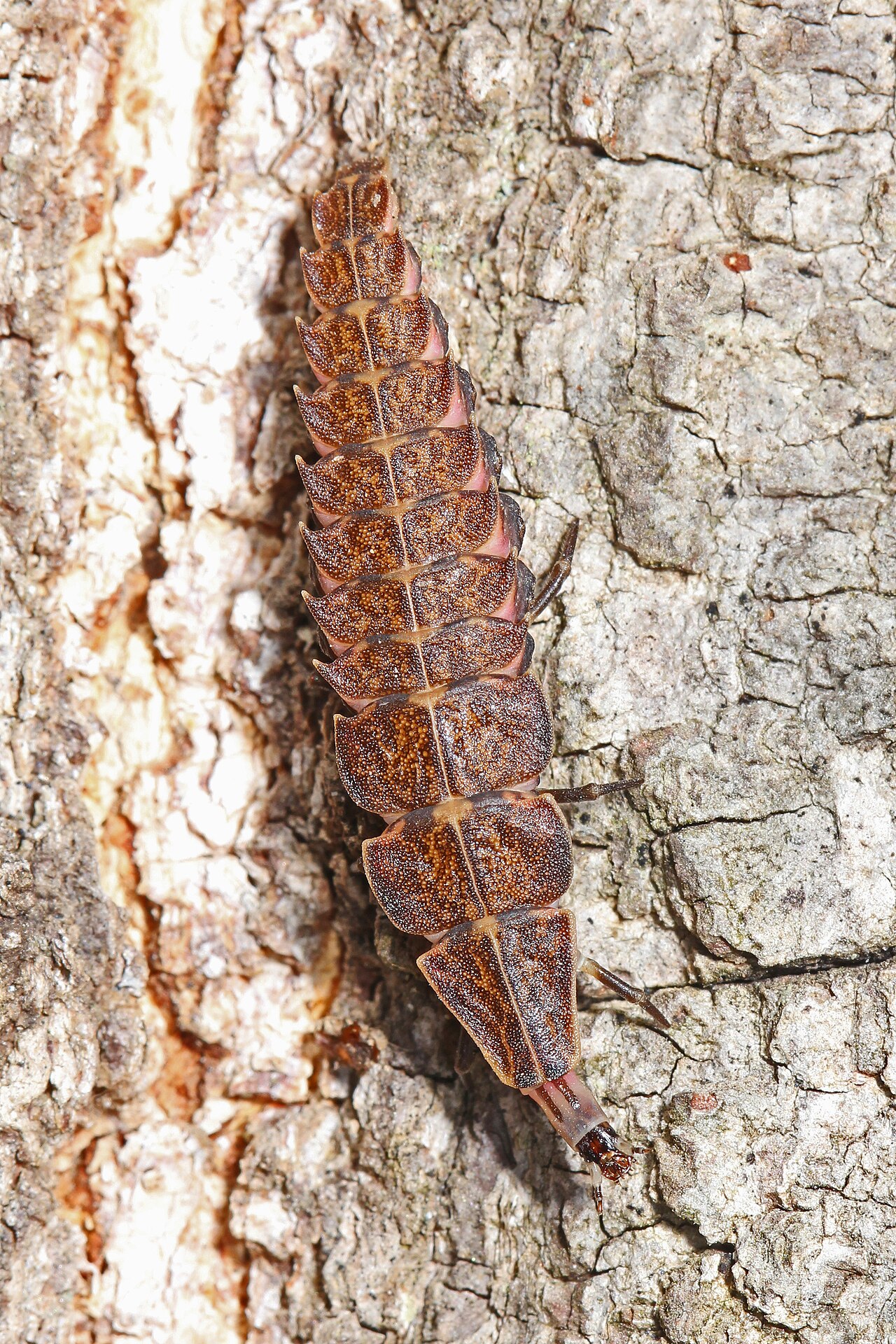
A baby firefly is a larva, often called a glowworm. It is a flat, dark, segmented grub with pale spots along its edges and a small head it can pull under its first plate. It glows faintly at the tail end, lives in damp leaf litter and hunts snails, slugs and earthworms at night.
What Does a Baby Firefly Look Like?
A baby firefly looks like an armored worm, not a tiny version of the adult. It has no wings and no wing covers. The body is long, flat and built from overlapping plates, dark brown to black. Pale yellow or pink spots mark the edges of those plates in many species. Ladybug larvae are also flat, segmented beetle grubs, but they hunt aphids on plants and do not glow.
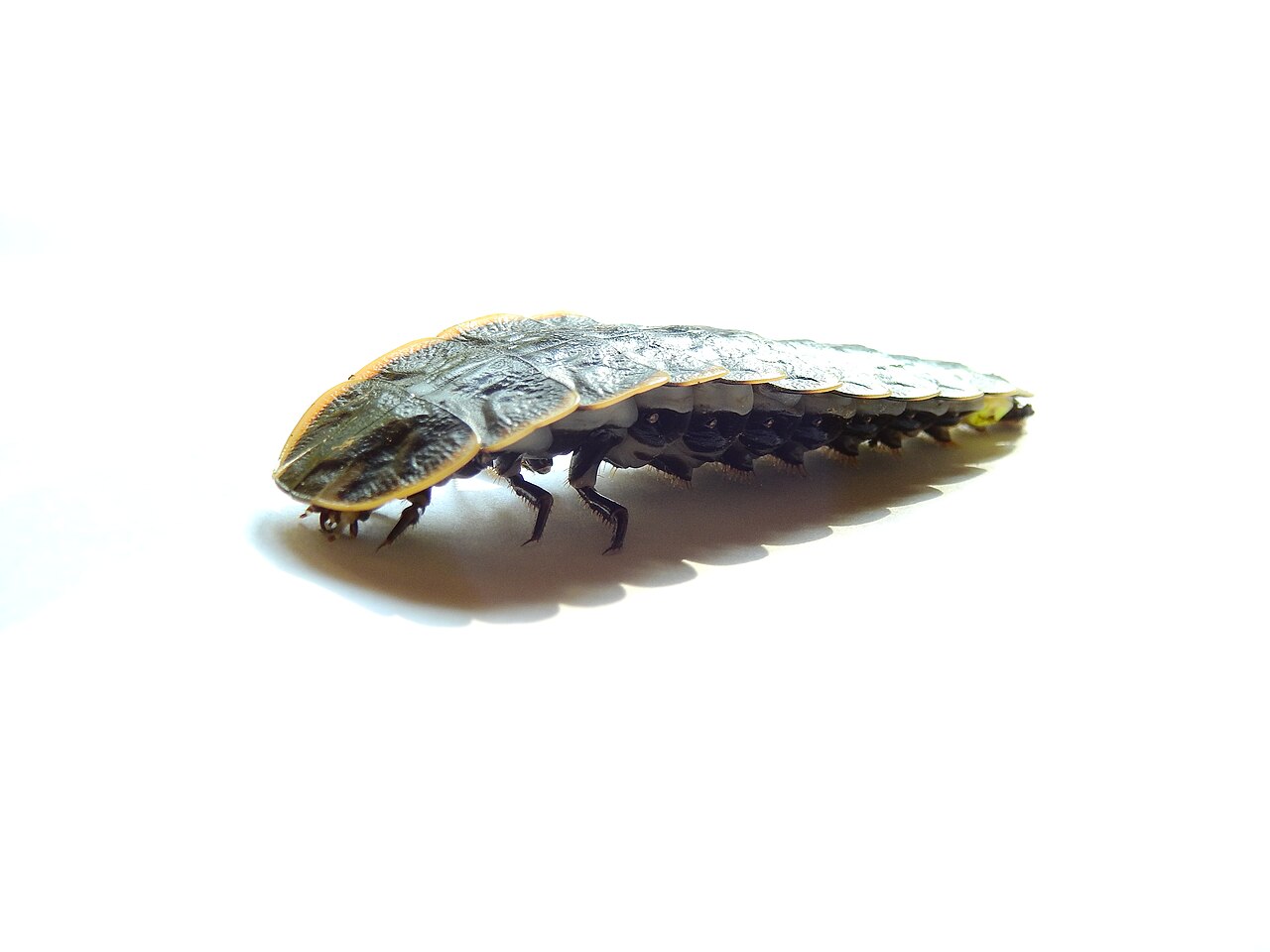
The head is small and easy to miss. The larva pulls it back under the first plate of its back when it rests or feels threatened, so from above it can look headless. Six short legs sit near the front. Carpet beetle larvae are small, hairy and found indoors, while firefly larvae stay outside in damp ground.
The light is the giveaway. A larva glows from two small spots near the tail with a soft, steady light that fades slowly instead of flashing in a pattern like the adult. People call these larvae glowworms, though that name also covers the larvae of other glowing beetles. A firefly in your house is a winged adult far more often than a larva, since larvae stay on the ground.
What Do Baby Fireflies Eat?
Baby fireflies eat other animals. They are predators that hunt snails, slugs and earthworms on the ground at night. A larva follows slime trails to find its meal, and the prey can be larger than the hunter. Snails feed mostly on plants and decaying matter, which keeps them in the same damp litter where the larvae hunt.
The larva kills with chemistry rather than strength. Its hollow, curved jaws inject a fluid that paralyzes the prey and starts to digest it. Once the tissue turns to liquid, the larva drinks it.
Larvae live where their food lives, in damp leaf litter, loose soil, moss and rotting wood. A few species, mostly in Asia, hunt underwater as aquatic larvae. The Missouri Department of Conservation counts the larvae as part of natural slug and snail control in gardens, though no one has shown that they reduce pest numbers on their own.
How a Baby Firefly Grows Into an Adult
A baby firefly grows into an adult through complete metamorphosis, in four stages. The egg hatches into a larva, the larva becomes a pupa, and the pupa becomes the winged beetle. Females lay their eggs in moist soil or moss.
| Trait | Larva | Adult |
|---|---|---|
| Body | Flat, segmented, wingless | Winged beetle with soft wing covers |
| Light | Steady, slow glow at the tail | Patterned flashes |
| Food | Snails, slugs, earthworms | Often little or nothing, depending on the species |
| Home | Leaf litter, soil, rotting wood | Tall grass, shrubs, open air at dusk |
| Time in stage | Longest stage, through winter | Short, in early to midsummer |
The larval stage is the longest by far. In North American species such as the common eastern firefly (Photinus pyralis), the larva typically spends one to two years in the soil, and some other species overwinter under bark. It molts several times as it grows and stays on the ground the whole time.
When it is ready, the larva builds a small chamber of soil and pupates inside it. The adult that crawls out lives a short life and eats little. Its flashes mainly serve to find a mate. Firefly symbolism grows out of that brief courtship light.
Frequently Asked Questions
Is it safe to touch a baby firefly?
Yes, briefly. A firefly larva has no sting and does not bite people, and gentle handling is generally fine. Larvae and adults contain defensive chemicals (lucibufagins) that make them taste bad or be toxic to predators, so keep them away from pets and your mouth and eyes, and wash your hands afterward. Set the larva back on the same patch of damp ground where you found it.
Is it rare to see a baby firefly?
No. Wherever adults flash in early summer, larvae live in the same ground, because females lay their eggs there. They hide by day, so look on a warm, damp evening after rain from late summer into fall, low along lawn edges, moss and leaf piles.
Sources
- Missouri Department of Conservation, Fireflies (Lightning Bugs) Field Guide
- Animal Diversity Web (University of Michigan Museum of Zoology), Photinus pyralis
- University of Georgia Odum School of Ecology (ecoreach), Photinus pyralis Lifecycle