Pink Betta Fish: Why Most Are Not Actually Pink, and What to Buy
Pink betta fish exist, but almost none of them are pink in the way a buyer expects. Bettas (Betta splendens) have no pink pigment cell at all. The fish sold as pink orchid, pastel pink, or light pink are fish whose pigment has been bred out, so what you are looking at is the flesh and blood showing through translucent scales.
That single fact explains most of the disappointment around them. A pink betta can deepen, fade to near white, or drift toward red over a year, because nothing is holding the color in place. Knowing which type you are buying tells you whether the pink will last.
Pink betta fish are real but rare, and the color is not a pigment. Cellophane and pastel bettas lack the pigment cells that would normally mask the flesh beneath their scales, so they read as pink. Expect to pay $15 to $40 at a store, or $50 to $150 for imported show-grade stock.
| Question | Short answer |
|---|---|
| Are they real? | Yes, but the pink is flesh tone, not pigment |
| Common names | Cellophane, pastel, pink orchid, koi, opaque |
| Price | $15 to $40 store, $50 to $150 imported |
| Minimum tank | 5 gallons (19 L), heated and cycled |
| Temperature | 78 to 80 F (25.5 to 26.5 C) |
| Lifespan | 2 to 4 years |
| Color stability | Low, especially in marble and koi lines |
Are Pink Betta Fish Real?
Yes. You can walk into a chain store and find a fish labeled pink orchid or pastel pink, and it will genuinely look pink under tank lighting. What you cannot find is a betta that produces pink pigment, because that cell type does not exist in the species.
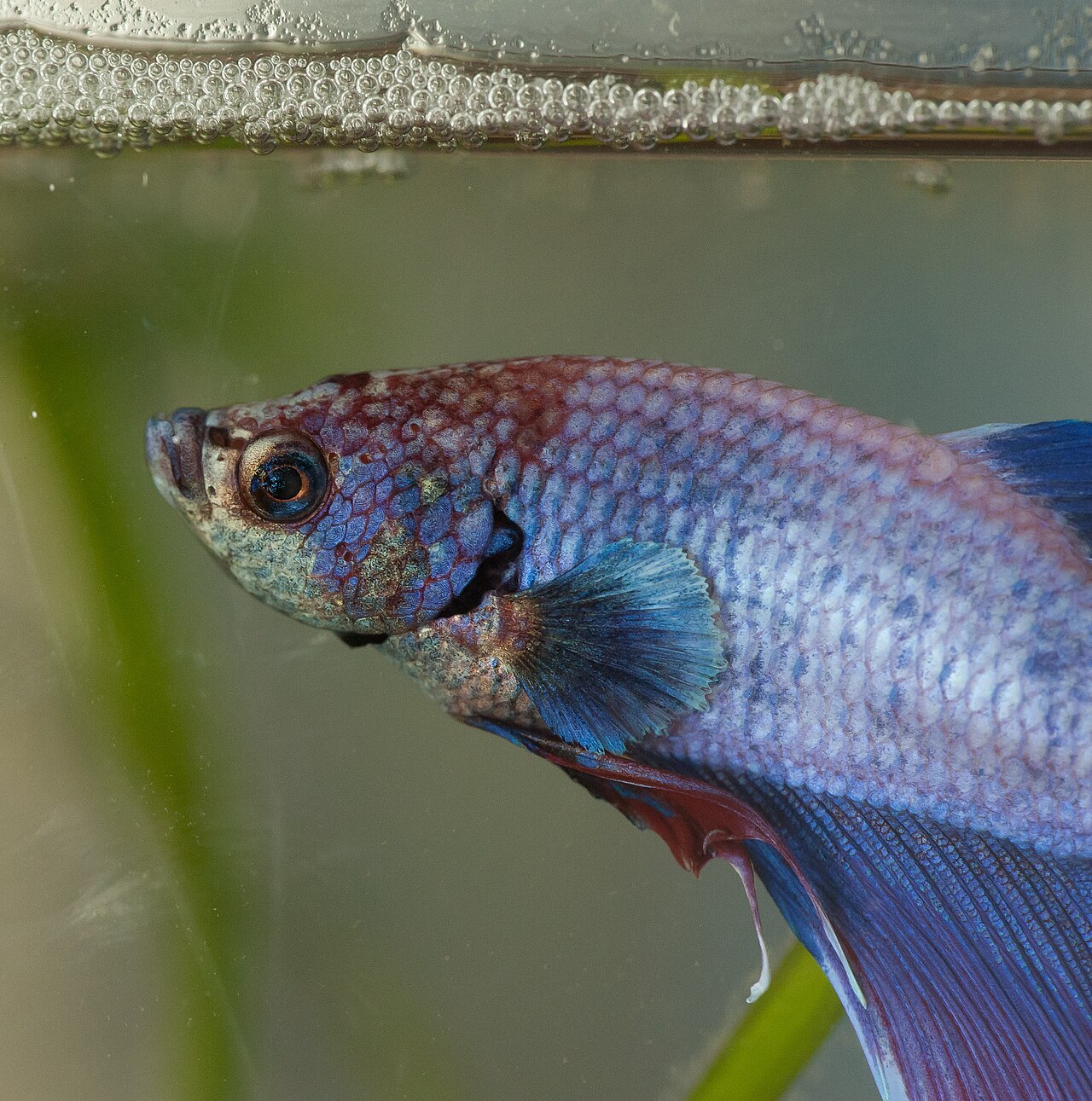
Betta color comes from four layers of chromatophores: melanophores for black and brown, erythrophores for red, xanthophores for yellow, and iridophores for the metallic sheen. Remove enough of the first three and the scales turn translucent. Light then passes through to the muscle and capillaries underneath, and the fish reads as pale pink.
This is why forum threads keep asking whether pink bettas are just lighting. The honest answer is that the effect is real and repeatable, but the mechanism is absence of color rather than presence of it.
Why a Betta Looks Pink: Cellophane, Pastel and Koi
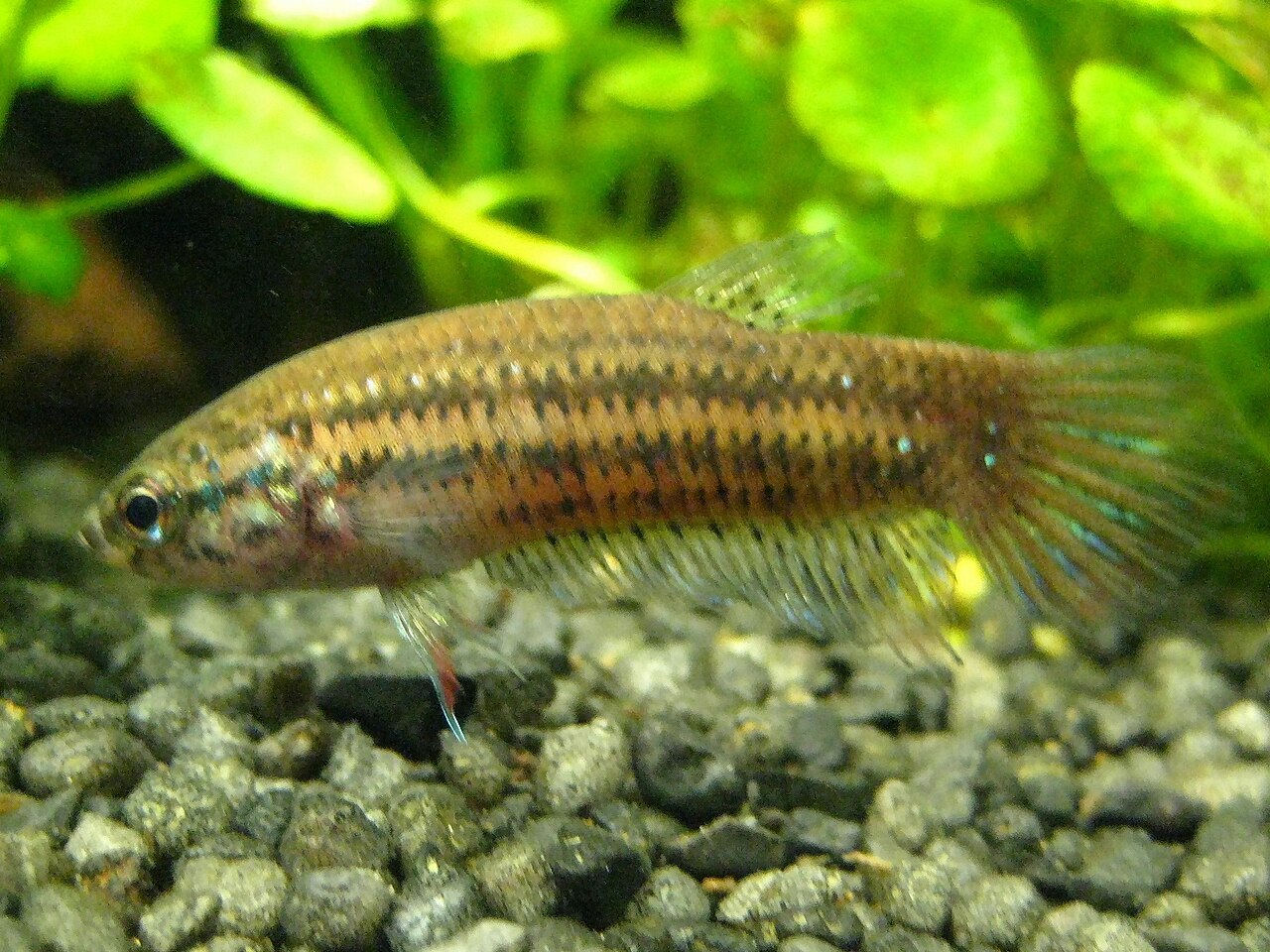
Cellophane bettas are the purest version. They carry almost no pigment in the body, so the fins run clear and the body is a flat flesh pink. A true cellophane has clear fins with no wash of color at the edges, which is the quickest way to tell one from a faded red.
Pastel bettas keep a thin iridophore layer, which softens the flesh tone into a milky pink with a slight blue or green shimmer at the shoulder. Opaque and platinum lines push a white pigment over the top, giving the pearly pink that sells best in stores.
Koi and marble bettas are the unstable group. They carry a transposable element that switches pigment production on and off in patches during the fish’s life, so a koi that arrives mostly pink may be half red by its next birthday. If the pink matters to you, avoid marble lines and buy cellophane or pastel. Our overview of the betta fish covers the full color vocabulary.
Are Pink Bettas Rare?
Less rare than sellers imply, more rare than blue or red. Cellophane is a recessive outcome that breeders get regularly as a byproduct of working toward other colors, so supply exists. What is genuinely uncommon is a clean, even pink with no patchy red bleed and no dull grey cast.
Most stores carry one or two at a time, usually from the same Thai exporters that supply the rest of the tank wall. Online specialist sellers hold more, and they photograph the actual fish rather than a stock image, which matters with a color this variable.
Treat the word rare on a price tag as marketing. Judge the individual fish: even coloration, no torn fins, alert response when you approach the cup.
What Is the Rarest Betta Color?
True purple is the answer most breeders give. There is no purple pigment either, so the color has to be faked by layering blue iridophores over red erythrophores in the right density, and the result almost always drifts toward blue or violet-black as the fish matures.
Solid albino is rarer still and barely exists as a stable line, because albino bettas tend to go blind early and breed poorly. Green is often listed as rare, though most fish sold as green are really blue with a turquoise sheen.
Against that list, pink sits in the middle. It is harder to find than a standard red or blue veiltail, and far easier to find than the colors breeders genuinely chase.
How Much Does a Pink Betta Cost?
A pink betta at a chain store runs about $15 to $40, with the higher end covering halfmoon and plakat tail types rather than the color itself. Big box stores price plakats lower and long-finned show tails higher.
Imported stock changes the math. A photographed, named fish from a Thai breeder is typically $50 to $150 plus $30 to $60 shipping, and that is where the even, poster-quality pinks live. Auction sites run higher for a fish with a competition record.
The fish is again the cheap part. A heated, filtered, cycled 5 gallon setup is $80 to $150, and that outlay is what actually determines whether the fish reaches three years old.
Are There Any Pink Female Betta Fish?
Yes, and they are easier to find than people assume. The cellophane and pastel genetics are not sex linked, so females carry them as readily as males. Females have shorter fins and a stockier body, which means the flesh tone shows across a broader surface and often looks more uniformly pink than it does on a male.
The usual place to see them is a sorority tank at a specialist seller, since females tolerate group housing in ways males never do. Be careful with that idea: sorority tanks fail often and need 20 gallons plus, heavy planting, and five or more fish. Our guide to the female betta fish sets out what that actually takes.
Can I Keep a Betta in a Bowl?
No. A betta can survive in a bowl for a while because its labyrinth organ lets it breathe air from the surface, and that single adaptation is responsible for decades of bad advice. Surviving is not the same as living a normal span.
An unheated, unfiltered bowl swings temperature with the room and accumulates ammonia between water changes. Both suppress the immune system, and the result is fin rot, lethargy, and a fish dead at eight months instead of three years. Pale fish show the damage first, because fin rot on a pink betta is visible as a dark ragged edge long before it shows on a red one.
Five gallons (19 L) is the working minimum, ten is better, and every one of those gallons needs a heater. The old bowl advice was never about what the fish needs.
Tank Setup, Water and Temperature
Run the tank at 78 to 80 F (25.5 to 26.5 C) with a small adjustable heater and a thermometer you actually read. Below 76 F a betta slows down, stops eating properly, and becomes vulnerable to infection; the detail is in our note on betta fish water temperature.
Use a gentle filter, a sponge filter or a baffled hang-on-back, because a betta’s fins are not built for current. Cycle the tank before the fish goes in, keep pH between 6.5 and 7.5, and target zero ammonia, zero nitrite, and nitrate under 20 ppm.
Plant it heavily and give the fish a resting spot near the surface. Bettas nap on broad leaves, and silk or live plants avoid the torn fins that plastic causes. Feed a betta-specific pellet twice a day with one fasting day a week, plus frozen bloodworm or brine shrimp as a treat; see what fish eat for how that compares with other aquarium species.
Will My Betta Survive in Tap Water?
Only after you treat it. US tap water carries chlorine or chloramine, both of which destroy gill tissue and wipe out the beneficial bacteria in a cycled filter. A few dollars of dechlorinator handles it, and there is no reason to skip that step.
Let treated water match tank temperature before it goes in. A cold top-up of a few degrees is enough to trigger a stress response, and repeated shocks shorten a fish’s life more reliably than any single mistake.
Well water needs testing rather than assuming. Check hardness and pH once, and only adjust if the readings sit well outside the 6.5 to 7.5 range. Chasing perfect numbers with chemicals causes more losses than slightly hard water ever does.
Why Pink Color Fades or Changes
Three things move a betta’s color. Genetics comes first, and marble lines simply keep changing throughout life. Nothing you do at the tank stops that, which is the main reason to buy cellophane or pastel if the pink is the point.
Stress comes second. A frightened or sick betta pales within hours and may show horizontal stress stripes; those fade once conditions improve. Chronic pallor with clamped fins is an illness signal, not a color change, and it deserves a water test the same day.
Age and diet come third. Color deepens through the first six months, holds for a year or two, then softens. A varied diet with carotenoid-rich foods supports red and orange tones but will not create pink, since there is no pigment to feed. Species records for wild Betta splendens are kept at FishBase, and the wild fish is a drab brown-green with none of this.
Frequently Asked Questions
Why can’t you touch betta fish?
Bettas are covered in a protective slime coat that blocks bacteria, fungus, and parasites. Human hands strip it on contact and leave soaps, lotions, and oils behind. A betta that has been handled is far more likely to develop fin rot or a fungal patch within the following week, so net the fish rather than scooping it by hand.
Can betta fish bite my finger?
Yes, and it barely registers. A betta has small teeth and will investigate a finger in the tank, sometimes with a nip that feels like a light pinch. It cannot break skin. The bigger issue is the slime coat again: keep your hands out unless you are doing maintenance, and rinse them free of soap first.
How long is a betta’s memory?
Longer than the three second myth suggests. Bettas learn routines within days, recognize the person who feeds them, and can be trained to follow a finger or swim through a hoop, with the behavior holding for weeks. Studies on fish memory generally find retention measured in months, not seconds.
How long do pink bettas live?
Two to four years in a heated, filtered, cycled tank, and about three years is typical. Color has no effect on lifespan; setup does. Store fish are usually six months to a year old at purchase, so the clock has already started. The full breakdown is in our piece on how long betta fish live.
Can pink bettas live with other fish?
Sometimes, in 10 gallons or more with the right tankmates. Bottom dwellers such as corydoras and snails work; anything with long flowing fins or bright red coloring may be attacked as a rival. Avoid fin nippers entirely. Livebearers like molly fish need harder water than a betta prefers, so that pairing is a compromise for both.
Where can I buy a pink betta?
Chain stores including Petco and PetSmart stock them irregularly, so it is worth asking staff when shipments arrive. Local aquarium shops carry better quality fish more often. For a specific shade, buy from an importer or a breeder who photographs each fish individually, and expect to pay two to four times the store price.