No See Ums: The Bug You Cannot See and How to Stop the Bites
No see ums are biting midges in the family Ceratopogonidae, and the name is literal: the adults are 1 to 3 mm long, which means they slip through standard window screens and land on skin without being noticed. The bite itself often goes unfelt too. What people notice is the aftermath, a rash of hard red welts that itch harder and longer than mosquito bites and show up hours after everyone has gone inside.
They are not gnats, not sand fleas, and not baby mosquitoes. They are their own family of tiny flies with roughly 5,000 described species worldwide, and only the females bite, because they need a blood meal to develop eggs. Knowing when and where they feed is most of the defense.
No see ums are biting midges of the family Ceratopogonidae, mostly in the genus Culicoides, measuring 1 to 3 mm. Females bite for blood, usually at dawn and dusk in still air near wet soil, marsh, or beach. Bites cause delayed, intensely itchy red welts that can last one to two weeks. They pass through 16 mesh window screens and require 20 mesh no see um netting to exclude.
| Trait | No See Um | Mosquito |
|---|---|---|
| Size | 1 to 3 mm | 4 to 10 mm |
| Bite felt at the time | Often not | Usually yes |
| Welt appears | Minutes to hours later | Within minutes |
| Itch duration | 3 days to 2 weeks | 1 to 3 days |
| Passes window screen | Yes | No |
| Stopped by wind | Yes, above about 5 mph | Partly |
| Peak activity | Dawn and dusk, still air | Dusk through night |
What Are No See Ums?
No see ums are true flies in the family Ceratopogonidae. In North America the biting species people encounter belong mostly to the genus Culicoides, with Leptoconops adding daytime biters in the Southwest and parts of the Caribbean. Regional names pile up fast: punkies in the Northeast, sand flies on the Gulf and Florida coasts, five o’clock bugs in the Rockies, and midgies in Scotland.
Only females bite. Males feed on nectar and never touch blood. A female uses short, scissor like mouthparts to cut the skin and then laps the blood that pools in the wound, which is a cruder method than the mosquito’s needle and a large part of why the reaction is so strong.
What Do No See Ums Look Like?
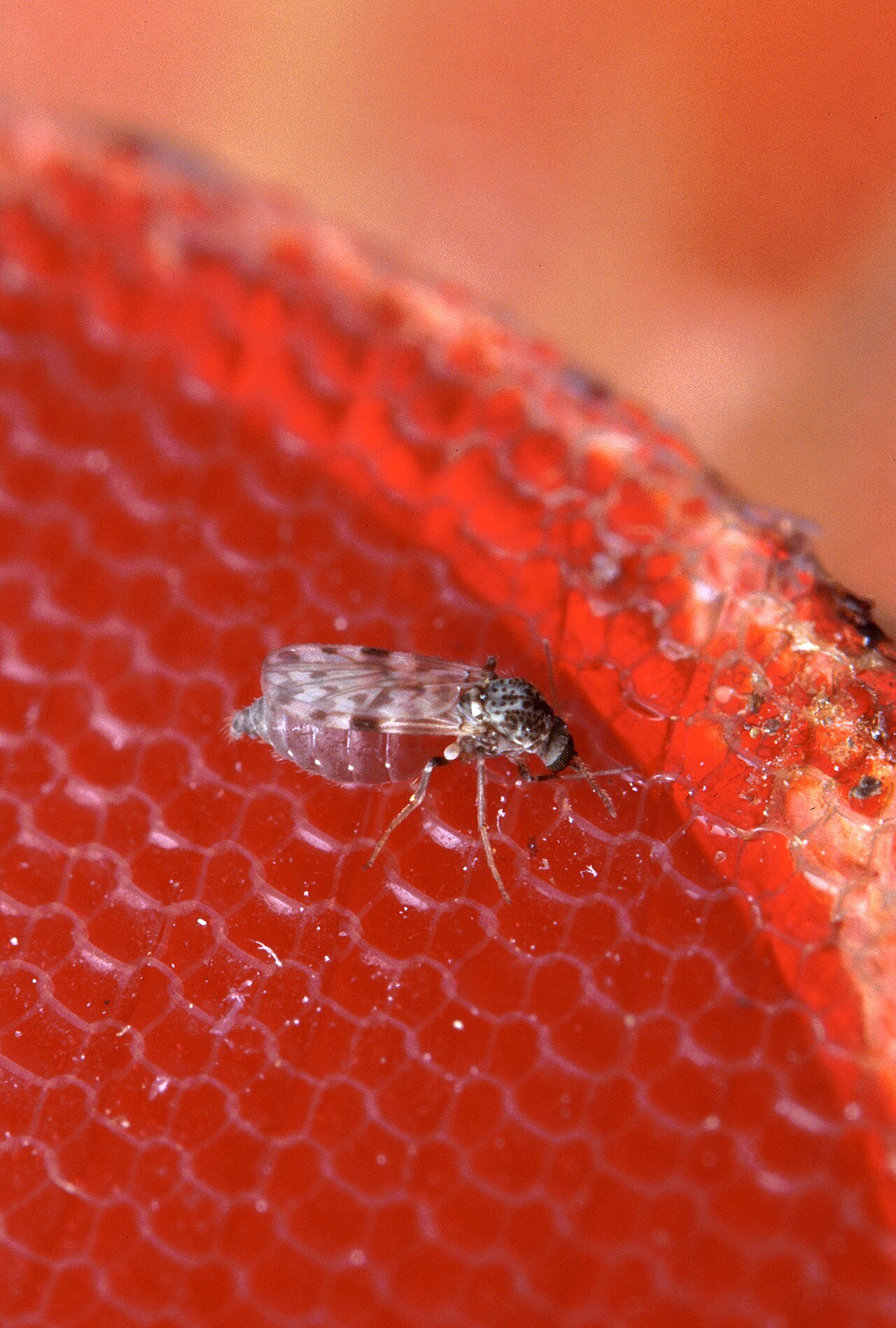
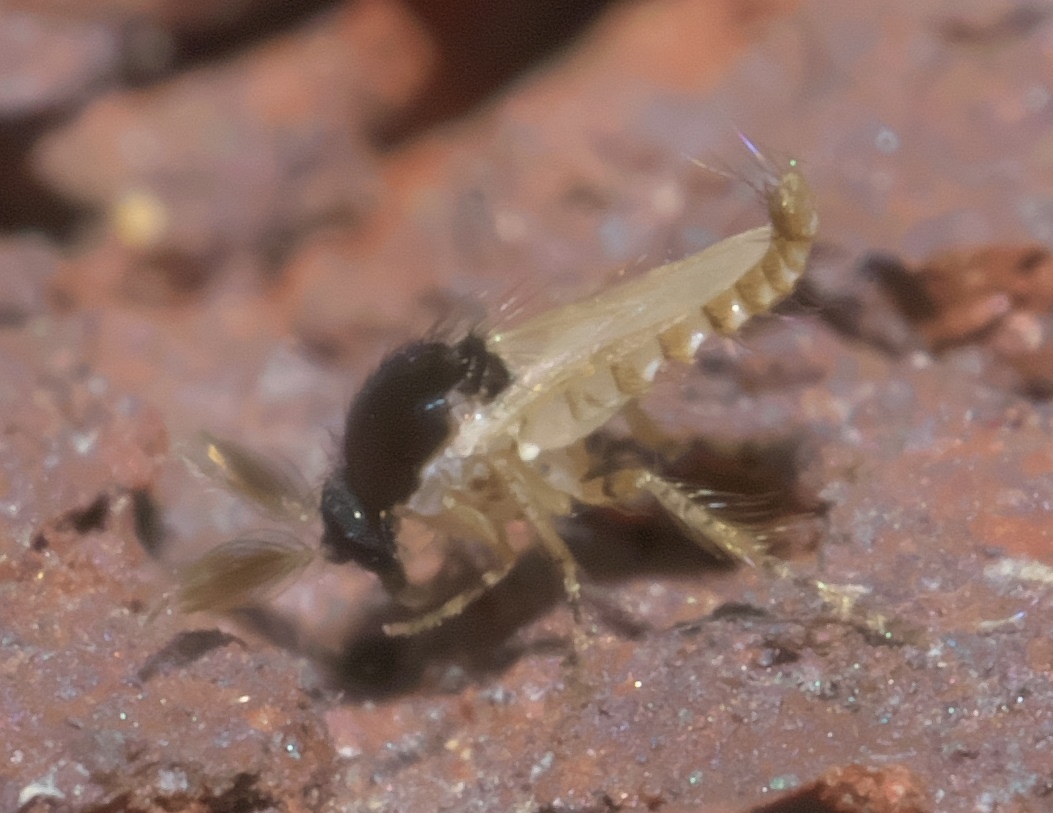
Under magnification they look like miniature mosquitoes with humped backs and short legs. The wings are the identifying feature: mottled with dark and pale patches in Culicoides, folded flat over the back at rest, and marked with a pattern that specialists use to separate species. To the naked eye, a no see um is a moving speck, often mistaken for a fleck of pepper or dirt.
The larvae look nothing like the adults. They are slender white worms living in wet sand, mud, marsh edges, tree holes, or manure, depending on the species, and they are aquatic or semiaquatic in almost all cases. Unlike the fully aquatic wrigglers of mosquitoes, midge larvae can live in soil that is merely saturated, which makes them much harder to drain out of an area.
Where No See Ums Live in the United States
Coastal salt marsh is the classic habitat, which is why Florida, the Gulf Coast, coastal Georgia and the Carolinas, and the barrier islands of the Northeast have the worst reputations. Populations are heavy in the Everglades and the Keys, along the Chesapeake, and through Maine’s tidal flats. Inland, they occupy the margins of lakes, irrigation ditches, swamps, and cattle operations.
Anywhere that holds permanently damp organic soil can produce them. That includes overwatered lawns, leaking irrigation, the shaded muck behind a pond dam, and the seepage below a livestock tank. The same wetland edges that support a large frog population tend to support the midges those frogs are eating.
When No See Ums Bite
The pattern is dawn and dusk, in the two hours around sunrise and the two hours around sunset. Some species bite through the night and a few, especially Leptoconops, bite in full midday sun. Activity peaks from late spring through early fall in most of the country, and year round in South Florida.
Wind is the single biggest variable. These insects are weak fliers and effectively ground themselves above roughly 5 mph, which is why a beach can be unbearable in the calm right after sunset and fine an hour later when the breeze picks up. Humidity and still air after rain make for the worst evenings.
Why No See Um Bites Itch So Much
The mouthparts tear rather than pierce, leaving a wider wound than a mosquito produces, and the saliva contains proteins that keep blood flowing. The immune system responds to those proteins, and in most people the response builds with repeated exposure rather than fading. Long term residents of a marsh coast often react less, but visitors get sensitized over a first season and react harder in their second.
The delay is the other reason they feel worse. Because the bite is rarely felt, there is no chance to swat, so a person can accumulate dozens of bites in twenty minutes on a porch. The welts then arrive together hours later, which is how a quiet evening outside turns into a night of scratching.
What a No See Um Bite Looks Like
A fresh bite is a small red dot, sometimes with a visible puncture at the center. Within a few hours it becomes a firm raised welt 2 to 10 mm across, often with a paler center and a red halo. Bites usually come in clusters or lines around ankles, the hairline, the back of the neck, the waistband, and anywhere clothing is tight against skin.
Some people develop fluid filled blisters instead, and scratched bites can stay visible as darkened spots for months. A single itchy bump is more likely a mosquito. A dense field of tiny bumps below the sock line after an evening near water is the signature of biting midges.
No See Ums vs Mosquitoes vs Sand Fleas
Mosquitoes are ten times the size, audible in flight, and stopped by ordinary screens. Sand fleas in the strict sense are crustaceans, not insects, and the burrowing chigoe flea that people fear from the tropics is a different animal again. What Gulf Coast locals call sand flies or sand gnats is almost always a Culicoides midge.
Chiggers cause a similar rash but only around tight clothing on ankles and waist, and they are picked up from vegetation rather than from air. Fleas from pets bite mostly below the knee and jump. If the welts appeared after sitting outside at sunset with no insect visible, biting midges are the default answer.
How to Treat No See Um Bites
Wash the area with soap and cool water, then apply a cold compress for ten minutes to blunt the histamine response. Over the counter hydrocortisone cream, calamine lotion, or a baking soda paste all reduce itching. Oral antihistamines help most when taken before bed, since the itch peaks at night and scratching in sleep causes most of the infections.
Keep fingernails short and resist opening the welts. Signs that need a clinician are spreading redness, warmth, pus, fever, or any swelling of the lips, face, or throat. Current guidance on insect bite care is maintained at cdc.gov.
What Repels No See Ums
DEET at 20 to 30 percent works, and picaridin at 20 percent works about as well with less odor and no damage to plastics. Permethrin treated clothing is the most effective option for extended exposure, since it kills insects on contact with the fabric rather than relying on skin coverage. Reapply skin repellents more often than the label suggests in humid coastal air.
Oil of lemon eucalyptus is the strongest of the plant based options and is registered for this use. The folk remedies that circulate on the Gulf Coast, mainly Avon Skin So Soft bath oil and vanilla extract, appear to work by coating skin rather than repelling, and they wear off fast. Citronella candles do almost nothing against midges outdoors.
How to Keep No See Ums Out of Your House
Standard window screen is 16 mesh, with openings around 1.3 mm, and biting midges walk straight through it. No see um netting at 20 mesh or finer is the fix, and it is sold for porches, tents, and window replacement. Expect reduced airflow, which is the trade off that makes people postpone the job.
Seal the smaller gaps too: weatherstripping under doors, caulk around window frames, and fine mesh over attic and dryer vents. Outdoors, reduce standing damp near the house by fixing irrigation leaks, clearing soggy leaf litter, and grading away puddles. Turning off porch lights during the dusk peak keeps them from gathering at the door in the first place.
What Eats No See Ums?
Almost everything that eats small flying insects. Swallows, swifts, nighthawks, warblers, and flycatchers take them in the air during exactly the dawn and dusk windows when the midges are active. Feeder birds as familiar as the blue jay take adult midges opportunistically, and a hummingbird gets a meaningful share of its protein from small flies rather than from nectar.
Bats work the same window after dark. In the water and mud, midge larvae feed dragonfly nymphs, small fish, and amphibians, while frogs and toads take the adults at the surface. Even wetland reptiles benefit indirectly, since the diamondback water snake hunts the frogs and fish that grow fat on midge larvae. No control program removes them from the food web without cost.
Do No See Ums Carry Disease?
In the United States, the risk to humans is very low. Culicoides midges do not transmit the pathogens that make mosquitoes dangerous here, and the main human illness they are linked to worldwide is mansonellosis, a mild filarial infection of Central and South America, Africa, and the Caribbean. Secondary bacterial infection from scratching is the realistic hazard for most people.
Livestock are a different matter. Biting midges transmit bluetongue virus and epizootic hemorrhagic disease to sheep, cattle, and deer, and African horse sickness elsewhere in the world, which is why veterinary agencies track them closely. Outdoor pets and small animals like an Abyssinian guinea pig can develop itchy hypersensitivity reactions to repeated bites and should be housed behind fine mesh in heavy season. Birds are also fed on regularly, and the same routes matter for them as for any animal that processes and excretes waste in a shared roost.
Frequently Asked Questions
What are no see ums attracted to?
Carbon dioxide from breath is the main long range cue, followed by body heat, moisture, and skin odor compounds including lactic acid. Dark clothing and still, humid air near damp soil increase the odds. Light attracts them to doorways at night but is not what draws them to a person.
How long do no see um bites last?
Most welts itch for three to five days and fade within a week. Sensitized people can itch for two weeks, and scratched bites may leave dark marks for a month or more. A bite that is still worsening after four days, or that becomes warm and painful rather than itchy, suggests infection.
Can no see ums get through window screens?
Yes. Standard 16 mesh insect screen has openings wide enough for a 1 mm midge to pass. Only 20 mesh or finer no see um netting excludes them reliably. That is the single most common reason people are bitten indoors and blame something else, such as bed bugs or fleas.
Do no see ums live in your bed or hair?
No. They do not infest homes, bedding, or hair, and they do not lay eggs on people. Adults enter through screens and gaps, bite, and leave. If bites keep appearing at night in the same spots on the body over weeks, the cause is more likely bed bugs, which leave larger welts in rows and are visible on the mattress seam.
What time of year are no see ums worst?
Late spring through early fall across most of the country, with a strong peak in the first warm humid weeks. On the Gulf Coast and in South Florida they are active all year, with the heaviest pressure from March to June and again after the fall rains. Cold snaps below about 50 F suppress them temporarily.
Are no see ums the same as gnats?
No. Gnat is a loose word for many small flies, most of which do not bite at all, including fungus gnats and fruit flies. No see ums are a specific family of biting midges. If the tiny insects around you are not producing itchy welts, they are almost certainly nonbiting gnats and require no treatment beyond drying out whatever is breeding them.