Types of Deer: The 5 US Species and How to Tell Them Apart
Five types of deer are native to the United States: white-tailed deer, mule deer, elk, moose, and caribou. Worldwide the deer family Cervidae holds somewhere between 43 and 55 living species depending on which taxonomy you follow, which is why two reference books can disagree about the total and both be defended.
Every true deer shares one trait that sets the family apart: antlers of solid bone, grown and shed every year. Cattle, sheep, and pronghorn keep permanent horns instead. Size, tail, ears, and antler shape will name almost any deer you meet in the field.
There are five native types of deer in the United States: white-tailed deer, mule deer (including the black-tailed subspecies), elk, moose, and caribou. Globally the family Cervidae contains roughly 43 to 55 species, split into Old World and New World deer. All true deer grow bone antlers and shed them annually.
| Deer | Scientific name | Shoulder height | Where in the US | Tell |
|---|---|---|---|---|
| White-tailed deer | Odocoileus virginianus | 3 to 3.5 ft (91 to 107 cm) | Nearly every state | White tail flag |
| Mule deer | Odocoileus hemionus | 3 to 3.5 ft (91 to 107 cm) | West of the Great Plains | Huge ears, forked antlers |
| Elk | Cervus canadensis | 4 to 5 ft (122 to 152 cm) | Rockies, Pacific Northwest | Pale rump patch |
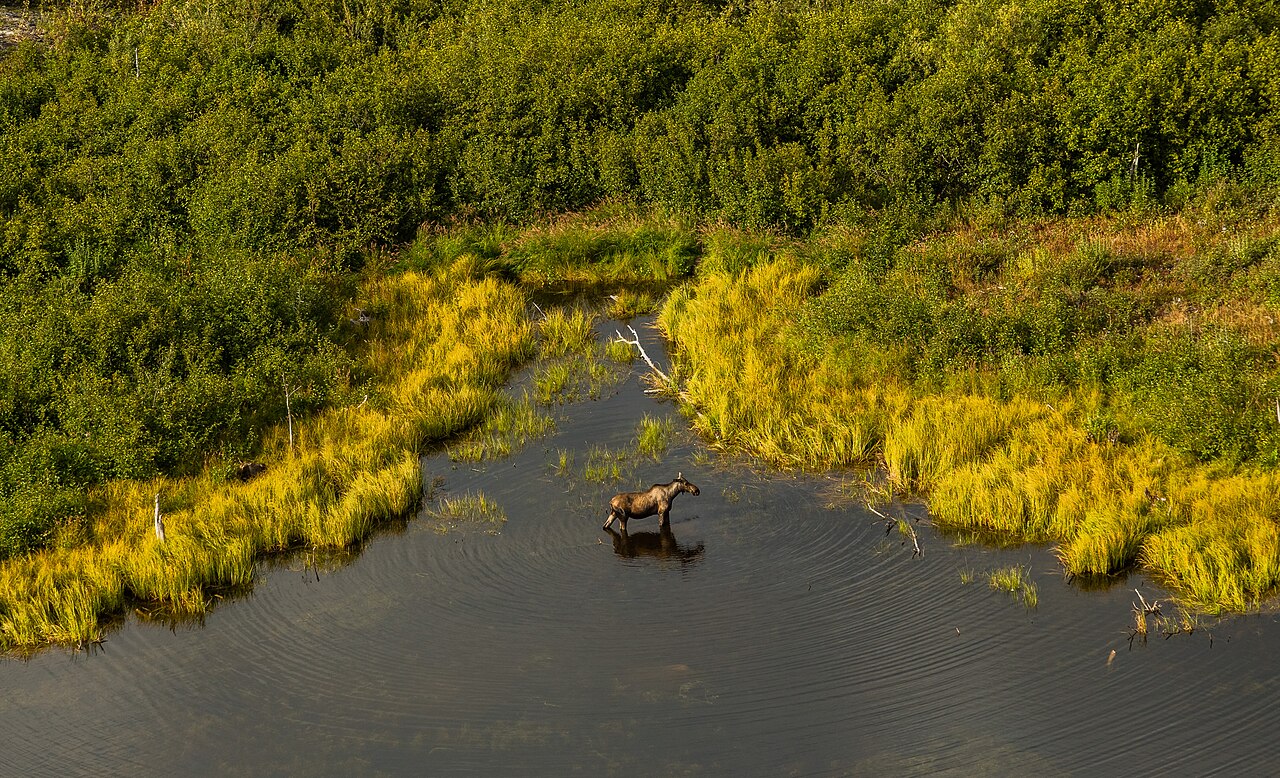
| Moose | Alces alces | 5.5 to 7 ft (168 to 213 cm) | Alaska, northern tier | Palmate antlers, dewlap |
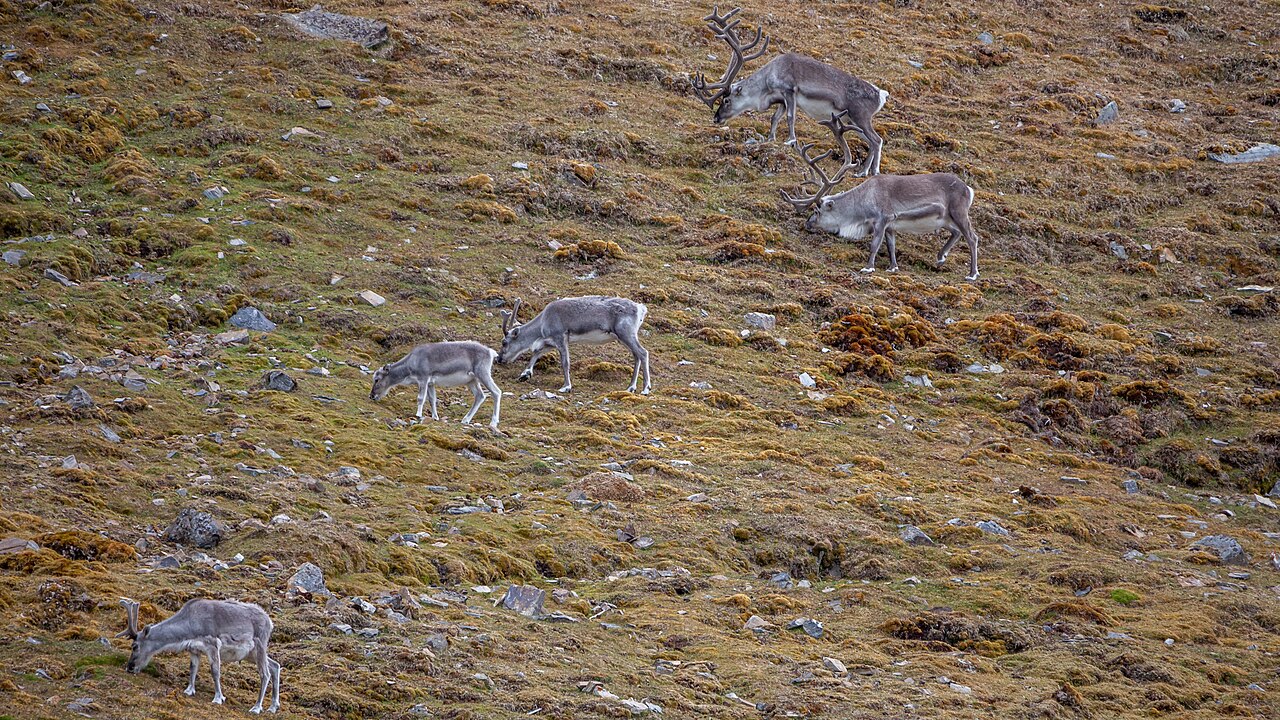
| Caribou | Rangifer tarandus | 3.5 to 4.5 ft (107 to 137 cm) | Alaska | Females grow antlers too |
| Axis deer (introduced) | Axis axis | 2.5 to 3.2 ft (76 to 97 cm) | Texas, Hawaii | Spots kept for life |
What Are the Different Types of Deer in the US?
The United States has five native deer and three established introduced ones. White-tailed deer cover the most ground, from Maine to Florida and west across the plains. Mule deer replace them through the arid West, and the coastal black-tailed deer of Oregon, Washington, and Alaska is a subspecies of mule deer rather than a species of its own.
Elk and moose are the heavyweights, with a bull moose passing 1,400 lb (635 kg) to make it the largest deer alive anywhere. Caribou hold on only in Alaska. Among the introduced species, axis deer thrive on Texas ranches and on Maui, and one quick check separates them from native young: fawns lose their spots within months, while axis deer never do. For a closely related question, see our guide to giant caterpillar.
What Are the 43 Species of Deer?
The figure of 43 comes from older taxonomies that count Cervidae conservatively. Newer treatments that split Rangifer, Mazama, and several Asian deer into multiple species push the total closer to 55. Nobody is wrong here; the count moves as genetic work redraws the boundaries.
The family divides into two branches. Cervinae, the Old World deer, holds red deer, sika, fallow, axis, and the elk lineage. Capreolinae, the New World deer, holds white-tailed and mule deer, moose, caribou, roe deer, and the brocket and pudu deer of South America. Two oddballs stretch the definition: the water deer (Hydropotes inermis) grows no antlers at all and uses tusks instead.
What Is the Most Common Type of Deer?
The white-tailed deer is the most common deer in the United States by a wide margin, with a population usually estimated near 30 million. It was down to roughly half a million around 1900 after unregulated market hunting, and the recovery is one of the clearest wildlife management successes on the continent, documented by state agencies and the US Fish and Wildlife Service.
That abundance has a cost. Deer browse reshapes forest understory and pushes songbirds out of the shrub layer that ground nesters and hunting raptors depend on, and vehicle collisions run into the hundreds of thousands per year. Regionally the answer shifts: in Utah, Colorado, and much of Nevada you will see mule deer, and in interior Alaska it is moose.
What Animal Looks Like a Deer but Is Not a Deer?
The pronghorn (Antilocapra americana) fools people most often. It grazes western grasslands alongside mule deer and stands about deer height, but it belongs to its own family, Antilocapridae, and carries branched horns with a keratin sheath it sheds yearly over a permanent bony core. No true deer does that.
Musk deer (family Moschidae) and the tiny chevrotains or mouse-deer (family Tragulidae) carry the name without the credentials either. Neither grows antlers, both grow tusks, and both sit on separate branches of the ruminant tree. Oddly enough, among animals similar to a deer the closest living relatives are giraffes and okapi.
What Is the Smallest Type of Deer?
The northern pudu (Pudu mephistophiles) is the smallest true deer, standing 12 to 14 in (30 to 36 cm) at the shoulder and weighing 7 to 13 lb (3 to 6 kg). It lives in Andean cloud forest, and its antlers are unbranched spikes barely 3 in (8 cm) long. The southern pudu of Chile and Argentina is only slightly larger.
Those tiny deer people mention are usually one of the pudus, a muntjac, or the lesser mouse-deer, which is not a deer at all. In North America the Key deer (Odocoileus virginianus clavium) of the Florida Keys is the smallest, a white-tailed subspecies topping out near 30 in (76 cm) and 75 lb (34 kg), and it lives nowhere else on Earth.
Related reading: Types of Rabbits.
Frequently Asked Questions
What are all the names for deer?
A male is a buck, or a bull in elk, moose, and caribou. A female is a doe, or a cow in the larger species; see the full breakdown of female deer names. Young are fawns, or calves in elk and moose. A group is a herd.
How many types of deer live in the US?
Five native species: white-tailed deer, mule deer, elk, moose, and caribou. Three introduced species, axis, sika, and fallow deer, hold established free-ranging populations. Counting recognized subspecies such as black-tailed and Key deer pushes the practical field list past a dozen distinct forms.
Which animal is similar to a deer?
The pronghorn is the closest look-alike in North America, and antelope, musk deer, and chevrotains fill that role elsewhere. None are true deer. The quick test is the headgear: deer grow branched bone antlers and drop them every year, while horns stay on for life.
How long do deer live?
Wild white-tailed deer average 2 to 3 years because of hunting and vehicles, though does in protected areas reach 10 to 12. Moose and elk live 15 to 20 years in good habitat. See our guide to how long deer live and the numbers for squirrel lifespan.