Leopard Gecko Morphs: 6 Groups, Prices, and 2 to Avoid
A leopard gecko morph is a bred-for color, pattern, or size variation of the wild-type Eublepharis macularius, and hobbyists now trade well over 100 recognized base morphs plus thousands of documented combinations. The morph decides what your gecko looks like, what it costs, and in a few lines whether it carries a neurological or tumor risk you should understand before you pay for it.
Almost all of that variety comes from a small set of genetic building blocks: three separate albino strains, a handful of pattern genes, two size genes, and polygenic traits such as tangerine that respond to years of selective breeding rather than to one mutation. Once you can name those blocks, a breeder price list that looks random starts to make sense.
Leopard gecko morphs fall into six working groups: albino (Tremper, Bell, Rainwater), hypomelanistic, patternless, snow and white, tangerine, and giant. Everything else on a breeder list is a combination of those. Common morphs sell for 40 to 90 USD, while rare combinations such as Black Night reach 1,000 to 3,000 USD.
| Morph group | What you see | Inheritance | Typical US price |
|---|---|---|---|
| Albino (Tremper, Bell, Rainwater) | No black pigment, brown or lavender markings, red or pale eyes | Recessive, three separate strains | 50 to 150 USD |
| Hypomelanistic | Ten or fewer body spots, bright yellow ground color | Polygenic, selected over generations | 50 to 120 USD |
| Patternless (Murphy) | Solid gray, green, or yellow adult, no spots or bands | Recessive | 60 to 150 USD |
| Snow and white | White to gray ground color, black markings | Mack Snow codominant, Blizzard recessive | 80 to 400 USD |
| Tangerine and carrot tail | Orange body, orange over 15 percent or more of the tail | Polygenic | 60 to 250 USD |
| Giant and Super Giant | Adults of 90 to 170 g instead of 45 to 65 g | Incomplete dominant | 150 to 500 USD |
| Designer combos (Black Night, Radar) | Near black or stacked multi-gene looks | Several genes stacked | 400 to 3,000 USD |
What Morphs of Leopard Geckos Are There?
There are six functional groups of leopard gecko morphs, and every long breeder list is built by stacking them. Color morphs change pigment, so albino, hypomelanistic, and melanistic lines belong here. Pattern morphs change how that pigment is arranged, which covers jungle, striped, bandit, patternless, and blizzard. Size morphs change growth, which is the Giant line and nothing else.
The reason a single breeder table can list 300 names is combination. A Mack Snow crossed into a Bell albino line produces Bell Snow, and adding Eclipse eyes to that gives Radar. The names are trade names, not species, and two breeders sometimes use different labels for the same visual animal. If you keep the six groups in mind, you can decode almost any listing without memorizing the trade vocabulary.
How Leopard Gecko Genetics Decide the Price
Price follows inheritance type more than it follows beauty. Recessive traits such as the three albinos, Blizzard, and Eclipse need two copies to show, so a visually plain animal can still be a valuable carrier, usually sold as het for that trait. Codominant and incomplete dominant traits such as Mack Snow and Giant show with one copy and produce a stronger super form with two.
Polygenic traits behave differently and that is where hobbyists overpay. Tangerine, hypomelanistic, and carrot tail are not single switches; they are the result of many small effects selected over generations, so the offspring of two bright orange parents vary noticeably. A high-end tangerine line holds value only as long as the breeder keeps selecting for it, which is why line names and photos of the parents matter more than a gene label.
Albino Morphs: Tremper, Bell, and Rainwater
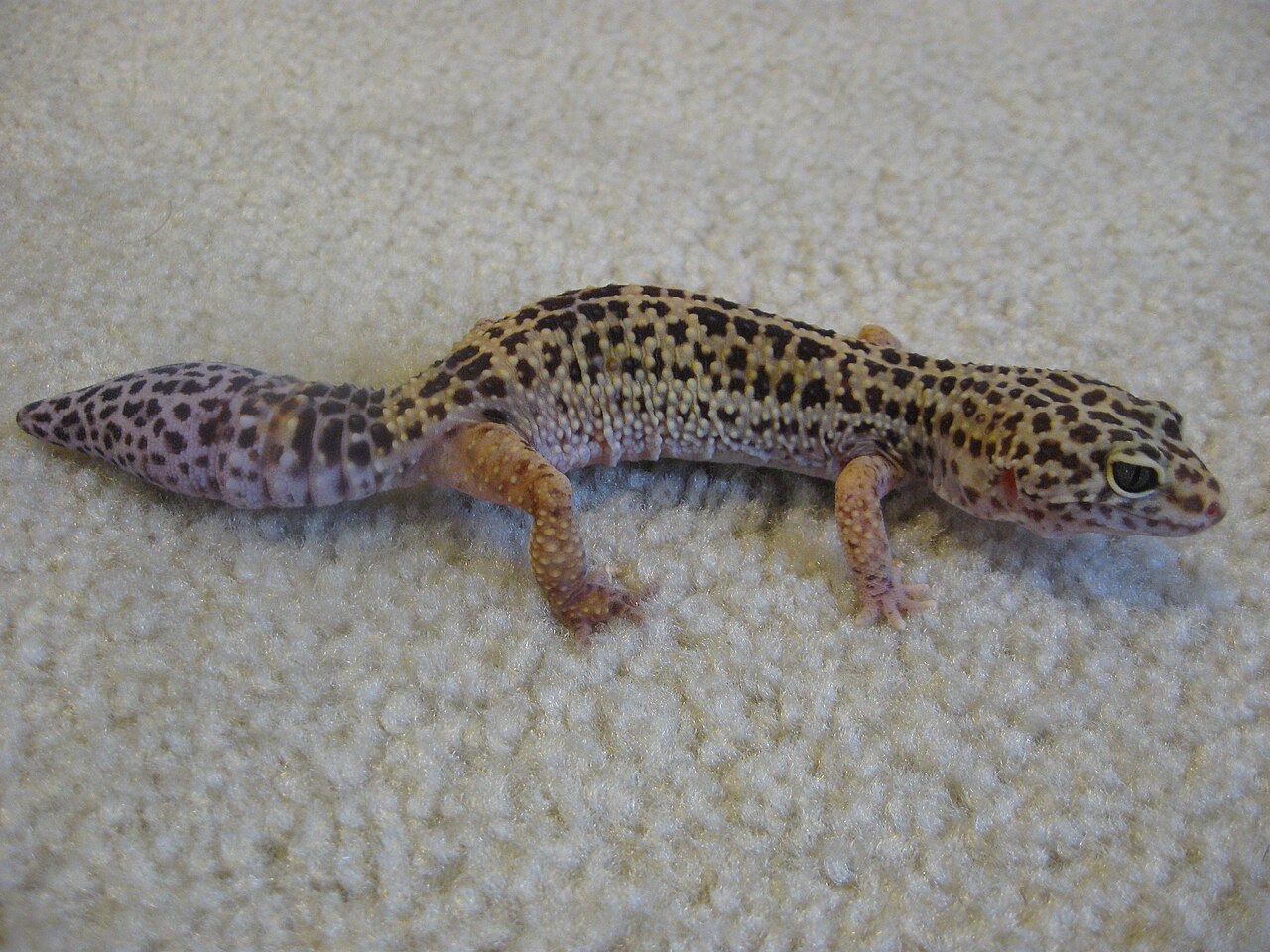
Leopard geckos have three albino strains that arose independently, and they do not combine. Tremper albinos came out of Ron Tremper’s line in 1996 and usually keep brown or tan markings with light gray eyes. Bell albinos, isolated by Mark Bell, show pink to lavender tones and distinctly ruby eyes in hatchlings. Rainwater or Las Vegas albinos, from Tim Rainwater, stay the smallest and palest of the three.
Because each strain is a separate recessive mutation at a different point in the pigment pathway, a Tremper bred to a Bell gives normal-looking, double-het hatchlings rather than albinos. That single fact ruins more breeding projects than any other. If you want the full breakdown of strains, prices, and the light sensitivity that comes with the trait, our guide to the albino leopard gecko goes through it species by strain.
Hypo, Super Hypo, and Baldy Morphs
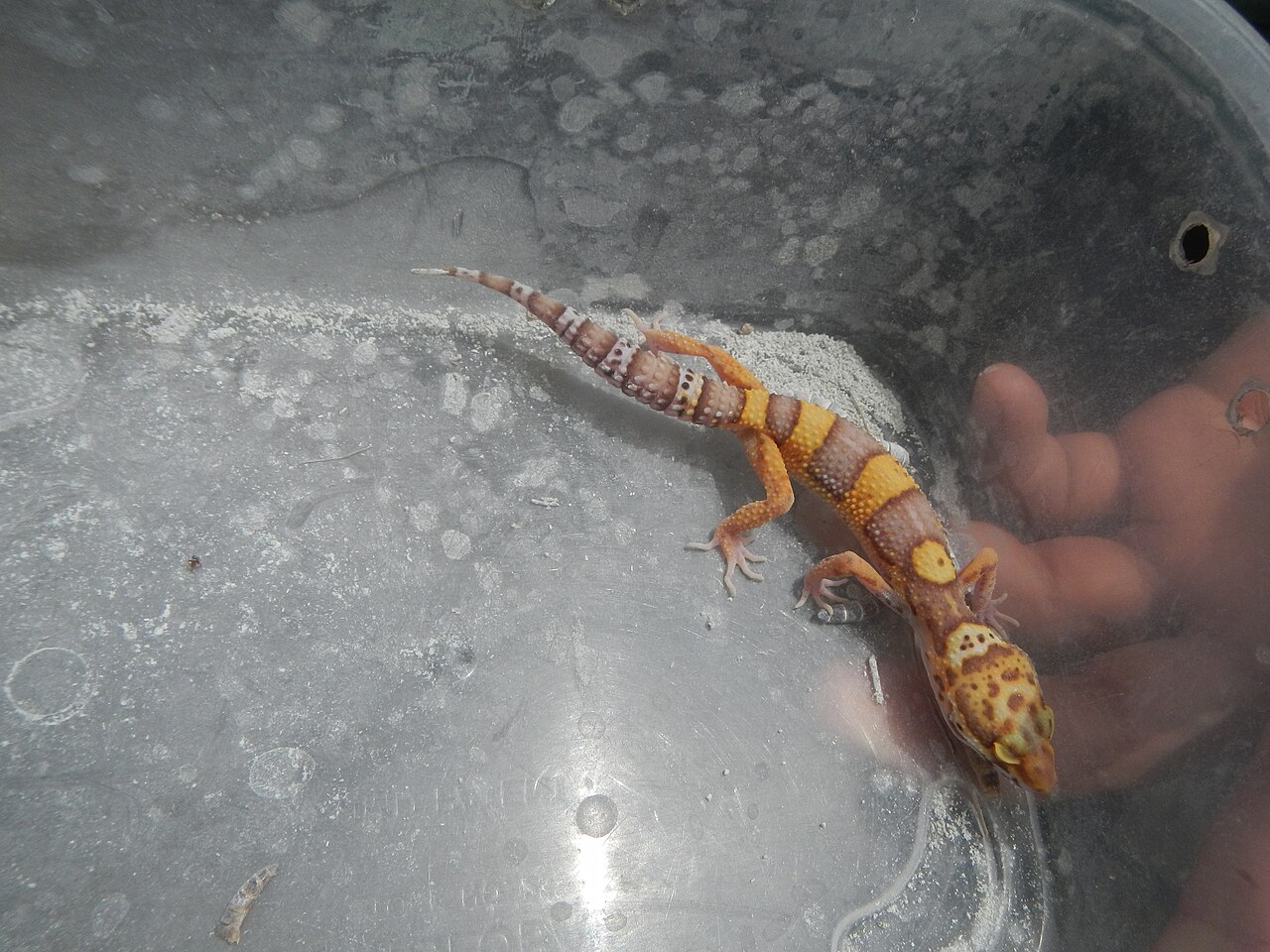
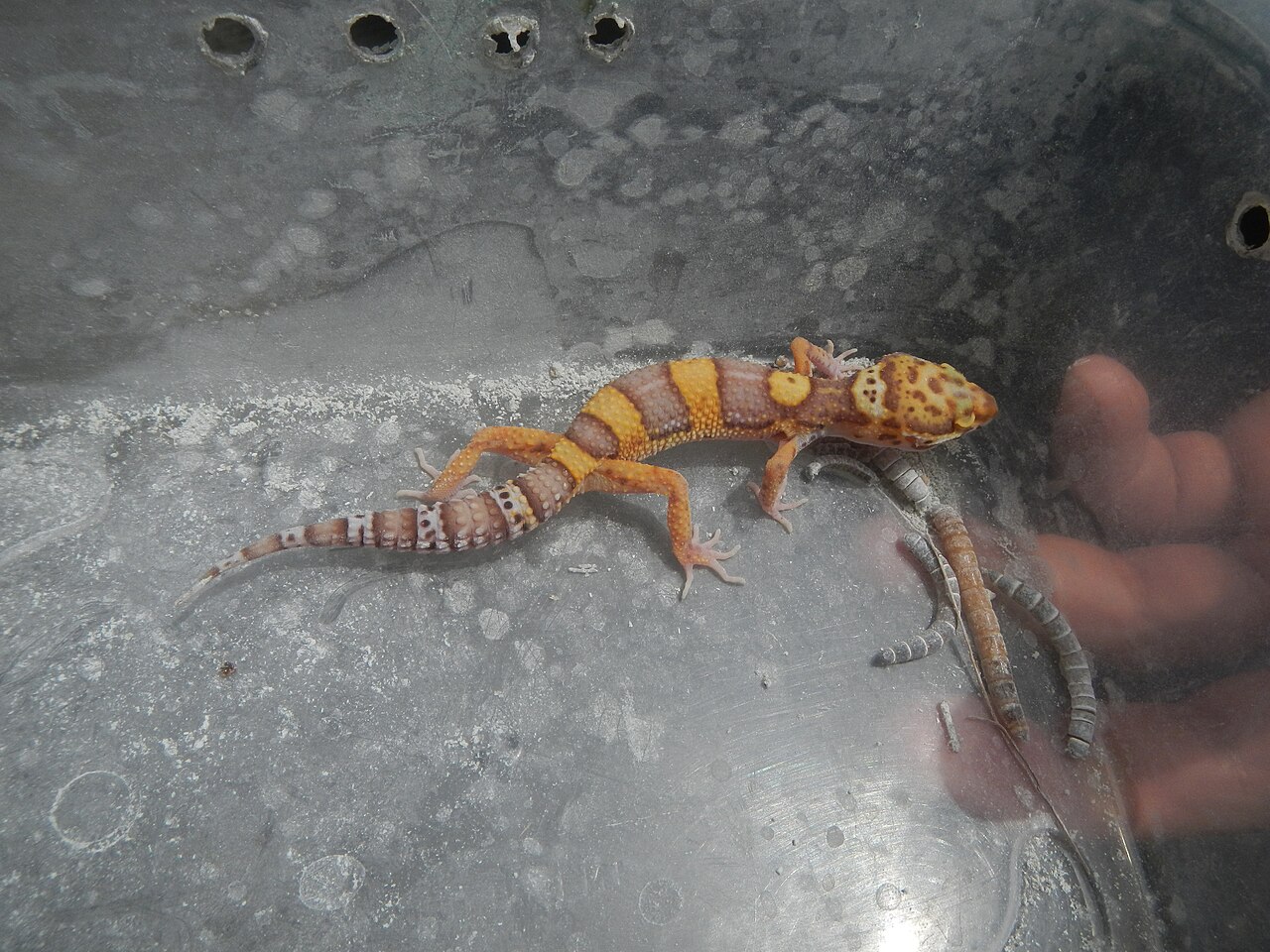
Hypomelanistic means reduced black pigment, and breeders count spots to grade it. A gecko with ten or fewer body spots, not counting head and tail, is a hypo. Zero body spots makes it a Super Hypo, often abbreviated SHT when combined with a carrot tail. When the head also loses its spots, the animal is called a baldy.
Hypo is polygenic, so two Super Hypo parents still throw some spotted babies. The trait is popular because it makes the yellow or orange ground color read as cleaner, and it is the base for most tangerine projects. Hatchlings look banded and only lose the bands over the first four months, so grading a hypo before it is 16 weeks old is guesswork. Watch how the baby leopard gecko transitions out of its juvenile bands before you judge the adult look.
Patternless, Murphy Patternless, and Blizzard
Murphy Patternless is a recessive morph that hatches with faint pattern and matures into a uniform gray, sage green, or dull yellow animal with a white belly and a plain tail. It was long sold as leucistic, which is wrong: pigment is present, it is simply unpatterned. Adults are often dismissed as boring, yet Patternless is a key ingredient in several high-value combos.
Blizzard is a separate recessive trait that removes pattern and most color, leaving a white, pale yellow, or gray animal with dark eyes and, unusually, a solid-colored tail from hatching. Blizzard crossed with Tremper albino gives Banana Blizzard; with Eclipse it gives a black-eyed white animal. Both morphs benefit from a light-toned enclosure, and the right substrate keeps a pale gecko from looking dirty in photos.
Tangerine, Carrot Tail, and Carrot Head
Tangerine describes orange ground color, and like hypo it is polygenic. Breeders grade it loosely from tangerine through hyper tangerine to the extreme lines sold as Electric Tangerine or Tangerine Tornado. The orange usually deepens until about 18 months and responds to temperature during incubation, so two siblings raised apart can end up visibly different.
Carrot tail is a separate selected trait: orange pigment covering at least 15 percent of the tail, measured from the base. Serious lines reach 80 to 100 percent coverage. Carrot head, orange pigment on the crown, is rarer and often paired with a baldy head for a clean look. None of these are guaranteed in offspring, so buy the animal you see rather than the promise on the listing.
Snow Morphs: Mack Snow, Super Snow, and TUG Snow
Mack Snow is codominant, which makes it one of the most useful morphs in the hobby. A single copy gives a hatchling with white bands instead of yellow, and the adult keeps a washed-out, high-contrast look. Two copies produce a Super Snow: a white to gray animal covered in small black speckles, with solid black eyes.
TUG Snow and Gem Snow came from separate lines and behave differently, which is why mixing snow lines confuses results. Snow stacks well, and most famous designer geckos include it. Mack Snow plus Bell albino plus Eclipse produces Radar; plus Tremper it gives Diablo Blanco when Blizzard is added too.
Giant and Super Giant Leopard Geckos
The Giant trait is incomplete dominant and affects size only. A normal adult female weighs 45 to 60 g and a male 60 to 80 g, roughly 7 to 9 in (18 to 23 cm) long. A Giant male reaches 90 to 110 g, and a Super Giant, carrying two copies, can pass 130 g and 11 in (28 cm).
Size is the one trait that changes husbandry. A Super Giant needs a 40-gallon breeder rather than a 20-gallon long, a larger warm hide, and noticeably more food during its first year. Giant genetics also combine with any color morph, so Giant Mack Snows and Giant tangerines are common. Growth rate is a poor indicator of the gene, because well-fed normals often outgrow underfed Giants in the first six months.
What Is the Rarest Leopard Gecko Morph?
The rarest leopard gecko morph commonly available is Black Night, a melanistic line developed in Italy that produces nearly solid black animals. Adults sell for 1,000 to 3,000 USD and remain scarce because the line is polygenic, slow to fix, and held by few breeders. Black Pearl and true black-and-white Galaxy variants sit in the same bracket.
Among single-gene morphs, the scarcest names shift every few years as breeders flood the market. Eclipse, once expensive, is now routine. If you are looking for genuine rarity rather than a trade name, ask how many breeders in the United States work with the line at all. Fewer than five is rare; two dozen is marketing. The same pattern plays out in other reptiles, and our overview of corn snake morphs shows how quickly a premium morph becomes a shop animal.
Which Leopard Gecko Morphs Should Be Avoided?
Two morph groups carry documented health problems. Enigma, and the related lines White and Yellow and Lemon Frost when Enigma is present, cause Enigma Syndrome: head tilting, circling, stargazing, and difficulty striking at prey. It is neurological, it is linked to the morph itself, and it does not go away. Severity varies, but any Enigma can express it at any age.
Lemon Frost is the second. The mutation that produces its bright white and yellow look also drives iridophoroma, a skin tumor that appears in a large share of animals and has been described in peer-reviewed genetic work indexed at the National Center for Biotechnology Information. Super Snow animals sometimes show mild eye issues as well. None of these are reasons to panic about the hobby; they are reasons to choose a different morph.
What Are the Cheapest Leopard Gecko Morphs?
The cheapest leopard gecko morphs are the wild-type normal and the high-yellow, both at 30 to 60 USD from a breeder and often less at a reptile expo late on the second day. Tremper albinos, basic Mack Snows, and Murphy Patternless usually sit in the 50 to 90 USD range because so many hatch each season.
Cheap does not mean lesser. A normal leopard gecko has the same 15 to 20 year lifespan, the same calm temperament, and none of the neurological risk attached to premium Enigma combos. Spending the difference on a larger enclosure, a decent thermostat, and a vet fund buys more welfare than a rarer morph does. For comparison, a crested gecko costs about the same and needs no heat mat at all.
How to Identify Your Leopard Gecko’s Morph
Start with the eyes. Solid black eyes point to Eclipse or Super Snow, red or ruby to Bell albino, light gray with visible veining to Tremper. Then read the ground color: white or gray suggests snow or blizzard, orange suggests tangerine, plain gray or green suggests Patternless. Finally count body spots to place the animal on the hypo scale.
If the gecko came from a pet store with no paperwork, accept that you may only reach a group rather than a trade name. Words like Super Hypo Tangerine Carrot Tail describe what you see, so they are safe to use. Genetic claims are not, since heterozygous carriers look ordinary. Age matters too: judge morphs after four months, and check that droppings look normal while you are inspecting the animal.
Frequently Asked Questions
What is the rarest color of a leopard gecko?
Near-solid black is the rarest color, seen in Black Night and Black Pearl lines that sell for 1,000 to 3,000 USD. True lavender saturation across the whole body is a close second. Both are polygenic, held by a handful of breeders, and slow to reproduce reliably, which keeps supply low season after season.
What is the coolest leopard gecko morph?
Among keepers, the most admired morphs are Super Snow for its black speckling and solid black eyes, Radar for the combination of pale body and dark eyes, and Black Night for sheer contrast. Coolest is taste, not biology, but those three appear on most keeper wish lists and hold their value best.
Is it better to have 1 or 2 leopard geckos?
One is better. Leopard geckos are solitary and do not need company. Two males will fight, and two females frequently bully each other over the warm hide, which shows up as lost weight and dropped tails. If you want a pair, that means two enclosures, not one larger tank with more hides.
Do leopard geckos like to be held?
Most tolerate handling rather than enjoy it. A calm adult, supported from below and never held by the tail, will sit on a hand for 5 to 10 minutes without stress. Signs to stop are tail waving, rapid breathing, and attempts to bolt. Hatchlings need two to three weeks to settle before any handling.
How does a leopard gecko morph calculator work?
A morph calculator applies simple Mendelian ratios to the genes you enter for both parents. It handles recessive and codominant traits reliably, so it predicts albinos, snows, and eclipses well. It cannot predict polygenic traits such as tangerine, hypo, or carrot tail, because those depend on line quality rather than on one gene.
What is the prettiest gecko species to keep?
Beyond leopard geckos, keepers usually name the crested gecko for its eyelash crests and color variety, and the Mediterranean house gecko for its subtle speckling. Leopard geckos still win on temperament and ease of care, which is why they remain the most recommended first lizard in the United States.