Komodo Dragon Venom: What It Does and Why the Bacteria Story Was Wrong
Komodo dragon venom is real, and it works by wrecking the blood rather than shutting down the nerves. The largest living lizard (Varanus komodoensis) carries paired venom glands in its lower jaw that release proteins which drop blood pressure and stop clotting, so a bitten animal bleeds and weakens instead of collapsing on the spot.
For most of the twentieth century the standard explanation was different: deadly mouth bacteria. That idea held for decades, appeared in documentaries and textbooks, and was overturned by venom research published in 2009. The bacteria story is still the most repeated piece of misinformation about this animal.
Komodo dragons are venomous. Glands in the lower jaw secrete anticoagulant and hypotensive proteins that prevent clotting and lower blood pressure, causing prey to bleed heavily and go into shock. The venom is not strong enough to kill a healthy adult human quickly, but bites cause severe bleeding and need immediate medical care.
| Question | Answer |
|---|---|
| Venomous or not | Venomous, confirmed 2009 |
| Gland location | Paired glands in the lower jaw |
| Main effect | Anticoagulant plus sharp drop in blood pressure |
| Speed of effect | Hours to days in large prey, not minutes |
| Danger to humans | Serious bleeding and infection risk, rarely fatal |
| Recorded human deaths | Fewer than a dozen since the 1970s |
How venomous are Komodo dragons?
Venomous, but not in the way a cobra or a rattlesnake is. The glands sit between the teeth of the lower jaw and ooze secretion into the wound as the dragon bites and pulls, rather than injecting a measured dose through hollow fangs. Delivery is messy and the dose is variable.
The active compounds are the interesting part. Analysis of the gland secretion found proteins that block clotting, widen blood vessels and induce shock, which together explain the massive bleeding seen in bitten prey. A 2009 study in the Proceedings of the National Academy of Sciences described both the glands and the compounds in detail.
Compared with the fastest acting elapid venoms, the effect is slow. A water buffalo bitten in the leg may take days to die, which is why the dragon’s hunting strategy depends on tracking rather than on an instant kill. That patience is a far better weapon than the raw toxicity ever was.
The bacteria myth, and why it lasted so long
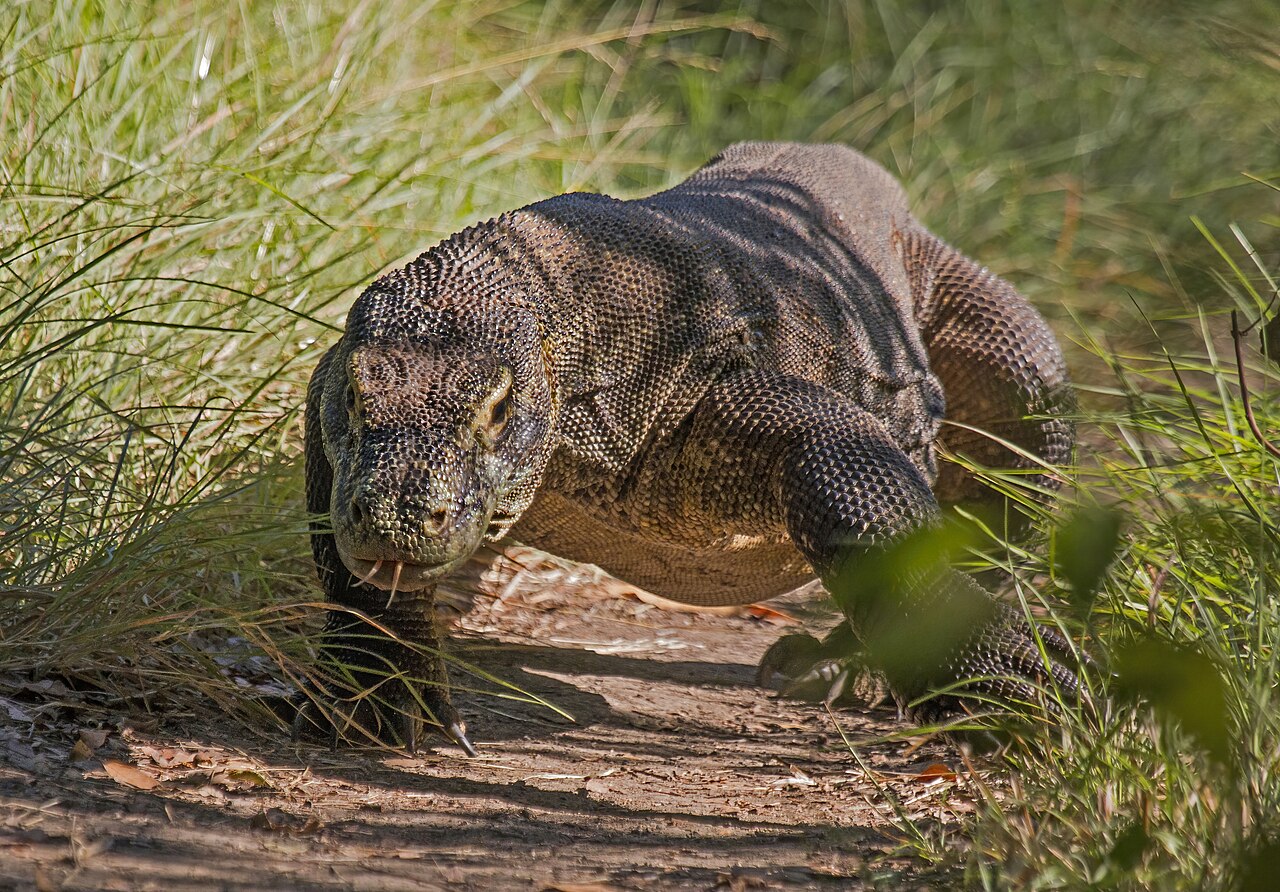
The old story said the dragon’s mouth carried such a lethal load of bacteria that a bite caused fatal septicemia. It was plausible, it matched the scavenging lifestyle, and it went unchallenged for decades. Later sampling found that the oral bacteria of wild Komodo dragons are unremarkable and broadly similar to those of other large carnivores.
Worse for the theory, septicemia is far too slow and unreliable to build a hunting strategy on. Prey that dies four days later from an infection is usually prey that someone else eats. The venom finding fits the observed reality better: bitten animals bleed persistently, weaken fast and stay findable.
Can a human survive a bite from a Komodo dragon?
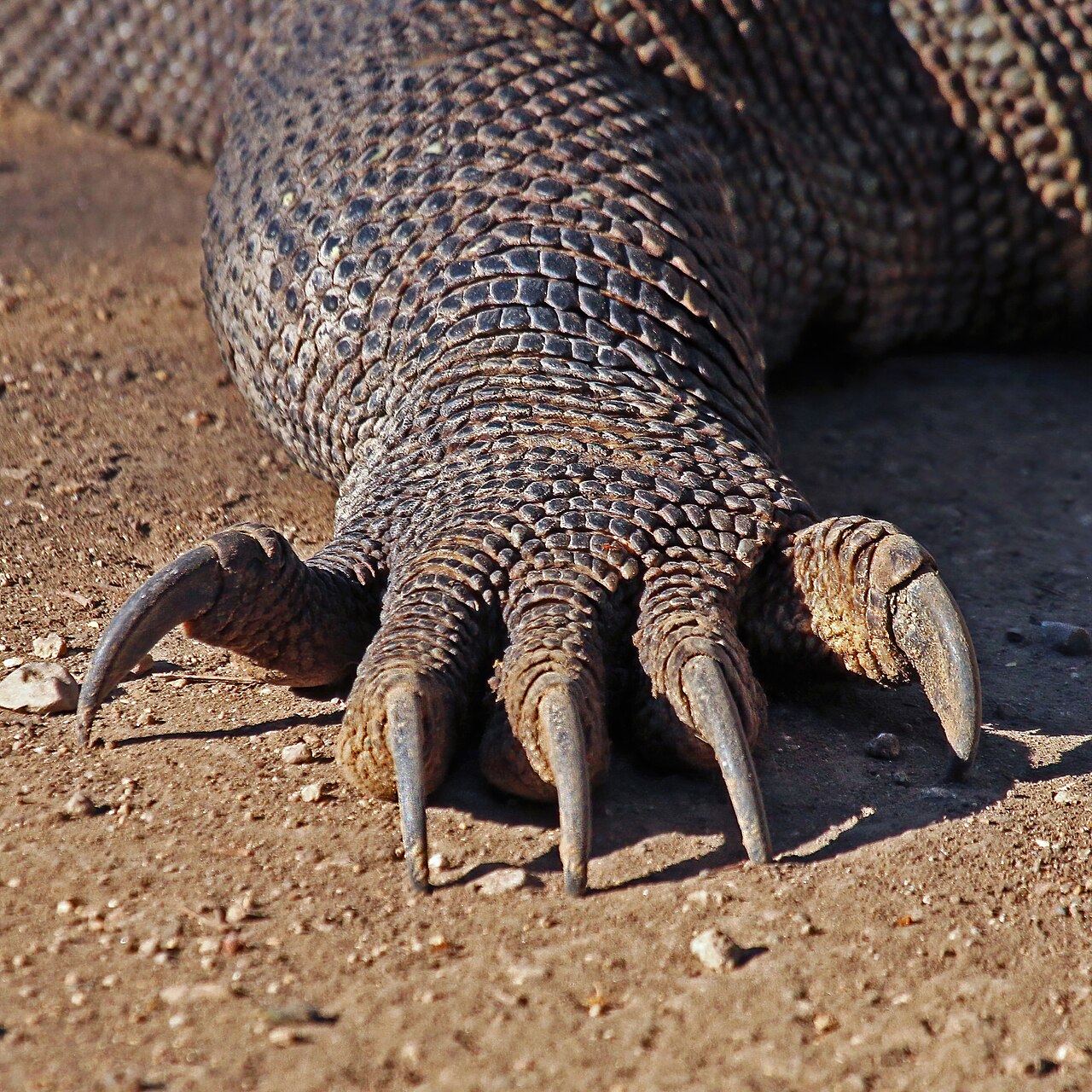
Yes, and nearly everyone does. The realistic danger from a Komodo dragon bite is mechanical damage plus bleeding that will not stop, not a rapid toxic death. Serrated teeth tear deep wounds, the anticoagulant keeps them bleeding, and the animal is heavy enough to knock an adult down.
Medical treatment is straightforward in principle: control the hemorrhage, clean and debride the wound thoroughly, and cover for infection. Documented bite cases treated in hospitals recover, though wound care can take weeks. Anyone bitten needs emergency care immediately, because the bleeding is the emergency.
How many humans have been killed by Komodo dragons?
Fewer than a dozen deaths have been recorded since systematic reporting began in the 1970s, in a population that shares islands with thousands of people. Most involved children, elderly villagers or people who were alone and unable to get away, and most fatalities came from blood loss and traumatic injury rather than venom alone.
Attacks have become slightly more frequent as dragons and people share shrinking space in Komodo National Park and on Flores. The animals are ambush hunters that respond to blood and carrion smell, so the practical warnings for visitors are about open wounds, wandering alone and moving quietly through brush.
What animal kills a Komodo dragon?
Adult Komodo dragons have no natural predators, and the main threat to one is another Komodo dragon. Cannibalism is common enough to shape the species’ life history: juveniles spend their first years in trees, rolling in feces and staying off the ground precisely because adults eat them.
That tree dwelling phase ends when the animal grows too heavy to climb, and life on the ground begins with the risk already behind it. Our guide to the young Komodo dragon covers that stage in more detail, and the running speed of an adult explains why escape on foot is not a plan.
For humans and for prey, the dragon’s real advantage is the combination of size, bite and chemistry. At up to 10 ft (3 m) and 150 lb (70 kg), it does not need venom to be formidable; the venom simply makes sure the wound keeps working after the animal has let go.
Venom, poison and where other reptiles fit
Venomous means injected through a bite or a sting. Poisonous means harmful when eaten or touched. A Komodo dragon is venomous; a tree frog with toxic skin secretions is poisonous; and an albino ball python is neither, because it kills by constriction.
The Komodo finding mattered beyond one species. It supported the idea that venom evolved once at the base of a large reptile group that includes monitor lizards, iguanians and snakes, which reframed a lot of harmless looking lizards as low grade venom producers. Plenty of reptiles people meet, including the eastern box turtle and most common frogs such as the African bullfrog, remain entirely free of both.
Frequently Asked Questions
What happens if a Komodo dragon licks you?
Nothing. The forked tongue collects scent particles for the animal’s Jacobson’s organ and carries no venom, because the glands sit in the lower jaw and release only into a bite wound. A lick is the dragon smelling you, which is still a good reason to move away.
Which animal is immune to Komodo dragon venom?
Komodo dragons themselves show strong resistance, which matters because they fight and bite each other frequently. Their blood contains antimicrobial peptides that have attracted medical research interest. No other species has been demonstrated to be immune, and the claims circulating about various mammals are not supported by data.
How fast does Komodo dragon venom kill?
Slowly by venom standards. Large prey such as deer or water buffalo may survive for hours or several days while bleeding and weakening, with the dragon following the scent trail. There is no documented case of a human dying within minutes of a bite.
Do Komodo dragons eat humans?
Very rarely, and it is not normal behavior. A handful of documented incidents involved bodies being consumed after a fatal attack. Dragons are opportunistic scavengers, so the behavior reflects a response to carrion and to vulnerable individuals rather than any preference for people.
Is there an antivenom for Komodo dragon bites?
No antivenom exists, and none is considered necessary. Treatment is supportive: stop the bleeding, irrigate and debride the wound, give antibiotics against contamination, and monitor blood pressure. Because the toxins act on clotting and circulation rather than on nerves, standard trauma care handles the case.