Gopher Snake: Harmless Rattlesnake Mimic With a Loud Hiss
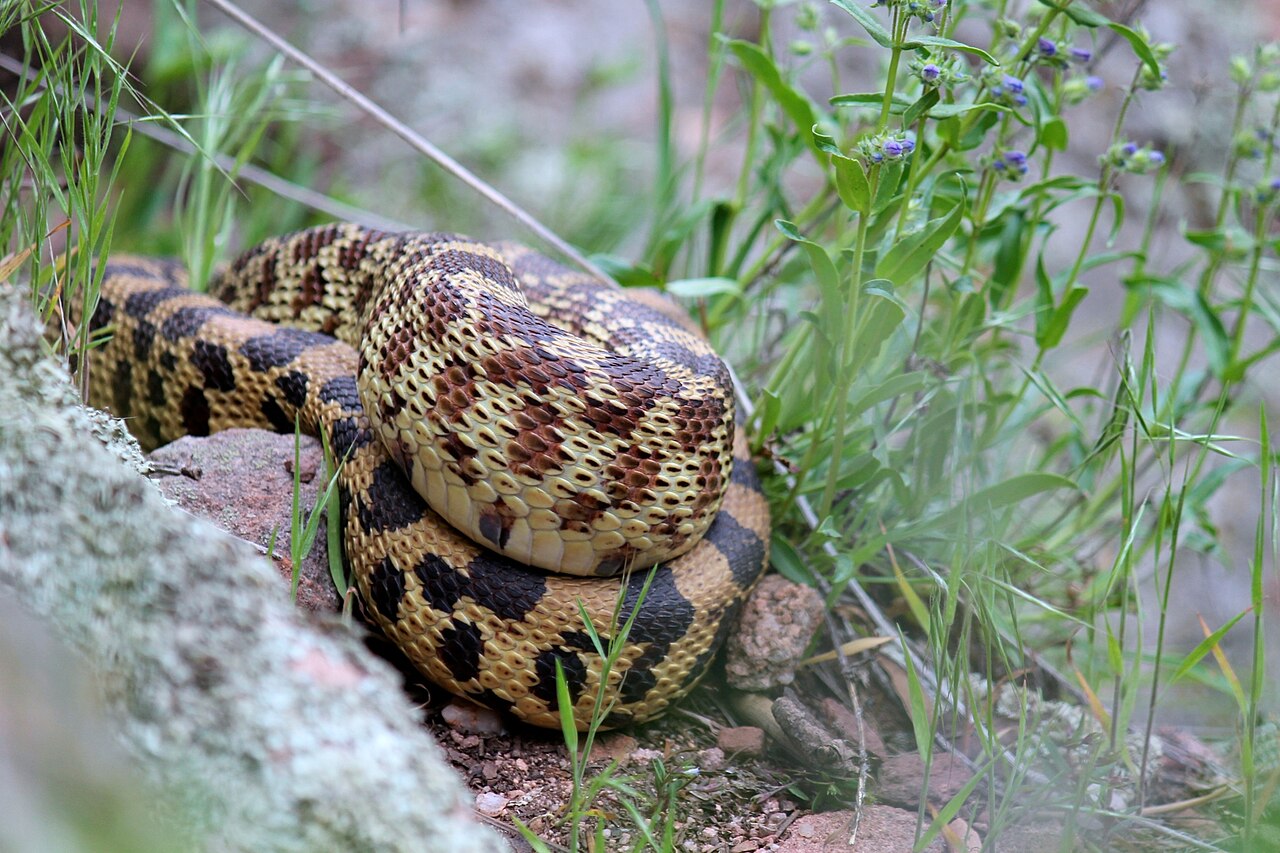
The gopher snake is a big, loud, completely harmless constrictor that does a first rate impression of a rattlesnake. When cornered it flattens its head into a triangle, hisses through a modified flap in its windpipe, and buzzes its tail in dry leaves. The act works so well that thousands of gopher snakes are killed every year by people who were certain they had a rattler in the yard.
Gopher snakes (Pituophis catenifer) range across most of the western United States and into the Great Plains, where the subspecies is better known as the bullsnake. They are among the longest snakes in North America, they eat pocket gophers and ground squirrels by the dozen, and they are one of the most useful animals a rural property can host. This guide covers identification, the rattlesnake comparison, diet, bites, handling and price.
Gopher snakes are not venomous and not poisonous. They kill prey by constriction and defend themselves by hissing, head flattening and tail vibration that mimic a rattlesnake. Adults reach 36 to 84 in (91 to 213 cm). A bite causes shallow scratches only and needs nothing more than cleaning.
| Quick fact | Gopher snake |
|---|---|
| Scientific name | Pituophis catenifer |
| Adult length | 36 to 84 in (91 to 213 cm) |
| Venomous | No, a constrictor |
| Main food | Pocket gophers, ground squirrels, mice, rabbits, birds and eggs |
| Range | Pacific coast to the western Great Plains, Canada to Mexico |
| Young | Eggs, 2 to 24 per clutch |
| Lifespan | 12 to 15 years wild, over 30 in captivity |
How Poisonous Is a Gopher Snake?
A gopher snake is not poisonous at all, and it is not venomous either. It has no venom glands, no hollow fangs and no delivery system of any kind. Prey dies from constriction, which is why a gopher snake needs a powerful body rather than a chemical shortcut.
The confusion is almost entirely about appearance and sound. The blotched pattern, the triangular head shape it can produce on demand, and the buzzing tail all point toward a rattlesnake to an untrained eye. None of it is backed by venom.
Nothing about the animal is toxic to handle, and it poses no poisoning risk to a dog or a curious child. The greatest hazard a gopher snake presents is being mistaken for something dangerous.
How to Identify a Gopher Snake
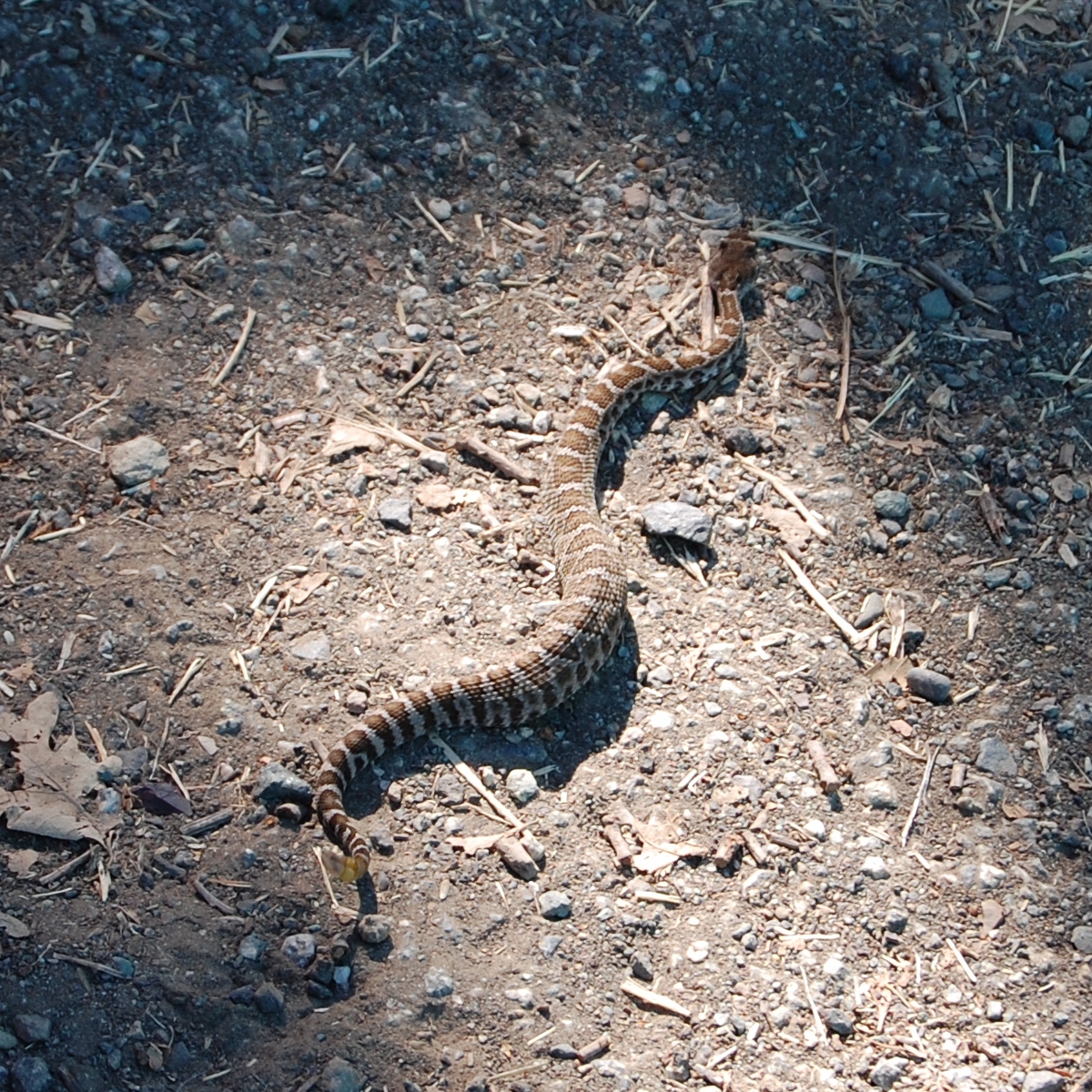
Gopher snakes are heavy bodied and long, usually yellow, tan or cream with a row of large dark brown or black saddle blotches down the back and smaller blotches along the sides. The scales are keeled, giving the animal a rough, matte look rather than a glossy one.
The head is comparatively small and narrow, only slightly wider than the neck when the snake is relaxed, with a pointed snout and an enlarged rostral scale used for pushing through soil. A dark line usually runs from the eye to the corner of the jaw.
Pupils are round, and there is no heat sensing pit between eye and nostril. Length alone often gives them away: a snake well over 5 ft in the American West is far more likely to be a gopher snake than anything venomous.
Gopher Snake vs Rattlesnake: How to Tell Them Apart
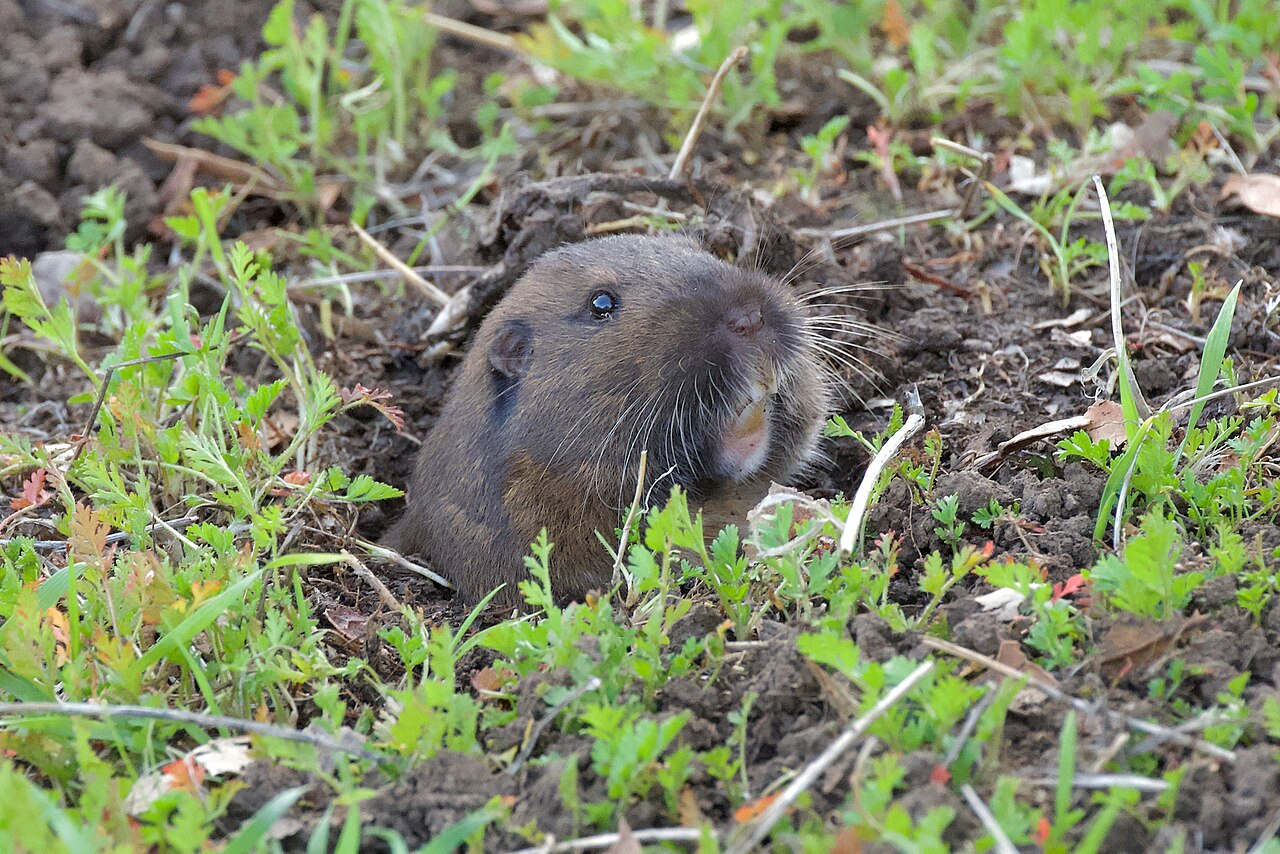
Four checks separate a gopher snake from a rattlesnake, and all of them work from a safe distance. The tail of a rattlesnake ends in a blunt segmented rattle, while a gopher snake tail tapers to a fine point. A rattlesnake has a genuinely broad triangular head set on a thin neck at all times; a gopher snake only flattens its head when threatened and looks narrow headed the rest of the time.
Pupils and pits settle it in a photo. Western rattlesnakes such as Crotalus oreganus have vertical slit pupils and a clear pit between the eye and the nostril. Gopher snakes have round pupils and no pit.
Body shape helps at range. Rattlesnakes are shorter and thicker for their length, and hold a tight defensive coil with the head cocked back. A gopher snake usually keeps moving, raises the front of the body in an S curve and hisses instead of holding a coil. The same distance first logic applies to every venomous lookalike question, including the one behind the coral snake color rhyme.
Why Gopher Snakes Hiss and Rattle
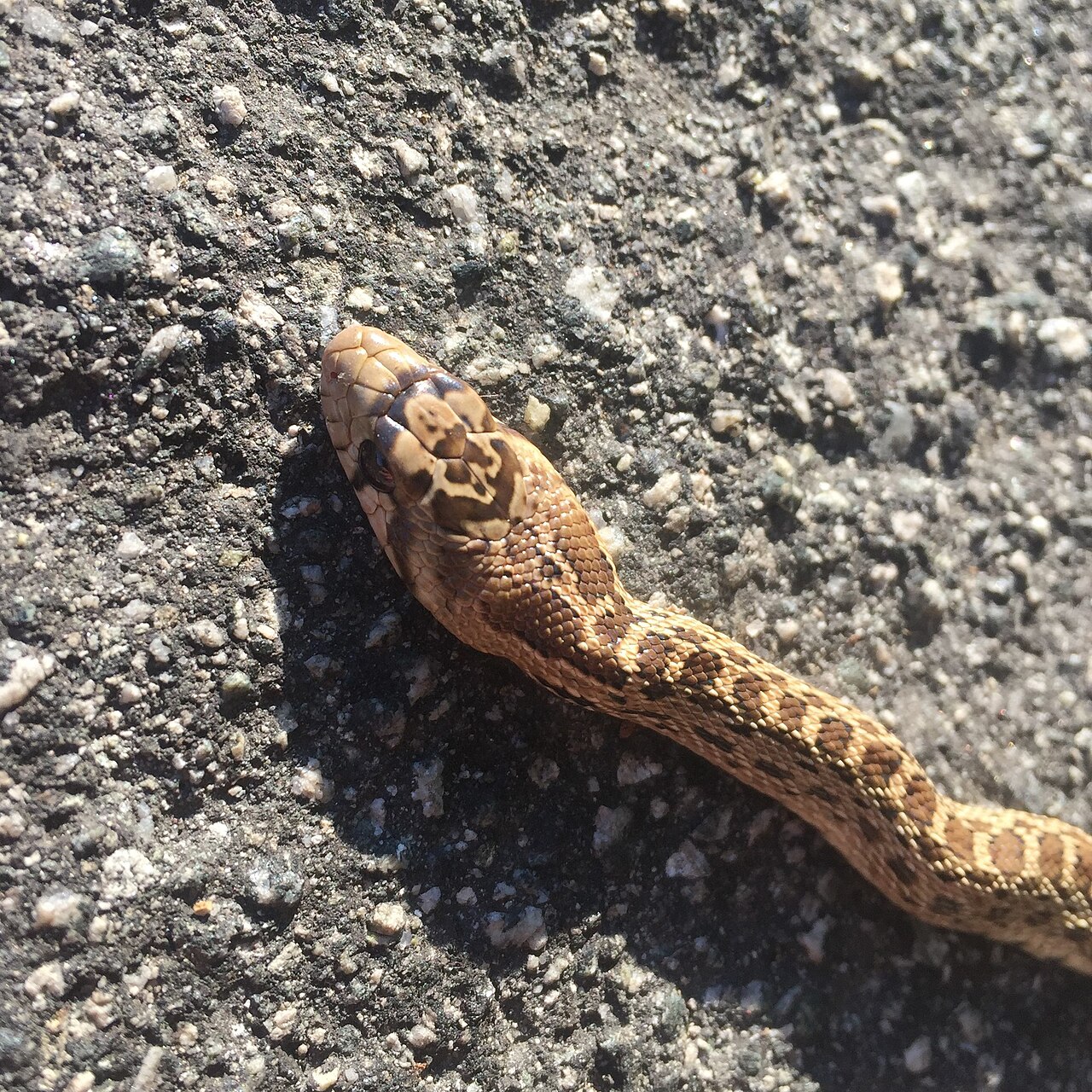
The hiss is anatomical, not incidental. Gopher snakes and their relatives have an enlarged epiglottis in front of the glottis that vibrates as air is forced out, turning an ordinary snake exhalation into a loud buzzing rasp audible from 20 ft (6 m) away. No other North American snake is this loud.
The tail vibration completes the illusion. Many harmless snakes buzz their tail when alarmed, but a gopher snake in dry grass or leaf litter produces a sound close enough to a rattle to fool experienced hikers.
This is defensive mimicry that costs the snake nothing and buys it space. Understanding the display is the practical point: a loud, hissing, head flattening snake with a pointed tail is telling you it is frightened, not that it is dangerous.
Is a Gopher Snake and a Bull Snake the Same Thing?
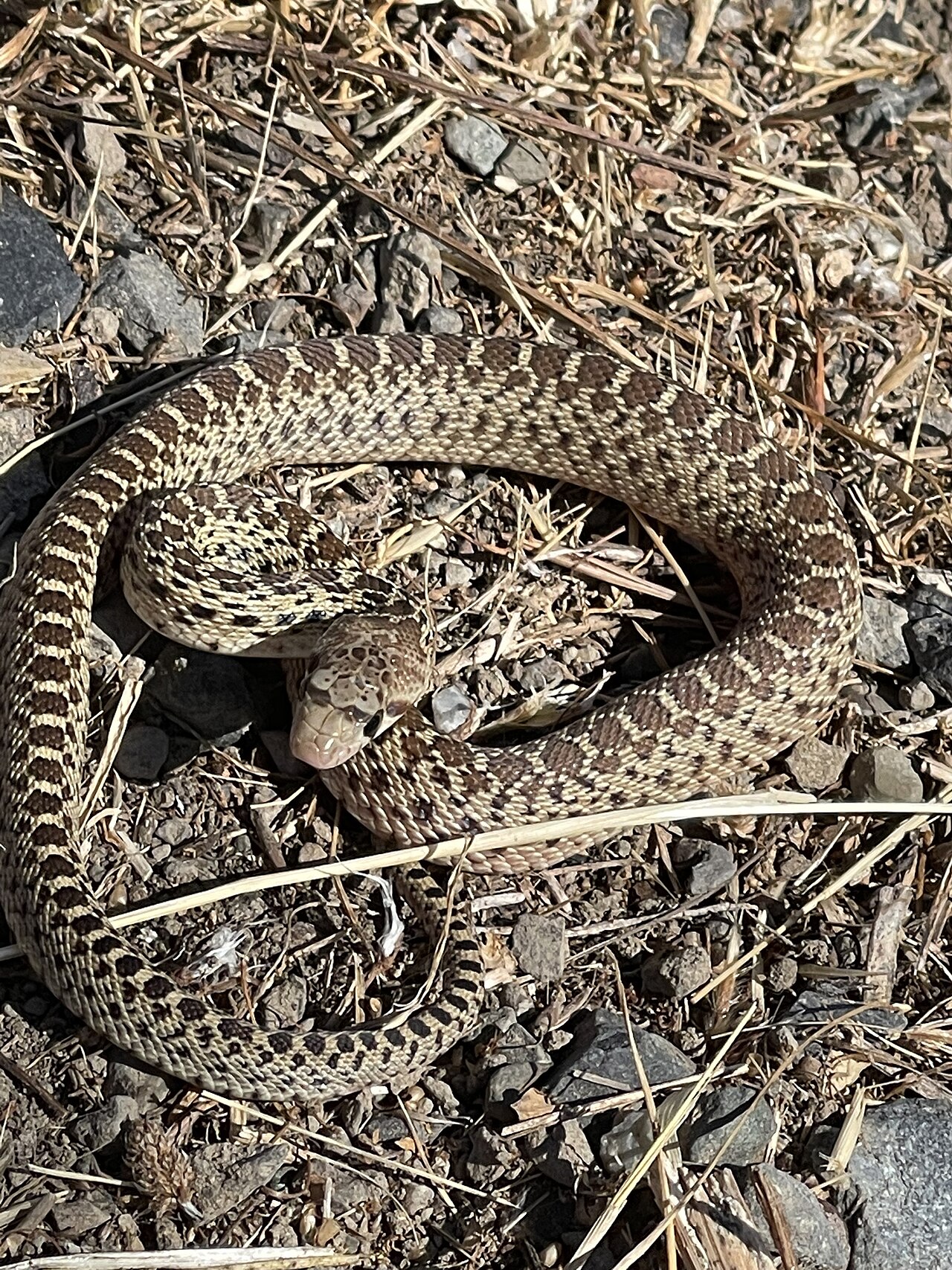
Essentially yes. The bullsnake is Pituophis catenifer sayi, a subspecies of the gopher snake found from the Great Plains into the Midwest and northern Mexico. Same species, different regional form and different common name.
Bullsnakes average larger and more yellow, with a heavier build and a reputation for a louder defensive display, and they are the giants of the group at lengths beyond 8 ft in rare cases. Pacific, Sonoran, Great Basin and San Diego gopher snakes are the other widely recognized subspecies.
If you are trying to identify one locally, use the regional name your state agency uses. We cover the plains form separately in our bull snake guide.
Where Gopher Snakes Live
Gopher snakes occupy an unusually wide range of habitats: grassland, sagebrush, desert scrub, chaparral, oak woodland, pine forest edges, agricultural fields and the rough margins of suburbs. They need loose soil with rodent burrows and open ground to hunt over.
The range runs from southern British Columbia south through California, the Great Basin and the Southwest into Mexico, and east across the plains states in the bullsnake form. They are absent from the humid Southeast.
Much of a gopher snake’s life happens underground in rodent tunnels, where it hunts, shelters from heat and spends the cold months. In the northern range they gather at communal dens, sometimes with rattlesnakes, a pattern explained in our guide to whether snakes hibernate.
What Gopher Snakes Eat
The name is accurate. Pocket gophers (Thomomys species) are a staple, along with ground squirrels, voles, mice, young rabbits, lizards, ground nesting birds and eggs. A large adult can take prey the size of a cottontail.
Hunting happens in the burrow as often as on the surface. A gopher snake will push into a tunnel, pin a rodent against the tunnel wall with a loop of its body, and swallow it underground, which is exactly why it is so effective against animals that traps and cats miss.
Feeding rates are substantial. A single adult may consume dozens of rodents a year, and in farm country a resident population measurably suppresses gopher damage to irrigation lines and root crops.
Is It Good to Have Gopher Snakes in Your Yard?
Yes. A gopher snake in the yard is free, quiet, permanent rodent control that does not poison anything up the food chain the way bait stations do. Owls, hawks and dogs die from secondary rodenticide poisoning; nothing dies secondhand from a snake.
There is a second benefit that surprises people. Gopher snakes are territorial toward rattlesnakes in the sense that they occupy the same burrows and eat the same prey, and a healthy gopher snake population is not compatible with a dense rattlesnake population on the same small parcel.
To keep them around, leave brush piles and rock stacks in place, stop using rodenticide, and keep cats indoors. Gopher snakes cannot damage a structure, a garden or a pet.
Will a Gopher Snake Bite You?
A gopher snake will bite if you corner it, grab it or step on it, and only then. The bite is a defensive strike from a nonvenomous mouth: rows of small recurved teeth leave a curved set of shallow punctures that bleed a little and sting.
Treatment is the same as for any minor scratch. Wash with soap and water, apply pressure until bleeding stops, cover it, and watch for infection over the next few days. There is no toxin to worry about, so no antivenom decision, no hospital, no time pressure.
Most encounters never get that far. A gopher snake would rather bluff than fight, and the enormous hiss is the whole point of the performance.
Is It Safe to Pick Up a Gopher Snake?
It is safe for you and usually bad for the snake. Physically there is no danger beyond a scratch, but a wild gopher snake being handled is a stressed animal, and a stressed animal that musks, bites and thrashes teaches an onlooker exactly the wrong lesson about harmless snakes.
Identify before you touch anything. The one situation in which handling is justified is moving a snake off a road or out of a garage, and a long broom plus an open door beats hands every time.
If you do lift one, support the body in two places and never dangle it by the neck or tail. Captive bred gopher snakes are a different matter entirely and are known as calm, easily handled animals, much like a corn snake over its long life.
Gopher Snake Lifespan and Reproduction
Gopher snakes lay eggs rather than bearing live young. Mating happens in spring after emergence, and the female deposits 2 to 24 leathery eggs in early summer in a burrow, under a rock slab or in loose sand. Incubation runs 65 to 80 days, and hatchlings emerge in late summer at 12 to 18 in (30 to 46 cm) already able to hunt and hiss. Our page on the baby gopher snake covers the first year in detail.
Wild lifespan is typically 12 to 15 years for snakes that survive the first two, with road mortality and deliberate killing by people as the leading causes of death.
In captivity, the species is remarkably long lived. Records exceeding 30 years exist, which puts a hatchling in the same commitment bracket as a parrot. Federal and state wildlife pages, including species accounts from the US Fish and Wildlife Service, are the best source for local protection status.
How Much Is a Gopher Snake Worth?
A captive bred gopher snake typically sells for 50 to 150 USD, with normal Pacific and Sonoran hatchlings at the low end. Designer morphs such as hypomelanistic, albino and patternless lines run 200 to 800 USD, and a well established breeder pair can be worth more than either animal alone.
Wild caught animals are cheap and a bad deal: parasites, stress, feeding refusal and, in several states, illegal collection. Check your state regulations before anyone hands you a snake for free.
The headline figures about six figure snakes belong to ball python morph projects, not to Pituophis. No gopher snake has ever approached that market, and the species remains one of the more affordable large colubrids alongside the garter snake.
Frequently Asked Questions
How poisonous is a gopher snake?
Not at all. Gopher snakes have no venom and are not poisonous to touch, handle or be bitten by. They kill prey by constriction. The hissing, head flattening and tail buzzing that make them seem dangerous are bluff behaviors that mimic a rattlesnake.
Is it good to have gopher snakes in your yard?
Yes. They remove pocket gophers, ground squirrels, mice and voles without poisoning hawks, owls or pets the way rodenticide does, and they occupy the same burrows rattlesnakes would use. Leave brush piles and rock stacks in place to keep them present.
Is a gopher snake and a bull snake the same thing?
They are the same species. The bullsnake is the Great Plains subspecies Pituophis catenifer sayi, generally larger and more yellow than the western gopher snake subspecies. Which common name is used depends on the region, not on any real difference in biology.
Will a gopher snake bite you?
Only if handled, cornered or stepped on. The bite leaves a curved row of shallow punctures that bleed briefly and sting. Wash it with soap and water, apply pressure and cover it. There is no venom involved, so infection is the only thing worth watching for.
Is it safe to pick up a gopher snake?
Physically yes, but it is unnecessary and stressful for the animal, which will musk, hiss and often bite. Move a snake with a broom and an open door instead. Captive bred gopher snakes, by contrast, are calm and handle well with body support in two places.
What is the lifespan of a gopher snake?
Wild gopher snakes that survive their first two years usually live 12 to 15 years. In captivity the species is exceptionally long lived, with documented records beyond 30 years, so a hatchling bought today is a multi decade commitment rather than a short term pet.