Skunk Tracks: 5 Toes, Claw Marks and the Raccoon Mix-Up
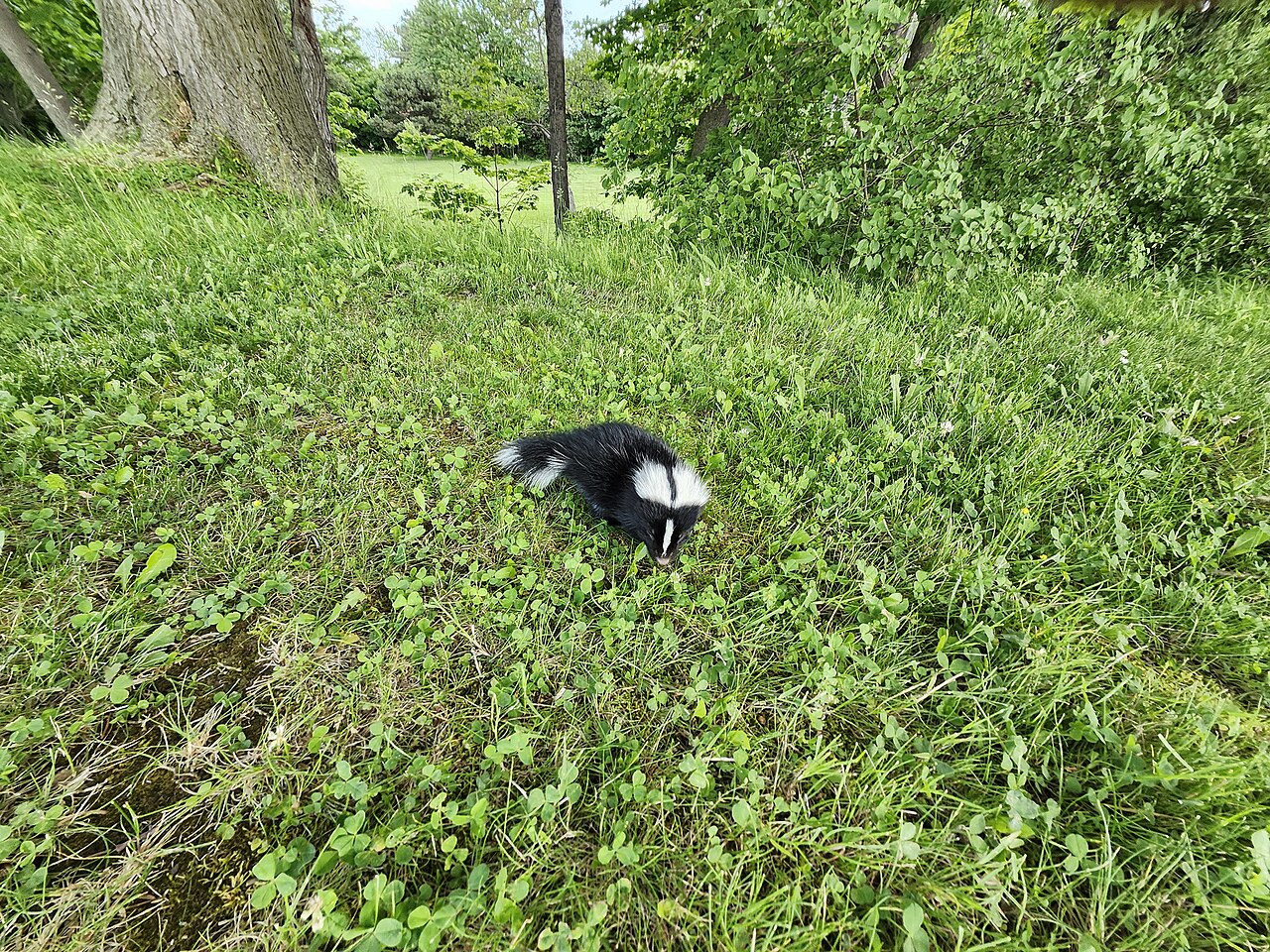
Skunk tracks show five toes on every foot, long claw marks set well ahead of the toe pads, and a small front print paired with a longer, flat hind print that looks faintly like a tiny bear’s. Most skunk tracks you will find are from the striped skunk (Mephitis mephitis), and the giveaway is the combination of five toes plus visible claws plus a short, shuffling stride. Snow is the easiest surface to read, which is convenient, because late winter is when skunks move most.
This guide works through the print itself, the measurements in inches and centimeters, the gait pattern, then each surface separately, and finally the lookalikes that cause almost every misidentification: raccoon, opossum and house cat.
Skunk tracks have five toes on front and hind feet with claw marks clearly separated from the toe pads. Front tracks measure about 1 to 1.5 in long (2.5 to 3.8 cm), hind tracks 1.5 to 2 in (3.8 to 5 cm) with a long heel. The stride is short, 4 to 6 in (10 to 15 cm), in a slow waddling walk.
| Measurement | Striped skunk | Notes |
|---|---|---|
| Front track length | 1 to 1.5 in (2.5 to 3.8 cm) | Claws add up to 0.5 in (1.3 cm) |
| Front track width | 0.8 to 1.2 in (2 to 3 cm) | Compact, toes close together |
| Hind track length | 1.5 to 2 in (3.8 to 5 cm) | Long heel pad registers in mud and snow |
| Stride, walking | 4 to 6 in (10 to 15 cm) | Short for the body size |
| Trail width | 3 to 4 in (7.5 to 10 cm) | Wide for the stride, hence the waddle |
| Usual gait | Walk, sometimes a 2 by 2 lope | Rarely a straight line |
What Do Skunk Tracks Look Like?
A clean skunk track reads as a small, blunt handprint with claw dots in front of it. All five toes usually register, arranged in a tight arc, and the claws print as separate marks rather than as extensions of the toes because they are long and only partly retractable. The overall impression is short and wide rather than elongated.
The trail matters as much as the print. Skunks potter: they stop, dig, circle a grub patch and move on, so a skunk trail wanders and rarely holds a bearing for more than a few feet.
Skunk Front Track vs Hind Track
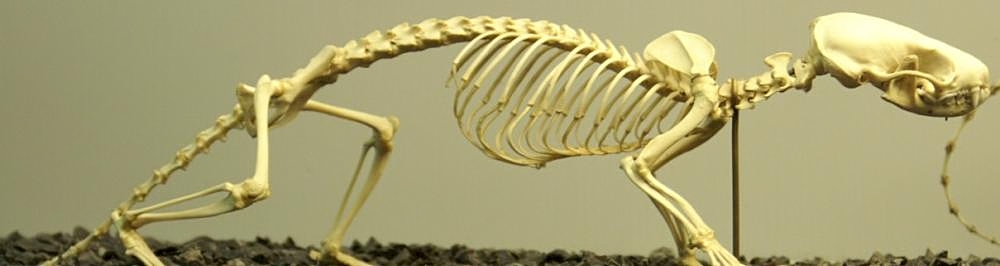
The front foot is the digger and prints smaller, with heavy claws that often show as five distinct scratches. The hind foot is longer and flatter, and when the animal slows down the heel pad registers, which produces that miniature bear print look. In a walking trail the hind print frequently lands partly over the front print, blurring both.
When you can only find one clear print, measure it and look for the heel. A heel means hind foot, and the size conclusions below follow from that.
Skunk Track Size in Inches and Centimeters
Front tracks run roughly 1 to 1.5 in long (2.5 to 3.8 cm) and 0.8 to 1.2 in wide (2 to 3 cm). Hind tracks run 1.5 to 2 in long (3.8 to 5 cm) with similar width. Add up to half an inch (1.3 cm) at the front if you are measuring claws in, which is why published figures vary: some sources include the claws and some do not.
Note which convention you used when you compare with a field guide. Half an inch is the difference between a skunk and a confident wrong answer.
Claw Marks: The Detail That Settles It
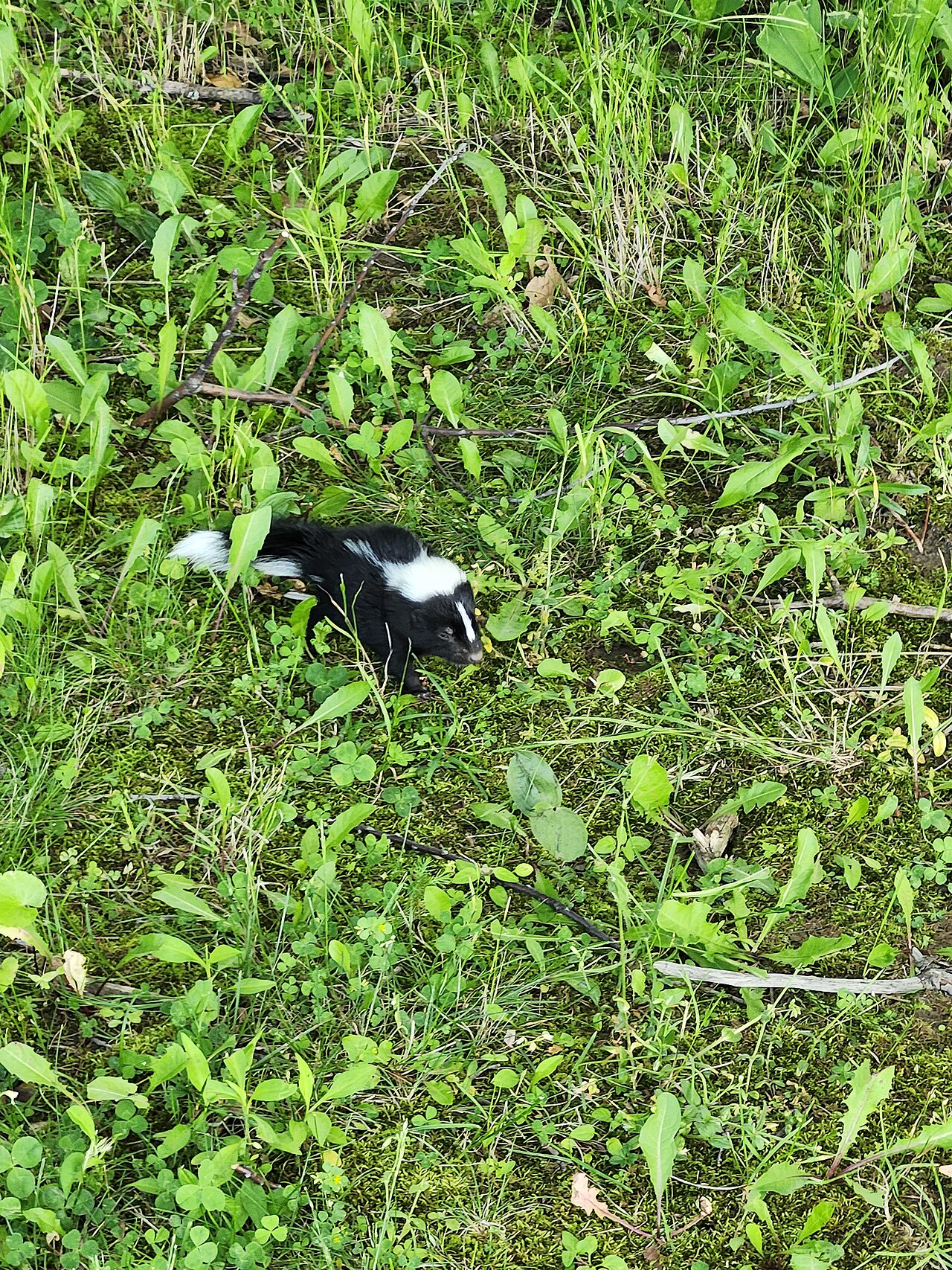
Skunk claws are long, blunt digging tools and they almost always print. In firm mud you get five fine punctures set 0.2 to 0.4 in (5 to 10 mm) ahead of the toe pads, and in snow they often drag, leaving short lines into the print. That gap between claw and toe is the single most diagnostic feature of a skunk track.
A cat never shows claws in a normal walking track. A dog shows claws, but only four toes, and the claws sit right at the toe tip.
Skunk Gait and Stride Pattern
Skunks walk. The default pattern is a slow, slightly rolling walk with a stride of 4 to 6 in (10 to 15 cm) and a trail width of 3 to 4 in (7.5 to 10 cm), which is wide relative to the stride and is exactly what produces the waddle people describe. When pressed, a skunk breaks into a clumsy lope that leaves tracks in pairs, two prints together, a gap, two more.
Compare that with the neat, nearly single file line of fox tracks, which is the clearest gait contrast in the eastern woods.
Skunk Tracks in Snow
Snow is the best surface and winter is the best season, with one catch: skunks do not hibernate but they do enter torpor and den up through cold snaps, often communally. Tracks therefore appear in bursts, during thaws and from February onward as mating season starts, then vanish for a week of hard cold.
In fresh snow under 2 in (5 cm) you get full detail including claw drags. In deeper snow the body and tail plow a trough and the individual prints disappear, leaving a continuous furrow with pawed scuffs along it. That furrow plus a den entrance under a shed or deck is a reliable combination.
Skunk Tracks in Mud
Mud gives the best measurements but the worst outlines. Soft mud spreads the print, making a skunk track look up to a quarter inch larger in each direction, and the heel of the hind foot sinks deepest. Look along pond edges, garden beds, driveway margins and the soft ground beside foundations, which is where skunks hunt grubs.
Firm, drying mud is the ideal. There the claw punctures stay crisp and the five toe count is unambiguous, which is what you need before ruling on possum tracks nearby.
Skunk Tracks in Sand and Dust
Dry sand collapses, so expect shape without detail: a rounded depression, maybe a hint of toes, no claws. Damp sand just above the waterline on a lake or river edge performs almost as well as mud. Dust along a barn wall, under a porch or in a dry crawl space is underrated and often holds a perfect print because nothing disturbs it.
In pure dry sand, judge by the trail pattern and stride rather than the print, since those survive when the outline does not.
Skunk Tracks vs Raccoon Tracks
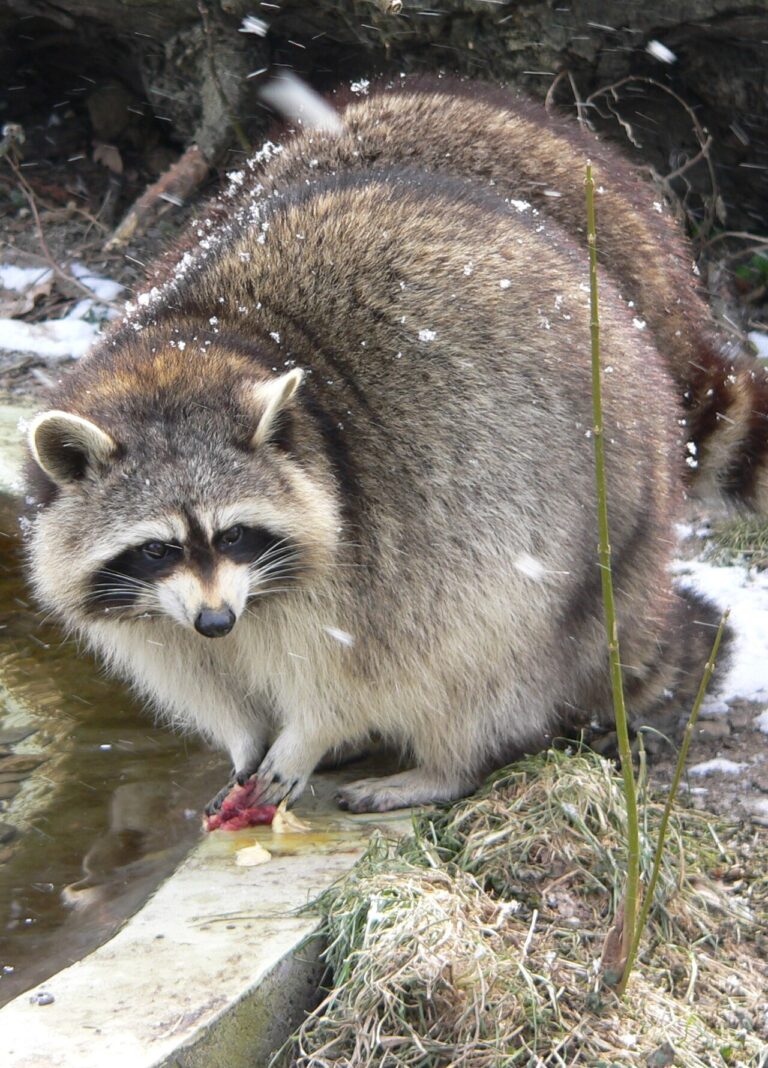
Both animals print five toes, and this is the confusion that trips up almost everyone. The difference is proportion. Raccoon toes are long and finger-like, splayed wide, and the hind foot is 2.5 to 4 in (6.4 to 10 cm) long and looks startlingly like a narrow human foot. Skunk toes are short and held in a tight arc, and the whole track is half the size.
Raccoon claw marks sit close to the toe tips; skunk claws stand off from them. If the print looks like a tiny hand, it is a raccoon. If it looks like a stubby paw with scratch marks ahead of it, it is a skunk.
What Do Possum Footprints Look Like?
Opossum tracks show five toes with one of them, the hind inner toe, sticking out sideways like a thumb. That opposable hallux has no claw and no equivalent in a skunk track, and once you have seen it the two species never get confused again. Opossum hind tracks run 1.5 to 2.5 in (3.8 to 6.4 cm), overlapping with skunk, so size alone will not do it.
Opossum front tracks look like a splayed star with toes pointing in all directions. Skunk front tracks are compact and forward facing.
Skunk Tracks vs Cat, Dog and Coyote Tracks
Cats and canids both print four toes, which rules them out of a five toe track immediately. House cat tracks are round, about 1 to 1.5 in (2.5 to 3.8 cm), with no claws. Dog and coyote tracks are oval, with four toes and blunt claws, and coyotes travel in a far more purposeful straight line than any skunk.
Count toes first, every time. Toe count eliminates more wrong answers in one step than any measurement, and it is also how you separate a skunk from bobcat tracks in the same yard.
Striped Skunk vs Spotted Skunk Tracks
Eastern and western spotted skunks (Spilogale species) leave the same five toe, long clawed print at roughly two thirds the size, with front tracks near 0.75 to 1 in (1.9 to 2.5 cm). They are also far more agile, climb readily, and leave a bounding trail more often than a walking one, so a small five toe track that bounds is worth a second look.
Range decides most cases. Spotted skunks are patchy and locally scarce across much of their range, while striped skunks occur in nearly every state. For the semiaquatic five toe prints you might find at the same pond edge, see mink tracks and fisher tracks.
Other Skunk Sign to Confirm the Track
Tracks rarely travel alone. Skunks leave shallow cone shaped diggings 1 to 3 in (2.5 to 7.5 cm) across in lawns where they pull grubs, small neat holes rather than the torn up turf a raccoon leaves. Scat is tubular, 1 to 2 in long, full of insect parts, and often dropped on a path. Den entrances sit under decks, sheds and woodpiles, with a smoothed hole 4 to 6 in (10 to 15 cm) wide and a faint musk.
State wildlife agencies and extension services publish regional track guides, and the U.S. Fish and Wildlife Service covers skunk distribution and legal status, which varies by state.
Frequently Asked Questions
What do skunks tracks look like in snow?
In snow shallower than 2 in (5 cm), skunk tracks show all five toes with claw drag lines ahead of the pads and a long hind heel. In deeper snow the animal plows a continuous trough roughly 4 in (10 cm) wide with scuffed pawing along the sides, and individual prints stop being readable.
What does it mean if you see a skunk in your yard?
It almost always means food. Skunks come for grubs and cutworms in lawn soil, fallen fruit, spilled birdseed, pet food left outside and accessible garbage. A skunk passing through is ordinary and temporary. A skunk denning under a deck or shed is a different problem and shows up as a worn hole with tracks running in and out.
What month are skunks most active?
February and March, during the mating season, when males range widely and both sexes are out at night after weeks of winter torpor. Activity stays high through spring as females feed litters, drops in midsummer heat, rises again in autumn as skunks fatten, and bottoms out in deep cold without ever becoming true hibernation.
What attracts a skunk to your yard?
Grub rich lawns, especially irrigated ones, plus pet food, birdseed under feeders, compost with food scraps, unsecured trash, fallen fruit, and open space under decks, sheds and porches. Removing the shelter matters as much as removing the food, since a yard with grubs but no den site usually gets visits rather than residents.
What smell do skunks absolutely hate?
Claims for citrus peel, ammonia soaked rags, predator urine and capsaicin sprays are widespread, and the evidence behind them is thin and mostly anecdotal. Repellents that do work tend to work briefly. Exclusion is the reliable answer: close off the den space with quarter inch hardware cloth buried 6 to 12 in (15 to 30 cm) deep, after confirming nothing is inside.
How long can a skunk stay in a live trap?
Not long, and in most states the law is specific: traps must be checked at least once every 24 hours, often sooner, and relocation is frequently prohibited outright because of rabies rules. A trapped skunk overheats fast in sun and sprays when jostled. Check your state wildlife agency first, and consider hiring a licensed operator.