6 Bugs That Look Like Termites: Check the Waist First
Most bugs that look like termites are winged ants, and the quickest way to separate them is the waist. A termite’s body is a straight tube from head to tail, while an ant pinches in sharply between the thorax and abdomen. That one check settles the majority of spring swarms found on windowsills, in bathtubs and around porch lights.
Five insects cause almost every false alarm in US homes: flying ants, acrobat ants, booklice, silverfish and powderpost beetles. Each is covered below with its key features, size, range and whether it damages wood. None delivers a serious bite, but two do chew structural timber, which is why the call is worth two minutes with a flashlight.
Termites have straight bodies, straight beaded antennae and four wings of equal length. Flying ants, the most common lookalike, show a pinched waist, elbowed antennae and front wings clearly longer than the rear pair. Booklice, silverfish and powderpost beetles are wingless or beetle shaped and get mistaken for pale termite workers.
| Feature | Termite (Reticulitermes flavipes) | Flying ant (Camponotus, Lasius) |
|---|---|---|
| Waist | Straight, no narrowing | Sharply pinched |
| Antennae | Straight, beaded | Bent at an elbow |
| Wings | Four, all the same length, twice the body | Front pair longer than rear pair |
| Color | Dark brown to black swarmer, creamy white worker | Black, brown or reddish throughout |
| Shed wings | Common, piles near windows | Rare |
| Eats wood | Yes | No, carpenter ants excavate but do not eat it |
Flying Ants: The Bug Most Often Mistaken for a Termite
Winged black carpenter ants (Camponotus pennsylvanicus) and black garden ants (Lasius niger) cause most termite scares. They swarm on warm, humid days in late spring and summer, exactly when subterranean termites do, and leave the same scatter of bodies on sills and in sinks. Carpenter ant swarmers run 0.5 to 0.75 in (13 to 19 mm), garden ant queens about 0.35 in (9 mm).
Hold one up and the waist gives it away. The ant narrows to a thread between its middle and rear segments, and its antennae kink at a right angle. Termite swarmers are the same width all the way down, with antennae like tiny strings of beads, and their four wings are identical in length rather than mismatched.
Ants bite when pinned but cause no lasting harm. Carpenter ants hollow galleries in damp wood and push out coarse sawdust mixed with insect parts, unlike the smooth, mud lined tunnels of termites. Frass like pencil shavings means ants; hollow wood with soil packed tunnels means termites. The same body shape test works on the species in our guide to roach lookalikes.
Acrobat Ants: Small, Dark and Found in Damaged Wood
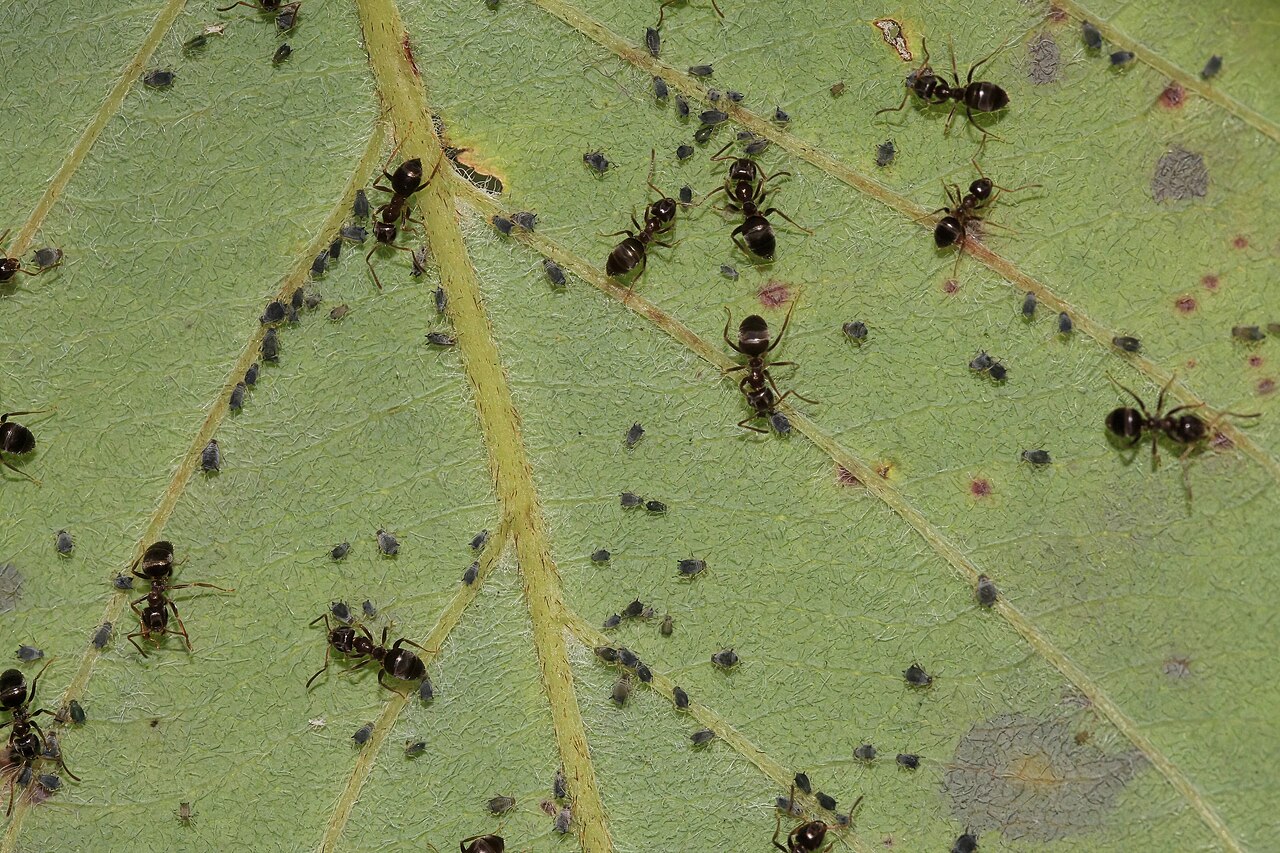
Acrobat ants (Crematogaster species) deserve their own section because they nest in the exact places homeowners inspect for termites: wet window frames, foam insulation and the galleries other insects abandoned. Workers are small at 0.1 to 0.13 in (2.5 to 3.3 mm), two toned light brown and dark brown, and the winged reproductives swarm from late summer into fall.
Their signature is the heart shaped abdomen, lifted over the body when disturbed. No termite does that. Acrobat ants also strip insulation off wiring and leave debris at nest openings, so sawdust under a window does not confirm termites on its own. They are harmless, though they smell faintly unpleasant when crushed.
Booklice: Tiny Pale Bugs That Look Like Termites in House Dust
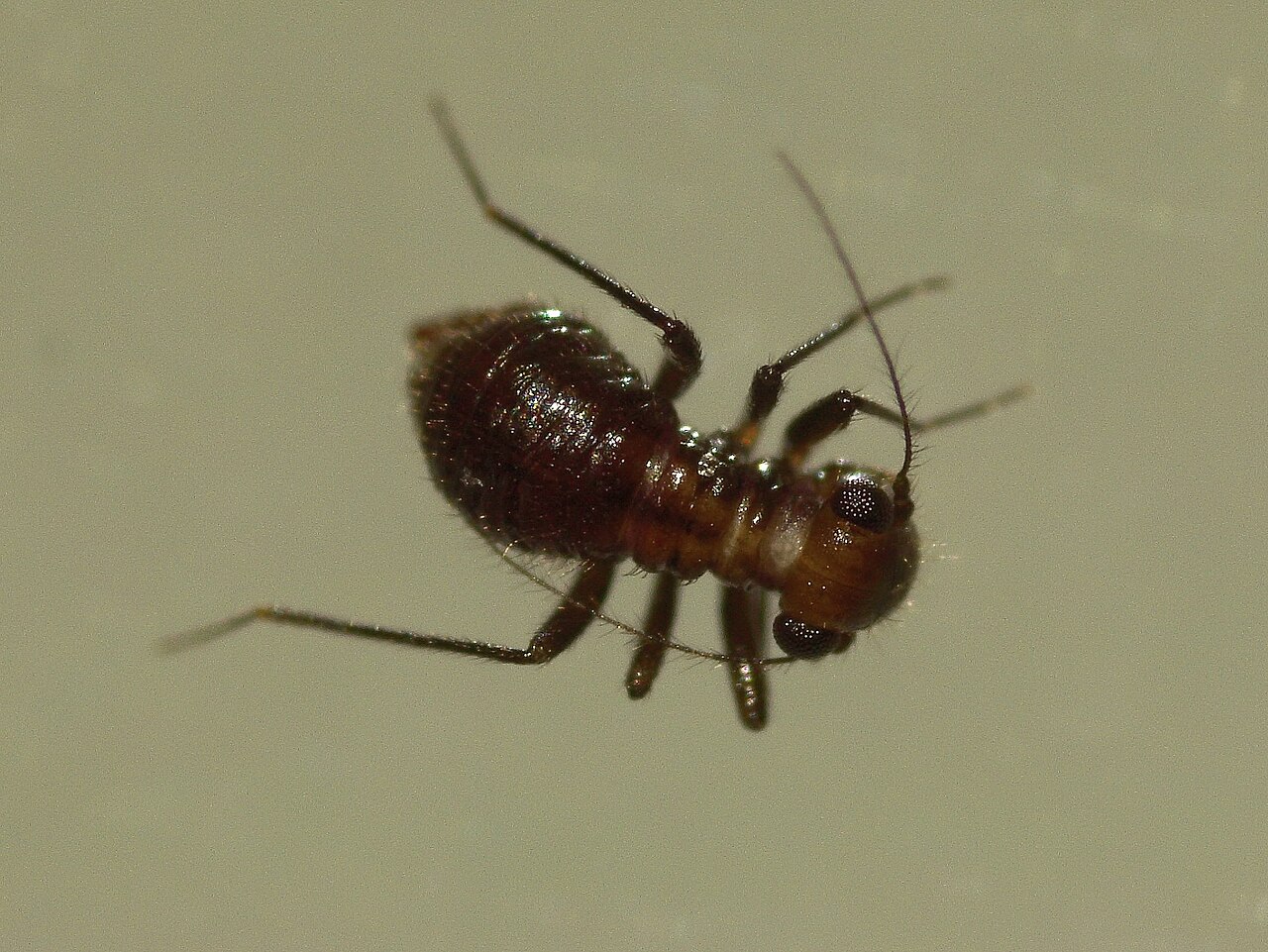
Booklice (order Psocoptera) are the usual answer when someone reports tiny bugs that look like termites but are not quite right. They measure 0.04 to 0.08 in (1 to 2 mm), are translucent cream to pale gray and cluster on damp drywall, around new plaster, in stored paper and on window frames in humid rooms. At that size a pale, soft bodied insect reads as a termite worker to the naked eye.
Under a hand lens booklice show a swollen head with long antennae and move in quick, jerky bursts, while termite workers are blind, slow and carry a hard brown head capsule. Booklice feed on mold, not wood, and vanish once humidity drops below about 50 percent. They do not bite or sting, and a dehumidifier beats any spray.
Silverfish: Wingless, Fast and Often Called Termites
Silverfish (Lepisma saccharina) grow to 0.5 to 0.75 in (13 to 19 mm), with a flat, carrot shaped body covered in metallic gray scales and three long bristles at the rear. They have no wings and never swarm, which rules out confusion with the termite reproductives people usually see. Homeowners mix them up with termite workers instead, since both turn up in basements, bathrooms and under sinks.
Silverfish damage is cosmetic. They graze on starches such as book bindings, wallpaper paste and cereal boxes, leaving surface grazing rather than tunnels, and they cannot chew framing lumber. An insect that bolts away in an S shaped wriggle is a silverfish. Our comparison of silverfish lookalikes covers that group.
Powderpost Beetles: Wood Damage Without Termites
Powderpost beetles (family Bostrichidae, especially Lyctus species) are the lookalike that matters structurally. Adults are slim, reddish brown to black beetles of 0.08 to 0.3 in (2 to 7 mm) with hard wing covers, and they fly to lights just as termite swarmers do, alongside the long legged insects in our guide to mosquito lookalikes. Their larvae tunnel inside hardwood flooring, trim, furniture and tool handles across the eastern and southern states.
The giveaway is what falls out of the wood: round exit holes the size of a pinhead and a fine, flour like powder beneath them. Termites leave no exit holes and no clean powder, packing their galleries with soil instead. Both need professional treatment, but the products differ, so the beetle versus termite call changes the repair plan.
How Do I Know If a Bug Is a Termite?
Work through four features in order: waist, antennae, wings and color. Straight sided body, beaded straight antennae, four equal wings and a uniformly dark or creamy body means termite. A pinched waist, elbowed antennae or mismatched wings means ant. No wings at all and a scaly, bristle tailed body means silverfish, and anything under 0.08 in (2 mm) on damp drywall is almost certainly a booklouse.
Then read the evidence around the insect. What are the first signs of termites in a house? Discarded wings in piles on sills, pencil thin mud tubes on foundation walls, floors that flex underfoot and door frames that suddenly stick. What do indoor termites look like when they are not swarming? Mostly you never see them, since workers are pale, blind and stay sealed inside their tunnels.
Save a few specimens in a jar for the inspector. The EPA covers termite inspection and treatment options at epa.gov/safepestcontrol. For more field checks, see stink bug lookalikes and bugs mistaken for spiders.
Frequently Asked Questions
What bug can be mistaken for a termite?
Winged ants are the top answer, especially black carpenter ants and black garden ants, because they swarm at the same time of year and shed wings indoors. Acrobat ants, booklice, silverfish and powderpost beetles round out the list. Only termites and powderpost beetles actually consume structural wood.
Should I be worried if I see termites?
Yes, a confirmed swarm indoors means a mature colony is already established nearby, often inside or under the structure. Termites pose no health risk and rarely bite, but subterranean colonies feed continuously. Get an inspection within days rather than weeks, since damage accumulates behind finished surfaces.
What kills termites immediately?
Contact sprays with pyrethroids kill the insects you can see, and that is all. The colony and its queen stay underground or inside the wall, so instant kill products do nothing for the infestation. Soil barrier treatments and bait systems from a licensed operator end a colony.
What do termites hate the most in the house?
Dry, ventilated conditions with no soil to wood contact. Termites need moisture and hidden access, so fixing leaks, grading soil away from siding, clearing mulch from the foundation and venting crawlspaces removes what they depend on. No household scent or oil reliably deters an active colony.
Are tiny bugs that look like termites with wings always a problem?
Not always. Winged booklice and fungus gnats are harmless moisture indicators, and winged ants damage nothing structurally in most cases. Check the waist and the wing lengths before assuming the worst. Keep any specimen you find, since an identification from a photograph alone often fails at that size.