Orange Centipede: Which One You Found, Bites & US Range
An orange centipede in a US home or garden is outside the desert Southwest a stone centipede, a soil centipede or the small eyeless Cryptops hortensis, and none of them can do more than give a pinprick.
Orange centipedes turn up in basements, flower beds and desert yards, and the color alone covers several unrelated species with very different bites.
Most orange centipedes in US homes and gardens are small stone, soil or Cryptops centipedes that are harmless to people and turn up coast to coast. The large orange tiger centipede with dark bands, Scolopendra polymorpha, lives from southern California east to Texas and gives a painful bite.
Is an Orange Centipede Dangerous? Bite and Venom
Most orange centipedes are not dangerous, and only the large banded Scolopendra species of the southern states and Hawaii give a bite that really hurts. Centipedes are venomous, not poisonous. The venom enters through the forcipules, a pair of modified front legs that work like fangs below the head. Do not handle a centipede you cannot identify, because large species can bite when handled.
Small orange species such as stone, soil and Cryptops centipedes are usually too small to break human skin, and a bite, if it happens, is a mild pinch at most. A bite from a large Scolopendra is different and causes sharp local pain and swelling, while serious reactions are rare.
Wash the bite with soap and water and hold a cold compress on it. No antivenom exists for centipede bites, so care targets pain and swelling. Seek medical care for swelling that spreads, any trouble breathing, or a bite on a small child.
Which Orange Centipede Did You Find? Quick ID by Shape
Body shape identifies an orange centipede faster than its exact shade. Look at width, leg length and the way it moves before you judge the color. Four shapes cover the orange centipedes found in the US.
| Species | Best field mark | US region | Bite to humans |
|---|---|---|---|
| Soil centipedes (Geophilomorpha) | Thread-thin, many short legs, worm-like crawl | Damp soil in most states | Rarely bites, mild at most |
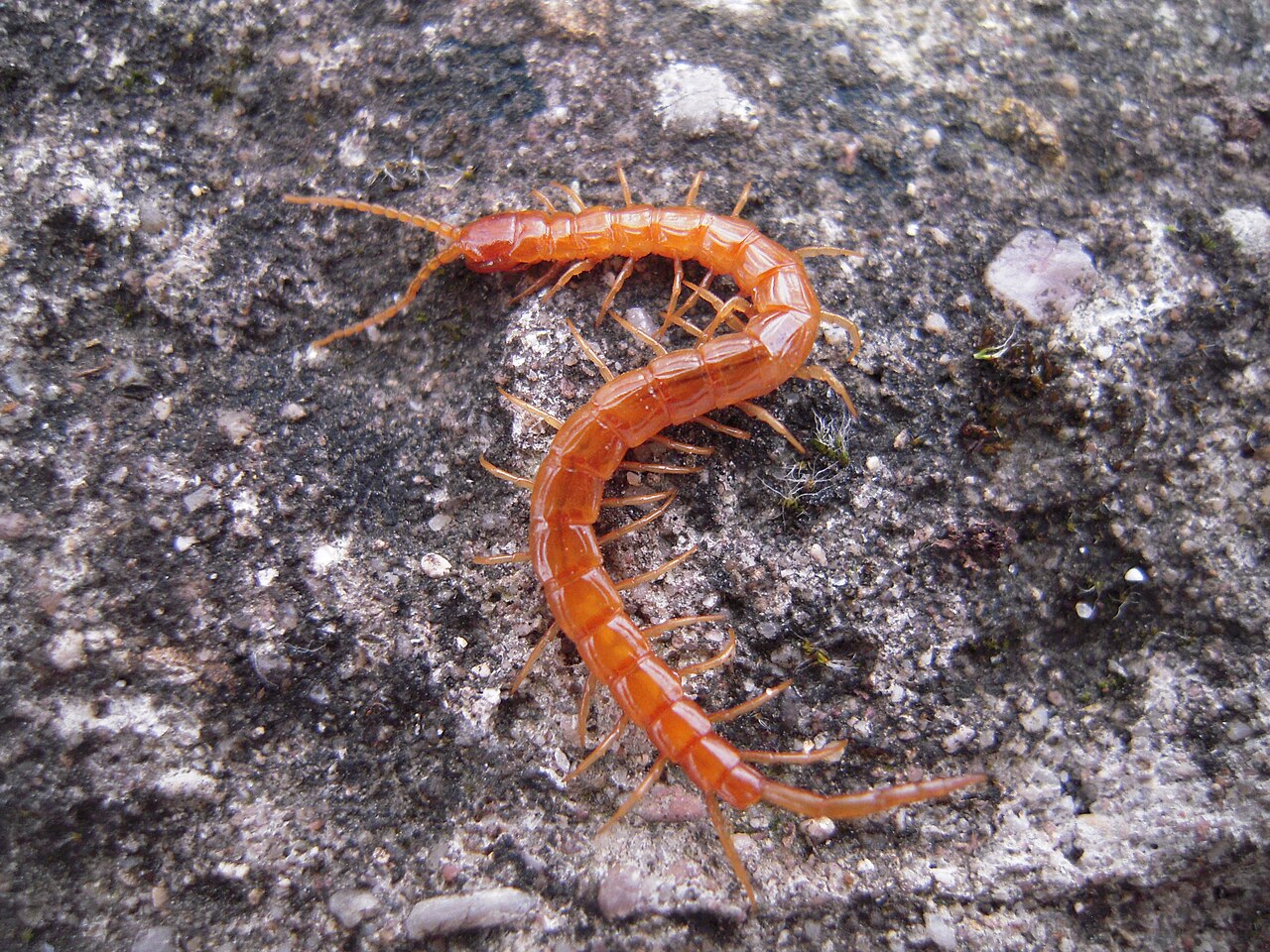
| Stone centipede (Lithobius forficatus) | Flat, chestnut to orange-brown, eyes on each side | Gardens and basements, widespread | Pinprick at most |
| Cryptops hortensis | Small, pale orange, no eyes | Near cities, nurseries and potted plants | Typically too small to break skin |
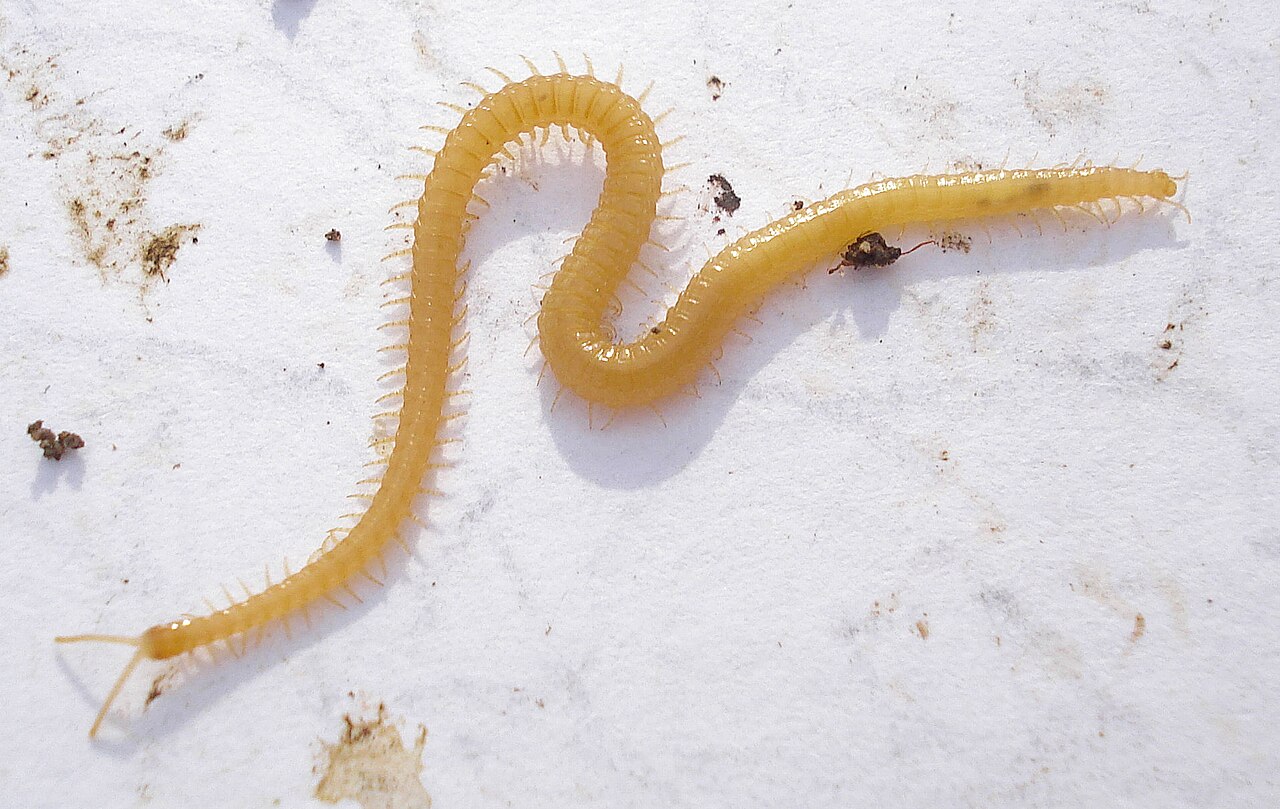
| Western yellow centipede (Haplophilus subterraneus) | Very long, slender, yellow to orange | Rare introduced records in the Northeast | Not reported |
| Tiger centipede (Scolopendra polymorpha) | Large, orange to tan with dark bands | Southern California and the desert Southwest | Painful, local swelling |
| House centipede (Scutigera coleoptrata), for comparison | Very long legs, gray-yellow with dark stripes | Indoors across the US | Rare, mild sting |
A phone camera zoomed on the head shows whether eyes are present, and that one detail separates stone centipedes from Cryptops. Blue centipedes belong to different species and are not color forms of the orange ones.
Western Yellow Centipede and the Name Mix-Up
The western yellow centipede is Haplophilus subterraneus, a European soil centipede listed under that name by NatureSpot. It is yellow to orange, up to about 70 mm long, and lives in leaf litter and under stones.
Online, the name gets attached to orange centipedes photographed in California. That label is wrong for most of those photos. A wide, banded animal on a California patio is a Scolopendra. A slim pale one in potting soil is Cryptops or a native soil centipede.
Haplophilus subterraneus has introduced records in the northeastern US and Canada rather than in California.
Stone Centipede (Lithobius forficatus): Orange-Brown Under Rocks
The orange-brown centipede under a rock or flowerpot is the stone centipede, Lithobius forficatus. It is chestnut to orange-brown, flattened and glossy, with a cluster of simple eyes on each side of the head. The legs stick out to the sides, and it runs fast the moment its cover lifts.
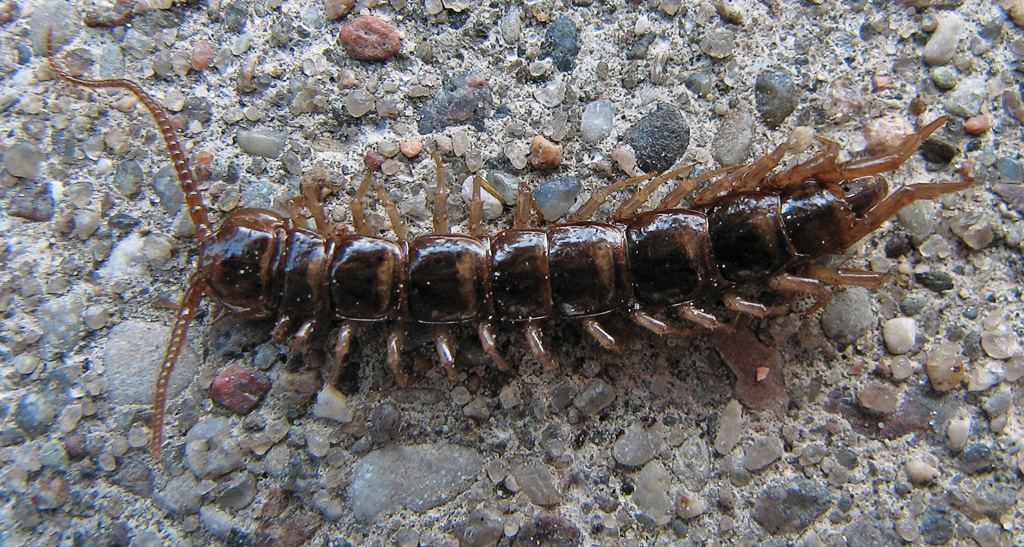
The species comes from Europe and is now widespread in US gardens and basements. Soil, plants and building material moved it from town to town.
It hides under stones, logs and mulch by day and hunts at night. A stone centipede indoors has followed moisture or prey from outside. It does not last long in dry rooms, so one in the hallway points to a damp spot nearby.
Cryptops hortensis, the Small Orange Garden Centipede
A small, pale orange centipede without eyes in garden soil or compost is Cryptops hortensis. BugGuide shows photos of Cryptops hortensis under the label “orange centipede” and lists the species as Common Cryptops, adventive from Europe and established in urban areas of the US and Canada. It has no eyes, and its color runs from pale orange to yellowish.
It travels in the root balls of potted plants and in nursery soil, so it shows up near garden centers, greenhouses and freshly planted beds. Inside a house it turns up in potting mix rather than on walls. It is typically too small to bite through human skin.
Its size makes people take it for the young of a larger species. Baby centipedes hatch with only seven pairs of legs in the stone centipede group, while young Cryptops already have all 21 pairs. An eyeless pale animal in potting soil is an adult Cryptops, not a young giant.
Tiger Centipede (Scolopendra polymorpha): Orange With Dark Bands
The large orange centipede with dark crossbands in southern California, Arizona and the desert Southwest is the tiger centipede, Scolopendra polymorpha. Its body is orange to tan, each segment carries a dark band, and the head can be darker than the body.
Tiger centipedes live in deserts, dry grassland and rocky yards. They shelter under stones, boards and debris during the day and come out at night to hunt insects. Watered lawns and porch lights that attract insects draw them close to houses.
Adults reach about 4 to 7 inches, far larger than any orange garden centipede. The giant desert centipede, Scolopendra heros, is a close relative that ranges across the southern US.
Where Orange Centipedes Live in the US: Range by Region
Orange centipedes live in every US region, but the species change from east to west. In the East and Midwest, most orange finds are stone centipedes, soil centipedes and Cryptops, and large Scolopendra such as the giant redheaded centipede occur in the southern states. The Missouri Department of Conservation records the giant redheaded centipede in the southernmost counties of Missouri.
In southern California and the Southwest, the tiger centipede adds the large banded form, and the giant desert centipede joins it farther east. Introduced European species such as Lithobius forficatus and Cryptops hortensis cluster around cities, nurseries and greenhouses in every region. Hawaii has an introduced large Scolopendra, Scolopendra subspinipes, which rarely grows beyond about 6 in.
iNaturalist and GBIF maps are the best free range data for these species. Read them with care. A dot marks where someone photographed and uploaded a centipede, not where centipedes are common. Cities and trails look crowded on the map, and an empty county can simply mean nobody looked.
Where You See Orange Centipedes in House, Garden and Bed
Orange centipedes come indoors for moisture and prey, and outdoors they stay where the soil stays damp.
In the House. Moisture draws them to basements, bathrooms, laundry rooms and floor drains.
In the Garden. Look under pots, mulch, boards and stones. They are most active after rain, when the surface stays damp through the night.
In Your Bed. Centipedes hunt insects, not people. One in a bed climbed in by accident, from a wall or a blanket that touches the floor.
Why Not Squish One. A centipede indoors eats household pests such as silverfish, spiders and cockroaches. The house centipede, Scutigera coleoptrata, is the best known indoor hunter of that kind. It is venomous, not poisonous, and its rare bite feels like a mild bee sting. Drying damp spots with a dehumidifier and sealing gaps around doors and pipes keeps all of them out.
Orange Centipede Lookalikes: Millipedes and Larvae
The bugs mistaken for orange centipedes are mostly millipedes and beetle larvae. Centipedes and millipedes differ in their legs, since a centipede has one pair per body segment, and most millipede segments carry two pairs. Millipedes move slowly and curl into a coil when disturbed. They do not bite.
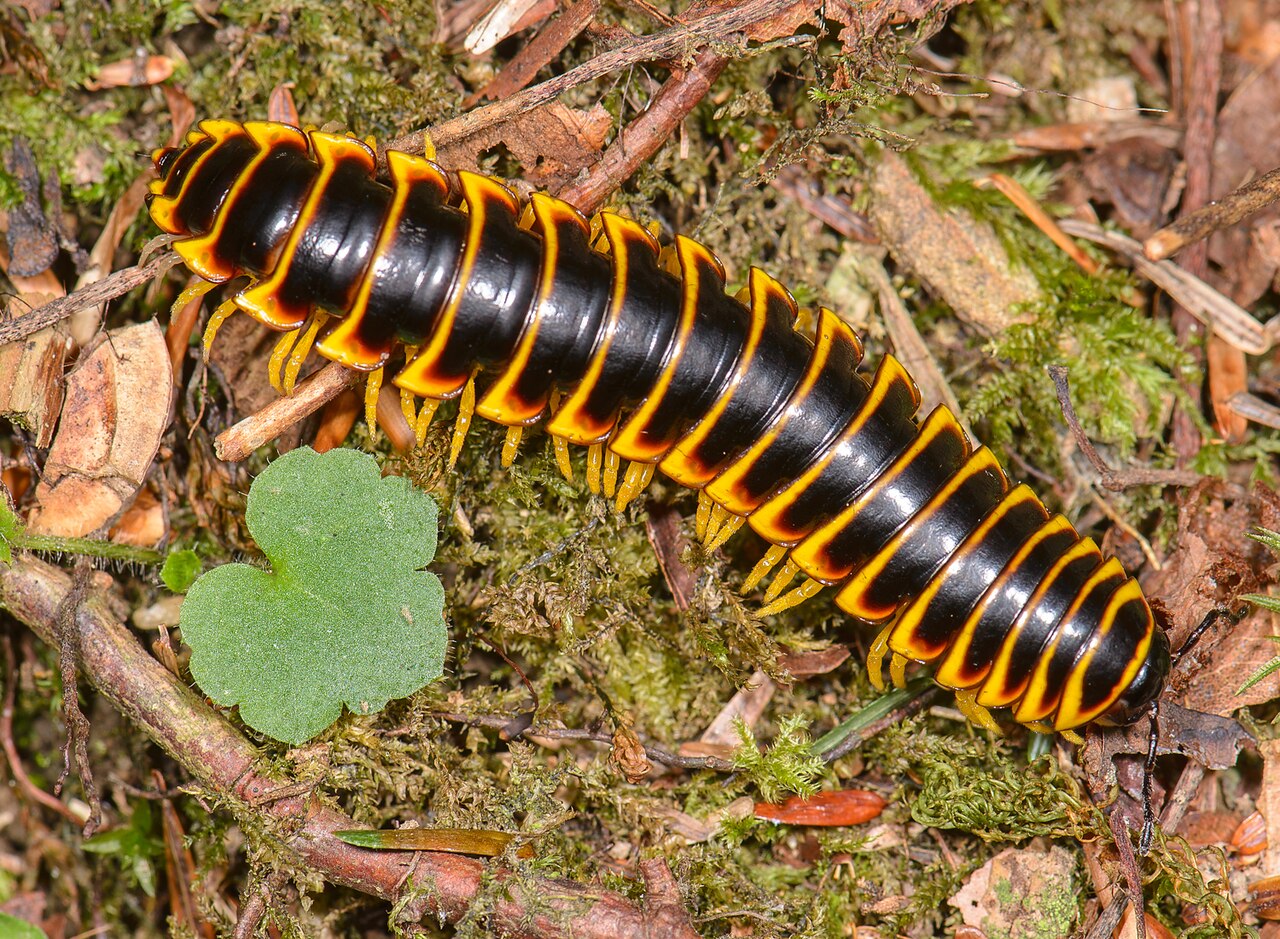
Orange-marked millipedes such as Apheloria virginiensis are black with orange or yellow side spots. They release a defensive fluid with a strong smell, not venom. Wash your hands after you pick one up.
Wireworms, the larvae of click beetles, are orange and segmented but have only six legs near the head. They live in soil and turn up when you dig.
Frequently Asked Questions
What centipede has yellow legs?
Some forms of Scolopendra heros and Scolopendra polymorpha have yellow legs against an orange or dark body. Both are large desert centipedes of the Southwest. Small orange garden centipedes have legs the same color as the body or slightly paler, so bright yellow legs point to a Scolopendra.
Why does a centipede look paler or more orange than usual?
A freshly molted centipede looks paler and brighter until its new cuticle hardens and darkens. Centipedes molt several times as they grow. The pale phase is short, and the animal stays the same species it was before, so identify it by body shape and eyes rather than by its shade.
Are house centipedes common in Missouri?
Yes. The Missouri Department of Conservation describes the house centipede as common in basements and cellars. It is gray-yellow with dark stripes and very long legs, not orange. An orange centipede in a Missouri house may be a stone centipede that came in from the garden or crawl space.
Can an orange centipede hurt my dog or cat?
Yes, a large banded Scolopendra can. Dogs and cats are usually bitten on the face or paw while pawing at one, and a swollen muzzle or paw is the sign to call your vet the same day.
What do orange centipedes eat?
Stone centipedes hunt small insects, spiders and other soft invertebrates at night. Soil centipedes feed on earthworms and insect larvae underground. Tiger centipedes take larger prey such as crickets and beetles. All of them are predators, and none of them eat stored food, wood or furniture in a house.
Is the orange-footed centipede found in the US?
No. The orange-footed centipede, Cormocephalus aurantiipes, is native to mainland Australia, and no established US population is known. A wild orange centipede in an American yard belongs to one of the native or introduced species in local field guides.
Sources
- Missouri Department of Conservation, Centipedes (Field Guide)
- BugGuide, Species Cryptops hortensis
- NatureSpot, Western Yellow Centipede