Spiritual Meaning of Beetle Landing on You: Good Omen?
The spiritual meaning of beetle landing on you is mostly positive. A beetle that chooses your hand, shoulder or hair has picked you, not the room around you. The contact itself is the point. A beetle crossing your path is scenery, but one that lands on you is personal. A green June beetle on your shoulder says something different from a ladybug on your finger or a black beetle on the bed.
A beetle landing on you is mostly a good omen. It points toward persistence, protection and a fresh start. A few cases read as mixed or cautionary, such as a beetle that pinches. A death-watch beetle tapping in an old house is a separate folklore omen. Species, color and landing spot refine the message.
What It Means When a Beetle Lands on You
A beetle landing on you means keep going. Beetles are slow, armored and stubborn, and they reach where they are going by steady effort rather than speed. Contact turns that trait into a message for you, not for the room or the garden around you. Something you are working on is closer to paying off than it feels.
The hard wing cases add a second layer. A beetle carries its own shield, so a landing during a stressful week points to protection while you feel exposed. You have more cover than you think. Hold your position instead of retreating.
The third layer is change. Every beetle starts as a soft larva, rests as a pupa and emerges as an armored adult, so its arrival points to a personal reset on the way. Ask what you were thinking or deciding the moment it touched you. That thought is the subject of the message.
Is a Beetle Landing on You a Good Omen?
Yes, a beetle landing on you is a good omen. Modern readings frame it as encouragement, a sign that patience is working and that you are protected while it works. The calmer the beetle, the stronger the sign.
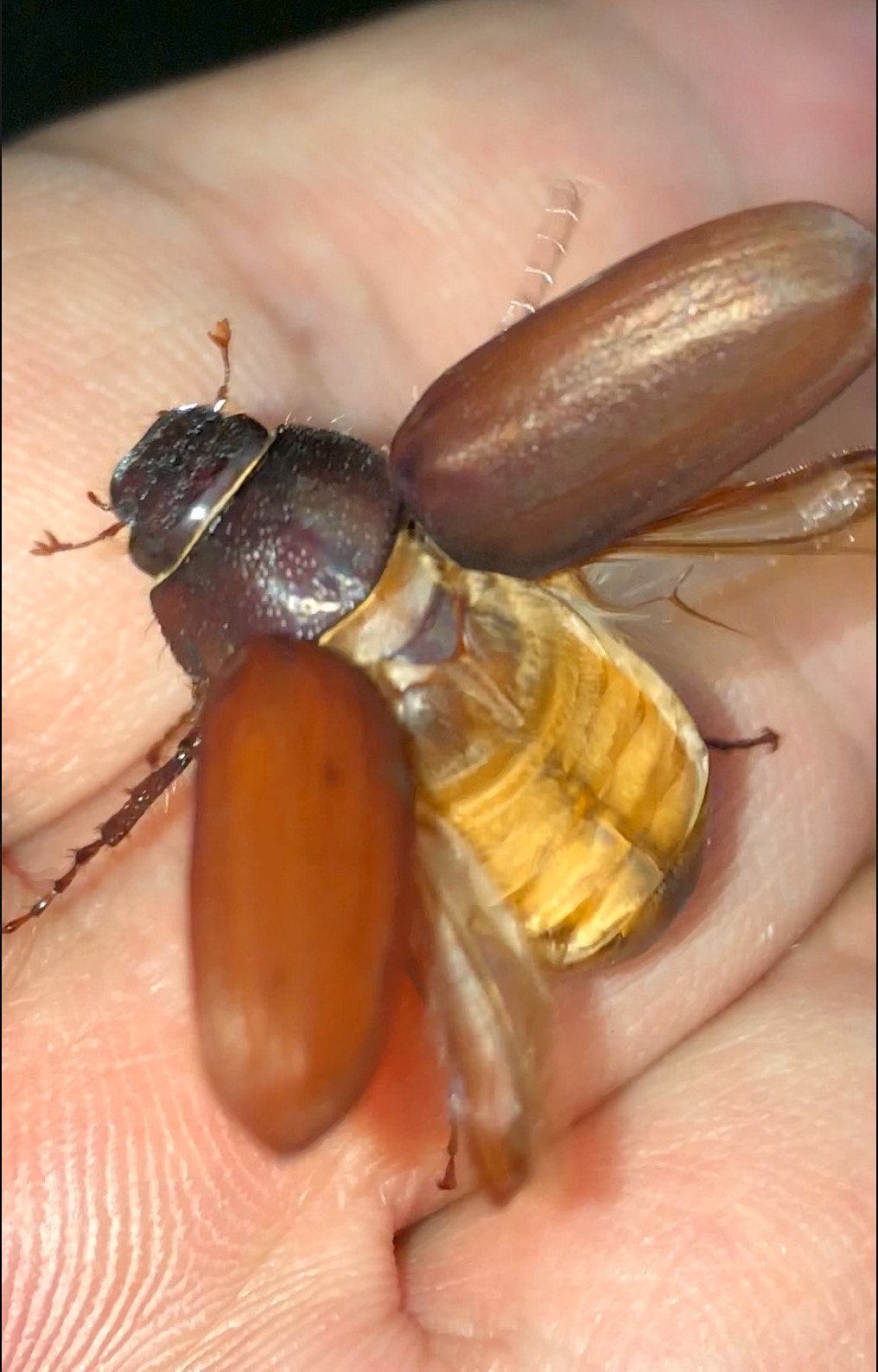
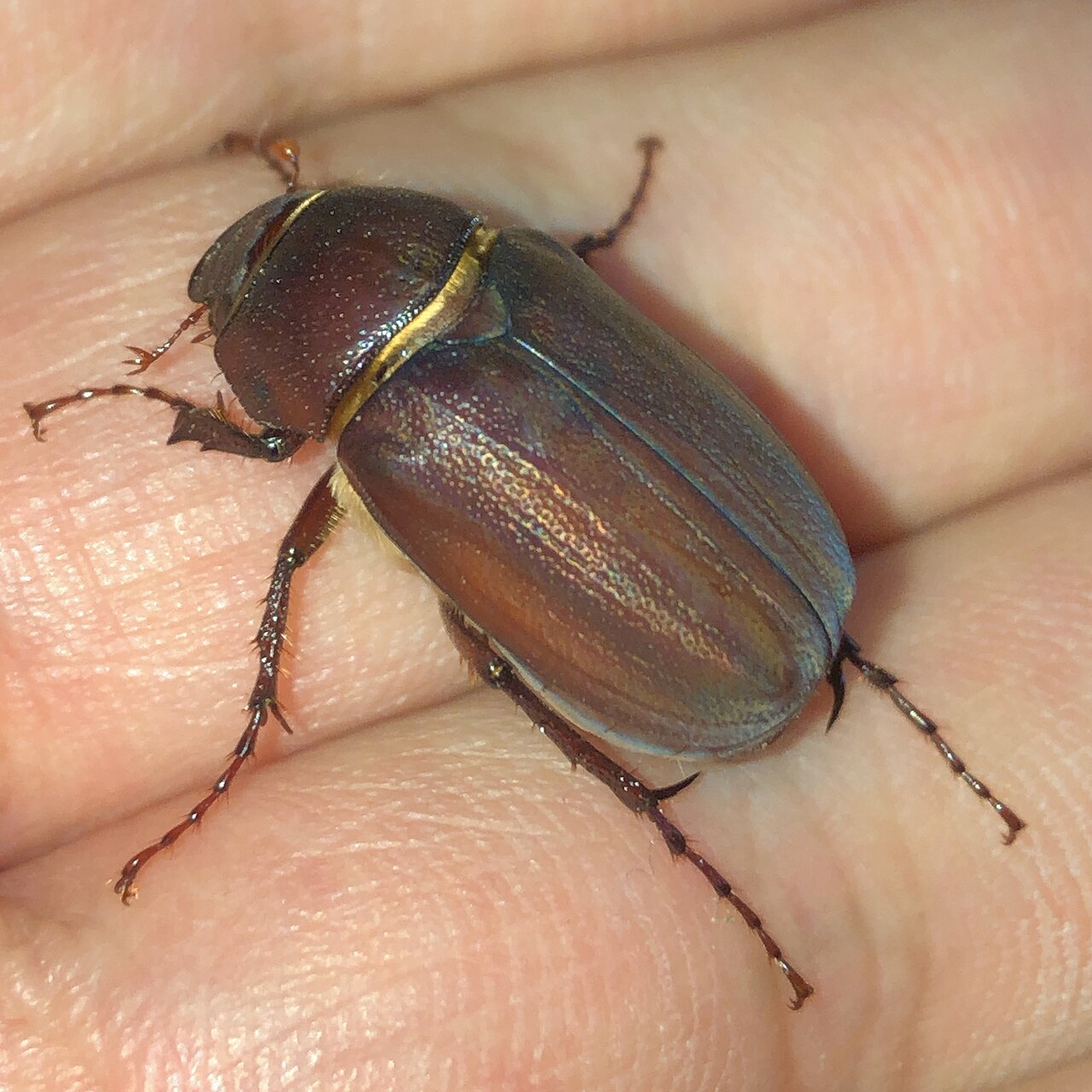
The clearest good signs come from a beetle that rests on your hand, shoulder or head and stays a while. It has chosen you as a safe place, and that trust mirrors the message. A beetle that lands and flies off at once is a mixed sign. The message there is timing, a window that opens briefly and needs a quick answer.
A ladybug adds luck, a black beetle adds protection, and a beetle on the shoulder adds the theme of support. Its message is about where to put your attention today.
What Beetles Symbolize Spiritually
Beetles symbolize persistence, grounding, renewal and boundaries. Each meaning comes straight from how beetles live. Dung beetles roll balls of dung that are often larger than their own bodies, and they keep pushing over every bump. That image is persistence in its plainest form.
Grounding comes from habitat. Many beetles live close to soil, roots and decaying wood, so they point you back to the body, the home and the practical next step. Renewal comes from their work. Decomposer beetles break down dead wood, dung and carcasses and return them to the soil as food for new growth.
Boundaries come from the elytra, the hardened forewings that fold over the flying wings like a lid. They stand for self-protection and for knowing what you let in. Beetle symbolism reaches further than these four traits, into dreams, totems and the meanings of single species.
When a Beetle Landing Reads as a Warning
A beetle landing turns into a warning only in a few specific situations. Bad-luck beetles are the exception in folklore, and each one is tied to a place or a behavior. Outside those cases, the default meaning stays positive.
England has the best-known example. The death-watch beetle (Xestobium rufovillosum) bores into old timber and taps its head against the wood to find a mate, and the sound carried through quiet houses during night vigils at sickbeds. English folklore turned that ticking into an omen of death. A beetle that pinches you carries a smaller warning. It points to a boundary being crossed, by you or by someone close to you.
A black beetle in the house sounds ominous but points toward clearing stagnant energy rather than doom. Treat every warning as a prompt to act. None of them is fixed fate.
Why Beetles Keep Landing on You
Beetles that keep landing on you point to a message you have not acted on yet. One landing is a nudge. A string of them over a few weeks is the same nudge, repeated until you move.
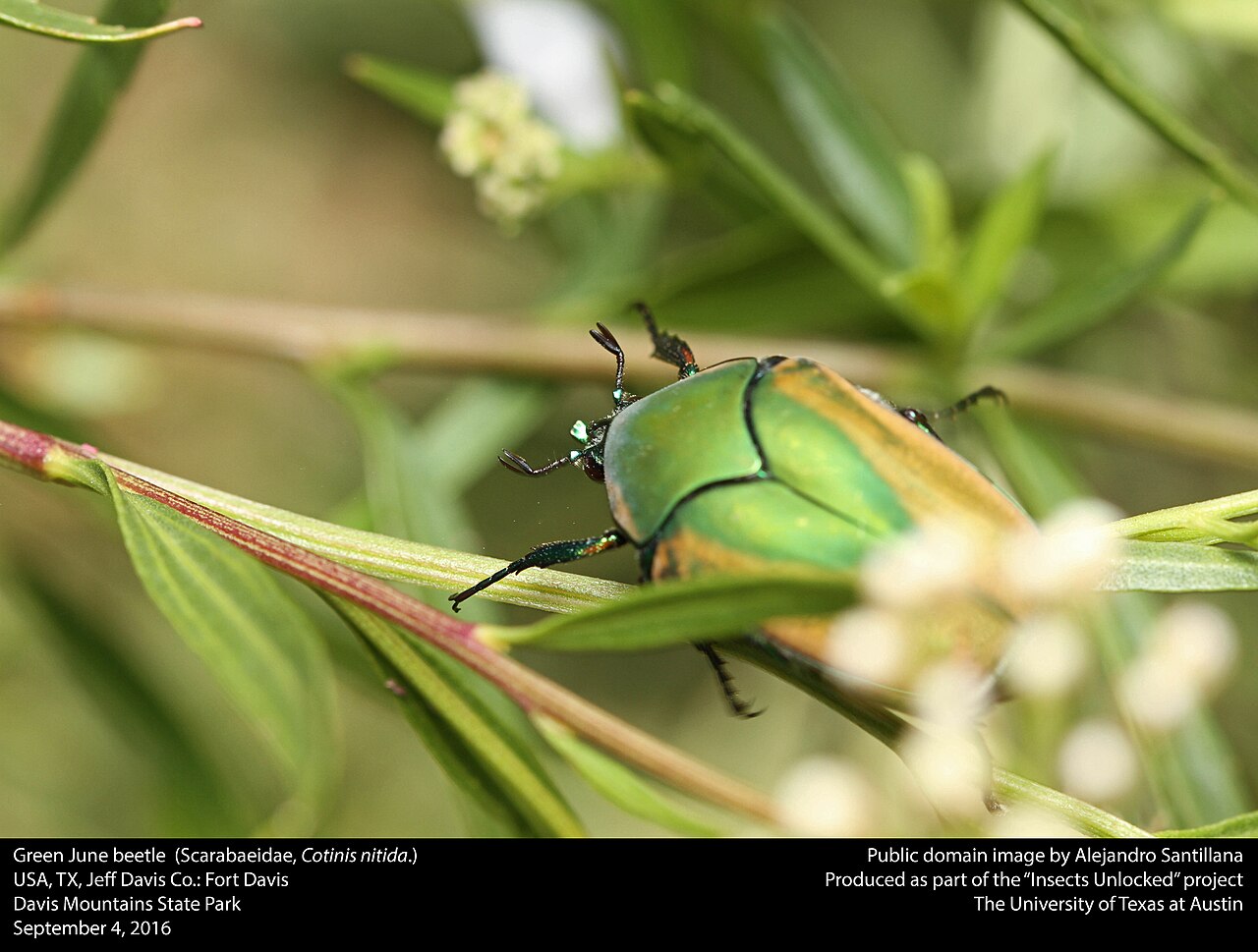
Rule out practical causes first. Bright clothing, porch lights, sweet scents from soap or sunscreen, and flowering garden plants all draw beetles in. The green June beetle (Cotinis nitida), a metallic green flier common in the eastern United States, bumbles into people on warm early summer days. A bee landing on you is a separate sign about productivity and community, not part of the beetle message.
Track the pattern before you settle on a meaning. Write down the date, the place and what was on your mind each time. If the landings cluster around one decision or one person, that is the subject.
Where It Lands on Your Body: Head, Face, Hand, Shoulder
Where a beetle lands on your body narrows the message. The head points to clarity. An idea or decision you have already made needs steady follow-through, not a second round of doubt.
The face is about being seen. A beetle on your cheek or forehead asks how others perceive your effort right now, and whether your work is visible to the people who matter. The hand is about work and craft. A project you are holding is worth finishing, even if progress has slowed.
The shoulder carries two meanings. It points either to a burden you carry alone or to someone quietly backing you, and the beetle’s behavior separates them. A beetle that sits still signals support, while one that crawls toward your neck asks you to set something down.
The Scarab: Beetle Symbolism in Ancient Egypt
Ancient Egypt gave the beetle its most famous meaning, the scarab as the rising sun. The god Khepri appears with a scarab for a head and stands for the morning sun at the moment of becoming. His name comes from the Egyptian word for coming into being.
The image grew from watching the sacred scarab (Scarabaeus sacer) at work. A scarab rolling its dung ball across the sand mirrored the sun pushed across the sky each day. Young beetles later emerged from buried balls, which looked like life creating itself. Rebirth and self-creation became the scarab’s core meaning.
Egyptians carved scarab amulets for protection and placed them with the dead, and heart scarabs were set on mummies. Science adds a modern twist. Some dung beetles steer by light in the sky, and a 2013 study showed that the African species Scarabaeus satyrus holds a straight line using the Milky Way at night. Egypt tied the scarab to the sun, and its relatives really do navigate by the sky.
Where You See It: House, Bed, Car, Doorstep
Where you see the beetle shifts the message toward one part of your life. The setting matters as much as the contact. Home, rest, travel and opportunity each have their own spot.
House or Wall A beetle landing on your house or crawling on a wall points to home matters. A household change is taking shape, from a move to a new routine. A beetle in the house that returns to the same room points the message at what happens in that room.
Bed or Pillow A beetle on your bed or pillow is about rest and dreams. Slow down before a decision. Sleep on it and let the answer settle.
Car A beetle on your car points to travel or to the direction of your life. Check the route you are on. If a choice about work, a move or a trip is pending, the beetle asks you to confirm it before you commit.
Doorstep or Window A beetle on the doorstep or window is an opportunity arriving. Be ready to open the door. An offer, a call or an invitation is close, and preparation now makes it easier to say yes.
Beetle Color Meanings: Black, Green, Brown, Red
Beetle color adds a specific theme to the landing. Black points to protection and to endings that clear space for something new. Black beetles include ground beetles, darkling beetles and stag beetles, among many others.
Green and metallic beetles point to growth, money and the health of a project. Their shine catches light the way a good idea catches attention. Brown beetles point to grounding, home and practical matters such as budgets, repairs and routines.
Red and orange beetles point to passion and luck, and they overlap with ladybug lore. Spotted or striped beetles carry a mixed message. Combine them with the body spot, since color and landing place form one answer.
Beetle Species and Their Meanings
Several common species carry a reading of their own, independent of color.
| Beetle | What it signals | Omen leaning |
|---|---|---|
| Stag beetle (Lucanidae) | Strength and standing your ground | Good |
| June bug (Phyllophaga) | A restless season of change | Mixed |
| Firefly (Lampyridae) | Hope and a light in a dark stretch | Good |
| Rhinoceros beetle (Dynastes) | Power far beyond your size | Good |
| Click beetle (Elateridae) | Bouncing back after a setback | Good |
| Longhorn beetle (Cerambycidae) | Sensing what lies ahead, but also slow damage from within | Mixed |
Japanese Beetle Landing on You
A Japanese beetle landing on you points to appetite and excess. Ask what is consuming your time, money or energy right now. The Japanese beetle (Popillia japonica) is a heavy eater, and the meaning follows that habit.
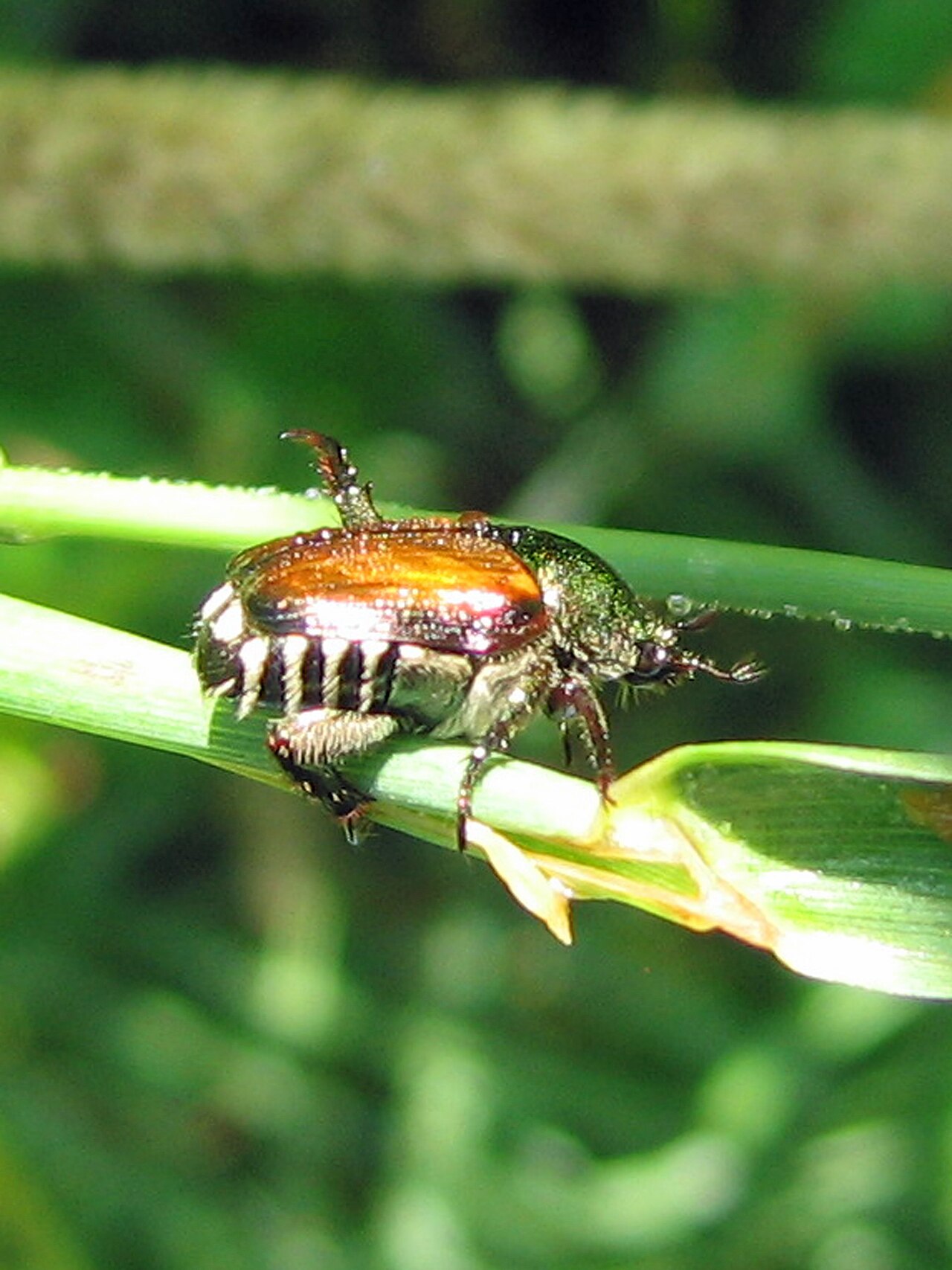
Identify it by the metallic green head, coppery wing cases and small white tufts of hair along its sides. It is invasive in the United States and feeds in groups on roses, grapes, linden and many other plants. A cluster on one rose can strip the leaves down to lace. University of Missouri Extension links those clusters to an aggregation pheromone and to the scent of chewed leaves. Birds that eat Japanese beetles, such as catbirds, grackles and starlings, pick them off plants in early summer.
Group feeding gives the beetle a second meaning. It points to community, or to crowd pressure worth watching if you are following others into a habit.
Ladybug or Asian Lady Beetle Landing on You
A ladybug landing on you is the best-known lucky beetle sign. Ladybugs are beetles, and the seven-spotted ladybug (Coccinella septempunctata) is the classic red one with black spots. Its landing means luck is on your side.
The English name ladybird is usually traced back to Our Lady, the Virgin Mary. The beetle eats aphids, so farmers welcomed it in fields and gardens. Folk custom says to let it fly off on its own and never brush it away. Brushing it off sends the luck with it.
The Asian lady beetle (Harmonia axyridis) looks similar and gathers indoors in fall in large clusters on sunny walls. The luck reading is the same for both. Asian lady beetles and ladybugs are easiest to tell apart at the head, where the Asian lady beetle carries a black M or W mark on a white shield.
What a Beetle Landing on You Means for Love
A beetle landing on you means steady progress in love. For singles, it marks the end of a reset period. You are more ready to meet someone than you were a season ago.
In a relationship, the beetle favors patient effort over big gestures. Small, repeated acts of care build more than a grand surprise. A beetle on the chest or over the heart points to emotional healing after a hard phase. The armor is coming off because it is no longer needed.
Two beetles together signal partnership or a pairing ahead. A rose chafer (Cetonia aurata) sitting in a rose ties the beetle to romance in a way few images can.
Frequently Asked Questions
Should you kill a beetle that lands on you?
No. Killing a beetle that lands on you cuts the message off before it is finished. Swatting is not needed either, because the beetles that most often land on people, such as June bugs and green June beetles, cannot bite through skin.
Why don’t you squish Japanese beetles?
Gardeners drop Japanese beetles into a bucket of soapy water instead of crushing them, because it is faster and cleaner when a plant is covered. Whether crushed beetles attract more is debated. Most of the pull comes from scents plants release when they are chewed, so the soapy-water bucket is simply the cleaner method. Early morning or late evening, when the beetles are less active, is the easiest time to knock them in.
Does a beetle landing on you mean a loved one who died is near?
No. There is no well-documented tradition of beetles bringing visits from departed loved ones. Visitation readings come from modern personal belief, and many people find comfort in them. If the landing brought someone to mind, that memory is real and worth honoring. The beetle’s own symbolism stays with persistence and renewal.
Is it bad luck if a beetle lands on you at night?
No. Most beetles that land on people after dark are night fliers such as June bugs (Phyllophaga), which swarm at dusk in late spring. The meaning stays the same as by day, with an added note about rest and what keeps you awake.
Can a beetle that lands on you hurt you?
Yes, but only a few species. Most beetles are harmless to people. Blister beetles release a chemical called cantharidin that can raise blisters on skin, so never crush one against you. Coax it onto paper or let it leave, and wash the spot with soap and water if it was squeezed.
Does a beetle landing on you in a dream mean the same thing?
Yes, largely. A beetle in a dream points to slow, hidden work and a renewal that is not visible yet, the way a larva grows underground before it emerges. One that lands or crawls on you in the dream brings that change into your own daily life.
Sources
- The Walters Art Museum, Heart Scarab of Bak-en-Djehuti
- Brooklyn Museum, Heart Amulet with Head of a Scarab
- Virginia Tech Extension, Blister Beetles (ENTO-526)
- Kansas State University, Japanese Beetle (MF3488)
Explore more: Insect Spiritual Meanings: 15 Bugs and What They Signal