Red-Tailed Hawk: Complete Identification Guide
A Red-Tailed Hawk is identified by its broad, rounded wings, a short, brick-red tail visible in adults from below and above, a pale breast with a dark, streaked “belly band” across the belly, and a hoarse, descending scream often used in movies to represent any bird of prey. It is the most common and widespread large hawk in North America, seen soaring over highways, fields, and forest edges from Alaska to Mexico.
| Fact | Detail |
| Length | 18 to 26 inches |
| Wingspan | 45 to 52 inches |
| Weight | 1.5 to 3.5 pounds, females larger |
| Tail color | Brick red above in adults, pale and banded in juveniles |
| Key field mark | Dark “belly band” of streaking across a pale chest |
| Diet | Small mammals, especially rodents and rabbits |
| Call | Hoarse, descending scream, “kee-eeeee-arr” |
How to Identify a Red-Tailed Hawk
The single fastest field mark is the tail: adults show a solid, brick-red to rust-colored tail from above, and a paler, pinkish-orange wash on the underside when lit from behind by the sun. From below, most individuals show a pale chest and a band of dark, blotchy streaking across the belly, sometimes called the “belly band,” which remains one of the most reliable marks across the highly variable plumage this species can show. In flight, the wings are broad and rounded with a dark leading-edge bar (called a patagial mark) visible on the underwing, a feature many similar hawks lack.
Juvenile Red-Tailed Hawks Look Different
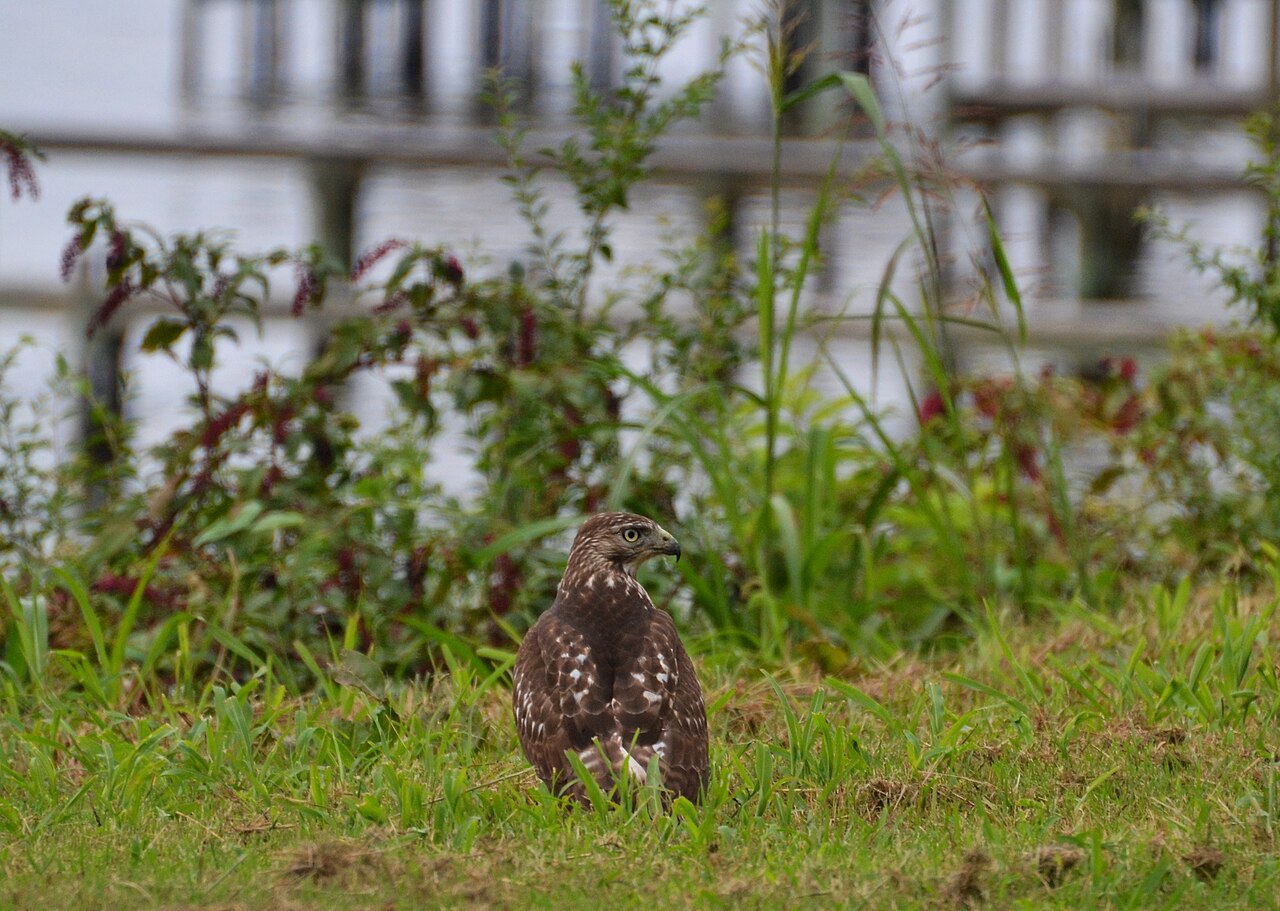
First-year Red-Tailed Hawks do not yet have the red tail that gives the species its name. Instead, juveniles show a brown tail crossed with several dark bands, and can be mistaken for an entirely different species by beginning birders. The belly band streaking is often heavier and more obvious on a juvenile than on an adult, which helps confirm the identification even without a visible tail. The red tail typically develops fully after the bird’s first complete molt, usually by its second calendar year.
Color Variation Across the Country
Red-Tailed Hawks are famous among birders for their plumage variability, with regional color morphs ranging from the pale, classic “eastern” type to much darker rufous and near-black morphs common in the Great Plains and West. The Harlan’s Hawk, a distinct western and northern population sometimes still treated as a separate subspecies, can show a blackish body with a marbled gray tail instead of the typical solid red, and is a frequent source of misidentification even among experienced hawk watchers. Despite all this variation, the broad-winged shape, heavy build, and typical perched posture stay consistent across nearly every color form.
Diet and Hunting Behavior
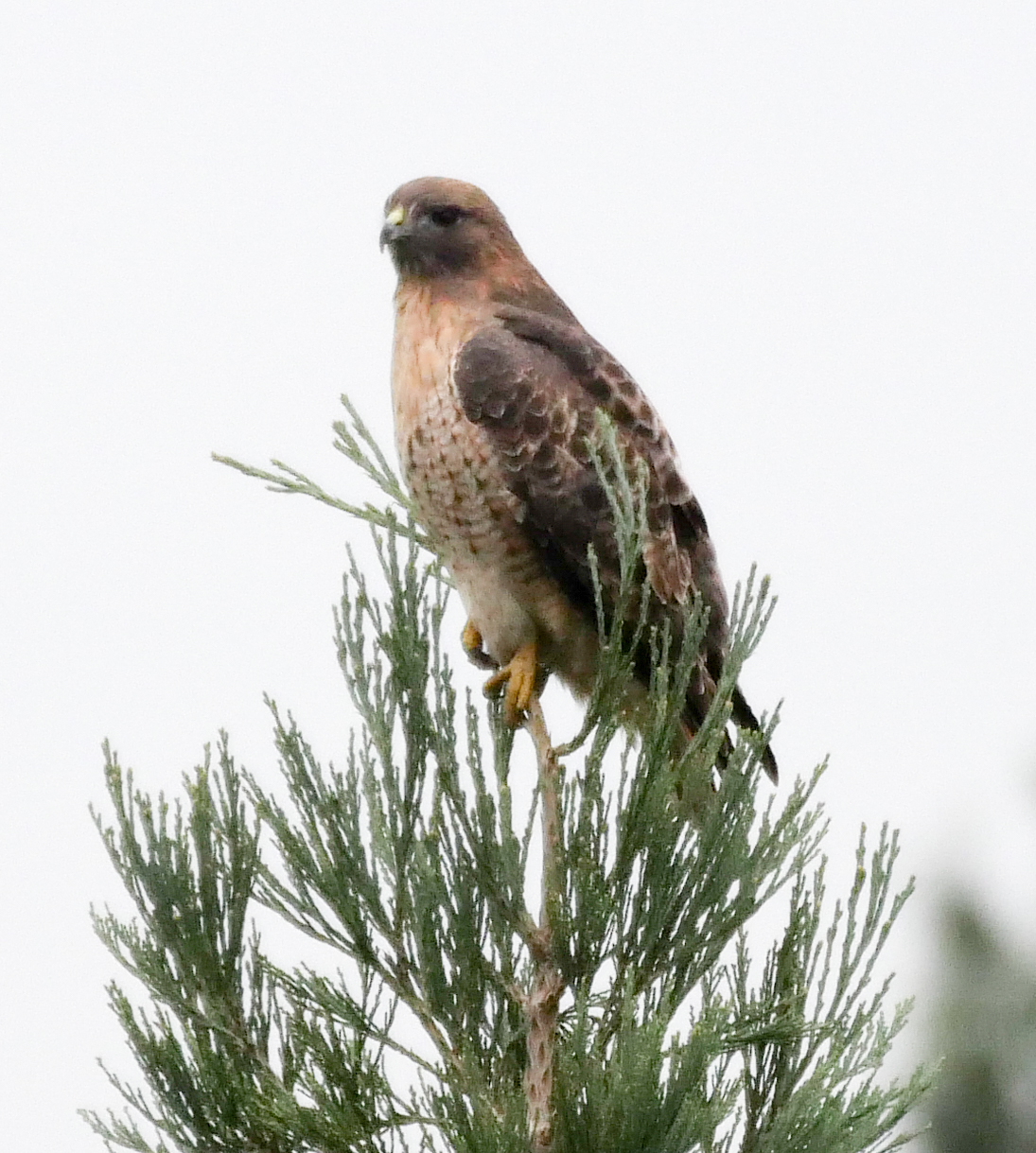
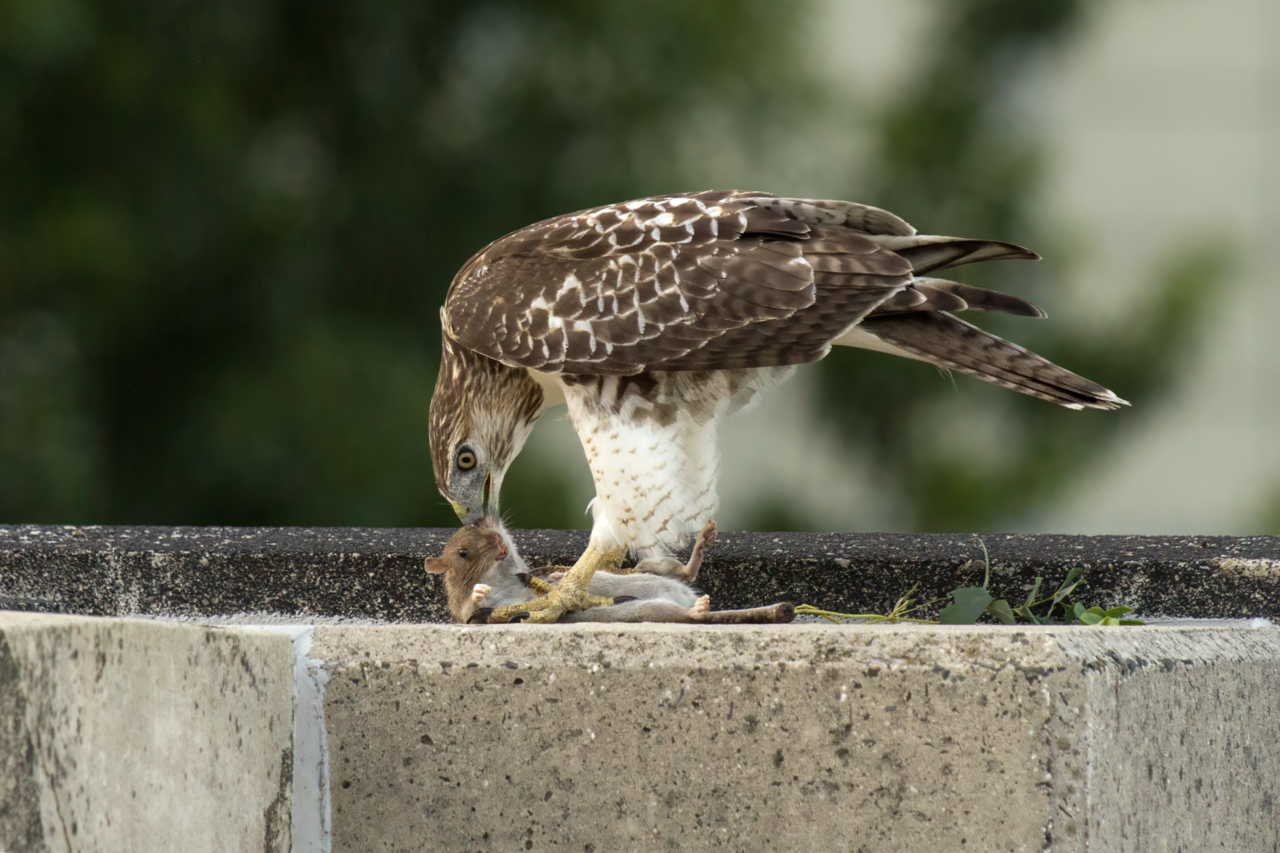
Small mammals make up the bulk of a Red-Tailed Hawk’s diet, especially voles, mice, ground squirrels, and rabbits, though the species is an opportunistic hunter that also takes birds, snakes, and even large insects when the chance arises. Its typical hunting method is to perch quietly on a high, exposed spot such as a utility pole or dead tree along open ground, scanning for movement below before dropping in a short, powerful stoop. This perch-and-wait strategy is why Red-Tailed Hawks are such a familiar sight along interstate highways, where roadside poles and the rodent populations drawn to grassy medians create ideal hunting conditions.
Can a Red-Tailed Hawk Carry Off a Pet?
This is one of the most common questions people search about Red-Tailed Hawks, and the honest answer is that it is extremely unlikely for all but the smallest pets. A Red-Tailed Hawk typically weighs 2 to 4 pounds and can carry prey roughly equal to or somewhat less than its own body weight for a short distance, which puts small rodents, young rabbits, and similarly sized prey well within range but rules out anything close to the size of a cat or a mid-sized dog. Small toy-breed dogs or unattended kittens left outside are the realistic edge case worth supervising, not larger pets.
Range and Habitat
According to the Cornell Lab of Ornithology, the Red-Tailed Hawk is found in nearly every open and semi-open habitat across North America, from farmland and roadside corridors to deserts, mountains, and city parks, making it the continent’s most widely distributed large hawk. Northern populations migrate south for winter, while hawks in much of the United States are year-round residents, which is why the species can be seen in the same territory in every season across most of the country. Its adaptability to human-altered landscapes, particularly the open grassy corridors along highways, has made it one of the few large raptors that has thrived rather than declined alongside suburban and agricultural expansion over the past century.
Red-Tailed Hawk vs Similar Species
The species most often confused with a Red-Tailed Hawk is the Red-Shouldered Hawk, which is smaller, more slender, and shows reddish shoulders and barred, translucent “window” patches near the wingtips rather than a solid red tail. Compared to smaller accipiters like the Cooper’s Hawk and Sharp-Shinned Hawk, the Red-Tailed Hawk is far bulkier, with broad rounded wings built for soaring rather than the short, rounded wings and long tail built for maneuvering through trees. Compared with the full range of North American hawks, the Red-Tailed Hawk stands out as the default “big soaring hawk” silhouette most field guides use as the baseline for comparison.
Nesting and Family Life
Red-Tailed Hawks build large stick nests high in trees, on cliff ledges, or increasingly on man-made structures like communication towers and highway signs, often reusing and adding to the same nest for multiple years. Pairs frequently mate for life and perform dramatic aerial courtship displays, including steep dives and mutual talon-grasping in midair. A typical clutch is one to three eggs, and young hawks remain dependent on their parents for several weeks after leaving the nest while they learn to hunt, a period during which they are noticeably clumsier fliers and easier to observe than the confident adults defending the territory around them.
Conservation and Cultural Significance
Red-Tailed Hawk populations are considered stable to increasing across most of their range, and the species has adapted remarkably well to human-altered landscapes, often benefiting from the rodent populations that farmland and roadside corridors support. Beyond its ecological role, the Red-Tailed Hawk holds deep cultural significance in many Indigenous traditions and is a common subject of the spiritual and symbolic meanings people associate with hawk sightings more broadly. Its scream has become so embedded in popular culture that most people who have never seen a live Red-Tailed Hawk have still heard its call dozens of times without realizing it.
How the Red-Tailed Hawk Got Its Reputation as “The” Hawk
Because it is so common, so widespread, and so frequently seen perched along roads and soaring over open country, the Red-Tailed Hawk has become the default mental image most Americans have when they picture a hawk, even if they have never learned the species by name. Field guide authors and wildlife photographers alike often use it as the baseline “typical hawk” silhouette against which more unusual species are compared, a status few other North American raptors share to the same degree. This familiarity is also why its scream became the go-to sound effect for film and television, standing in for everything from eagles to fictional monster birds regardless of what is actually shown on screen.
Related reading: White-Tailed Hawk.
Related reading: Red-Tailed Hawk vs Red-Shouldered Hawk.
Frequently Asked Questions
How do you identify a Red-Tailed Hawk?
Look for a broad-winged, heavy-bodied hawk with a solid brick-red tail in adults, a pale chest crossed by a dark streaked belly band, and a harsh, descending scream, often seen perched on roadside poles or soaring in wide circles.
How big is a Red-Tailed Hawk?
Red-Tailed Hawks measure 18 to 26 inches long with a wingspan of 45 to 52 inches, and typically weigh between 1.5 and 3.5 pounds, with females noticeably larger than males.
Can a Red-Tailed Hawk carry off a dog or cat?
It is extremely unlikely for anything beyond a very small pet. A Red-Tailed Hawk can lift prey roughly equal to its own body weight of a few pounds, putting mid-sized dogs and cats well outside a realistic threat range.
What does a Red-Tailed Hawk eat?
Its diet is mostly small mammals, especially rodents and rabbits, though it also opportunistically takes birds, snakes, and large insects depending on what is available locally.
How can you tell a juvenile Red-Tailed Hawk from an adult?
Juveniles have a brown, banded tail instead of the solid red tail of an adult, and typically show heavier streaking across the belly band until their first full molt around their second year.
Why do Red-Tailed Hawks vary so much in color?
The species has several recognized color morphs, from pale to dark rufous to nearly black, which vary by region and are especially pronounced in western and Great Plains populations, including the distinctive Harlan’s Hawk form.
Do Red-Tailed Hawks migrate?
Northern populations migrate south for the winter, while hawks across much of the United States are year-round residents that hold the same territory throughout the year.