Giant Millipede: Care, Diet, and the Secretion Warning
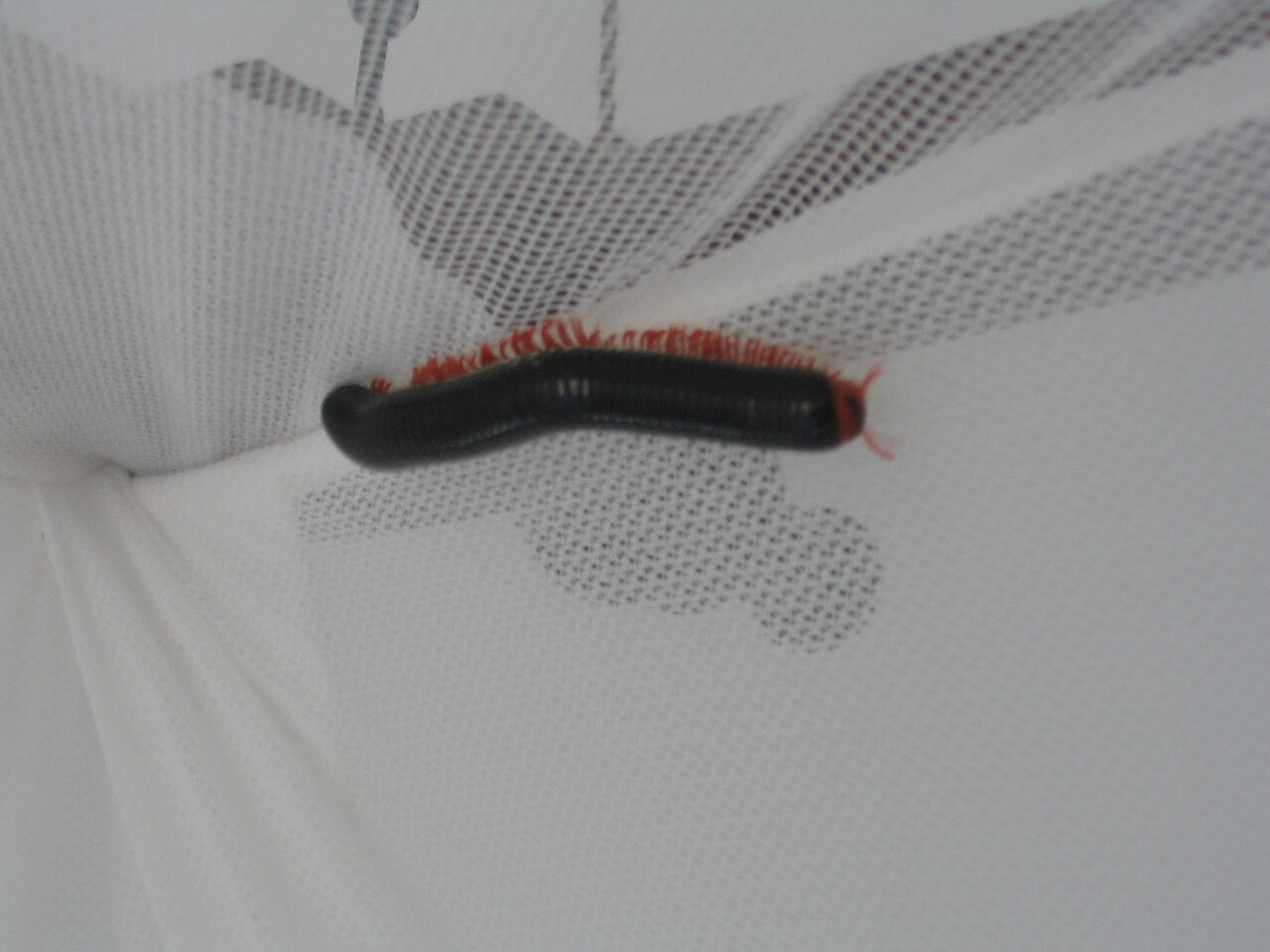
The giant African millipede (Archispirostreptus gigas) is the largest millipede in the world, reaching 12 to 15 in with roughly 250 legs, and it is one of the most docile invertebrates kept as a pet. It has no venom, no bite worth the name, and its only defense is curling into a spiral and releasing a chemical secretion.
That secretion is the one thing keepers need to take seriously. Millipede defensive fluid contains benzoquinones that stain skin brown, irritate on contact, and cause genuine harm if transferred to the eyes, which is why washing hands after handling is not optional. This guide covers the species, what they eat, the substrate that is actually their food, molting, handling, and the import rules that surprise buyers in the United States.
| Quick Facts | Giant African Millipede |
|---|---|
| Length | 12 to 15 in when fully grown |
| Legs | Around 250, four per body segment |
| Lifespan | 7 to 10 years in captivity |
| Diet | Decaying leaf litter and rotting wood |
| Defense | Coiling plus benzoquinone secretion |
| Bite or sting | None |
What a Giant Millipede Is
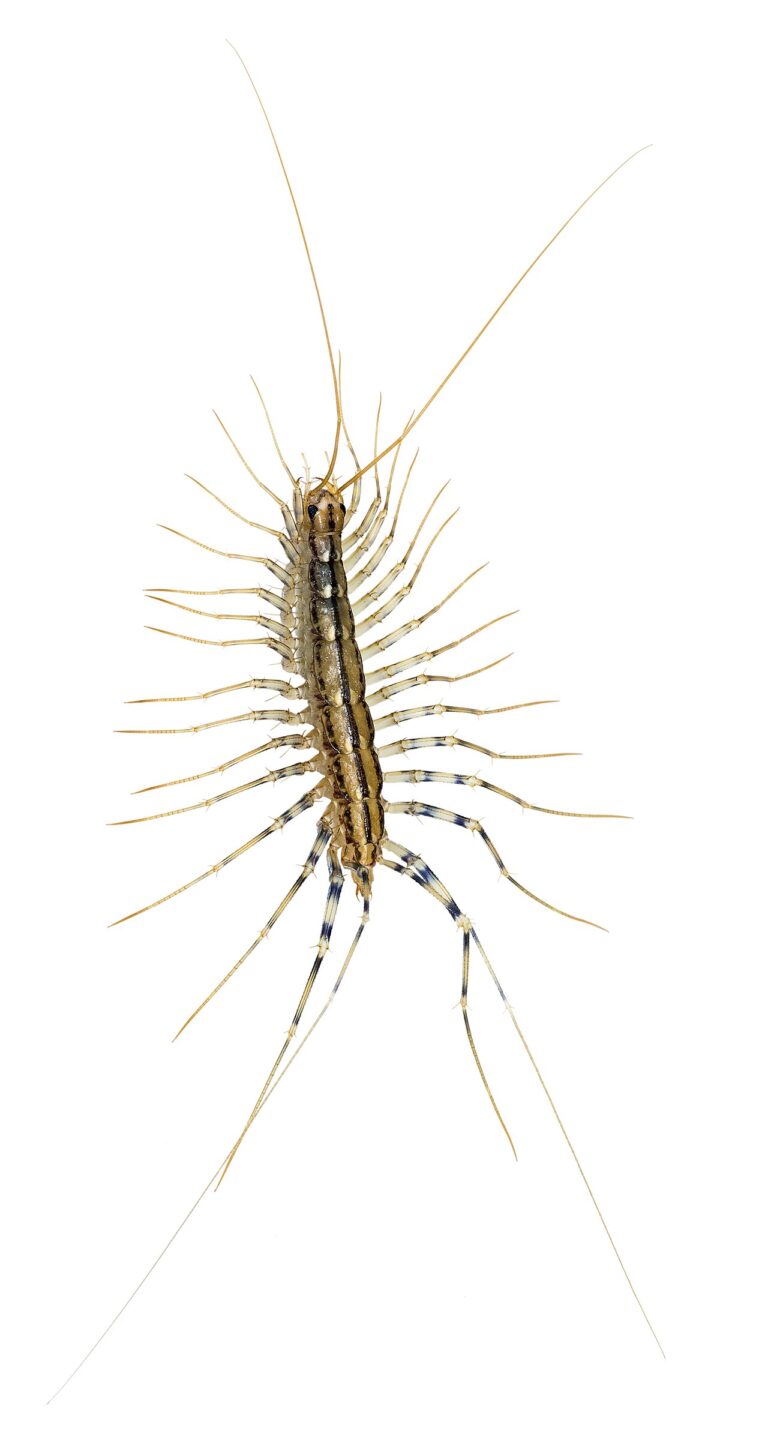
Millipedes are diplopods, a class distinct from centipedes, and the difference matters for anyone deciding whether to keep one. Millipedes have two pairs of legs per body segment, move slowly, and eat decaying plant matter. Centipedes have one pair per segment, move fast, and are venomous predators.
The giant African millipede is native to lowland forest in East Africa, from Mozambique north through Tanzania and Kenya, where it lives in leaf litter and under logs. Adults are glossy dark brown to black, cylindrical, and heavy enough that the weight is noticeable in the hand.
The leg count never reaches a thousand despite the name. Giant African millipedes carry around 250 legs at full size, and the species with the most legs known to science, a recently described Australian millipede, has over 1,300, but it is a tiny thread-like animal rather than a giant. Our guide to the house centipede covers the fast-moving predator people confuse with them.
What They Eat
Giant millipedes are detritivores, meaning they eat decaying organic matter rather than living plants or animals. In the wild the diet is fallen leaves, rotting wood, and the fungi and bacteria growing on both, and they play a substantial role in breaking down forest litter.
In captivity the substrate is the main food source, which is the single most important husbandry fact about them. A deep bed of decaying hardwood leaf litter and rotten wood mixed with coconut fiber or topsoil is not just bedding, it is the animal’s diet, and a millipede in a clean sterile enclosure will slowly starve regardless of what else is offered.
Supplement rather than replace. Slices of cucumber, courgette, sweet potato, carrot, and soft fruit such as banana and melon are readily taken and provide moisture and variety, offered on a small dish and removed before they mold. Calcium is essential for the exoskeleton, so provide cuttlefish bone, crushed eggshell, or a calcium powder mixed into the substrate.
The Defensive Secretion
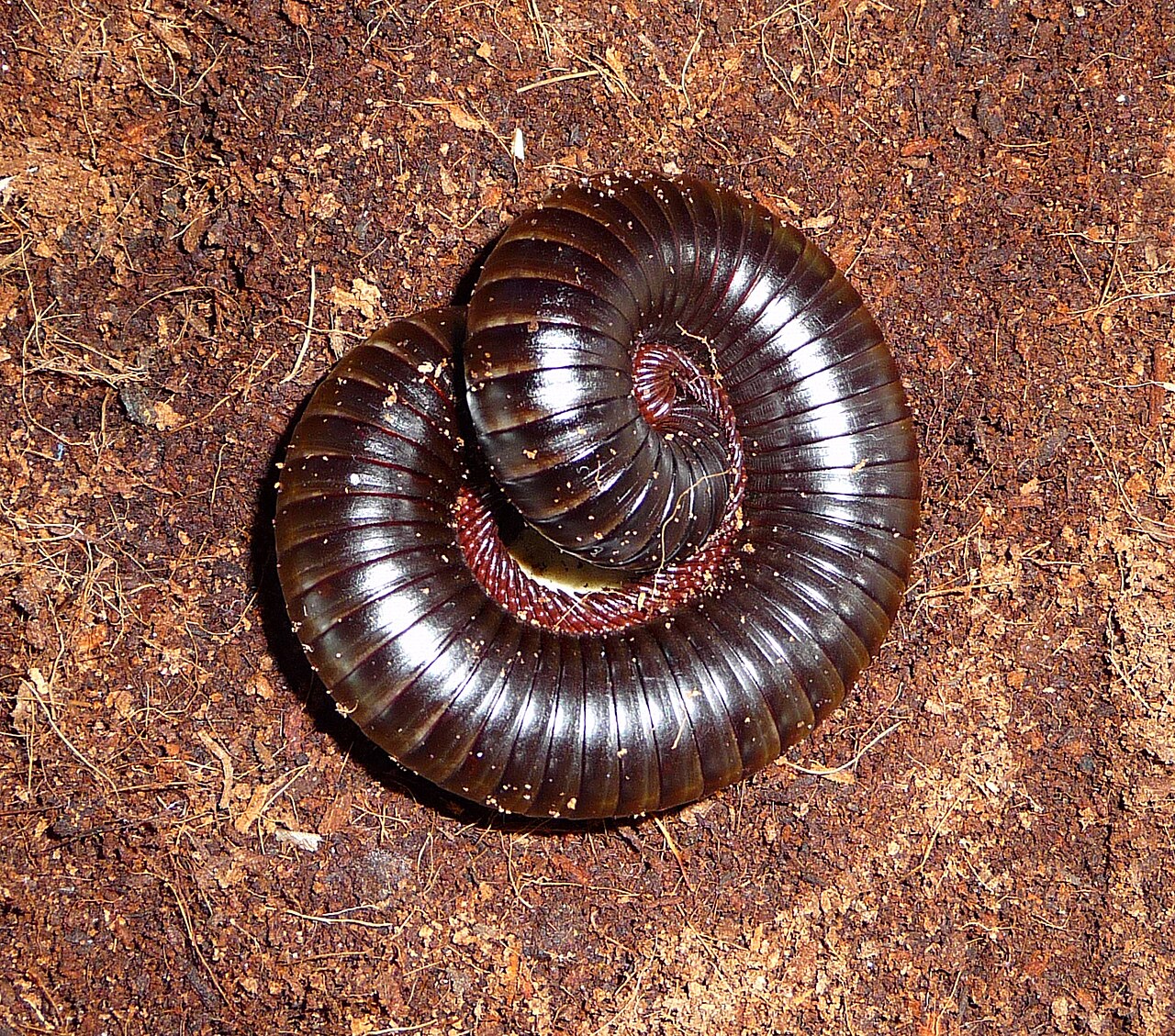
A threatened millipede coils into a tight spiral with the hard dorsal plates outward and the vulnerable legs and head protected inside. If the threat continues, it releases fluid from pores along the sides of its body.
The chemistry is worth respecting. The secretion contains benzoquinones and related compounds that stain skin a persistent purple-brown, cause irritation and occasionally chemical burns on sensitive skin, and are genuinely damaging to eyes and mucous membranes. Some species also produce small amounts of hydrogen cyanide.
In practice the risk is manageable and entirely avoidable. Handle calmly so the animal has no reason to secrete, wash hands thoroughly with soap immediately afterward whether or not you saw fluid, and never touch your face or eyes before washing. Children should be supervised and should wash immediately after any contact, and anyone with sensitive skin may prefer to handle with the animal walking across a hand rather than being gripped.
Enclosure and Substrate
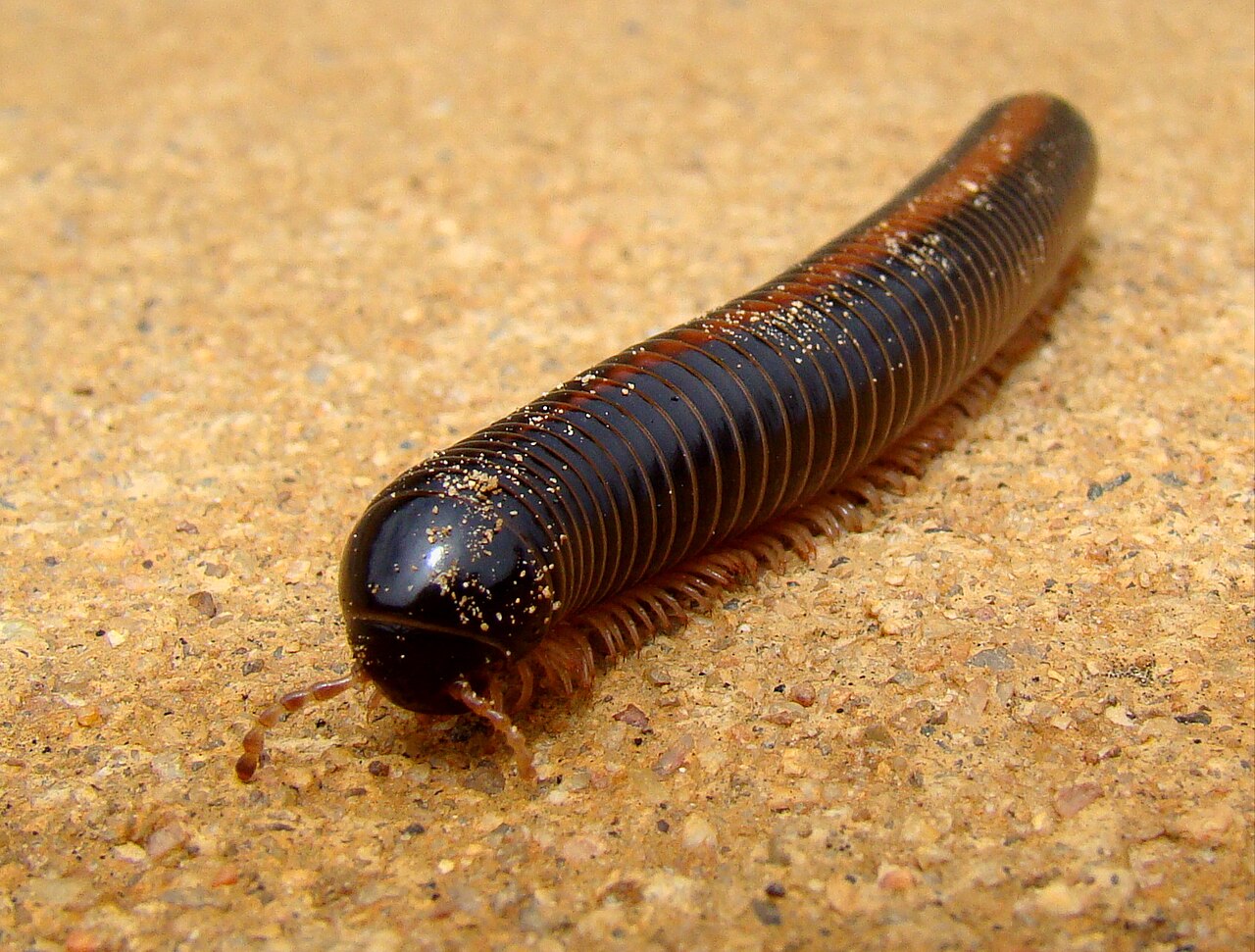
Substrate depth matters more than floor area. Provide at least 6 to 8 in of substrate for an adult, deeper if possible, because millipedes burrow extensively and need to bury themselves completely to molt safely.
The mix should be organic and decaying. Coconut fiber or peat-free topsoil as a base, with a generous proportion of decaying hardwood leaves such as oak, beech, or maple, plus crumbling rotten wood, and none of it treated with pesticide. Leaves collected from a garden should be from unsprayed trees and can be baked briefly or frozen to kill unwanted hitchhikers.
Keep it humid but not waterlogged. Aim for substrate that holds together when squeezed but releases no water, mist as needed, and provide a shallow water dish with pebbles so the animal cannot drown. Temperature should sit at roughly 70 to 80 F, which most homes provide without additional heating, and a secure lid is necessary since millipedes climb better than they look capable of.
Molting
Millipedes molt throughout life, adding segments and legs with each molt as juveniles and continuing to molt periodically as adults. It is the most vulnerable period and the point at which most captive deaths occur.
A millipede preparing to molt burrows deep and constructs a smooth-walled chamber, then remains still for days to weeks, often refusing food beforehand. The new exoskeleton is soft and pale for several days after the old one splits, and the animal is defenseless during that window.
The rule is simple: do not dig. A keeper who excavates a buried millipede out of concern almost always kills it, and a disappearance lasting weeks is normal rather than alarming. Keep the substrate deep and humid, leave the enclosure undisturbed, and the animal will reappear. Millipedes also eat their shed exoskeleton to recover calcium, so leave any remains in place.
Handling
Giant millipedes are among the most handleable invertebrates available, which is much of their appeal. They are slow, have no bite or sting, and generally walk calmly across a hand without attempting to escape.
The technique that works is passive. Let the animal walk onto a flat open palm rather than gripping it, keep your hands low over a soft surface in case it falls, and avoid squeezing, since the body is more fragile than it looks and pressure damages the segments.
Keep sessions short and infrequent. Handling is stressful even when tolerated, and the more relaxed the animal stays the less likely it is to release its defensive fluid. Wash hands afterward without exception, and note that millipedes can carry mites, which are usually harmless commensals rather than parasites but are another reason for basic hygiene.
Import Rules in the United States
This surprises buyers and it is worth knowing before ordering. Importing live giant African millipedes into the United States is prohibited without USDA APHIS permits, and permits are generally not issued for the pet trade.
The reason is not the millipedes themselves but the mites they carry. Giant African millipedes host commensal mites that pose a documented risk to agriculture, and the import restriction dates to concerns about introducing them alongside the animals.
What that means practically is that legally held specimens in the United States descend from stock imported before the restriction, and the captive population is limited. Buyers should ask sellers directly about origin, since animals offered cheaply and in quantity may have entered illegally, and species substitution is common in a market where the genuine article is scarce. Other regions including much of Europe have no equivalent restriction.
Breeding and Life Cycle
Millipedes reproduce readily in a well-established enclosure, and many keepers find eggs appearing without any deliberate attempt. Males transfer sperm using modified legs called gonopods, and females then lay eggs in the substrate, sometimes encasing them in a capsule of soil and their own droppings.
Hatchlings emerge tiny, pale, and with only a handful of segments and three pairs of legs. They add segments and legs with each molt in a process called anamorphic development, taking several years and many molts to reach adult size, which is why large specimens command higher prices.
The young need the same conditions as adults, meaning deep decaying substrate that doubles as food, humidity, and calcium. They are fragile and easily lost during substrate changes, so a keeper who suspects breeding should sift rather than dump, and leaving the enclosure largely undisturbed produces better survival than active intervention.
Other Giant Millipedes
Several species are kept and sold under similar names. The bumblebee millipede, a Central American species with striking yellow and black banding, is smaller at around 4 in and is one of the more popular alternatives.
Chocolate millipedes, ivory millipedes, and various Asian species appear in the trade at sizes between 4 and 10 in, and buyers should apply the same scrutiny to seller claims that our guide to the black fuzzy caterpillar recommends for identification generally, and all share the same basic care requirements: deep decaying substrate, humidity, calcium, and no handling during molts.
North America has its own large species. The North American millipede reaches around 4 in and is common in eastern woodland leaf litter, and several western species are similar in size. None of them requires or benefits from being collected, and a millipede found under a log is doing exactly the decomposition work that keeps forest soil functioning, alongside the other invertebrates covered in our guides to what crickets eat, the baby praying mantis, and what scorpions eat.
Frequently Asked Questions
How big do giant millipedes get?
The giant African millipede reaches 12 to 15 in with around 250 legs, making it the largest millipede species. Despite the name, no millipede has a thousand legs, and the record holder is a tiny thread-like Australian species with over 1,300.
Do giant millipedes bite?
No. They have no biting mouthparts capable of harming a person and no venom. Their only defense is coiling into a spiral and releasing a chemical secretion containing benzoquinones, which stains skin and irritates, and is genuinely harmful if it reaches the eyes.
What do giant millipedes eat?
Decaying leaf litter and rotting wood, which means the substrate is their main food source rather than just bedding. Supplement with cucumber, courgette, sweet potato, and soft fruit, and provide calcium through cuttlefish bone or crushed eggshell.
Why has my millipede disappeared into the substrate?
It is almost certainly molting, which happens in a smooth-walled chamber deep in the substrate and can take days to weeks. Do not dig it up, since a molting millipede is soft and defenseless and excavation usually kills it. Leave the shed skin in place for it to eat.
Are giant millipedes safe to handle?
Yes, more than almost any other large invertebrate, provided you wash your hands afterward. Let the animal walk onto an open palm rather than gripping it, keep sessions short, and never touch your face before washing, since the defensive fluid damages eyes.
Can I buy a giant African millipede in the United States?
Import is prohibited without USDA APHIS permits, which are generally not issued for the pet trade, because the species carries commensal mites considered an agricultural risk. Legally held animals descend from pre-restriction stock, so ask sellers about origin.
What is the difference between a millipede and a centipede?
Millipedes have two pairs of legs per body segment, move slowly, and eat decaying plant matter. Centipedes have one pair per segment, move fast, and are venomous predators. The distinction determines everything about how each animal behaves and whether it can hurt you.