Baby Centipede: Legs, Development, and What They Mean
Baby centipedes hatch with far fewer legs than adults and add pairs as they grow. A house centipede emerges with just four pairs and reaches fifteen pairs over successive molts, a pattern called anamorphic development that is standard across several centipede groups and explains why a small centipede in a bathroom looks like a different animal from the large one you saw last month.
They are also predatory from the moment they hatch, hunting springtails, mites, and other tiny invertebrates. This guide covers what young centipedes look like, the leg-adding development, the maternal care that some species show and others do not, whether they bite, and what finding them indoors actually means.
| Quick Facts | Baby Centipedes |
|---|---|
| Legs at hatching | 4 pairs in house centipedes, more in some groups |
| Adult legs | 15 pairs in house centipedes, up to 191 in others |
| Development | Anamorphic, adding segments and legs with molts |
| Diet | Springtails, mites, small insects, from hatching |
| Maternal care | Present in some groups, absent in others |
| Danger | Too small to break skin meaningfully |
A baby centipede is a miniature adult with fewer legs. House centipedes hatch with four pairs and add pairs at each molt until they reach fifteen. They are pale, fast and harmless to people, and finding one indoors means the species is breeding inside rather than wandering in.
What a Baby Centipede Looks Like
Newly hatched centipedes are pale, soft, and translucent, darkening and hardening over the following days. They are small, often under 0.2 in in house centipedes, and the proportions look wrong compared with an adult because the legs are relatively short and few.
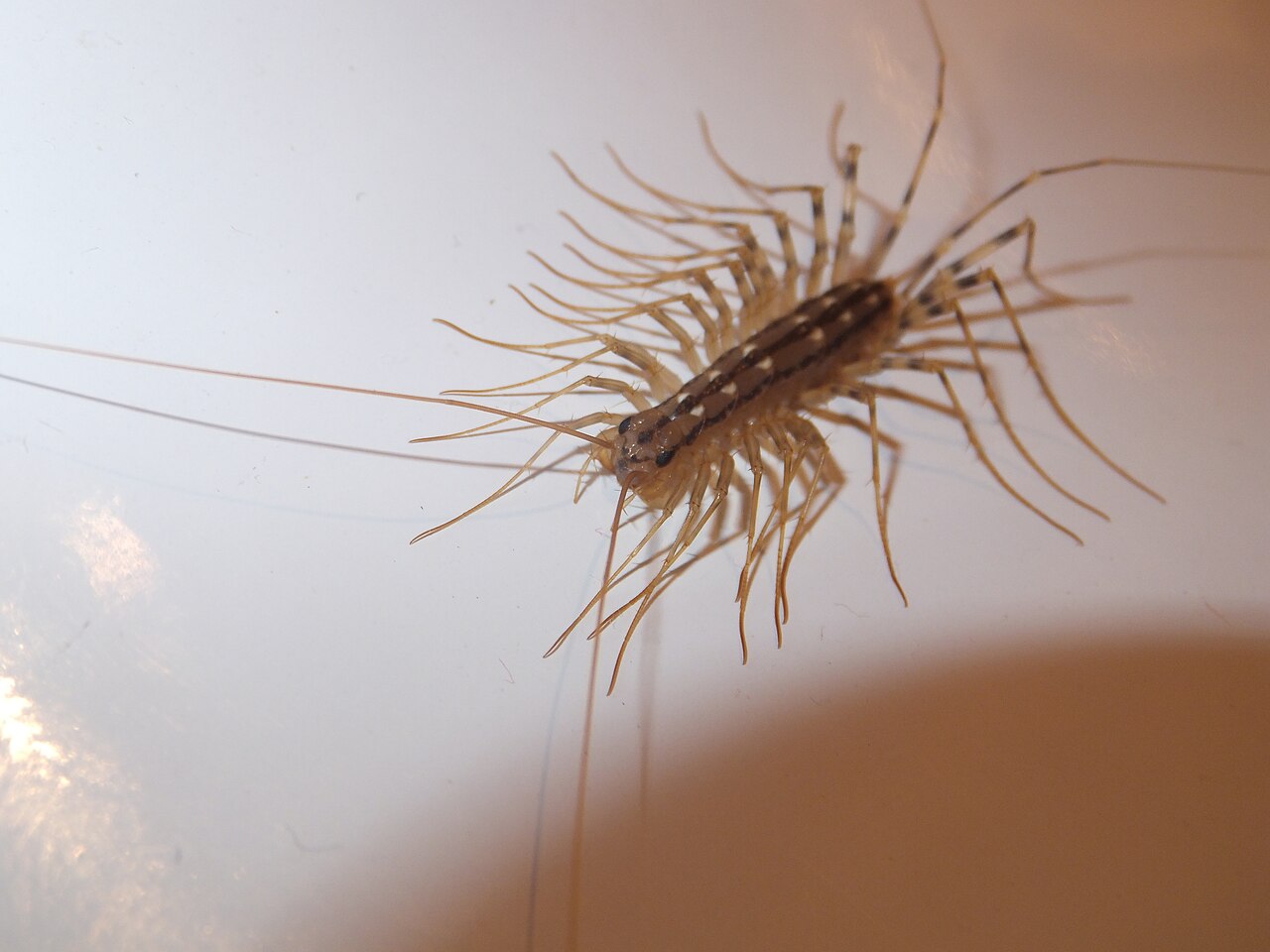
The body plan is recognizable despite the size. One pair of legs per body segment, a flattened elongated body, long antennae, and a pair of modified front legs called forcipules that deliver venom, though in a hatchling these are far too small to matter to anything larger than a springtail.
The leg count is what confuses people most. A house centipede with four pairs of legs looks nothing like the fifteen-paired adult that scuttles across a bathroom floor, and small individuals are frequently reported as a different species or as some kind of insect larva. Our guide to the house centipede covers the adults in detail.
Adding Legs: Anamorphic Development
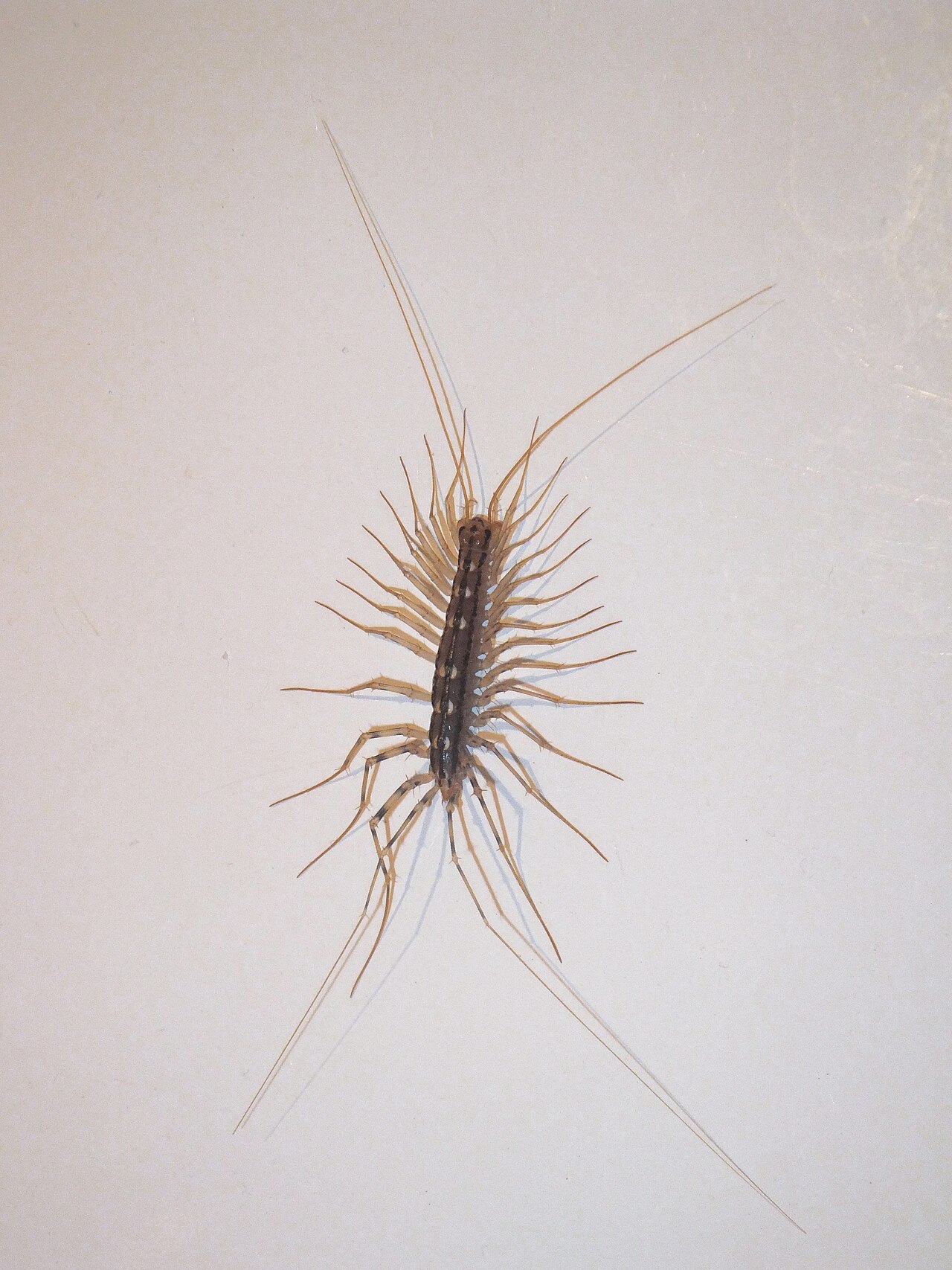
This is the defining feature of centipede growth in several major groups and it has no equivalent among insects. Rather than hatching with the full adult complement and simply growing larger, these centipedes add body segments and leg pairs at each molt.
House centipedes are the clearest example. They hatch with four pairs of legs and gain more at successive molts, reaching five, then seven, nine, eleven, thirteen, and finally fifteen pairs as adults, and each stage looks progressively more like the familiar animal.
Not all centipedes do this. Soil centipedes and tropical giant centipedes in the order Scolopendromorpha hatch with the full adult number of leg-bearing segments and simply grow larger, a pattern called epimorphic development. Which group an animal belongs to therefore determines whether a small individual with few legs is even possible, and the difference between centipedes and millipedes is covered in our guide to centipedes versus millipedes.
How Many Legs They End Up With
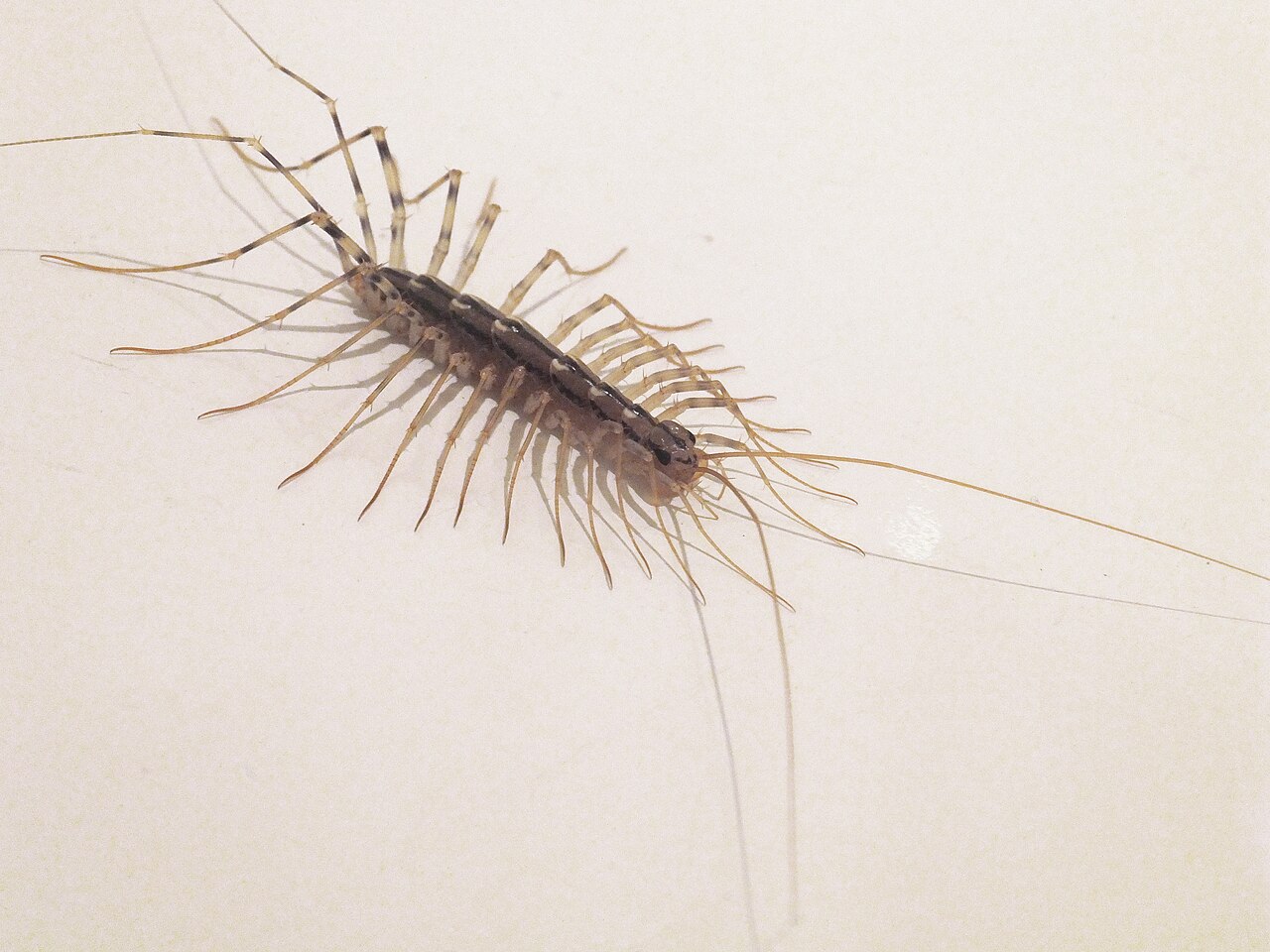
The name promises a hundred and no centipede has exactly that number, because leg pairs always come in odd numbers. House centipedes finish at fifteen pairs, giving thirty legs, while common garden and stone centipedes also carry fifteen pairs.
Soil centipedes are the leggy ones. Species in the order Geophilomorpha carry anywhere from 27 to 191 pairs depending on species, and the record holder, a species found in California, reaches 382 legs in total. These are thin, pale, worm-like animals living in soil rather than the fast-moving hunters people meet indoors.
Tropical giant centipedes in the genus Scolopendra sit at 21 or 23 pairs and reach 8 to 12 in in length, and these are the animals with medically significant venom. Nothing in a North American house approaches that, and the largest species people encounter indoors is the house centipede at around 1.5 in of body length.
Eggs and Maternal Care
Reproductive strategy splits along the same lines as development. House centipedes and stone centipedes lay eggs singly in soil or leaf litter and provide no care, and the female deposits an egg, sometimes coats it in soil, and leaves.
Soil centipedes and giant centipedes do the opposite. Females lay a clutch and then coil their bodies around it, guarding and grooming the eggs continuously for weeks, cleaning them to prevent fungal growth and defending them against predators.
The maternal care is genuinely committed. A brooding female typically does not feed for the duration, and disturbing her frequently causes her to eat the clutch or abandon it, which is why finding a coiled centipede under a log or stone in spring is worth leaving alone. She continues guarding for a period after hatching in some species before the young disperse.
What Baby Centipedes Eat
They hunt from the moment they can move. Newly hatched centipedes take springtails, mites, tiny insect larvae, and other minute invertebrates, using the same venomous forcipules the adults use, scaled down.
Prey size increases with each molt. A young house centipede progresses from springtails to small flies, silverfish nymphs, and eventually to the cockroaches, spiders, moths, and bed bugs that adults take, which is what makes the species genuinely useful indoors.
Cannibalism is routine among centipedes generally, and young individuals eat each other readily where they are crowded. This is one reason dispersal happens quickly after hatching and why finding several young centipedes together is unusual outside a brood chamber. Our guide to what scorpions eat describes the same pattern of early independence and cannibalism in another arthropod predator.
Do Baby Centipedes Bite?
Not in any way that matters. All centipedes have venom and forcipules, but a hatchling’s are far too small to penetrate human skin, and even adult house centipedes rarely manage a bite that a person notices.
Adult house centipede bites, when they happen, produce a brief sting comparable to a mild bee sting with minor local redness, and they occur essentially only when the animal is pressed against skin. There is no medical significance and no treatment beyond washing.
The centipedes that do warrant caution are the large tropical Scolopendra species, which reach 8 to 12 in and deliver genuinely painful bites causing significant swelling and occasionally systemic symptoms. None of them occurs in a typical North American house, and the giant desert centipede of the southwestern United States is the largest native species at around 8 in.
Finding Them Indoors
Small centipedes indoors mean the same thing as large ones: moisture and prey. Centipedes need humidity because they lose water readily through their cuticle, and they follow the insects that also concentrate in damp areas.
Basements, bathrooms, crawl spaces, laundry rooms, and areas around leaking pipes are the usual locations. House centipedes can complete their entire life cycle indoors, which is why you may find individuals at several sizes in the same building.
Their presence is diagnostic rather than merely annoying. A centipede population indoors indicates both a moisture problem and a supply of prey insects, and both are worth addressing regardless of how you feel about the centipedes. Dehumidifying, fixing leaks, improving ventilation in crawl spaces, and sealing entry gaps around foundations and utility penetrations addresses the root cause, while killing individual centipedes does not.
How Long They Take to Grow Up
Development is slower than most household arthropods. House centipedes take around three years to reach adulthood through their sequence of leg-adding molts, and they then live a further three to seven years, which is exceptionally long for something people think of as a pest insect.
Molting is the vulnerable point at every stage. The animal must withdraw completely from the old cuticle including every leg, and a molt that goes wrong leaves the centipede deformed or trapped, which is a common cause of death in both wild and captive individuals.
University extension entomology programs note that this longevity is part of why house centipede numbers indoors stay stable rather than exploding. They reproduce slowly compared with the roaches and silverfish they hunt, so a house rarely develops the population densities that other indoor arthropods reach.
Should You Kill Them?
House centipedes are among the more useful animals that get into houses, and the case for tolerance is stronger than for most household arthropods. They hunt cockroaches, silverfish, carpet beetle larvae, spiders, moths, and bed bugs, and they do it at night in the same crevices those pests occupy.
They cause no damage of any kind. They do not eat fabric, wood, paper, or stored food, they do not transmit disease, they do not build nests or webs, and they do not reproduce in numbers that constitute an infestation in the way roaches or ants do.
The realistic position for most people is to remove individuals from living areas and leave the rest. A glass and a piece of card move one outside in seconds, and a centipede in a basement is doing work you would otherwise pay for. Pesticides are largely ineffective against them anyway, since they move quickly across surfaces and spend most of their time in voids, which is the same conclusion our guides to the black house spider and the giant millipede reach about their respective animals.
What Bug Is Mistaken for a Baby Centipede?
Millipedes are the most common mix-up, and the leg count settles it: centipedes have one pair of legs per body segment and move fast, millipedes have two pairs per segment and move slowly, curling into a spiral when disturbed. A small many-legged bug that rolls up is not a centipede.
Silverfish are the second, especially in bathrooms where both turn up. A silverfish has six legs, three long tail filaments and a tapered, fish-shaped body covered in fine scales, and it moves in a darting wriggle. A baby house centipede has long legs sticking out well beyond the body on both sides and runs in a straight sprint.
Two others come up. Symphylans, sometimes called garden centipedes, are tiny white many-legged relatives found in soil and potting mix rather than on walls. And newly hatched earwigs are pale and small enough to be mistaken for almost anything, but have only six legs and obvious pincers at the rear. Penn State Extension’s guide to house centipedes covers where indoor populations breed and what the presence of one indicates about moisture.
Frequently Asked Questions
How many legs does a baby centipede have?
House centipedes hatch with four pairs and add more at each molt until they reach fifteen pairs as adults. This is called anamorphic development. Soil centipedes and tropical giant centipedes hatch with the full adult number and simply grow larger.
What does a baby centipede look like?
Pale, soft, and translucent at first, darkening over days, often under 0.2 in, with proportionally short and few legs compared with an adult. The body plan is recognizable: one pair of legs per segment, long antennae, and venomous front appendages far too small to matter.
Do baby centipedes bite?
Not meaningfully. Their venomous forcipules are far too small to penetrate human skin. Even adult house centipedes rarely bite, and when they do the effect is comparable to a mild bee sting with no medical significance.
Do centipedes care for their young?
It depends on the group. House centipedes and stone centipedes lay eggs singly and abandon them, while soil centipedes and giant centipedes coil around their clutch, guarding and grooming it for weeks without feeding, and often continue guarding briefly after hatching.
What do baby centipedes eat?
Springtails, mites, tiny insect larvae, and other minute invertebrates from the moment they can move, progressing to small flies, silverfish, and eventually cockroaches and spiders as they grow. Cannibalism among young centipedes is routine.
Why are there centipedes in my house?
Moisture and prey. Centipedes lose water readily and follow the insects that concentrate in damp areas, so basements, bathrooms, crawl spaces, and leaking pipes attract them. Their presence indicates both a moisture problem and a supply of other insects.
Should I kill house centipedes?
Generally no. They hunt cockroaches, silverfish, carpet beetle larvae, spiders, and bed bugs, cause no damage, transmit no disease, and do not infest in the way roaches do. Move individuals outside with a glass and card, and fix the moisture that attracted them.