Yellow and Black Butterfly: Identifying 5 Common Species
A yellow and black butterfly spotted in the United States is most often one of a handful of common swallowtail species, led by the eastern tiger swallowtail, whose bold yellow wings marked with dramatic black tiger-stripe bands make it one of the most instantly recognizable large butterflies across the entire eastern half of the country. Beyond the tiger swallowtail, several other yellow-and-black species, including the giant swallowtail, the black swallowtail’s yellow-spotted form, and various sulphur butterflies with darker markings, round out the identification possibilities depending on region and specific pattern details.
Because “yellow and black butterfly” describes a genuinely broad category covering several distinct species with different ranges, host plants, and specific pattern arrangements, correctly narrowing down which particular species you encountered requires checking a few specific features rather than relying on the general color combination alone. This guide covers the most common yellow-and-black species found across North America, the specific field marks that separate each, their host plants and typical habitat, and what the color combination itself has come to symbolize across various folk traditions.
| Species | Key Pattern |
|---|---|
| Eastern tiger swallowtail | Yellow with bold black tiger stripes |
| Giant swallowtail | Dark with yellow spot bands, yellow X below |
| Black swallowtail (yellow form) | Mostly black with yellow spot rows |
| Clouded/cloudless sulphur | Solid yellow with dark wing borders |
| Zebra swallowtail (pale form) | Whitish-yellow with black zebra stripes |
Eastern Tiger Swallowtail: The Classic Answer
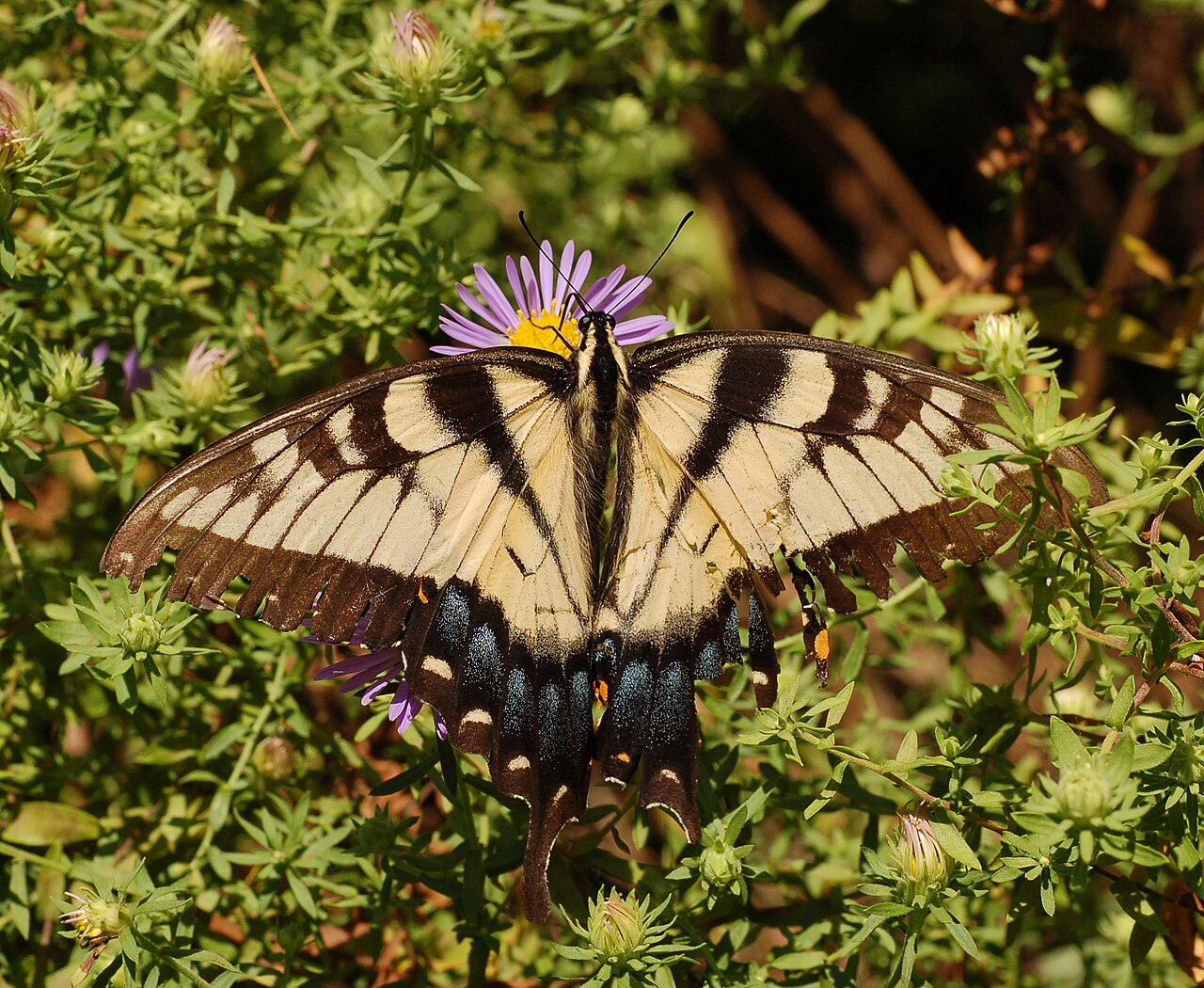
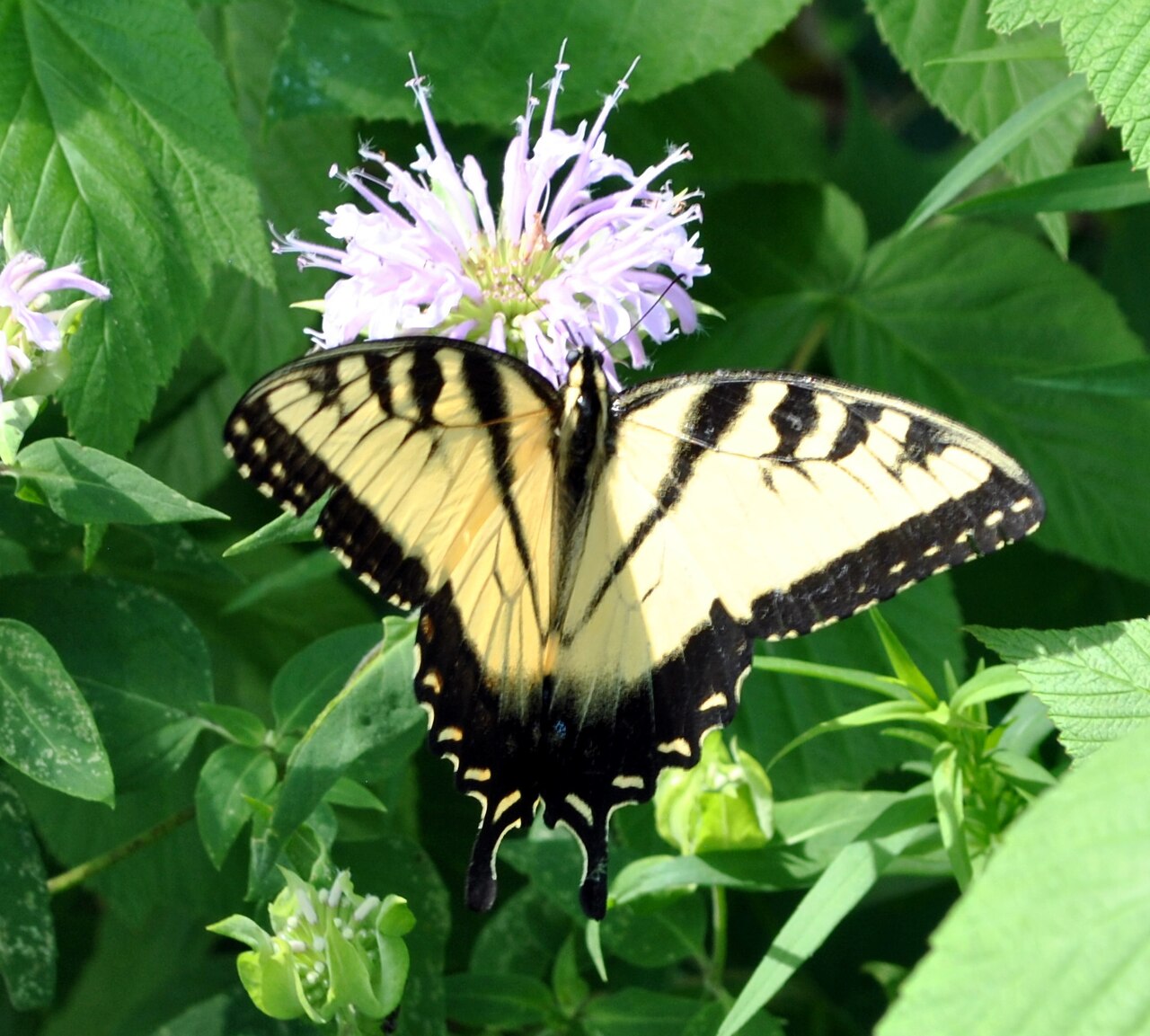
When most people picture a large yellow and black butterfly in the United States, they are almost certainly picturing the eastern tiger swallowtail (Papilio glaucus), whose vivid yellow wings marked with bold, parallel black stripes running perpendicular across both fore and hind wings create one of the most striking and widely recognized butterfly patterns found anywhere on the continent, spanning 3 to 5.5 inches and ranking among the larger butterflies most Americans regularly encounter.
This species ranges across essentially the entire eastern United States and well into the Midwest, frequenting gardens, woodland edges, and stream corridors where its host plants, including wild cherry, tulip tree, and various other broadleaf trees, grow, a range and host plant relationship well documented by university extension entomology programs, making it genuinely one of the most commonly sighted large butterflies for a huge portion of the American population living within its broad range.
A notable complication exists specifically with female eastern tiger swallowtails, which occur in two distinct color forms: the typical yellow-and-black pattern matching males, and a separate dark form that is almost entirely black with only faint shadow-striping visible, a form believed to mimic the toxic, unpalatable pipevine swallowtail as protection from predators, meaning not every tiger swallowtail you encounter will actually show the classic yellow-and-black pattern this species is generally known for.
Giant Swallowtail: North America’s Largest Butterfly
The giant swallowtail (Papilio cresphontes) holds the title of the largest butterfly species in North America, with a wingspan reaching up to 6.5 inches, and displays a notably different yellow-and-black arrangement than the tiger swallowtail: predominantly dark brown-black wings marked with a diagonal band of yellow spots across the forewing and a distinctive yellow patch forming a rough X or cross pattern visible on the underside of the hindwing when viewed from below.
This species ranges across the southern and eastern United States, extending somewhat further south into Mexico and parts of Central America than the tiger swallowtail typically reaches, and its caterpillars feed specifically on citrus family plants, including wild citrus relatives and, notoriously for citrus growers, cultivated orange and lemon trees, earning the larval stage the common nickname “orange dog” among growers dealing with occasional caterpillar damage to citrus foliage.
Distinguishing the giant swallowtail from the tiger swallowtail comes down primarily to the overall pattern arrangement rather than color alone, since the giant swallowtail’s dark background with yellow spot bands looks meaningfully different from the tiger swallowtail’s predominantly yellow background marked with black stripes, an inverted color emphasis that, once specifically looked for, resolves the identification confidently even at a moderate viewing distance.
Black Swallowtail’s Yellow-Spotted Form
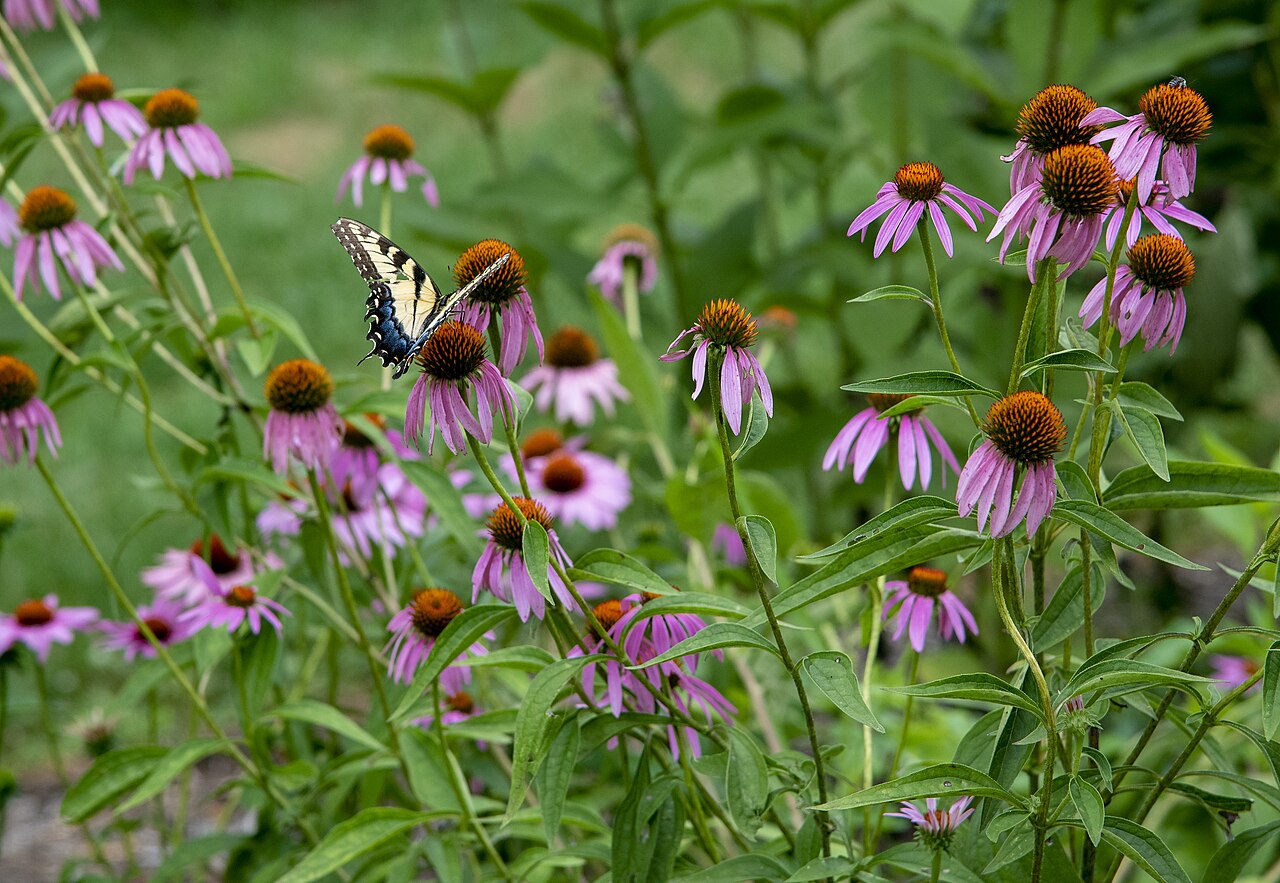
The black swallowtail (Papilio polyxenes) presents a genuinely different kind of yellow-and-black pattern than either swallowtail covered above: a predominantly black wing background marked with two rows of yellow spots running roughly parallel to the wing edges, plus additional blue and orange markings near the hindwing tail that add further color complexity beyond the basic yellow-and-black combination.
This species ranges very broadly across nearly all of the continental United States, considerably wider than either the tiger or giant swallowtail’s more regionally concentrated ranges, and its caterpillars feed on plants in the carrot family, including wild Queen Anne’s lace as well as cultivated garden vegetables like parsley, dill, carrots, and fennel, making black swallowtail caterpillars a genuinely familiar sight to many home vegetable gardeners specifically.
Males and females show slightly different emphasis in their yellow spotting, with males generally displaying somewhat bolder, more extensive yellow spot patterns than females, whose spots tend to run smaller and less prominent, though both sexes clearly show the same overall black-background-with-yellow-spot-rows pattern that distinguishes this species from the more solidly yellow-based patterns of the tiger and giant swallowtails covered above.
Sulphur Butterflies: Smaller Yellow-and-Black Options
Beyond the larger swallowtail species covered above, several considerably smaller sulphur butterfly species also present a yellow-and-black combination, typically a mostly solid yellow body marked with a darker black or brown border along the wing edges rather than the bold striping or spotting patterns swallowtails display, giving sulphurs a genuinely different overall visual impression despite sharing the same basic two-color combination.
The clouded sulphur and orange sulphur, both common and widespread across most of North America in open fields, meadows, and roadsides, show this yellow-with-dark-border pattern at a considerably smaller size than any swallowtail species, typically only 1.5 to 2.5 inches across, a size range closer to the smaller green butterfly species than to any swallowtail, making overall size alone a genuinely useful quick distinguishing feature between sulphurs and the larger swallowtails covered in earlier sections.
Sulphur caterpillars typically feed on legume family plants, including clover and alfalfa, connecting their presence to open agricultural and meadow habitat rather than the woodland edges and garden settings more associated with swallowtail host plants, and their generally more modest size and simpler border-pattern coloration, compared to the bold striping or spotting of swallowtails, makes sulphurs a genuinely distinct visual category within the broader yellow-and-black butterfly identification question this guide addresses.
Zebra Swallowtail’s Pale Yellow Form
The zebra swallowtail (Protographium marcellus), typically described primarily as a black-and-white species given its usual greenish-white base coloration, occasionally shows a notably more yellowish or cream-toned base color in certain individuals or lighting conditions, creating a pattern that can read as yellow-and-black rather than the more standard white-and-black description this species usually receives, particularly relevant for anyone encountering the species and specifically searching for a yellow-and-black match rather than the more commonly cited white-and-black description.
This species is instantly recognizable regardless of the exact base tone by its dramatic long tails, considerably longer relative to body size than any other common North American swallowtail, combined with the bold parallel black striping running across the wings that gives the species its zebra-inspired common name, features that remain consistent and diagnostic even when base coloration shifts somewhat toward yellow rather than the more typical whiter tone.
Zebra swallowtails are tied specifically to pawpaw trees as their exclusive host plant, meaning this species’ range and local abundance follows pawpaw distribution specifically across the eastern and southeastern United States, and anyone encountering a yellowish, black-striped, dramatically long-tailed butterfly near a pawpaw thicket specifically should strongly consider this species even if the coloration reads somewhat more yellow than the classic whitish description most field guides emphasize.
Quick Identification: Sorting the Species by Pattern
When facing an unidentified yellow and black butterfly, checking pattern arrangement first resolves most cases efficiently: a predominantly yellow background with bold black stripes points strongly toward eastern tiger swallowtail, while a predominantly dark background with yellow spots arranged in bands or rows points toward either the giant swallowtail (with its distinctive underside X-mark) or the black swallowtail (with its two parallel spot rows and additional blue-orange hindwing accents).
Size provides a genuinely useful secondary check, since the giant swallowtail runs notably larger than any other common yellow-and-black species, larger even than the rare purple butterfly species some collectors specifically seek out, the tiger swallowtail and black swallowtail fall into a similar mid-large range, and any considerably smaller yellow-and-black butterfly, under 2.5 inches or so, likely points toward one of the sulphur species rather than any swallowtail at all, regardless of the specific pattern details involved.
Host plant and habitat context add a final useful layer: citrus-adjacent sightings favor giant swallowtail, vegetable garden or Queen Anne’s lace association favors black swallowtail, wild cherry or tulip tree proximity favors tiger swallowtail, open meadow or agricultural field habitat favors sulphurs, and pawpaw thickets specifically favor the zebra swallowtail’s occasional yellow-toned individuals, making location and nearby plant life a genuinely practical supplementary identification tool alongside the pattern and size checks covered above.
Symbolism and Meaning of Yellow and Black Butterflies
Across various folk traditions, yellow butterflies broadly carry associations with happiness, friendship, and the arrival of good news, drawing on yellow’s generally positive, sunny color symbolism found across many cultural contexts, while the addition of black markings in a combined yellow-and-black pattern is sometimes read as adding a layer of protection, grounding, or the successful navigation of a difficult transition alongside the underlying joyful yellow symbolism.
This combined interpretation connects to the broader tradition of butterfly symbolism generally centered on transformation and rebirth, covered in more depth in our butterfly tattoo meaning guide, with the specific yellow-and-black combination sometimes interpreted as representing a joyful transformation, positive change that has required real effort or protection to achieve rather than one arriving effortlessly or without any accompanying challenge along the way.
As with all butterfly color symbolism, these interpretations reflect folk tradition and personal meaning-making rather than any scientific claim about the insects themselves, and readers interested in the broader landscape of butterfly color meanings can explore related guides on black and white butterflies specifically, the closely related orange butterfly, or the general framework covered when a butterfly lands on you, for additional perspective on how different color combinations get interpreted across various spiritual and folk traditions.
Related reading: Black Swallowtail Butterfly.
Related reading: Yellow Butterfly.
Related reading: Black Butterfly Spiritual Meaning.
Related reading: Yellow and Black Bird.
Related reading: Black and Yellow Wasp.
Frequently Asked Questions
What is the most common yellow and black butterfly in the US?
The eastern tiger swallowtail, recognized by its bold yellow wings marked with dramatic black tiger stripes, found across essentially the entire eastern United States and into the Midwest.
What is the largest yellow and black butterfly?
The giant swallowtail, North America’s largest butterfly species overall, showing a dark background marked with yellow spot bands and a distinctive yellow X-shaped mark visible on the underside of the hindwing.
How do I tell a tiger swallowtail from a giant swallowtail?
Check the background color emphasis: tiger swallowtails show a predominantly yellow background with black stripes, while giant swallowtails show a predominantly dark background with yellow spots arranged in bands.
Why are some tiger swallowtails all black instead of yellow and black?
Some female eastern tiger swallowtails occur in a dark color form that is almost entirely black, believed to mimic the toxic pipevine swallowtail for predator protection, rather than showing the typical yellow-and-black pattern.
What is a small yellow and black butterfly with a dark border?
Likely a clouded or orange sulphur butterfly, considerably smaller than any swallowtail species at only 1.5 to 2.5 inches across, with a solid yellow body and a darker border along the wing edges rather than bold stripes or spots.
What do black swallowtail caterpillars eat?
Plants in the carrot family, including wild Queen Anne’s lace and cultivated garden vegetables like parsley, dill, carrots, and fennel, making them a familiar sight in many home vegetable gardens.
Does a yellow and black butterfly mean anything spiritually?
In various folk traditions, yellow butterflies broadly symbolize happiness and good news, while the black markings are sometimes read as adding protection or representing a transformation that required real effort to achieve.