Do Polar Bears Hibernate? No, and Only One Group Ever Dens
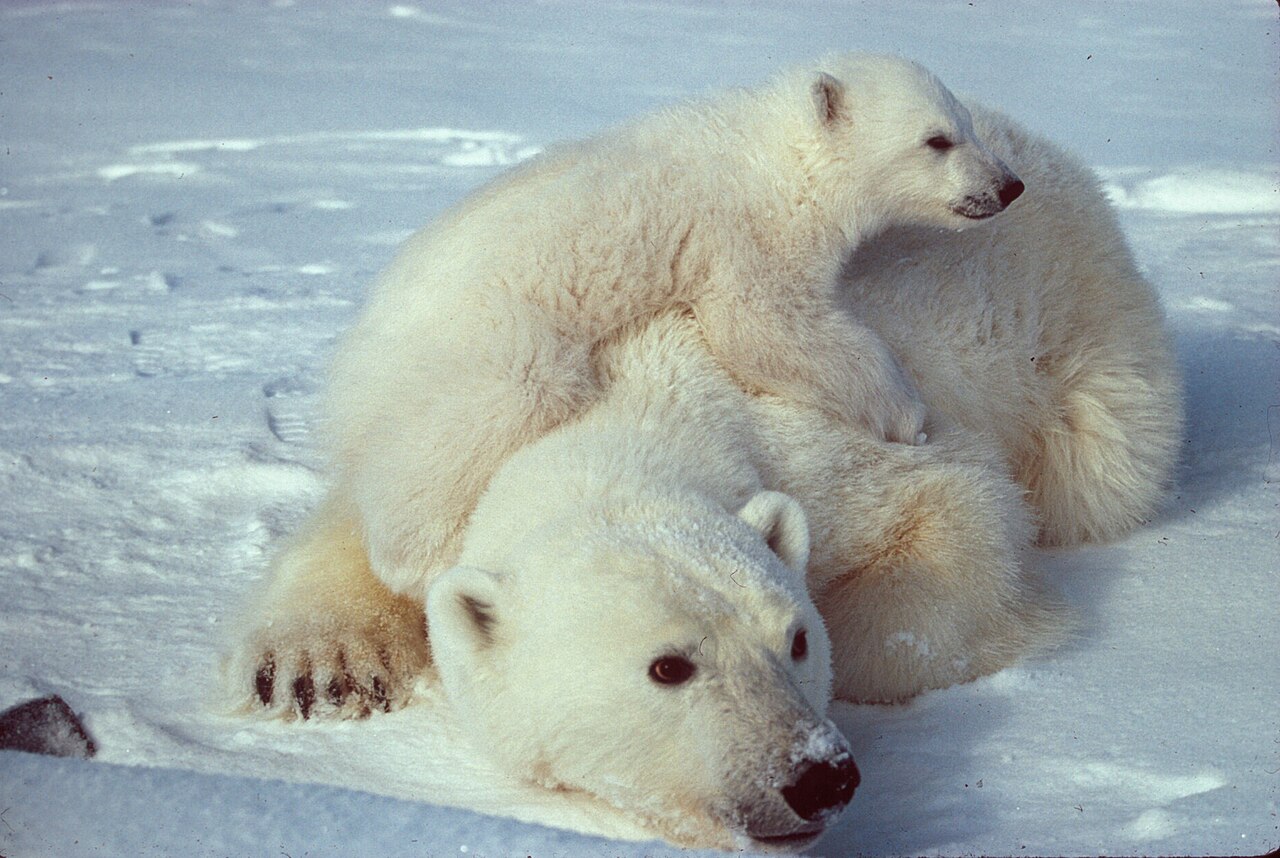
Polar bears do not hibernate. The answer to do polar bears hibernate is no for every adult male and for every female that is not pregnant, and winter is the one season these bears least want to sleep through. Sea ice locks up in the dark months, ringed seals come within reach, and a polar bear that spent January underground would miss the best hunting of its year.
There is one real exception, and it is the source of most of the confusion. Pregnant females dig a snow den in autumn, give birth inside it, and stay put for five to eight months. That looks like hibernation from the outside, and biologists still argue about what to call it, but the animal inside the den is doing something quite different from a woodchuck.
Polar bears do not hibernate. Adult males and non-pregnant females stay active all winter, because frozen sea ice is their prime seal-hunting season. Only pregnant females den, entering a snow chamber in October or November and emerging in March or April with cubs. Their body temperature stays near normal, so denning is not true hibernation.
| Bear | Winter behavior | Typical duration | Body temperature drop | Can it be roused? |
|---|---|---|---|---|
| Polar bear, adult male | Active hunting on sea ice | None | None | Awake anyway |
| Polar bear, pregnant female | Maternity denning | 5 to 8 months | About 2 to 5 F (1 to 3 C) | Yes, easily |
| Brown or grizzly bear | Winter dormancy | 5 to 7 months | About 7 to 12 F (4 to 7 C) | Yes |
| American black bear | Winter dormancy | 3 to 7 months | About 10 F (6 C) | Yes |
| Thirteen-lined ground squirrel | True hibernation | 6 to 8 months | To near freezing | Only after hours of rewarming |
Do Polar Bears Hibernate in the Winter?
No. Winter is when a polar bear (Ursus maritimus) earns its living. As the Arctic Ocean freezes over from October onward, the ice platform the bears hunt from expands, and ringed seals (Pusa hispida) start maintaining breathing holes the bears can wait beside. Late winter and spring, roughly March through June, deliver the fattest seal pups and the bulk of a bear’s annual calorie intake.
Bears tracked by satellite collar through the polar night keep walking, swimming, and killing seals in complete darkness at temperatures near minus 40. A denning male would be giving up the only reliable food window he gets.
The same logic explains a common follow-up. Male polar bears never den for the season, at any age, anywhere in the species range.
Why Do Polar Bears Not Hibernate?
Hibernation is an answer to winter food scarcity, and for polar bears winter is not the scarce season. Their calendar is inverted compared with a forest bear. Summer is the lean time, when the ice melts out from under them and the seals go where the bears cannot follow, so the fasting period lands in July and August rather than January.
That inversion runs through the whole family. Raccoons and tree squirrels face their hardest stretch in deep winter and respond with torpor or cached food. A polar bear responds to its hard stretch by burning the fat it stacked on during the good ice.
Adults can lose 2 lb (0.9 kg) of body mass per day while fasting ashore, which is survivable for a few months and increasingly is not, as ice-free periods lengthen.
What Pregnant Females Do Instead
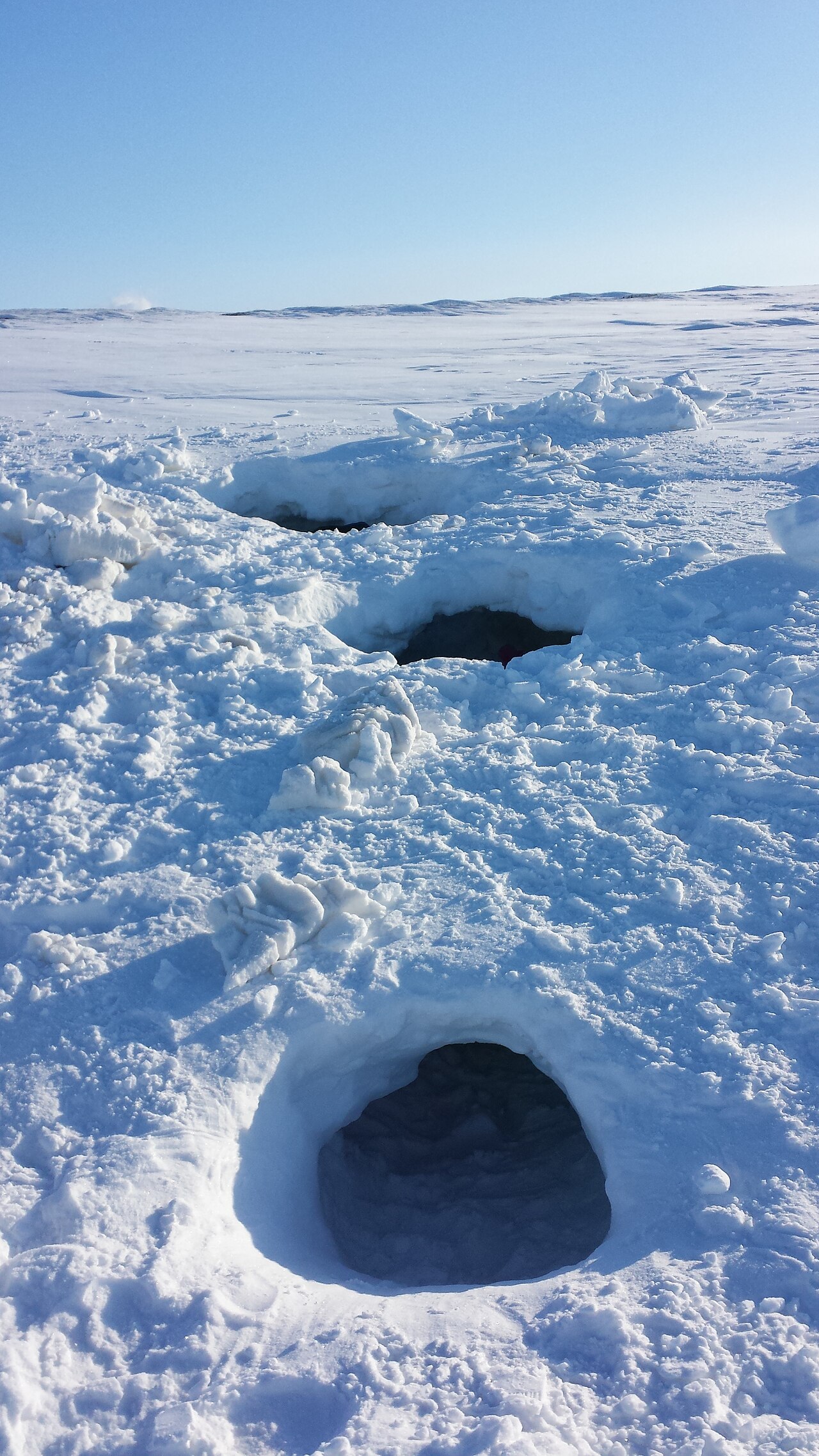
A pregnant female digs into a snowdrift, usually on a coastal slope or on drifting pack ice, between late October and mid November. The den is a chamber roughly 6 ft (1.8 m) across with a short entrance tunnel, and snow insulates it so well that the inside can sit 40 F (22 C) above the outside air.
She gives birth in December or January to one or two cubs weighing about 1 lb (0.45 kg), blind, nearly hairless, and no bigger than a guinea pig. For the next two to three months she does not eat, drink, urinate, or defecate, while nursing on milk that runs above 30 percent fat.
Denning females on the southern Beaufort Sea have shifted noticeably from pack ice to land dens over recent decades, a trend tracked by US Geological Survey researchers.
How Long Do Polar Bears Hibernate in the Den?
Counting from den entry to final departure, a pregnant female is inside for five to eight months, with about six months as the norm. Entry falls in October or November, birth in midwinter, and the first emergence in March or early April, when she breaks the roof open and lets the cubs test the outside air.
Mother and cubs then linger near the den for one to two weeks before walking to the ice. That pause lets the cubs build muscle and coat before a march that can cover 20 mi (32 km) or more.
Bears that fail to find enough food the previous summer may abandon the attempt entirely, since the pregnancy only implants if she reaches a fat threshold in autumn.
Is Denning the Same Thing as Hibernation?
Not in the strict sense. In true hibernation, seen in ground squirrels and marmots, core temperature falls toward freezing, heart rate can drop below 10 beats per minute, and the animal needs hours of shivering to wake. A denning polar bear drops her core temperature only a couple of degrees and her heart rate from roughly 46 beats per minute to near 27.
She also does something no true hibernator manages: she gives birth and nurses through the whole period. That takes a working metabolism, not a suspended one.
Biologists usually call the bear state winter dormancy or carnivorean lethargy. Frogs sit at the other extreme, letting parts of their bodies freeze solid.
What Happens in Summer, the Real Fasting Season
When the ice retreats, bears in Hudson Bay and similar southern areas come ashore and wait, sometimes for four months. They pick at berries, kelp, bird eggs, and the occasional carcass, but none of it replaces seal blubber. A fuller look at what carries them through sits in our guide to bear diets.
For years this fast was described as walking hibernation, a supposed metabolic slowdown that let bears coast through summer. A 2015 study that implanted temperature loggers and tracked activity found no such special state; the bears simply starve like any other fasting mammal.
That correction matters for climate projections, because it removes an assumed safety margin that never existed.
Do Polar Bears Hibernate in Captivity?
Zoo polar bears do not hibernate, and most show no seasonal dormancy at all. Food arrives year round, so the physiological trigger for denning never fires. Some females given access to a den box will use it, and a few individuals become noticeably less active in winter, but that is preference rather than dormancy.
Captive bears do keep their seasonal appetite rhythm to a degree, eating more in autumn. Keepers usually adjust rations to prevent the weight gain that would be adaptive in the Arctic and simply unhealthy in a zoo.
Captive lifespans run longer than wild ones as a result of that reliable feeding, often into the mid thirties.
Polar Bears Compared With Grizzly and Black Bears
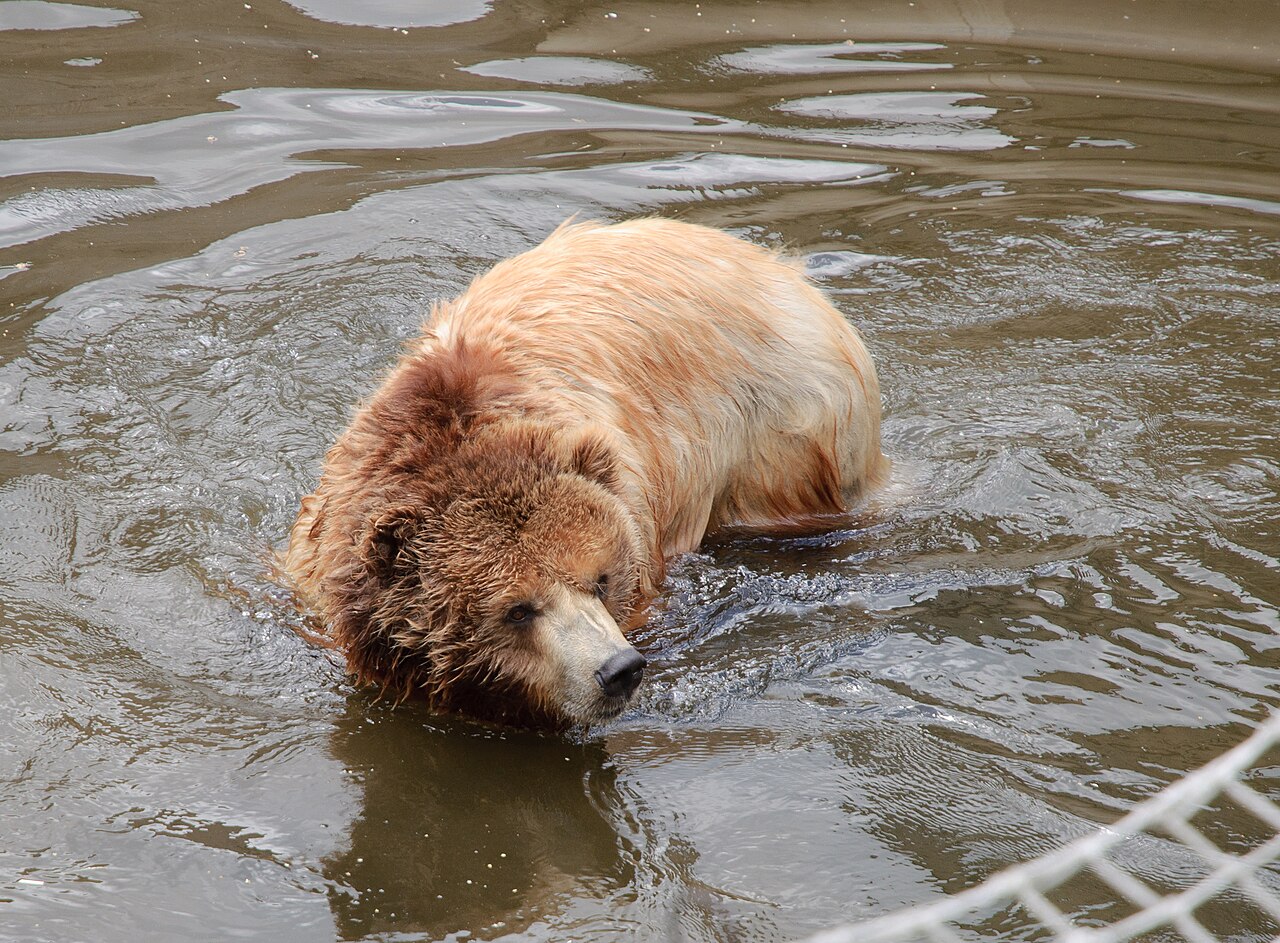
Brown bears (Ursus arctos) and American black bears (Ursus americanus) both den for the winter across most of their range, males included, for three to seven months. They lose 15 to 30 percent of their body mass and come out lean in spring. Polar bears reverse the pattern, arriving at spring in the best condition of their year.
All three share the same tricks inside the den: recycled urea to preserve muscle, no waste elimination, and minimal bone loss despite months without weight bearing. If you have ever wondered what a group of bears is called, the word is a sloth or a sleuth, which fits the dormant ones better than it fits a polar bear.
Related reading: do bears hibernate.
Frequently Asked Questions
Can you wake up a hibernating bear?
Yes, and it takes very little. Bears in winter dormancy keep their body temperature within a few degrees of normal, so a denned bear can rouse and defend itself within seconds. That is why wildlife agencies treat any den approach as hazardous, and why denning bears sometimes abandon a site after human disturbance.
Why can’t we eat polar bear meat?
The liver is the real danger. Polar bear liver carries vitamin A at concentrations high enough to cause acute hypervitaminosis A, producing headache, vomiting, peeling skin, and in severe cases death. Muscle meat is eaten by Arctic communities but must be cooked thoroughly, because polar bears frequently carry Trichinella parasites.
Has a grizzly ever mated with a polar bear?
Yes. A hybrid shot on Banks Island in 2006 was confirmed by DNA, and several more have turned up since, including a second-generation animal in 2010. The informal names are grolar bear and pizzly bear. Hybrids are fertile, and warming ranges are bringing the two species into contact more often.
What is the lifespan of a polar bear?
Wild polar bears typically live 15 to 18 years, though individuals reaching 25 to 30 are documented. Cub mortality is the bottleneck, with roughly half not surviving their first year. In zoos, with steady food and veterinary care, polar bears commonly pass 30 and the oldest recorded reached 43.
What state has zero bears?
Hawaii is the only US state with no wild bear population of any kind. Delaware and Rhode Island have no resident breeding population either, though wandering black bears show up in both. Chipmunks, by contrast, occur across almost the entire continental United States.