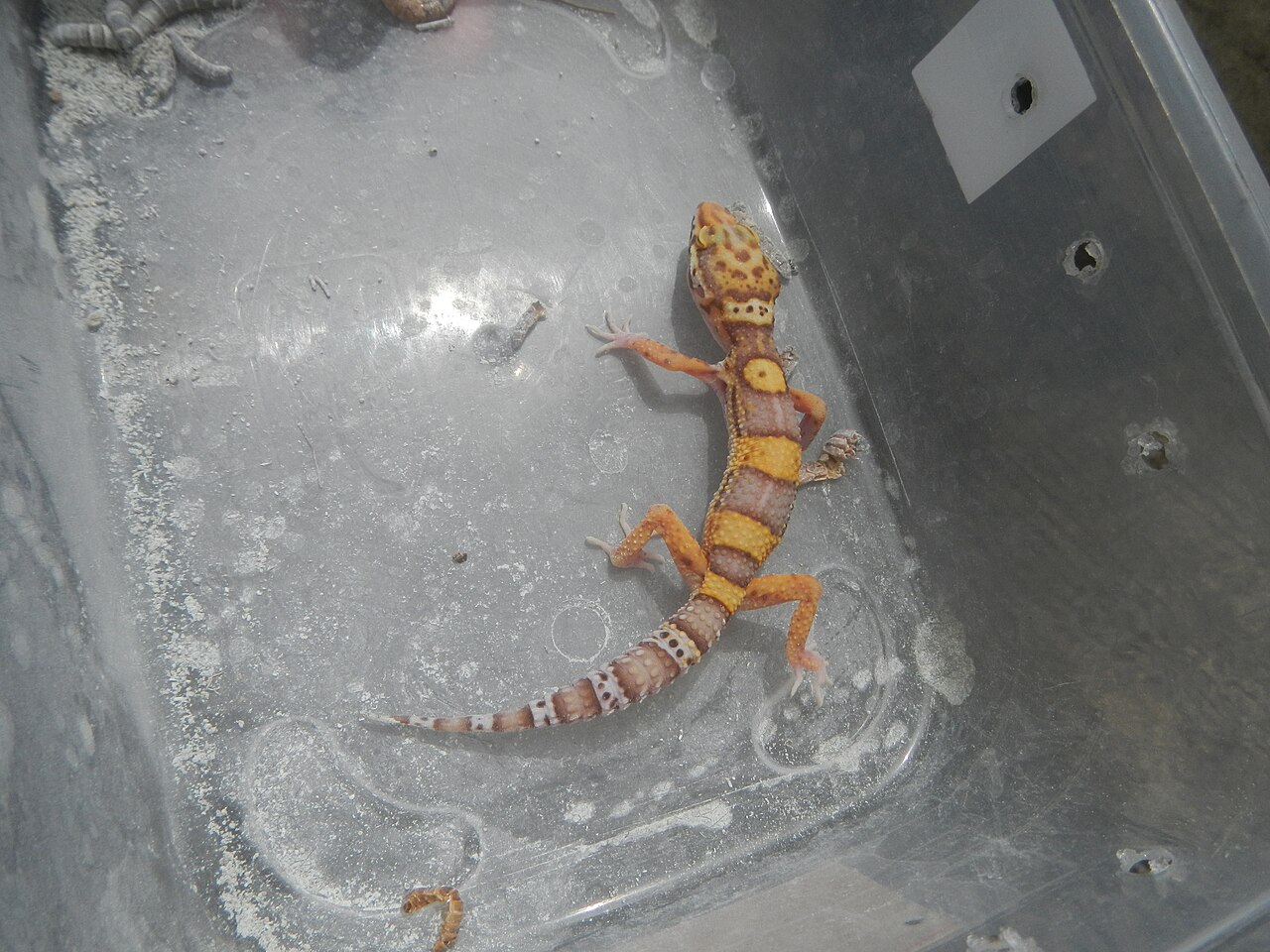
Leopard Gecko Lifespan: 15 to 20 Years, and What Cuts It Short
The average leopard gecko lifespan in captivity is 15 to 20 years, and males routinely outlive females by several years. That makes Eublepharis macularius one of the longest lived small reptiles a beginner is likely to buy, on par with a parrot in commitment terms and far beyond the two or three years most people expect from a pet that fits in one hand.
Wild leopard geckos do considerably worse. Estimates from field observations in the dry grasslands and rocky foothills of Afghanistan, Pakistan, and northwestern India put survival at roughly 6 to 8 years, because predators, drought, and parasite load take animals long before old age does. Captivity removes almost all of that, which is why the ceiling is so much higher indoors than out.
Leopard geckos live 15 to 20 years in captivity, with males often reaching 20 and females averaging 10 to 15 because egg laying drains calcium reserves. Wild animals survive about 6 to 8 years. The verified record is a male named Pumpkin who reached 27 years and 10 months.
| Group | Typical lifespan | Main limiting factor |
|---|---|---|
| Captive male | 15 to 22 years | Obesity, impaction, poor temperatures |
| Captive female (not bred) | 15 to 20 years | Occasional infertile egg laying |
| Captive female (bred yearly) | 10 to 15 years | Calcium depletion, egg binding |
| Wild leopard gecko | 6 to 8 years | Predation, drought, parasites |
| Hatchling to adult | 10 to 12 months to reach full size | Growth rate depends on feeding |
| Verified record | 27 years 10 months | Single male, captive bred |
How long do leopard geckos live in captivity?
Fifteen to twenty years is the honest working number, and a well kept animal that clears its first year has a good chance of reaching the top of that range. The first twelve months carry most of the risk: hatchlings are vulnerable to dehydration, impaction, and failure to thrive, and a gecko that establishes a steady feeding routine by six months rarely dies young.
Breeder surveys and long running keeper records cluster tightly around this range. Reports of geckos dying at 5 or 6 years almost always trace back to one of three husbandry failures rather than genetics, and those failures are documented well enough that they are avoidable. Our baby leopard gecko guide covers the first year in detail, since that is where most lifespan is won or lost.
Leopard gecko lifespan in the wild

Wild leopard geckos average about 6 to 8 years. They occupy rocky, arid terrain across Afghanistan, Pakistan, Iran, and India, sheltering in burrows and crevices through the heat of the day and hunting insects at dusk. Fat stored in the tail carries them through cool season dormancy, which is a survival mechanism and not a comfort.
Snakes, foxes, and large birds take a steady share of the population, and a gecko that drops its tail to escape loses its energy reserve at the same time. Drought years reduce insect numbers and hit juveniles hardest. The gap between 7 wild years and 18 captive years is not a difference in the animal, it is a difference in the risks it faces, which mirrors the pattern in our bird lifespan comparisons.
Do males and females live the same length of time?

No. Female leopard gecko lifespan in captivity averages 10 to 15 years when the animal is bred regularly, while males commonly reach 18 to 22. The difference comes from reproduction. A breeding female produces clutches of two eggs every 15 to 22 days across a season, and each clutch pulls calcium and fat from her body.
Females that are never bred close most of that gap and live nearly as long as males. The one complication is infertile egg laying, which happens in isolated females as well and still costs calcium. Keeping a constant dish of calcium powder available and providing a moist lay box for any adult female removes most of the risk of egg binding, which is a leading cause of death in otherwise healthy breeding animals.
Next question: Leopard Gecko Habitat: The Tank Setup That Actually Works
Are leopard geckos hard to keep alive?
They are not hard, but they are unforgiving of three specific mistakes. Wrong temperatures, loose particulate substrate, and a diet of nothing but mealworms account for the large majority of premature deaths, and all three are decisions made on the first day rather than accidents that happen later.
Leopard geckos digest food using belly heat, so a warm side surface of 88 to 92 F (31 to 33 C) over an under tank heater or a thermostat controlled heat mat is not optional. Without it, food sits undigested and the animal slowly declines while still appearing to eat. Set up the leopard gecko enclosure with a proper gradient from the start, and choose a leopard gecko substrate that cannot be swallowed.
What shortens a leopard gecko’s lifespan the most?
Metabolic bone disease is the single biggest killer in home collections. It develops when calcium and vitamin D3 supplementation is skipped or inconsistent, and by the time the jaw softens and the legs bow, the damage is permanent. Dusting feeder insects at nearly every meal and leaving a small dish of plain calcium in the enclosure prevents it outright.
Impaction ranks second. Geckos kept on sand, calcium sand, or fine gravel ingest particles while striking at prey, and a blocked gut in a 60 gram animal is often fatal before it is noticed. Obesity is third: a gecko fed waxworms as a staple develops fatty liver disease, which shortens life by years without ever producing an obvious symptom. Veterinary case reports on all three are indexed through the National Center for Biotechnology Information.
Does morph or price predict how long a gecko lives?
Mostly no, with one important exception. Standard morphs, including the popular albino leopard gecko lines, live the same length of time as wild type animals when husbandry is equal. Color genetics do not shorten life on their own.
The exception is the enigma syndrome associated with the enigma morph and some white and yellow lines, a neurological condition causing head tilting, circling, and star gazing. It does not always shorten life, but affected animals struggle to hunt and may need assisted feeding. Price tells you little either: a 30 dollar pet store gecko and a 300 dollar designer animal from our leopard gecko morphs rundown face the same husbandry risks.
What does an aging leopard gecko look like?
Leopard geckos age slowly and visibly. Past roughly 12 years, colors fade and the pattern washes out, the tail becomes less plump, shedding takes longer, and appetite drops from several meals a week to one or two. Older animals also spend more time in the cool hide and hunt less actively, so slower feeder insects are easier for them to catch.
Senior care is mostly about lowering effort. Keep the warm side stable, offer smaller and softer prey such as black soldier fly larvae, check the toes for retained shed after every cycle, and weigh the gecko monthly so that a slow decline shows up as a number instead of a surprise. A gecko that holds weight at 18 years is doing well by any measure, and the same husbandry logic carries over to the crested gecko lifespan.
Frequently Asked Questions
What is the leopard gecko lifespan record?
The most widely cited record belongs to a captive bred male named Pumpkin, who lived 27 years and 10 months. Several breeders report animals in their mid twenties as well. These are exceptional cases rather than targets, but they show the biological ceiling is well above the 15 to 20 year average.
Is it better to have 1 or 2 leopard geckos?
One. Leopard geckos are solitary and do not benefit from company. Two males will fight, and a larger gecko housed with a smaller one often monopolizes the warm hide and the food, leaving the other to slowly lose weight. Single housing removes a real and common threat to lifespan.
Do leopard geckos like to be held, or do they like to be left alone?
They tolerate handling rather than enjoy it. Most adults accept short sessions of 5 to 10 minutes a few times a week once they are used to a keeper, and many will walk calmly across a hand. Outside of those sessions they prefer to be left alone in a dark, warm hide.
Should I leave my leopard gecko’s light on at night?
No. Leopard geckos are crepuscular and need a clear day and night cycle, so all visible light should go off at night. If the room drops below 65 F (18 C), use a thermostat controlled ceramic heat emitter or heat mat, which produces warmth without light.
Do leopard gecko bites hurt, and how much does a leopard gecko cost?
A bite from an adult feels like a firm pinch and rarely breaks skin, and bites are uncommon outside of feeding mistakes. Prices run about 30 to 60 dollars for a standard animal and 150 to 1,000 dollars or more for designer morphs, with the enclosure usually costing more than the gecko.