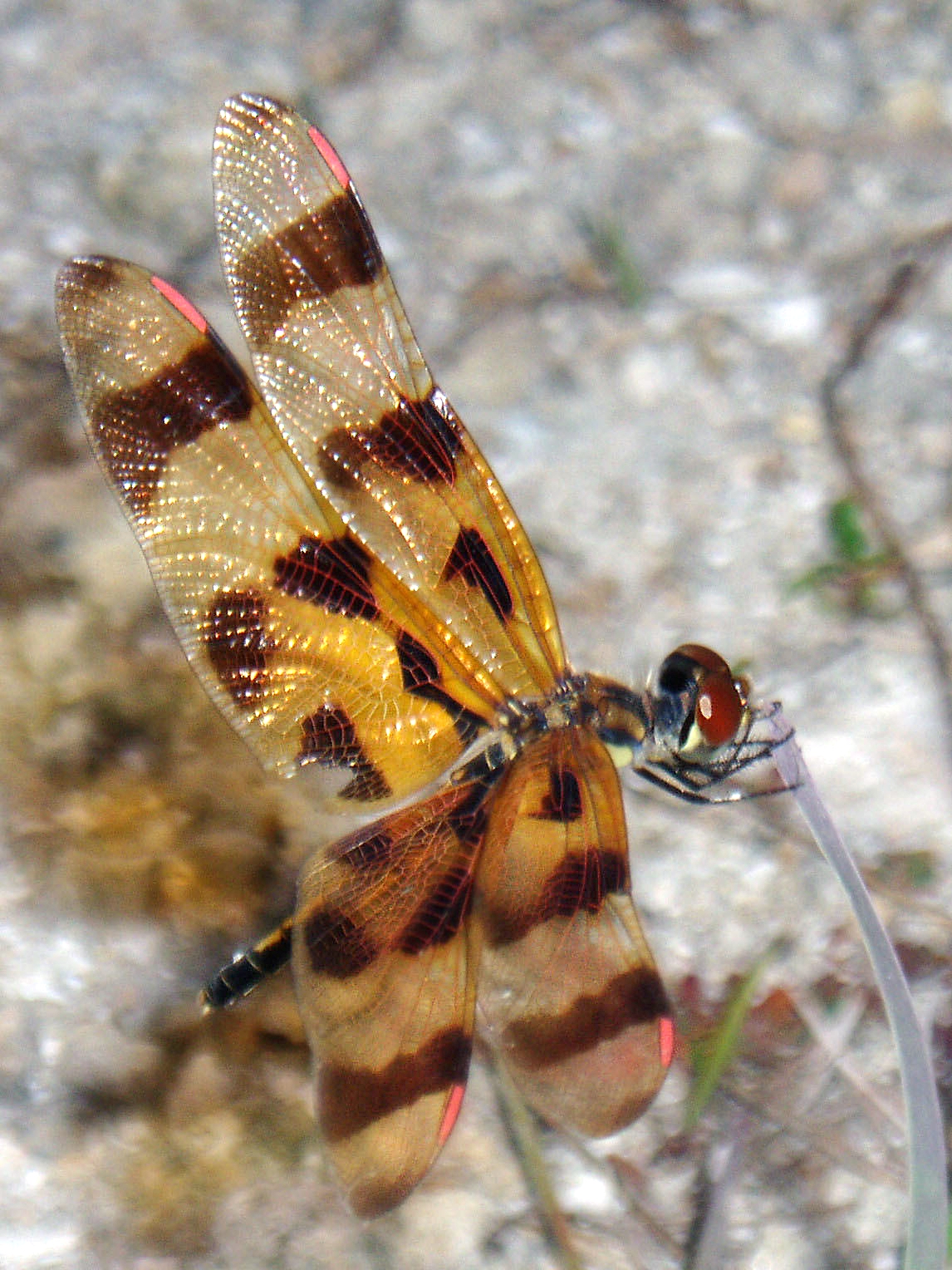
Yellow Dragonfly ID: Halloween Pennant and Lookalikes
The Halloween Pennant is the yellow dragonfly most people in the eastern US notice first, about 1.5 in long and often mistaken for a butterfly.
Dragonfly symbolism links the insect to change and renewal in many Native American and Japanese traditions.
A yellow dragonfly in the US with amber-yellow wings crossed by dark brown bands is a Halloween Pennant (Celithemis eponina). If the wings are clear and the body is yellow, look at clubtails, female skimmers, and young meadowhawks. Check the wings first, since body color changes with age and sex.
How to Identify a Yellow Dragonfly by Its Field Marks
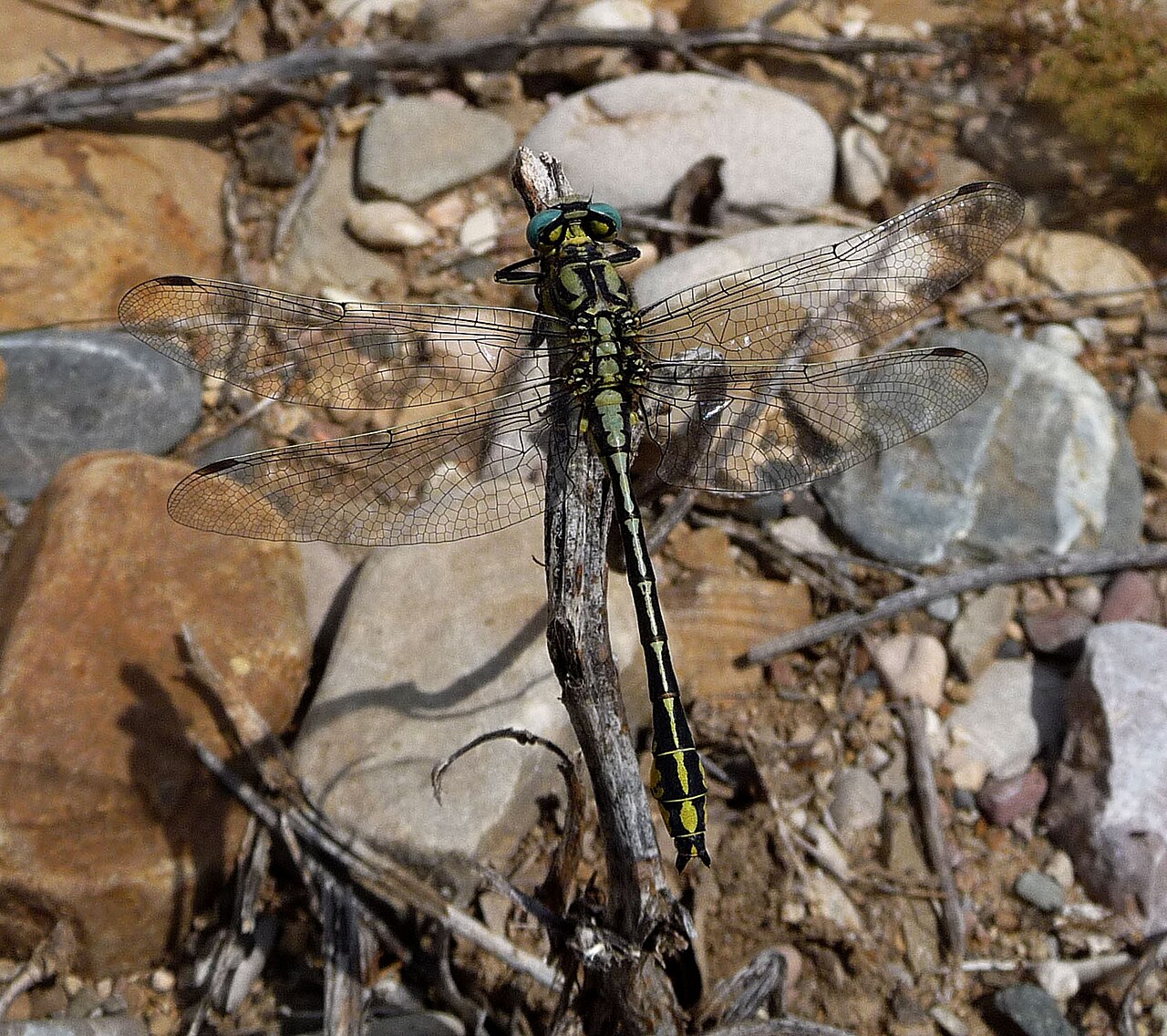
Start with the wings, then the body, then the behavior. Yellow dragonflies in the US are most often skimmers (Libellulidae) or clubtails (Gomphidae), though some darners and other families show yellow too. Skimmers are the pond regulars that return to the same perch again and again. Clubtails have eyes that sit clearly apart on the head for a dragonfly and typically a tail that swells near the tip.
A yellow body with clear wings points to a clubtail or a female skimmer. Many skimmer females and young males wear yellow before they gain their adult color. Meadowhawks (Sympetrum) start out yellow, and the males turn red as they mature. Red dragonflies at the same pond in late summer are frequently those same meadowhawks a few weeks older.
Perch habit narrows it further. Pennants and many skimmers sit on the tip of a tall stem. Clubtails land flat on the ground, on rocks, or on broad leaves. They fly mainly in late spring and early summer along rivers, streams, and lake shores rather than small ponds.
Halloween Pennant, the Yellow Dragonfly With Banded Wings
The Halloween Pennant (Celithemis eponina) is the yellow dragonfly with dark bands across its wings. It is a skimmer in the pennant genus Celithemis. The body is dark brown with yellow stripes on the thorax.
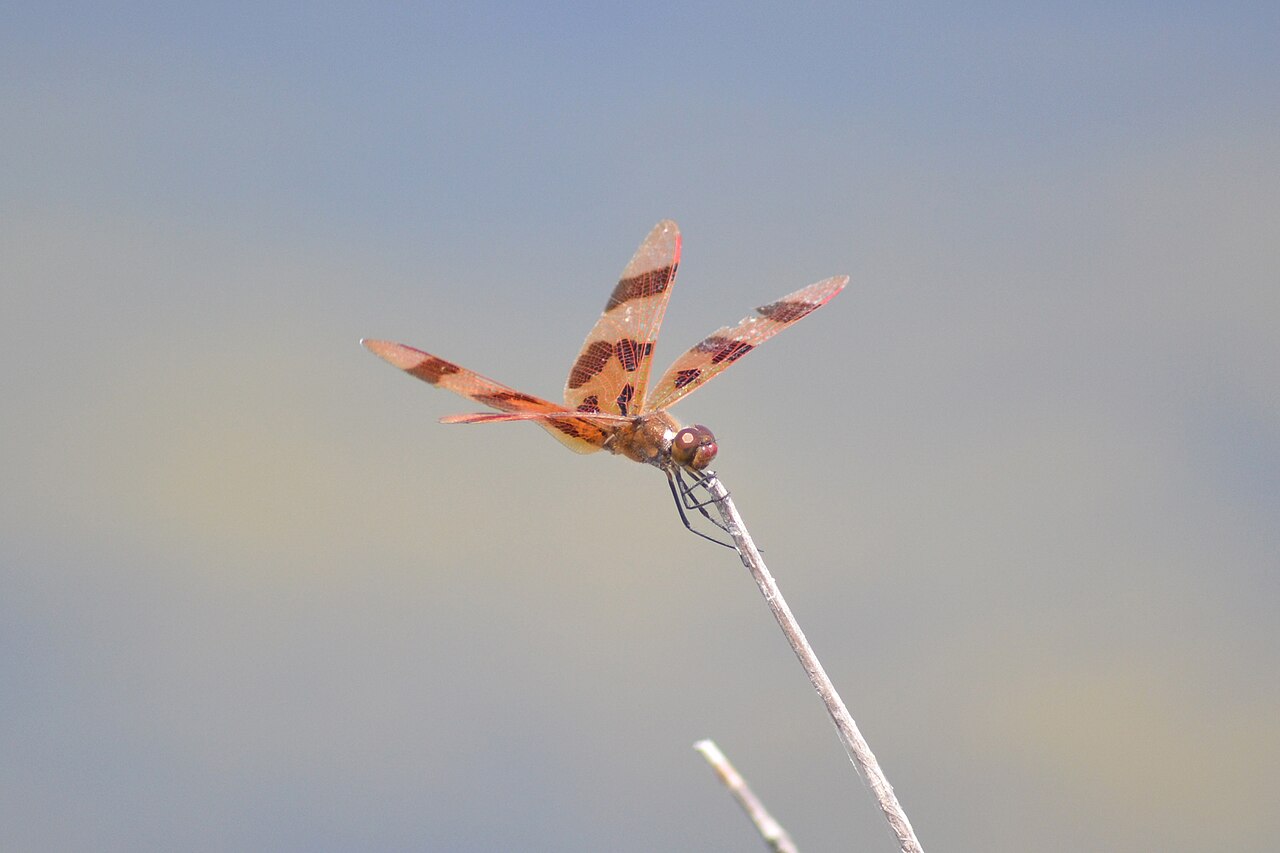
Watch how it perches. A Halloween Pennant clings to the very tip of a tall stem with its wings tilted and sways in the breeze. That habit gave the pennants their common name, since the swaying perch looks like a small flag. The UW-Milwaukee Field Station describes this flag-like perch in its notes on the species.
Its flight is fluttery and loose, so at first glance it passes for a butterfly. Yellow butterflies share the same weedy edges, but many of them fold their wings upright at rest. Look for the Halloween Pennant at weedy ponds in the eastern US during summer.
Two other skimmers carry amber or gold on the wings. The Eastern Amberwing (Perithemis tenera) is one of the smallest dragonflies in North America, about 1 in long, and the male has fully amber wings. The female’s wings are spotted with brown. Males guard a perch over floating plants, and in flight their striped abdomen gives them the look of a small wasp. The Golden-winged Skimmer (Libellula auripennis) is larger, with an orange-gold body and golden veins along the leading edge of each wing. It patrols open ponds and marshes in the Southeast.
| Species (scientific name) | Wings at rest | Yellow body marks | Typical habitat |
|---|---|---|---|
| Halloween Pennant (Celithemis eponina) | Spread and tilted, amber-yellow with dark bands | Yellow and brown abdomen | Weedy ponds |
| Eastern Amberwing (Perithemis tenera) | Spread, amber in males | Small, amber and brown body | Ponds with floating plants |
| Golden-winged Skimmer (Libellula auripennis) | Spread, golden leading edge | Orange-gold body | Open ponds and marshes |
| Yellow-sided Skimmer (Libellula flavida) | Spread, mostly clear | Yellow stripes on the sides | Seeps and boggy pond edges |
| Young meadowhawk (Sympetrum) | Spread, clear | Plain yellow, males redden later | Pond margins and fields |
| Clubtail (Gomphidae) | Spread, clear | Yellow and black stripes, swollen tail tip | Streams and lake shores |
| Spiketail (Cordulegaster) | Spread, clear | Black with yellow rings, the US relative of the European Golden-ringed Dragonfly | Small forest streams |
| Citrine Forktail (Ischnura hastata) | Folded over the back | Bright yellow tail on a tiny body | Grassy pond edges |
Yellow Dragonfly or Damselfly? A Quick Field Test
Look at the wings at rest. Most dragonflies hold their wings spread flat like an airplane, and most damselflies fold them together over the back. Spreadwing damselflies hold them half open, but their wings are narrow at the base and their eyes still sit far apart.
Then check the eyes. Most dragonfly eyes meet or nearly meet on top of the head, while damselfly eyes sit far apart like a hammer. Clubtails are the exception among dragonflies, with eyes set apart, but they still rest with wings spread flat. Both groups belong to the order Odonata, where dragonflies form the suborder Anisoptera and damselflies the Zygoptera.
Yellow damselflies exist too. The Citrine Forktail (Ischnura hastata) is a small, slender one with a bright yellow tail. Blue dragonflies get mixed up with bluet damselflies, and the same wing test separates them.
Neither group is a threat to people. Both hunt small flying insects, including mosquitoes and gnats. Baby dragonflies live underwater as nymphs and hunt there before they emerge.
Frequently Asked Questions
Will a dragonfly let you touch it?
No, not willingly. A dragonfly flies off when a hand gets close, though a calm one on a cool morning may stay put. Dragonflies cannot sting. A large one may nip if you hold it, and the nip typically does not break the skin.
Is the Halloween Pennant rare?
No. It is common from southern Ontario to Florida and west to Texas, flying from about May to September in the north and longer in the Deep South.
What is the significance of a yellow dragonfly?
In Japan the dragonfly is the kachimushi, the victory insect, a samurai emblem of courage, and the same reading covers yellow ones. In Native American traditions of the Southwest, dragonflies signal water and renewal.
Sources
- BugGuide, Halloween Pennant species page
- BugGuide, Celithemis (Pennants) genus page
- UW-Milwaukee Field Station, Halloween Pennant notes