Spiritual Meaning of Seeing a Wolf: What Your Sighting Says
The spiritual meaning of seeing a wolf is mostly positive. It marks a moment to trust your instincts and protect your people. A wolf on the road, at your fence or in a dream each points somewhere different.
Seeing a wolf is a call to trust your instincts, guard what matters and trust loyal allies. It is a good sign in most readings, though an alarming one warns of a false friend. A wolf crossing the road points to a decision, a wolf near home to protection, a black wolf to shadow work.
What Does a Wolf Symbolize?
A wolf symbolizes instinct, loyalty, freedom and guidance. The gray wolf (Canis lupus) has keen senses of smell and hearing, which is why it stands for early awareness. That sharp awareness is the first thing a wolf brings to mind.
Loyalty comes next. Wolves live and hunt in family packs, and each member has a role. The pack stands for commitment that holds when life gets hard. Freedom balances that loyalty. A wolf ranges wide and answers to no fence, a counterweight to routine and to a life run on autopilot.
The fourth theme is the teacher. In this role the wolf shows you the next step rather than the whole road. Wolf symbolism in Ojibwe teaching makes Ma’iingan, the wolf, the brother of the first man, who walked the earth beside him.
The Spiritual Meaning of Seeing a Wolf
Seeing a wolf points to the question you are already carrying. It is a mirror for whatever sits at the front of your mind. Ask what you were thinking about just before the wolf appeared.
A sighting during a pending decision points straight at that decision. If you are weighing a new job, a move or a hard conversation, the wolf asks you to trust the instinct you keep overriding. Facts still matter. The wolf simply reminds you that your gut has already gathered some of them.
Repeated sightings in a short span carry an insistent message. Three wolf images in one week, a real animal, a documentary and a dream, belong together. Treat them as one message that keeps knocking. The repetition says the lesson is unfinished, and the wolf keeps showing up until you act. Write down where each one appeared, because the places together sketch the shape of the message.
Where You See a Wolf: Road, Wild, Home, Night, Dream
Where you see a wolf shapes the message as much as the wolf itself. A road, a trail, a yard, the night and a dream each frame the encounter differently. Start with the place, then add what the animal did.
Crossing your path or road.A wolf crossing your path marks a crossroads choice. The animal moves from one side to the other without hesitating. That is the lesson. Stop waiting for perfect conditions and make the move you have been circling.
In the wild or on a trail.A wolf in the wild calls you back to instinct. Out there it owns nothing and carries nothing extra. Simplify. Drop one obligation that drains you and see how much clearer the path looks.
Near your home or yard.A wolf near your home is about protection. It asks you to look after your family and to check who crosses your boundaries. Notice who takes more than they give.
At night.A wolf seen at night brings intuition and hidden knowledge to the surface. Darkness strips away distraction. A hunch you dismissed during the day deserves a second look.
In a dream.Wolf dreams turn on what the wolf did. A wolf chasing you points to a pressure you keep avoiding, a calm wolf beside you to an inner guide.
What the wolf did adds the final layer.
| Wolf behavior | Spiritual reading | Question to ask yourself |
|---|---|---|
| Staring at you | You are seen clearly, and a truth wants your attention | What am I avoiding looking at? |
| Walking away calmly | The situation resolves without force | Where can I let go of control? |
| Running off | A window is brief, or a fear is smaller than it looks | What am I chasing or fleeing? |
| Following you | A lesson stays with you until you learn it | Which pattern keeps repeating? |
| Looking back at you | An invitation to follow your instinct into new ground | What step am I ready to take? |
| Resting | Recovery comes before the next effort | Where do I need to slow down? |
| Hunting | Focus and patience bring results | What goal needs my full attention? |
Lone Wolf or a Pack, and What the Number Means
The number of wolves tells you whether the message is about you alone or about the people around you. One wolf speaks to independence. It points to a solo path you are ready to walk. The shadow side is isolation, so ask whether your independence still serves you or has turned into a wall.
Two wolves stand for partnership. They point to a committed bond, a business partner or an ally you need right now. If you have been carrying a project alone, two wolves say it is time to ask for help.
A pack means family, team and belonging. It favors cooperation over solo effort and reminds you that strength grows in numbers. Pups in sight add a layer of new beginnings. They call you to nurture something young, a child, a fresh idea or a plan still finding its legs.
Black, White and Gray Wolf Meanings
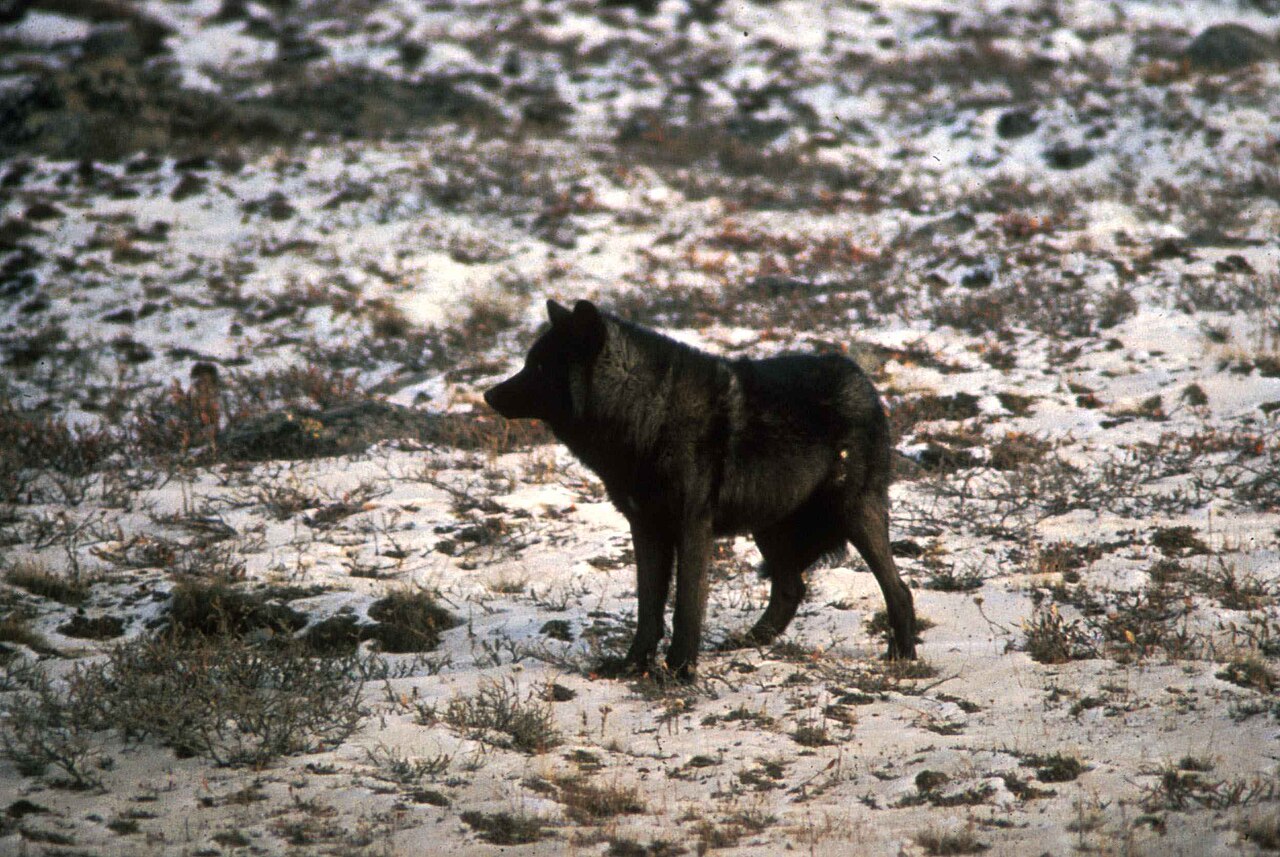
Coat color sharpens the meaning of a sighting. A black wolf points to shadow work and mystery. It guards what is still unknown, including parts of yourself you have not faced yet. Seeing one asks you to look inward rather than run.
A white wolf stands for purity and clarity. It arrives as a spiritual guide during transition, a move, a loss or a change of direction. The pale coat signals that the way forward is cleaner than it feels right now.
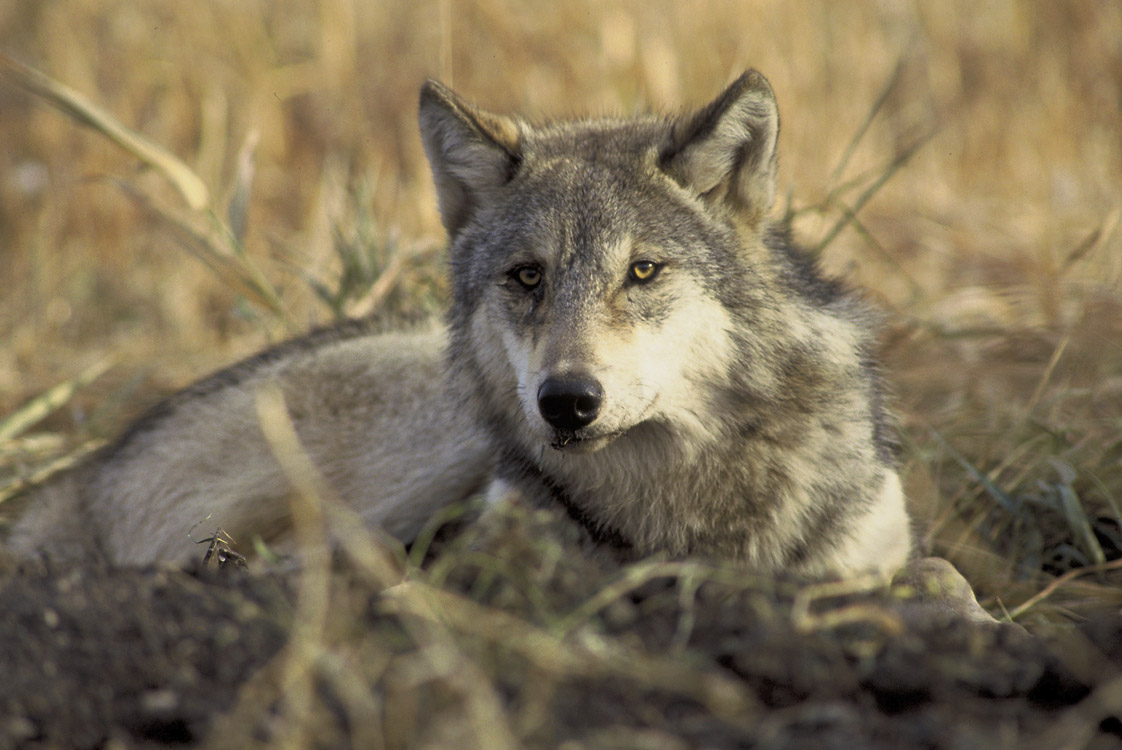
The gray wolf stands for balance and wisdom, the middle way between extremes.
Wolf as Spirit Animal, Totem and Power Animal
The wolf works as spirit animal, totem or power animal, and each role lasts a different length of time. As a spirit animal it guides you through one phase of life. It keeps reappearing in sightings, images and dreams until that phase ends.
As a totem the wolf marks a lifelong set of traits. The word totem comes from the Ojibwe doodem, a clan sign passed down through families, and the Cherokee count the Wolf Clan, Aniwaya, among their seven clans. People with a wolf totem are loyal, protective and team-minded, and they defend their circle without being asked.
As a power animal the wolf is energy you call on. The term comes from core shamanism, which Michael Harner described in The Way of the Shaman (1980). Picture the wolf before a hard conversation or a conflict and borrow its courage.
Some signs point to the wolf as yours. You feel a strong pull toward wolves, your gut feelings are sharp, and you need both deep belonging and room to roam. A wolf tattoo is how many people mark that bond for good.
Is Seeing a Wolf Good or Bad? Positive and Negative Signs
Seeing a wolf is a good sign far more than a bad one, but it carries a warning side too. On the positive side the wolf brings protection, loyal allies and renewed self-confidence. It arrives when you need to stand taller.
The warning concerns other people. A wolf can point to a predatory person or to deceit close to you. Think of the person who flatters you while working against you. The shadow side lives inside you. Isolation, aggression and trusting no one are the darker wolf traits, and a sighting asks whether any of them have crept into your life.
Your body tells the two apart. If you felt calm during the sighting, even awe, take it as a positive sign. If you felt alarm, a knot in the stomach, treat it as a warning. Then look closely at the people and choices around you.
Wolves in Myth: Rome’s She-Wolf and Norse Fenrir
Wolves in myth play two roles, nurturer and destroyer, and Rome and Scandinavia show both. In Roman tradition a she-wolf nursed the twins Romulus and Remus, the founders of the city. Livy tells the story in Book 1 of his history of Rome.
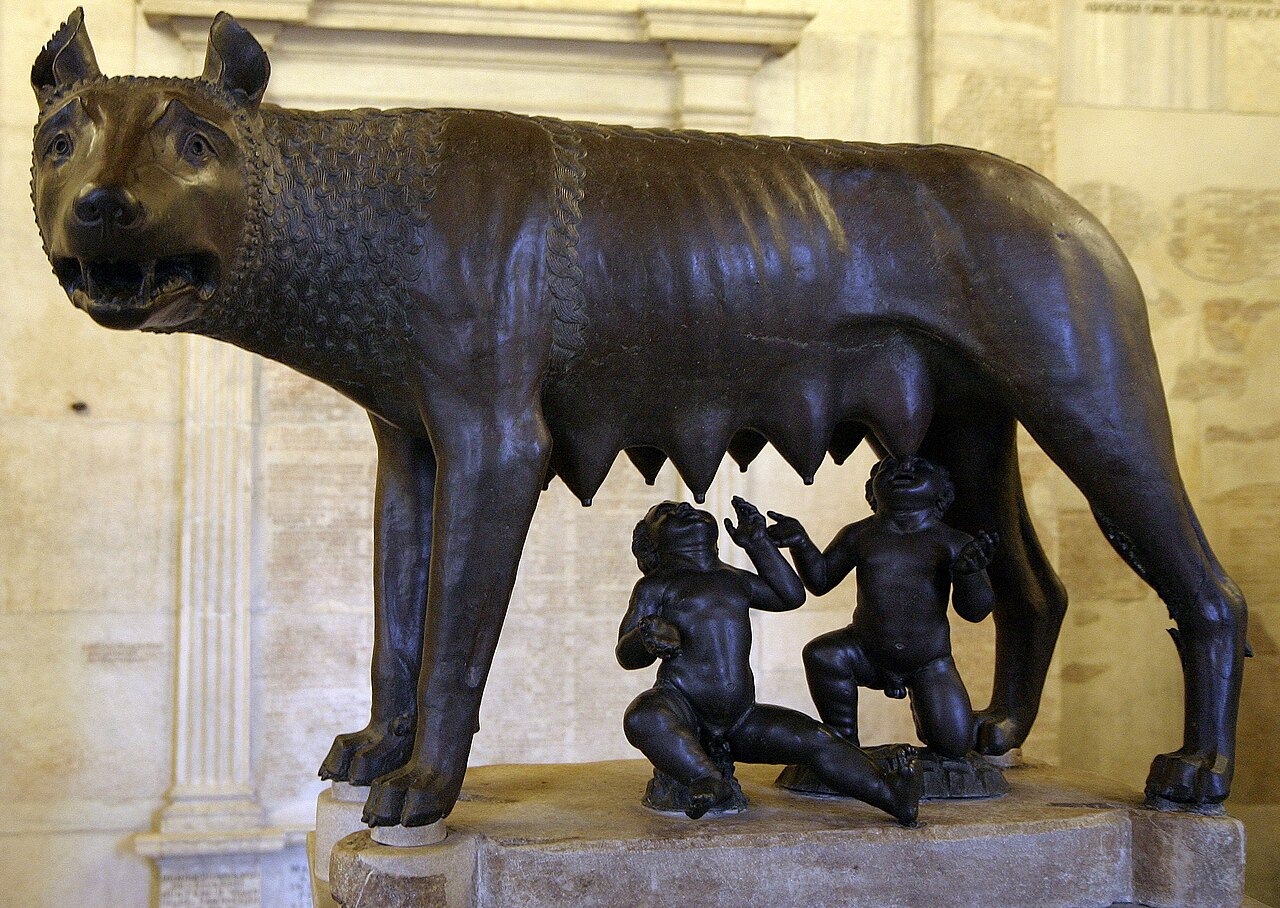
The Capitoline Wolf, a bronze statue in Rome, keeps that founding image alive. The wolf there is mother and protector. Norse myth gives the opposite picture. Fenrir, a giant wolf, grows so dangerous that the gods bind him, a tale told in the Prose Edda section called Gylfaginning. Odin keeps two wolves of his own, Geri and Freki, who stand for companionship and hunger.
For a sighting, the lesson is that both sides live in one animal. The wolf can feed you or consume you. Ask which side the encounter brings forward, the care you need or the appetite you should watch.
Wolf Meaning in the Bible
The wolf in the Bible mostly stands for danger to the faithful, and in the prophecies of Isaiah 11:6 and 65:25 it appears at peace with the lamb. Matthew 7:15 warns of false prophets who come in sheep’s clothing but inwardly are ravening wolves. That verse gave English the phrase a wolf in sheep’s clothing.
Matthew 10:16 sends the disciples out as sheep in the midst of wolves and tells them to be wise as serpents and harmless as doves. John 10:12 describes a hireling who flees when the wolf comes, and the wolf scatters the sheep. In both passages the wolf tests who stands firm.
Isaiah turns the image around. The wolf dwells with the lamb, and the two feed together, a picture of a world at peace. For a Christian, a sighting is a call to discernment, not doom. Watch for the false voice, protect the vulnerable and hold on to the promise of peace.
Wolf Meaning in Tarot and Moon Lore
In tarot the wolf appears on The Moon card, where it stands for wild instinct. The Rider-Waite deck shows a wolf and a dog howling at the moon, with a crayfish rising from a pool between them.
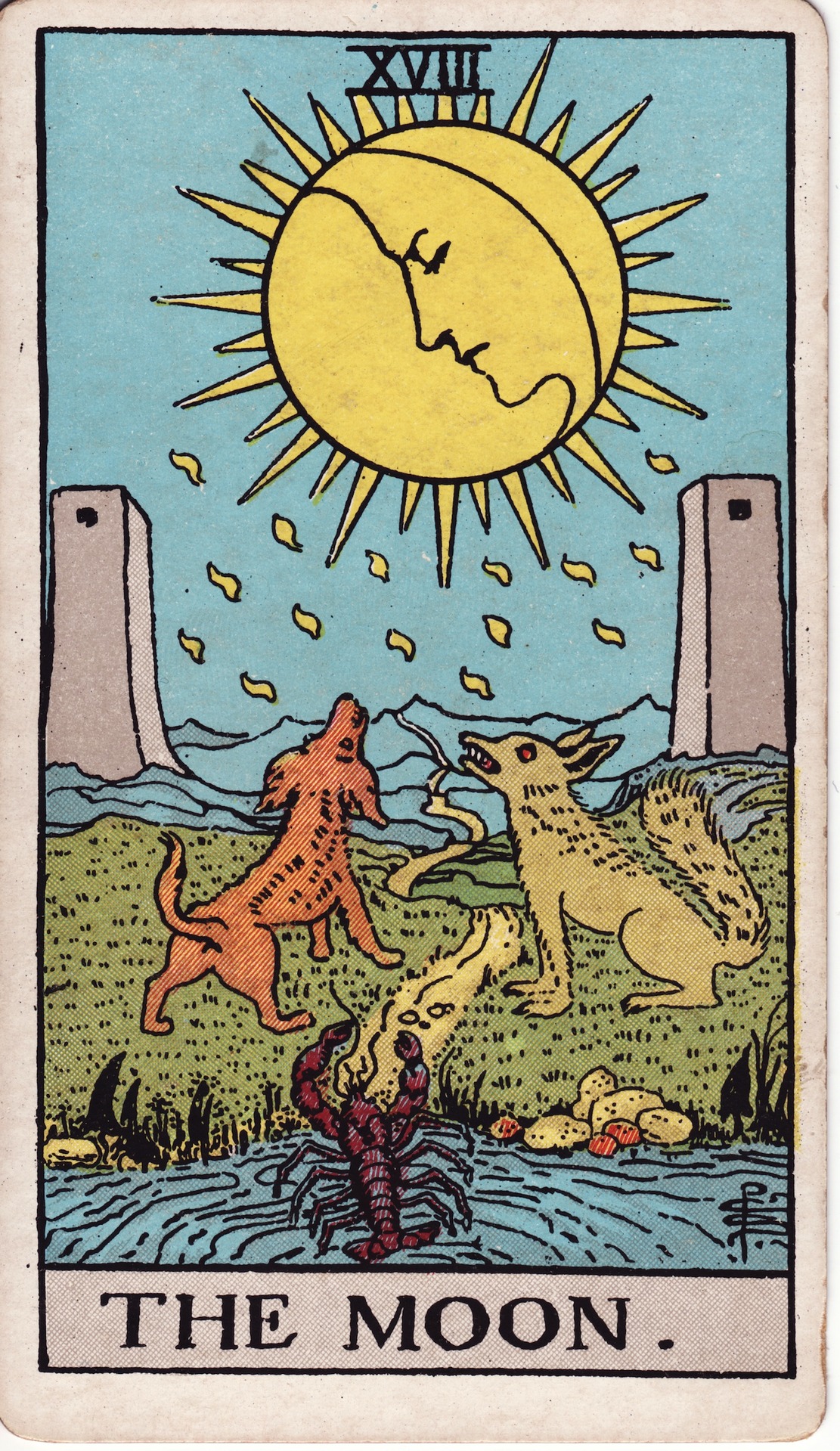
The two animals form a pair. The wolf is wild instinct, and the dog is the tamed mind. A path runs between them toward two towers, and the card asks you to honor both on the way. Its message covers illusion, intuition and finding your way through uncertainty when the path is lit only by moonlight.
Moon lore ties wolves to the night sky, but the biology tells a different story. Wolves howl to reach their pack, not to call to the moon. The image still works as a symbol. A wolf howling under a full moon stands for a voice calling out to find its own people.
Was It Really a Wolf? Wolf vs. Coyote
Check the animal before you read the message, because a coyote or a large dog is easy to mistake for a wolf at a distance. Compared with a coyote, a wolf is larger, with a broad snout and rounded ears. Its whole build looks heavier.
A coyote (Canis latrans), by contrast, is slimmer, with pointed ears and a narrow muzzle. The coyote vs wolf difference is clearest in size. An adult Yellowstone wolf weighs about 90 to 115 lb, a coyote about 25 to 35 lb, according to the National Park Service. A quick photo helps you compare later.
The meaning changes with the animal. Coyote carries the trickster, adaptability and humor, a lighter message than the wolf. Large dogs cause mix-ups too, so check ears, gait and tail before you decide what you saw.
What to Do After Seeing a Wolf
After seeing a wolf, take a moment for the spiritual side and then handle the practical one. Ask which instinct or boundary you have ignored lately. The answer is the message.
A real wolf is a wild animal. Keep your distance, and never approach or feed it. If a wolf hangs around homes, report it to your state wildlife agency. Wolves can carry rabies, which is almost always transmitted through a bite, according to the USDA APHIS rabies program; see a doctor the same day after any bite.
Frequently Asked Questions
What is a black wolf called?
A black wolf is a melanistic gray wolf (Canis lupus), not a separate species. Its dark coat comes from a gene variant that entered wolves through ancient breeding with domestic dogs, as a 2009 study in Science showed.
How rare is it to see a black wolf?
It depends on the region. About half of Yellowstone’s wolves are black, according to the National Park Service, while black wolves are rare in Europe and Asia.
What month is a wolf spirit animal?
January comes closest. The Old Farmer’s Almanac calls January’s full moon the Wolf Moon. In Sun Bear’s Medicine Wheel astrology (1980), the wolf is the sign for people born February 19 to March 20. That ties the wolf spirit animal to midwinter, a season of endurance, rest and quiet planning.
What demon is represented by a wolf?
Scripture names no wolf demon. The 17th century grimoire Ars Goetia describes Marchosias as a she-wolf with griffin wings and Amon as a wolf with a serpent’s tail. In the Bible the wolf stays a symbol of false teachers and danger to the flock, not a named demon.
What is a wolf’s worst enemy?
Other wolves. In Yellowstone, fights with rival packs are the leading natural cause of death for wolves, according to the National Park Service. Outside protected areas, people cause most wolf deaths. Spiritually that makes the wolf’s real danger an inner rival, not an outside predator.
What is the meaning of the word “wolves”?
Wolves is the plural of wolf, the word for the wild canine Canis lupus. The word comes from Old English wulf. As a verb, to wolf means to eat fast and greedily, as in wolfing down a meal.
Sources
- USDA APHIS, Rabies (National Wildlife Programs)
- National Park Service, Yellowstone Wolf Project
- National Park Service, Yellowstone Coyotes
- The Old Farmer’s Almanac, Full Moon for January: The Wolf Moon
- Anderson et al., Molecular and Evolutionary History of Melanism in North American Gray Wolves, Science (2009)