Mediterranean House Gecko
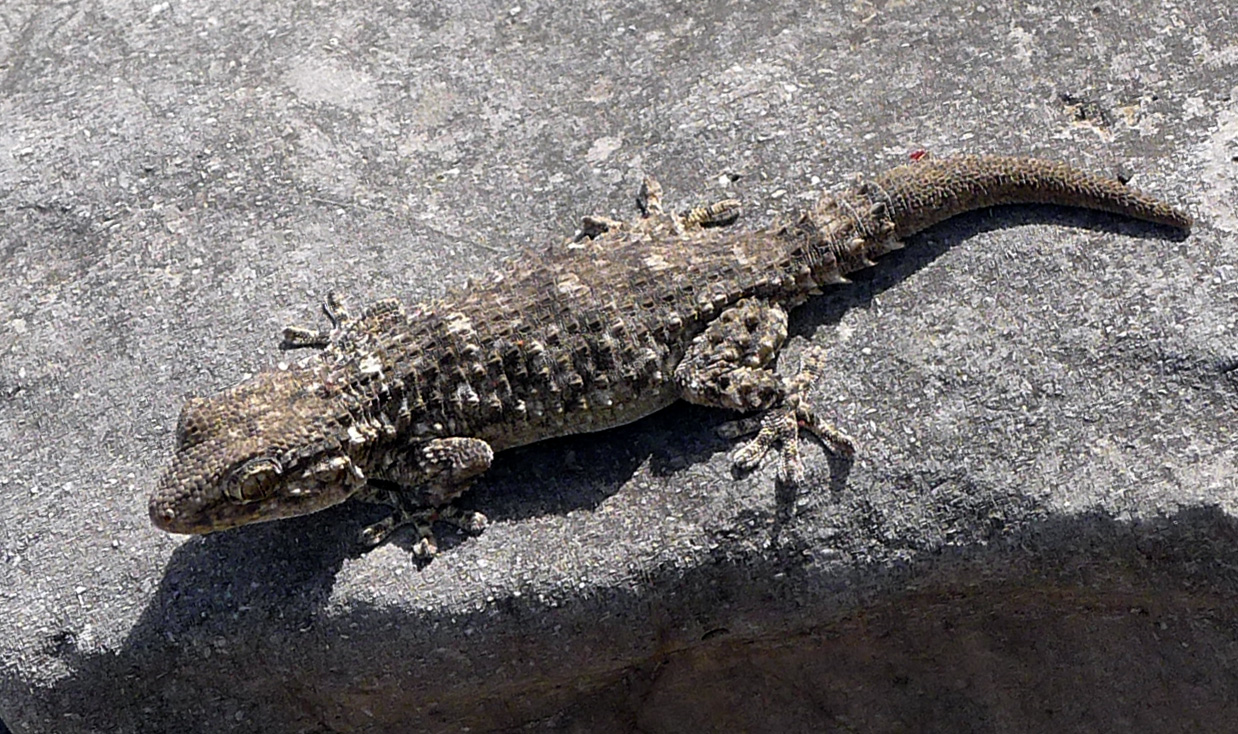
A Mediterranean house gecko is a small, pale, nocturnal lizard, usually pinkish-gray to tan with a bumpy, almost translucent skin, that has spread from its native Mediterranean range to warm regions worldwide, including much of the southern United States. Scientifically known as Hemidactylus turcicus, it is easy to spot clinging to walls and ceilings near porch lights on summer nights, hunting the insects the light attracts.
Despite its foreign origin and rapid spread, this gecko is harmless to people and pets, and many homeowners in warm climates have come to appreciate it as a quiet, free form of pest control that costs nothing and asks for nothing beyond a porch light left on after dark.
| Quick Reference | Detail |
|---|---|
| Scientific Name | Hemidactylus turcicus |
| Also Called | Turkish gecko, moon lizard |
| Size | 4 to 5 inches including the tail |
| Color | Pinkish-white to gray or tan, with small darker spots |
| Activity | Nocturnal; most active shortly after dusk |
| Diet | Insects, spiders, small roaches, moths |
| Risk to Humans/Pets | Harmless; not venomous, bite is weak |
What Is a Mediterranean House Gecko?
The Mediterranean house gecko is a small lizard, rarely exceeding five inches in total length including its tail, with a slender body covered in bumpy, granular scales and skin so thin it can look almost translucent, sometimes revealing a hint of the internal fat and organs underneath. Coloring ranges from pinkish-white to gray or light tan, usually with small, irregular darker spots scattered across the back, and the overall pattern can shift slightly lighter or darker depending on temperature, time of day, and the color of the surface the gecko happens to be resting on.
Its most distinctive features are its large, lidless eyes with vertical pupils, an adaptation that gives it excellent night vision, and specialized toe pads covered in microscopic hair-like structures called lamellae that let it cling to and climb smooth vertical surfaces, including glass windows and stucco walls, with no trouble at all whatsoever. Unlike many diurnal lizards that rely on movable eyelids, this gecko instead uses its long, flexible tongue to periodically wipe its eyes clean, keeping them clear for hunting after dark.
Males and females look broadly similar at a glance, though males tend to be slightly more heavily built and are noticeably more likely to be seen defending a favored hunting perch. Juveniles hatch from small, hard-shelled eggs, usually laid in pairs, and already show the same basic coloring and pattern as the adults, just in miniature.
Where Did Mediterranean House Geckos Come From?
As the name suggests, this species is native to the Mediterranean basin, including coastal regions of southern Europe, North Africa, and parts of the Middle East. The first confirmed United States sighting dates back to 1915 in Key West, Florida, and researchers believe the gecko arrived as an accidental stowaway aboard cargo ships traveling from the Mediterranean region.
From that initial foothold, the species spread rapidly, aided considerably by the pet trade and by human construction that provided exactly the warm, crevice-filled urban habitat it thrives in. The Mediterranean house gecko has since established breeding populations across a broad band of the southern United States stretching from California to Virginia and Florida, and it now occupies more than twenty states, with new county records still being documented periodically as the species continues expanding into new territory along highway corridors and shipping routes.
Are Mediterranean House Geckos Dangerous?
Mediterranean house geckos are not venomous and are not aggressive toward people. If one does bite in self-defense, which is uncommon, the bite is generally weaker than that of a native anole lizard and causes little more than momentary surprise.
One health-related detail worth knowing, however, is that like many reptiles, this gecko can carry and transmit salmonella, so washing your hands after handling one, or after touching a surface where droppings may be present, is a sensible precaution. Beyond that standard reptile-handling caution, this gecko poses no real threat to people or household pets.
What Do Mediterranean House Geckos Eat?
These geckos are strict insectivores, feeding on a wide variety of small invertebrates including moths, small roaches, spiders, and other soft-bodied insects that make up the bulk of their diet in the wild and around homes. Artificial lighting plays a major role in their hunting strategy, since porch lights, streetlights, and windows draw in flying insects, and the geckos simply position themselves nearby to intercept an easy meal, often returning to the exact same productive spot night after night once they find one.
This appetite is exactly why many homeowners consider the species a net benefit despite its invasive status: a gecko working a porch light overnight can meaningfully reduce the number of roaches, moths, and other insects, similar to the way a banana spider‘s web quietly thins out flying insect numbers in a different part of the yard.
Mediterranean House Gecko Behavior and Sounds
Mediterranean house geckos are strictly nocturnal, spending daylight hours hidden under stones, bark, or in wall cracks and coming out shortly after dusk to hunt and, during the breeding season, to find mates. They are one of the relatively few lizard species capable of producing audible sound, communicating through distinctive chirps, clicks, and squeaks used for territorial disputes and courtship, sounds distinctive enough that many people notice them on a quiet porch long before they ever spot the gecko itself.
Males are notably territorial and will defend a favored foraging spot, such as a productive porch light, against rival males with aggressive posturing, chasing, and vocalizations. Researchers have documented a range of related behaviors beyond simple chasing, including push-up displays, back-arching, and direct jaw-snapping confrontations when two males refuse to back down from the same patch of wall.
Like many lizards, this gecko can also drop its tail through a defense mechanism called autotomy if a predator grabs it, escaping while the detached tail continues wriggling to distract the attacker; the tail eventually regrows, though usually with a slightly different texture and color than the original.
Mediterranean House Gecko vs. Common House Gecko
Two different invasive gecko species are commonly found around buildings in the warmer United States, and they are easy to confuse at a glance. The Mediterranean house gecko has noticeably bumpy, tubercle-covered skin, while the common house gecko (Hemidactylus frenatus), an entirely different species originally from Southeast Asia, has smoother skin and a more uniform grayish-tan color.
Range also helps separate the two: the Mediterranean house gecko dominates in much of the interior and Gulf Coast states, while the common house gecko is more concentrated in Florida and other coastal tropical areas. Both species fill a nearly identical ecological niche around human structures, feeding on insects drawn to artificial light, and in areas where their ranges overlap, the two sometimes compete directly for the same foraging spots, with some local studies suggesting the more aggressive common house gecko can gradually displace the Mediterranean species from the very best lit hunting perches over time.
Can You Keep a Mediterranean House Gecko as a Pet?
Their hardiness and simple care requirements make Mediterranean house geckos a popular, beginner-friendly option in the reptile hobby, and captive-bred or occasionally wild-caught individuals are kept successfully by hobbyists. A single adult does well in a vertically oriented enclosure of around five to twenty gallons, since the species is a dedicated climber that appreciates height over floor space, not unlike the vertical setup preferred by a crested gecko.
With stable temperature and humidity, these geckos rarely get sick and can live several years in captivity, though owners should watch for signs of respiratory or skin issues linked to incorrect enclosure conditions rather than bad luck. Feeding is straightforward, consisting mainly of appropriately sized live insects such as crickets, and provides a much lower-maintenance alternative to keeping a larger reptile like a painted turtle or a African bullfrog. A shallow water dish and light daily misting help maintain the humidity level these geckos need to shed properly.
Should You Remove Mediterranean House Geckos From Your Home?
According to researchers at Texas A&M University’s AgriLife Extension, no significant negative environmental impact has been documented from Mediterranean house gecko introductions in the United States, and the species is notably resistant to common insecticides and pesticides, meaning chemical control is not recommended or particularly effective. For most homeowners, coexistence is the simplest and most practical approach, and many people who initially want the geckos gone eventually come to appreciate the reduction in moths, roaches, and other insects around their porch and windows.
If you would still prefer to discourage them, reducing outdoor lighting near entry points, sealing exterior cracks and gaps, and minimizing the insects that attract them in the first place are more effective long-term strategies than chemical treatments. Where the species has become locally overabundant, there is some concern that it may compete with native lizards such as the blue-tailed skink for food and shelter, though it has not been formally linked to population declines in most areas it has invaded.
Related reading: Crested Gecko Lifespan.
Related reading: Baby Leopard Gecko.
Frequently Asked Questions
Are Mediterranean house geckos dangerous to humans?
No, they are not venomous and rarely bite, and a bite that does happen is weaker than that of a native anole and causes only minor, momentary discomfort.
Can Mediterranean house geckos climb walls and ceilings?
Yes, specialized toe pads let them grip and climb smooth vertical surfaces, including glass and stucco, with ease, which is why they are so often seen near porch lights and windows.
Why do Mediterranean house geckos make chirping sounds?
They use chirps, clicks, and squeaks for territorial disputes between males and during courtship, making them one of the few lizard species that regularly communicates with audible sound.
What is the difference between a Mediterranean house gecko and a common house gecko?
The Mediterranean house gecko has bumpier, more tubercled skin, while the common house gecko (a different, Southeast Asian species) has smoother skin, and the two also differ somewhat in their US range.
Do Mediterranean house geckos bite?
They can, but bites are rare, weak, and essentially harmless, typically occurring only if the gecko is handled roughly or feels it has no other way to escape.
How did Mediterranean house geckos get to the United States?
They likely arrived as accidental stowaways on cargo ships from the Mediterranean region, with the first confirmed US sighting recorded in Key West, Florida, in 1915, and later spread further through the pet trade, shipping routes, and human development across the warmer southern states.
Can you keep a Mediterranean house gecko as a pet?
Yes, they are hardy, low-maintenance, and well suited to a small vertical enclosure, making them a popular beginner reptile pet.