What Is a Group of Ravens Called? Unkindness, Conspiracy, and Flock
A group of ravens is called an unkindness, and that is the traditional collective noun listed in most dictionaries and birding references. A group of ravens is also called a conspiracy, a term that has become at least as popular, and both names date back to the same era of English wordplay that gave us a murder of crows. In practical terms, ornithologists simply call a group of ravens a flock, and a large roost of ravens is called a roost or a congregation. What is a group of ravens called therefore has two traditional answers, unkindness and conspiracy, and one everyday answer, flock.
The dark names reflect centuries of folklore rather than anything the birds actually do. Ravens were associated with battlefields, gallows, and omens across medieval Europe, and the collective nouns coined for them borrowed that reputation. The real bird is one of the most intelligent animals on the planet, a problem solver and a playful acrobat that mates for life and is rarely seen in groups larger than a family for much of the year. This guide sorts out every term, explains where unkindness and conspiracy came from, compares them with the names for crows, and describes when and why ravens actually gather in numbers.
A group of ravens is called an unkindness or a conspiracy, the two traditional collective nouns. Both come from medieval folklore linking ravens to death and ill omen rather than from raven behavior. Ornithologists simply call a group of ravens a flock, and a large nighttime gathering is a roost. A group of crows, by contrast, is a murder.
| Question | Answer |
|---|---|
| Traditional collective noun | Unkindness of ravens |
| Second traditional noun | Conspiracy of ravens |
| Everyday and scientific term | Flock (or roost for nighttime gatherings) |
| Group of crows | Murder of crows |
| Typical group size | 2 (pair) to 6 (family); roosts of 100 to 2,000 |
| Origin of the names | 15th century English lists of terms of venery |
| Species | Common raven, Corvus corax |
Why Is a Group of Ravens Called an Unkindness?
A group of ravens is called an unkindness because of a medieval belief that ravens were cruel or neglectful parents. According to folklore recorded in England from at least the 1400s, raven parents were thought to push their young out of the nest before they could fend for themselves, or to abandon them entirely and leave them to survive on dew. The word unkindness, meaning an act of cruelty or an unnatural absence of family feeling, was attached to the birds on that basis. The term appears in the Book of Saint Albans, printed in 1486, which is the source of many surviving collective nouns.
The belief itself is false. Common ravens are devoted parents that feed their young for six weeks in the nest and continue to care for them for several months after fledging, longer than most songbirds. Young ravens stay with their parents through the summer and often into the fall, learning to find food and avoid danger. The legend likely arose because raven chicks are born nearly naked and pinkish, looking unlike their glossy black parents, and because ravens nest early, in February or March, when a nestling could plausibly be seen in cold, harsh weather that looked like abandonment to a medieval observer.
Unkindness survived into modern dictionaries because those 15th century lists were copied from book to book for five centuries, not because anyone used the word in speech. It has the same status as a parliament of owls or an exaltation of larks: a literary curiosity that is technically correct, useful for quizzes and crosswords, and essentially never heard from people who actually watch ravens. The Cornell Lab of Ornithology (allaboutbirds.org) treats all such collective nouns as tradition rather than terminology.
Why Is a Group of Ravens Called a Conspiracy?
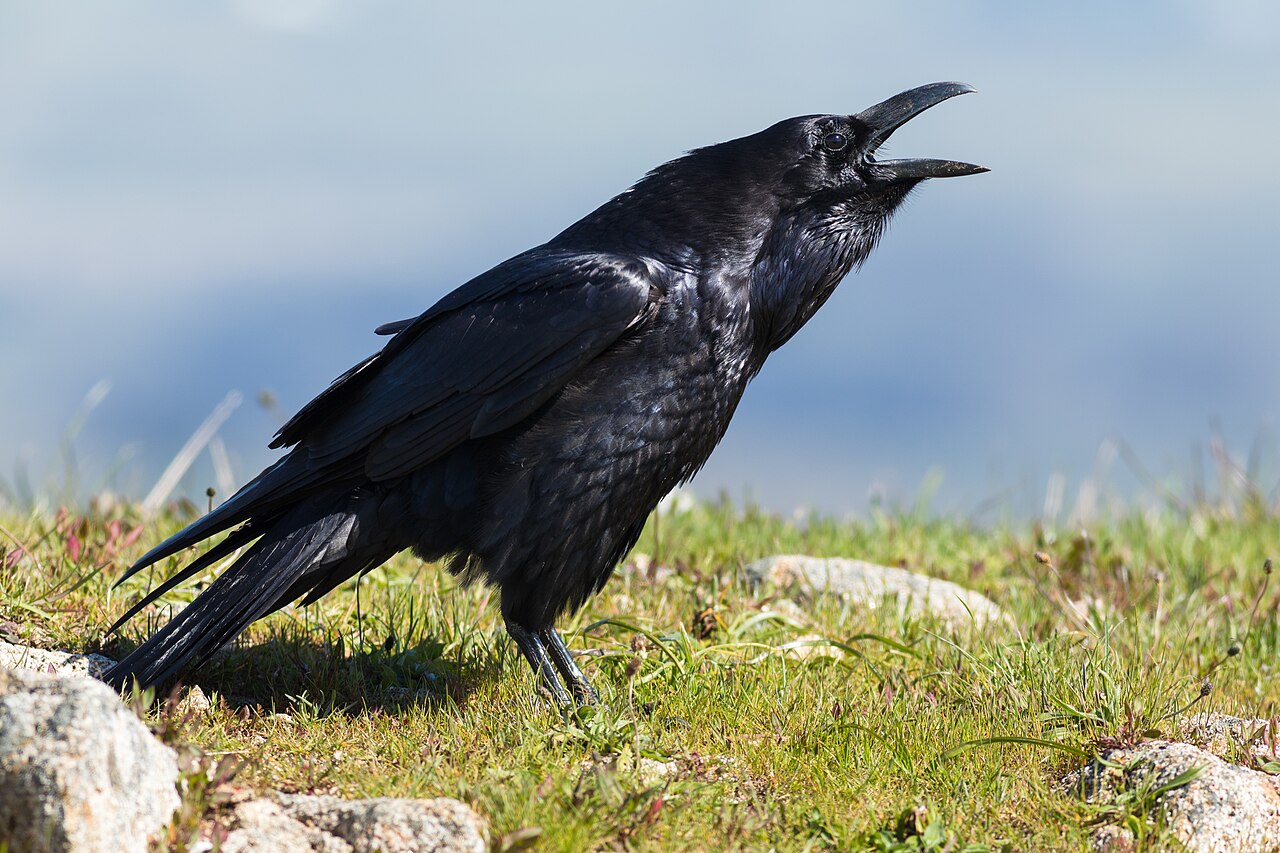
A group of ravens is called a conspiracy because of the bird’s long association with secrecy, cunning, and dark omens, and the term plays on the image of black birds gathered together as if plotting. Conspiracy is a later addition to the collective noun lists than unkindness and does not appear in the 1486 Book of Saint Albans. It seems to have entered circulation in the 19th or 20th century as writers expanded the traditional lists with new inventions, and it has become the more popular of the two terms online, probably because it is easier to remember and sounds deliberately sinister.
There is a grain of behavioral truth behind conspiracy that unkindness lacks. Ravens are extraordinarily intelligent and do cooperate in ways that can look calculated. Pairs coordinate to raid nests, with one bird distracting a parent while the other takes an egg. Groups of young ravens have been documented recruiting each other to large carcasses that a resident adult pair is defending, overwhelming the territory holders by sheer numbers. Researchers at the University of Vienna and elsewhere have shown that ravens track the relationships between other ravens, remember individuals who cheated them, and adjust their behavior accordingly. If any bird deserves to be described as conspiring, it is this one.
Both terms are considered correct, and neither is more official than the other. Reference works commonly list unkindness first and conspiracy second, or give both without preference. If you need one answer for a quiz, unkindness is the older and more widely attested word, but conspiracy will not be marked wrong in any modern source. The raven symbolism guide explores the cultural history that produced both names, from Norse mythology to Edgar Allan Poe.
Is a Group of Ravens Called a Murder?
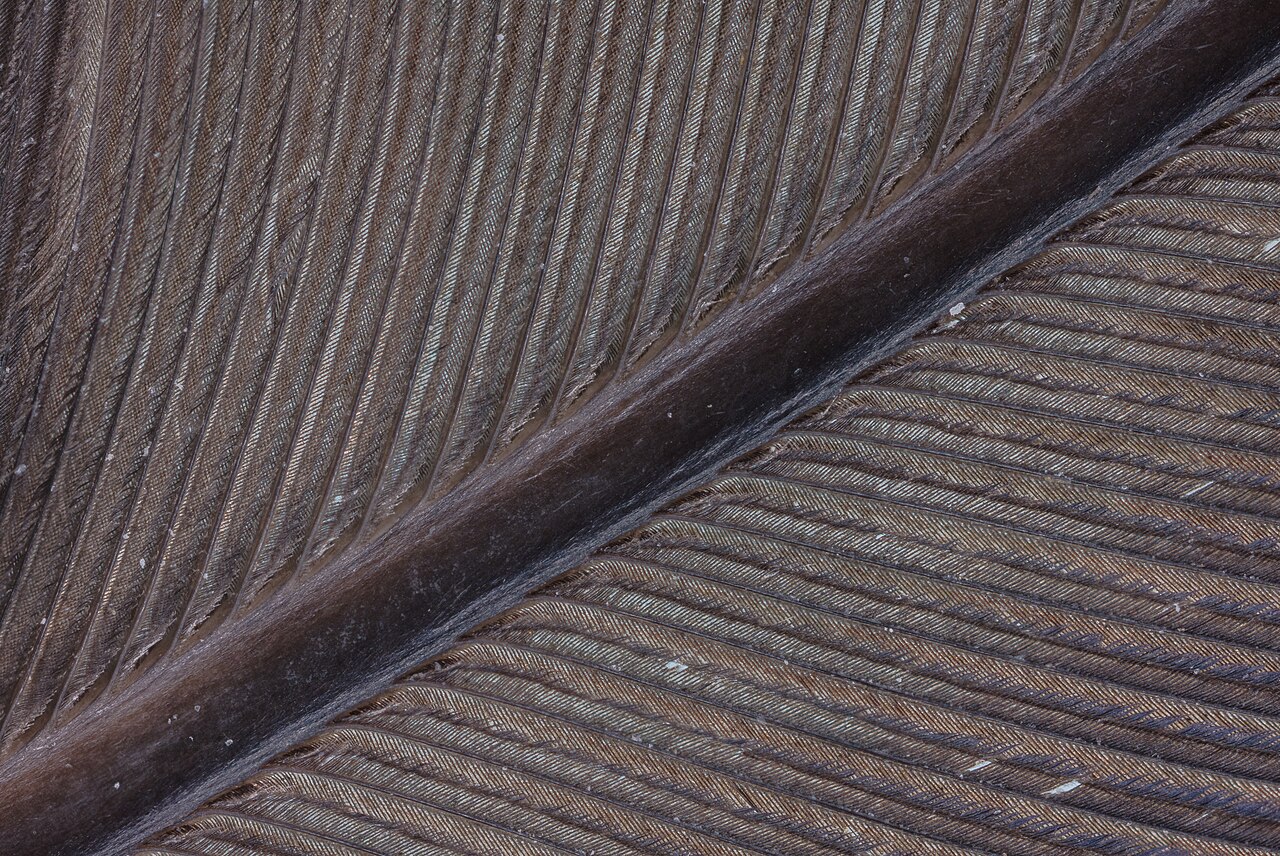
No, a group of ravens is not called a murder; that term belongs to crows. The confusion is understandable because ravens and crows are close relatives in the genus Corvus, both are large black birds with dark folklore attached, and the two are frequently mistaken for each other in the field. But the traditional lists keep the names separate: a murder of crows, an unkindness or conspiracy of ravens. Using murder for ravens is a common error and one of the most frequent corrections in discussions of collective nouns.
The murder of crows term has its own medieval origin, tied to the crow’s habit of scavenging on battlefields and the superstition that crows gathered to decide the fate of one of their own. Like unkindness, it comes from folklore rather than observation. Crows do hold noisy gatherings around dead crows, which modern research suggests is a form of learning about danger rather than any kind of judgment, and this behavior probably fed the legend. The crow symbolism guide covers that history in depth.
Telling the two birds apart resolves the question of which noun to use. Ravens are noticeably larger, with a wingspan of about 4 feet compared with roughly 3 feet for an American crow, and they have a heavier bill, shaggy throat feathers, and a wedge-shaped tail visible in flight. Their call is a deep, resonant croak rather than the crow’s flat caw. The raven vs crow comparison lays out every field mark side by side. If the bird is croaking and soaring with a diamond-shaped tail, the group is an unkindness; if it is cawing and flapping steadily with a fan-shaped tail, it is a murder.
What Do Ornithologists Actually Call a Group of Ravens?
Ornithologists call a group of ravens a flock, and a large gathering at a nighttime sleeping site a roost. Neither unkindness nor conspiracy appears in scientific literature except as a historical footnote. Researchers describing raven social behavior use more specific terms based on what the group is doing: a pair for a mated couple, a family group for parents with their offspring, a non-breeder flock or vagrant flock for the loose bands of unpaired young adults, and a communal roost for the aggregations of dozens to thousands of birds that form on winter nights.
These working terms describe real social structures. Adult ravens hold territories as mated pairs and defend them year-round, so a territorial pair is the basic unit of raven society and the group most people see. Young ravens that have not yet found a mate and territory, typically birds between one and four years old, wander widely and gather in flocks that can number from a handful to a few hundred. These non-breeder flocks are the birds that show up in numbers at carcasses, landfills, and roost sites, and they are the reason a species that lives mostly in pairs sometimes appears in great crowds.
Flock is therefore always correct and always understood. Unkindness and conspiracy are correct in the sense that they are recorded in dictionaries, but they belong to the same category as a parliament of owls: charming, memorable, and essentially ceremonial. Anyone who watches ravens for a living will tell you they saw a pair, a family, or a flock. The guide to what ravens eat explains the food sources, from carrion to insects to garbage, that determine when those flocks form.
How Big Is a Group of Ravens?
A typical group of ravens is small, usually 2 to 6 birds. For most of the year the common raven lives as a mated pair defending a territory that may cover several square miles, and the only additions are that year’s young, which stay with the parents through summer and early fall. A family group of two adults and three or four juveniles moving through a canyon or over a ridge is the largest raven gathering most observers ever see in the breeding season. Ravens are far less gregarious than crows, which form large flocks nearly year-round.
Winter changes the picture. Non-breeding ravens gather at communal roosts on cold nights, often in sheltered stands of conifers, on cliffs, or on power line structures, and these roosts can hold from 50 to more than 2,000 birds. Roosts of 1,000 or more have been documented in Idaho, Utah, and Alaska, and a well-known roost near Bristol in Newfoundland has been studied for decades because ravens leaving it in the morning appear to share information about where food was found the previous day. Birds fly in from 30 miles or more at dusk and disperse again at dawn.
Large daytime gatherings almost always mean food. A dead deer or elk, a whelping seal colony, a landfill, or a slaughterhouse can attract dozens of ravens, most of them non-breeders drawn from a wide area. Ravens are also known to follow wolf packs in Yellowstone and elsewhere, arriving at kills within minutes, and studies there have counted more than 100 ravens at a single wolf-killed bison. These crowds break up once the food is gone, and the birds return to their solitary wandering or their territorial pairs.
Do Ravens Live in Groups or Alone?
Ravens live in pairs for most of their adult lives, and a mated pair is the core social unit of the species. Common ravens pair at around three to four years of age, and once bonded the pair typically stays together for life, which for a raven in the wild can mean 10 to 15 years and occasionally more than 20. The pair defends a territory jointly, builds a nest together on a cliff ledge, tall tree, or man-made structure, and shares the work of raising four to six young each spring. Outside the breeding season the pair still roosts and forages together.
Before they pair, young ravens live a very different life. After leaving their parents in autumn they join loose flocks of other unpaired birds, and these groups wander over large areas, sharing information about food and roosting communally. This phase can last several years, and it is when ravens develop the social intelligence for which the species is famous. Researchers have documented that ravens in these flocks form alliances, console friends after fights, and remember individual birds for years. Their sounds are a large part of that social life, and the raven sounds guide describes the dozens of calls they use.
So the honest answer to whether ravens live in groups is that it depends on the bird’s age and the season. Established adults are territorial pair-livers that tolerate other ravens only at shared food or at winter roosts. Young adults are flock-livers until they find a mate and a territory. This dual social system is one reason ravens have thrived across the Northern Hemisphere, from Arctic tundra to Mojave Desert to city rooftops, and it explains why the same species can be a solitary sentinel on a cliff one day and part of a thousand-bird roost the next.
Collective Nouns for Ravens Compared With Other Corvids
Ravens belong to the crow family, Corvidae, and nearly every member of the family has a memorable collective noun. Crows are a murder. Rooks, the European species that nests in colonies, are a parliament or a building, the latter a genuine old term from the way rookeries are constructed. Jackdaws are a clattering or a train. Magpies are a tiding, a tittering, or a mischief. Jays are a party, a band, or a scold. Choughs are a chattering. Ravens, with unkindness and conspiracy, have the darkest names of the group, which says more about how medieval Europeans felt about ravens than about the birds.
Most of these terms come from the same handful of 15th century sources, especially the Book of Saint Albans and its predecessors, which listed hundreds of “terms of venery” for hunters and gentlemen to memorize as a mark of education. Many were jokes or puns at the time and were never meant to be used literally. The lists were revived by Victorian writers and again in the 20th century, and today they circulate mainly as trivia. That history explains why the names sound so literary and why almost none of them describe actual bird behavior.
The irony is that the corvids, more than almost any other bird family, do have complex group behavior worth naming. Ravens negotiate, crows hold funerals and recognize human faces, jays cache food and remember thousands of hiding places, and magpies pass mirror self-recognition tests that few animals pass. If the collective nouns were being coined today by people who had studied the birds, an unkindness of ravens might well be called an intelligence instead. Until then, unkindness and conspiracy remain the answers to the question, and flock remains the word that everyone who watches ravens actually uses.
Related reading: what is a group of turkeys called.
Related reading: what is a group of crows called.
Related reading: what is a group of flamingos called.
Related reading: what is a group of owls called.
Related reading: what is a group of penguins called.
Related reading: what is a group of vultures called.
Related reading: what is a group of pigs called.
Related reading: what is a group of eagles called.
Related reading: what is a group of hummingbirds called.
Related reading: what is a group of parrots called.
Related reading: Animal Group Names.
Frequently Asked Questions
What is a group of ravens called?
A group of ravens is called an unkindness or a conspiracy. Both are traditional collective nouns, with unkindness being the older term, recorded in 1486. Ornithologists and birders simply call a group of ravens a flock, and a large nighttime gathering is a roost.
Why is a group of ravens called an unkindness?
The name comes from a medieval belief that ravens were cruel parents who pushed their young out of the nest or abandoned them. The belief is false; ravens are among the most attentive bird parents, caring for their young for months after fledging.
Why is a group of ravens called a conspiracy?
Conspiracy reflects the raven’s long association with secrecy, cunning, and dark omens. It is a more recent term than unkindness and has become popular because it sounds fittingly sinister. Ravens do cooperate cleverly, which gives the term a grain of truth.
Is a group of ravens called a murder?
No. A murder is the collective noun for crows, not ravens. The two birds are often confused because both are large and black, but the traditional lists keep them separate: a murder of crows, an unkindness or conspiracy of ravens.
What is a group of ravens and crows together called?
There is no special term for a mixed group. Birders would simply describe a mixed flock of corvids. In practice ravens and crows rarely flock together, and crows often mob and chase ravens away from their territories.
How many ravens are in a group?
Most raven groups are a mated pair or a family of 2 to 6 birds. Unpaired young ravens form wandering flocks of a few to a few hundred, and winter communal roosts can hold 50 to more than 2,000 ravens that disperse each morning.
Do ravens mate for life?
Yes. Common ravens usually pair at three to four years old and remain together for life, defending a shared territory year-round. A pair may stay together for 10 to 15 years or longer, and they only take a new mate if the first one dies.