Squirrel Tracks in Snow vs Rabbit: Spot the Difference Fast
Squirrel tracks in snow vs rabbit tracks come down to the front feet and the route. A squirrel sets its front feet side by side, and a rabbit sets them one behind the other.
Both animals hop, so big hind feet land ahead of the front feet. A squirrel sets its front feet side by side and runs tree to tree. A rabbit places them one behind the other and heads for brush. Squirrels sit out storms in their nests and track on calm, sunny days, rabbits mostly overnight.
| Feature | Squirrel | Rabbit |
|---|---|---|
| Front feet | Side by side, box-shaped group | One behind the other, Y shape |
| Toe detail | Toes and claws visible on firm snow | Usually blurry edges from furred feet |
| Hind prints | Shorter and splayed | Long and narrow |
| Trail route | Trunk to trunk across open lawn | Cover to cover on reused runways |
| Sign nearby | Small dug pits from recovered nuts | Clipped twigs, round pellets |
| Fresh tracks | Calm, sunny days | Dusk, night and dawn |
Squirrel vs Rabbit Footprints in Snow and What Each Print Shows
A squirrel print group is a box, and a rabbit print group is a Y. Both animals hop, so the two large hind feet swing forward and land ahead of the smaller front feet. That puts the big prints in front in the direction of travel, and the front pair shows the difference.
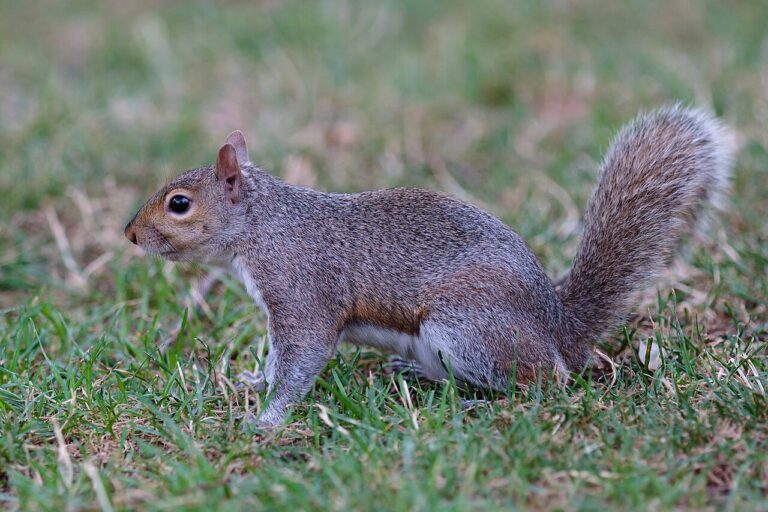
Squirrel tracks show the front feet landing side by side, so the four prints form a neat box. On firm snow they also show toes and claws. The hind prints are shorter than a rabbit’s and splay outward. The eastern gray squirrel (Sciurus carolinensis) leaves this pattern under backyard oaks and feeders.
Rabbit tracks show the front feet landing one behind the other, forming the stem of a Y with the hind prints as its arms. Rabbit feet are furred, so the edges usually come out blurry and the toes are often indistinct. The hind prints are long and narrow.
Reading the Whole Trail From Tree to Tree or Brush to Brush
When prints blur, the route tells you who made them. Deep powder swallows toe detail, and melting snow widens every print until a box and a Y look alike. The path between print groups survives both, so follow the trail a few yards.
A squirrel trail starts at one trunk and ends at another. It crosses open lawn in a straight line, because a squirrel in the open wants to reach a tree fast. Look along the way for small dug pits where the squirrel recovered a buried nut.
A rabbit trail leads under shrubs, brush piles and decks. Rabbits reuse the same paths night after night, so a packed runway forms between two pieces of cover. Twigs clipped at a clean angle and round pellet droppings mark a rabbit trail. Wear gloves before you move a dead rabbit or squirrel, since CDC guidance on tularemia names rabbits and rodents as carriers.
Do Squirrels Come Out When There’s Snow on the Ground?
Yes. Tree squirrels do not hibernate and stay active all winter. During storms and hard cold they shelter in their nests, sometimes for days at a stretch. That gap explains why a fresh snowfall can sit untouched under the oaks.
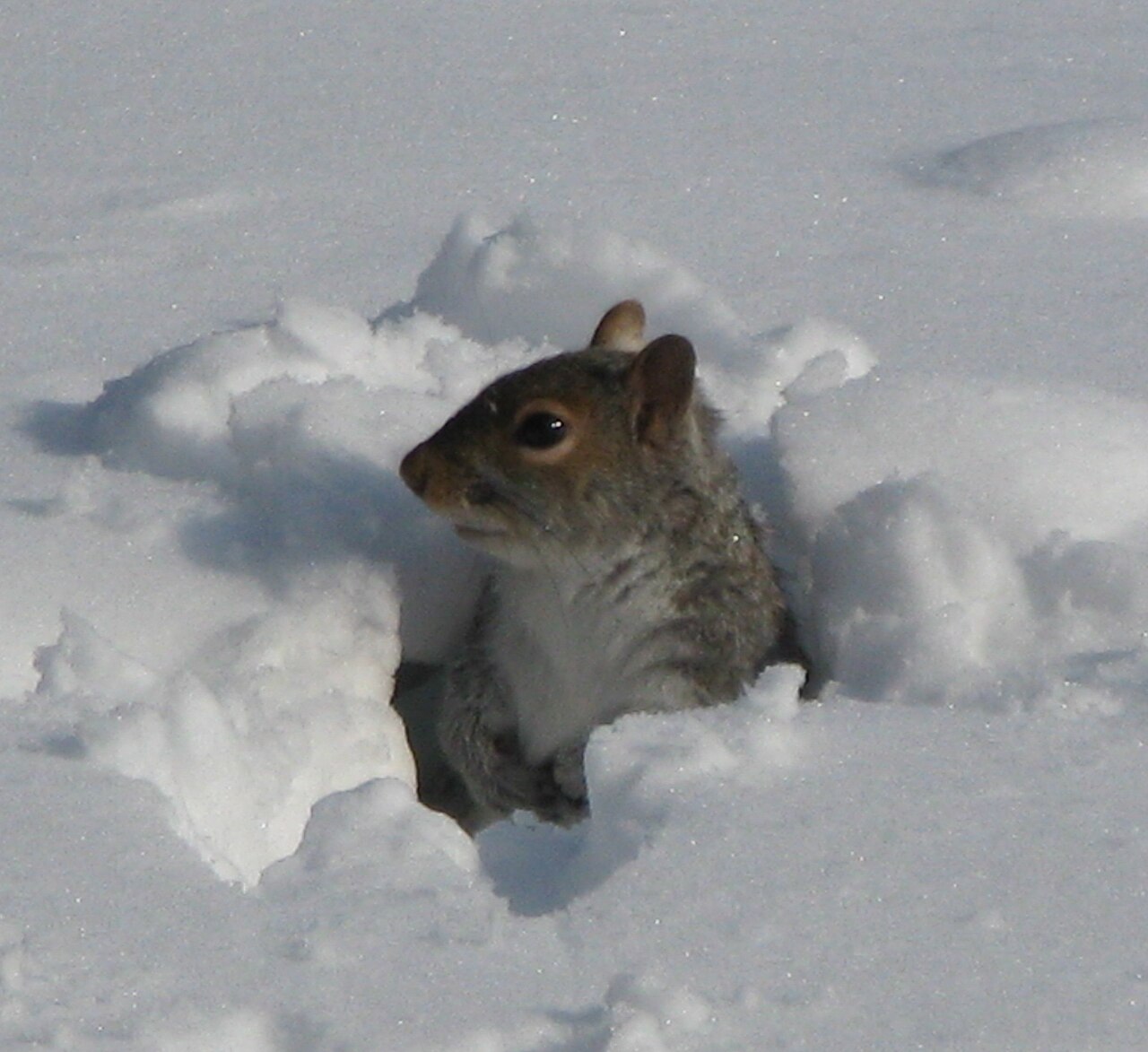
Fresh squirrel tracks appear on the calmer, sunnier days after a snowfall. Squirrels forage in daylight and return to the nest before dark. A crisp trail that runs trunk to trunk points to a squirrel. Crisp edges alone do not date a track, because cold, dry snow keeps prints sharp for hours, rabbit prints from the night before included.
Eastern cottontails (Sylvilagus floridanus) move mostly at dusk, through the night and at dawn. Tracks you find at first light far from any tree point to a rabbit. In cold regions, ground squirrels hibernate through winter and leave no prints in snow.
Frequently Asked Questions
Will squirrels bother rabbits?
No. Gray squirrels and cottontails barely compete in winter, because squirrels dig up cached nuts while rabbits clip twigs, buds and bark. Seeing both trail types around the same shrub or feeder is ordinary winter traffic, not a sign that one animal is pushing the other out.
Do predators follow squirrel and rabbit tracks in snow?
Yes. Foxes, coyotes, hawks and owls hunt both squirrels and rabbits in winter. Foxes and coyotes often trot along rabbit runways in search of a meal. When a hopping trail ends with wing marks fanned into the snow on either side, a hawk or owl made a strike there.
Can mouse tracks be mistaken for squirrel tracks in snow?
Yes. Deer mice and white-footed mice bound with the front feet side by side, just like a squirrel, but the whole print group is far smaller. A thin tail drag between groups in soft snow points to a mouse.
Sources
- CDC, About Tularemia
- Missouri Department of Conservation, Eastern Cottontail
- Maryland DNR, Eastern Gray Squirrel
- National Park Service, Mammals of Grand Portage