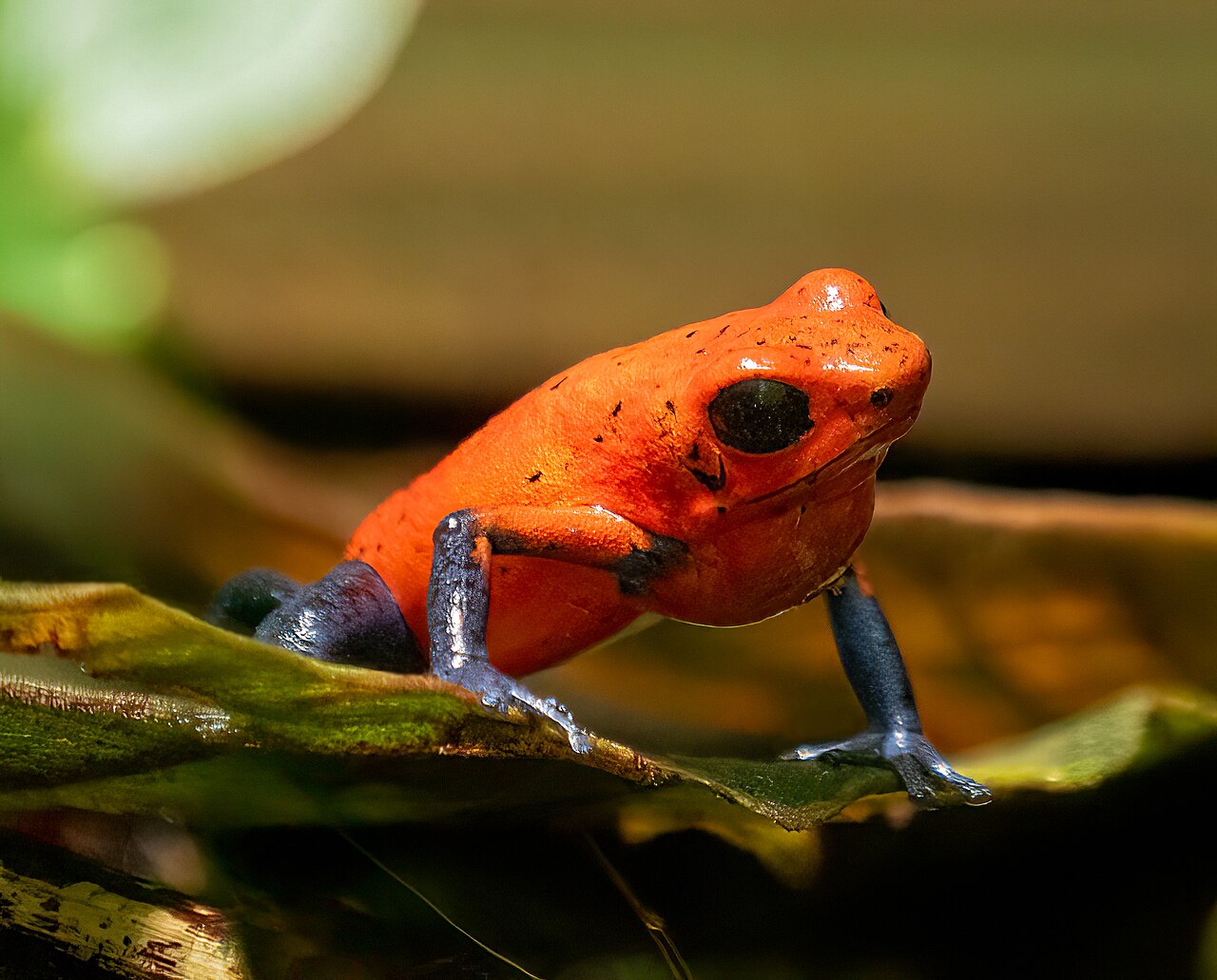
Poison Dart Frog Colors: 6 Species and What Each Shade Warns
Poison dart frog colors are a warning label, not decoration. The bright blue, fire red, canary yellow, and metallic green you see on these thumbnail-sized amphibians tell every predator in the rainforest that swallowing them would be a mistake, and in the case of the golden poison frog (Phyllobates terribilis) a fatal one. Roughly 170 species carry some version of this signal, and a single species can produce dozens of separate color forms in valleys only a few miles apart.
What follows is a plain-language tour of the whole palette: which colors belong to which species, how much toxin sits behind each shade, what actually happens if you touch one, and why researchers now think some of these loud patterns work as camouflage from a distance. If you want the broader biology first, start with our overview of the poison dart frog and come back for the color detail.
Poison dart frogs come in blue, yellow, orange, red, green, black, white, and copper, often combined in spots, stripes, or marbling. The colors are aposematic, meaning they advertise toxicity to predators. Brighter and more contrasting patterns usually signal stronger alkaloid defenses, and the yellow golden poison frog is the most toxic of all.
| Species | Main colors | Adult size | Toxicity |
|---|---|---|---|
| Golden poison frog (Phyllobates terribilis) | Solid yellow, orange, or mint green | 1.5 to 2.2 in (38 to 55 mm) | Extreme |
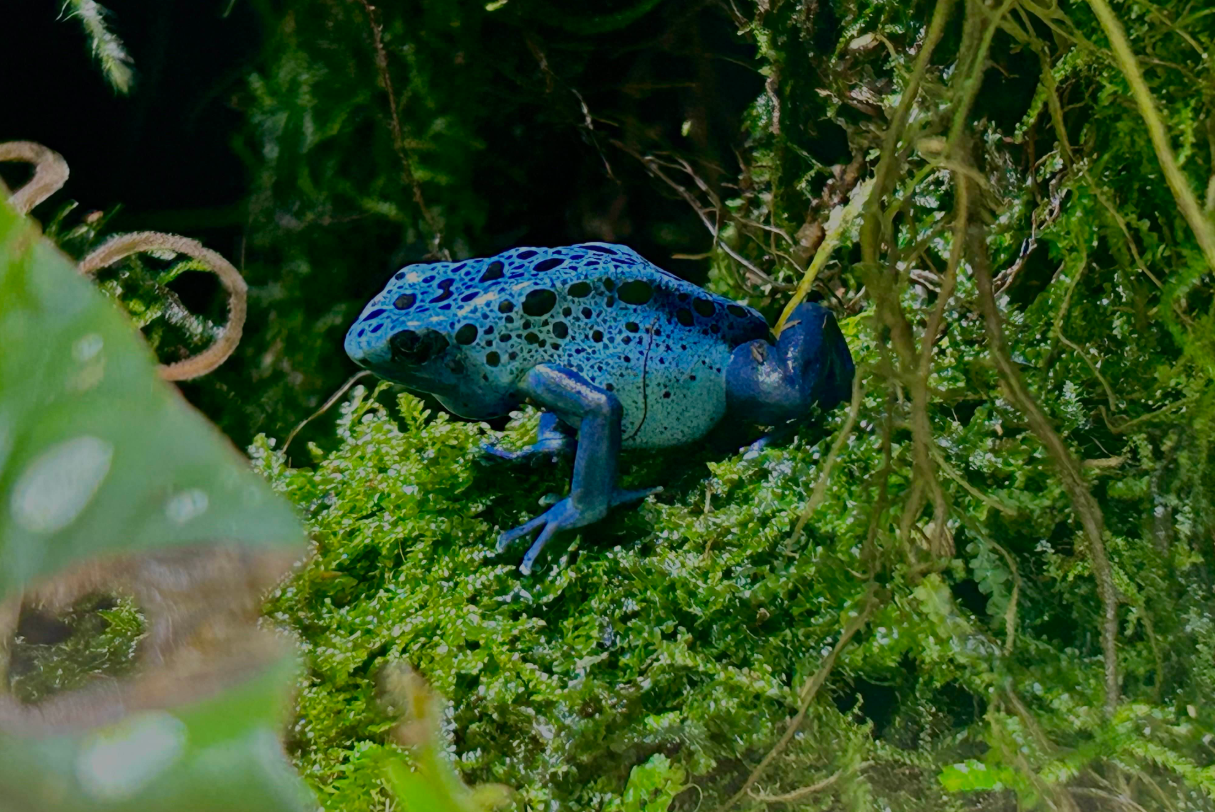
| Blue poison dart frog (Dendrobates tinctorius “azureus”) | Sky blue with black spots | 1.4 to 1.8 in (35 to 45 mm) | Moderate |
| Dyeing poison frog (Dendrobates tinctorius) | Yellow and black with blue legs | 1.6 to 2.4 in (40 to 60 mm) | Moderate |
| Strawberry poison frog (Oophaga pumilio) | Red, orange, white, green, blue | 0.7 to 1.0 in (17 to 24 mm) | Low to moderate |
| Green and black poison frog (Dendrobates auratus) | Mint or teal green over black | 1.0 to 1.6 in (25 to 40 mm) | Low |
| Phantasmal poison frog (Epipedobates tricolor) | Red-brown with cream stripes | 0.7 to 1.0 in (18 to 25 mm) | Low |
Why Are Poison Dart Frogs So Brightly Colored?
The colors exist to be seen. Biologists call this aposematism: an animal that is genuinely dangerous to eat benefits from being unmistakable, because a bird that learns the pattern once will avoid every frog wearing it afterward. Dull camouflage would protect an individual frog from one attack, but a bright pattern protects the whole population from repeated attacks by educated predators.
That trade only works if the threat is real. Poison dart frogs sequester lipophilic alkaloids from the mites, ants, and springtails they eat, then store the compounds in glands across their skin. A bird that bites down gets an immediate bitter, burning mouthful and drops the frog, usually before the frog is fatally injured. The signal and the chemistry evolved together, which is why the loudest species tend to be the ones you least want in your mouth.
The Full Color Range: Blue, Yellow, Red, Green, and Black
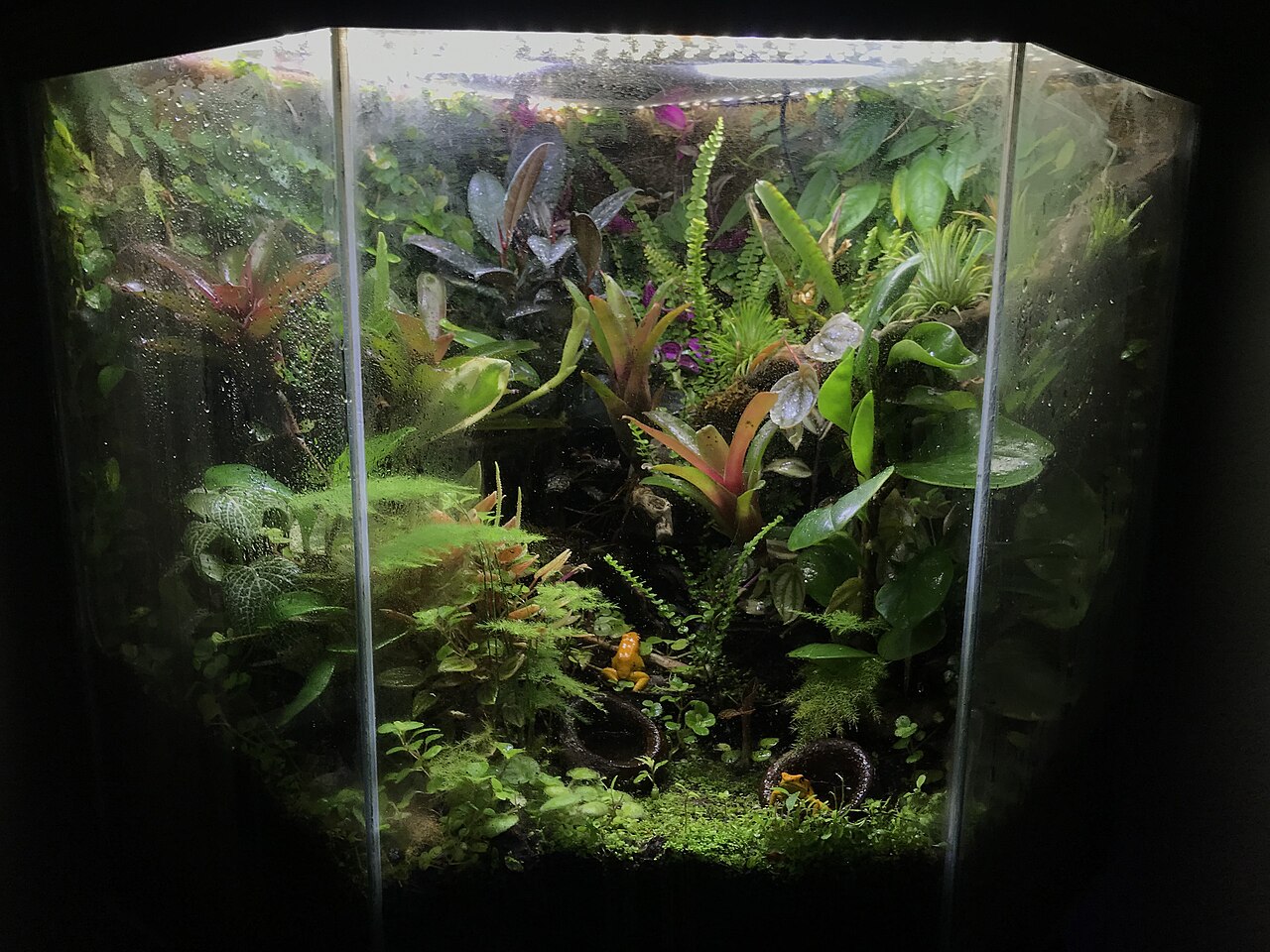
Across the family Dendrobatidae, the documented palette covers cobalt and sky blue, lemon and school-bus yellow, tangerine, scarlet, mint and forest green, bronze, copper, chalk white, and deep matte black. Most species combine two or three of these rather than wearing one flat color. Black is almost always the background that makes the other colors pop, since high contrast reads as a warning at a longer distance than a single hue does.
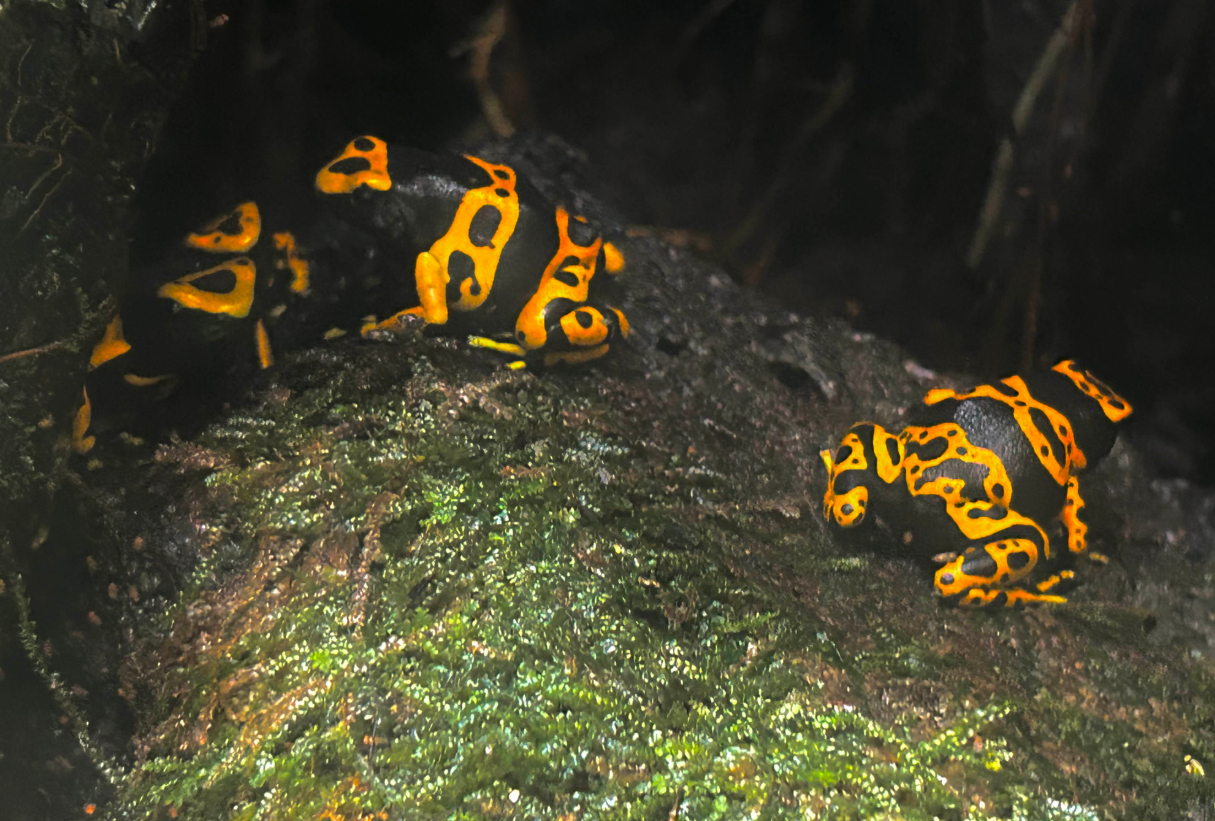
Patterning matters as much as pigment. You will find crisp round spots on blue forms, reticulated netting on green and black frogs, lengthwise racing stripes on the smaller Epipedobates and Ameerega species, and irregular marbling on the dyeing poison frog. Those patterns are fixed for life once the frog finishes metamorphosis, which is why field guides can identify populations by a spot arrangement the way you would read a fingerprint.
What Happens If I Touch a Blue Poison Dart Frog?
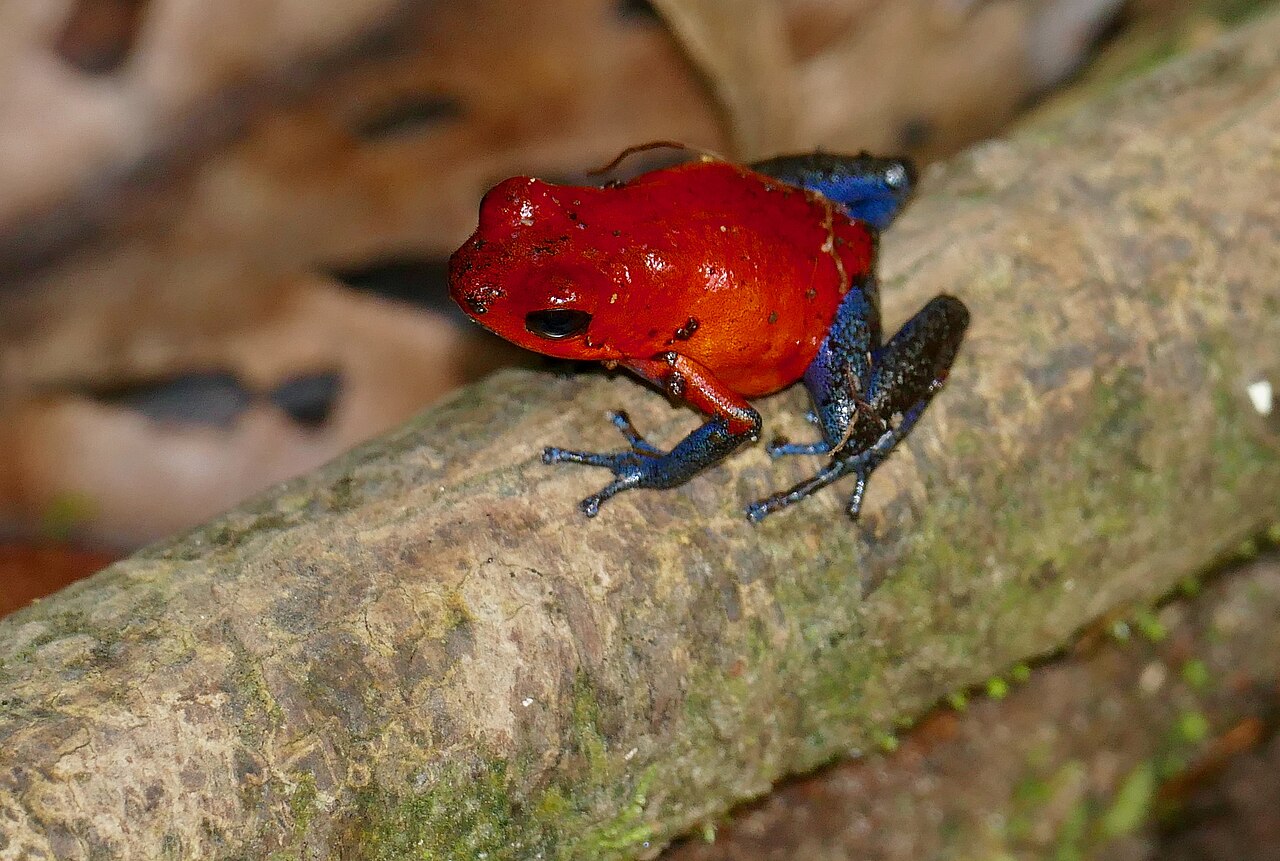
In almost every case, nothing. The toxins in a blue poison dart frog sit in skin glands and need a route into your bloodstream to do harm, and intact skin on your fingers is a good barrier. People handling these frogs report at most a faint tingling or a soapy residue. The real risk runs the other way: your hands carry salts, oils, and soap that damage the frog’s permeable skin, which is why keepers use wet nitrile gloves or simply do not handle them.
The exception is broken skin and mucous membranes. A cut, a hangnail, or rubbing your eye after contact can deliver enough alkaloid to cause burning, numbness, and nausea. Wash with soap and water immediately, avoid touching your face, and treat any frog in the Phyllobates genus with far more caution than the rest. Our species profile on the blue poison dart frog covers handling in more detail.
Golden Poison Frog: The Brightest and Deadliest
The golden poison frog wears solid, unbroken color: canary yellow in most populations, deep orange in some, pale mint green in others. There are no spots, no stripes, and nothing that breaks up the shape, which makes it one of the most conspicuous vertebrates on earth. It lives in a small stretch of lowland forest on Colombia’s Pacific coast and nowhere else.
Its defense is batrachotoxin, a sodium-channel blocker that locks nerve and muscle cells in the open position. A single wild adult carries roughly 700 to 1,900 micrograms, and the estimated lethal dose for an adult human sits near 200 micrograms, meaning one frog holds several human doses. The Emberá people used exactly this species to tip blowgun darts, which is where the family’s common name comes from.
Red and Strawberry Morphs: One Species, Many Color Forms
No frog illustrates color variation better than the strawberry poison frog of Panama and Costa Rica. On the mainland it is the classic red body with dark blue legs that earned it the nickname blue jeans frog. Across the Bocas del Toro archipelago, separate island populations have diverged into more than fifteen recognized morphs: solid orange, green with black flecks, bright white, dull olive, and a nearly black form on Isla Escudo de Veraguas.
These islands separated only a few thousand years ago, which makes the group a textbook case of rapid color evolution. Female preference appears to drive part of it, since females of each morph tend to court males that look like them. Predator learning locks the pattern in place locally. See our profile of the strawberry poison dart frog for the island-by-island breakdown.
Green and Black Poison Frogs: The Beginner’s Frog
The green and black poison frog is the species most people meet first, both in zoos and in the hobby. Its base color ranges from pale mint through emerald to turquoise, laid over a black network that looks poured rather than painted. Populations from Panama, Costa Rica, and introduced stock in Hawaii differ enough that keepers label them by locality, such as “El Cope” or “Bronze”.
Toxicity here is real but low, and captive individuals lose it almost entirely. The frogs are also bolder than most relatives, active during the day, and tolerant of a planted vivarium, which is why they carry the reputation of a starter species. Their color still functions as a warning in the wild even though the chemistry behind it is weaker than in Phyllobates.
What Is the Rarest Poison Dart Frog?
By population, the rarest well-documented species is the Golfodulcean poison frog (Phyllobates vittatus), restricted to a small area of southwestern Costa Rica, and the Escudo morph of the strawberry poison frog, confined to one island a few square miles in size. The Lehmann’s poison frog (Oophaga lehmanni), a red-and-black or yellow-and-black banded species from a single Colombian valley, is listed as Critically Endangered and heavily targeted by smugglers.
Rarity in the hobby is a separate question and changes fast. Color forms that were unobtainable a decade ago are now captive-bred in quantity, while wild populations of the same animals keep shrinking from habitat loss and the chytrid fungus. Buying captive-bred stock from a documented line is the only defensible way to keep any of them.
Can a Human Survive a Poison Dart Frog?
Yes, in every realistic scenario. There is no verified record of a human dying from casual contact with any poison dart frog, including the golden poison frog. Intact skin blocks the alkaloids, and the frogs do not bite, spray, or otherwise deliver toxin on their own. Deaths attributed to these frogs come from darts and arrows that concentrated the secretions and put them under the skin.
Serious poisoning requires the toxin to bypass your skin barrier through a wound, your eyes, or your mouth. Symptoms in that case escalate from local burning and numbness to muscle weakness, irregular heartbeat, and in extreme batrachotoxin exposure, cardiac arrest. There is no antidote, and treatment is supportive, which is the practical reason to keep hands out of wild frog habitat.
What Are the Top 3 Most Poisonous Frogs?
The golden poison frog takes first place by a wide margin, carrying enough batrachotoxin in one animal to kill several adult humans. Second is the black-legged poison frog (Phyllobates bicolor), a yellow or orange frog with dark blue or black legs from the same region of Colombia, which uses the same toxin class at lower concentration. Third is the Kokoe poison frog (Phyllobates aurotaenia), black with bright yellow or orange dorsal stripes.
All three sit in the genus Phyllobates, and all three were used to poison blowgun darts. Everything outside that genus, including the blue and green species that dominate photographs, is dramatically less dangerous. The pattern holds across the family: solid yellow or orange over dark legs is the color combination worth respecting most.
What Eats Poison Dart Frogs?
Very little, which is the point of the coloring. The confirmed predator that matters is the fire-bellied snake (Leimadophis epinephelus), which tolerates dart frog alkaloids and hunts them directly. Large spiders, giant water bugs, and some crabs take froglets and eggs, and a few birds will sample a frog and spit it out, which is exactly the learning event the color evolved to trigger.
Predation pressure is still shaping the signal. Field experiments with clay models show that models painted in local morph colors get attacked less than models painted in a neighboring island’s colors, meaning predators learn the specific pattern they grew up around. Read more on the defensive toolkit in our piece on poison dart frog adaptations.
Do Captive Frogs Keep Their Colors?
They keep the color and lose the poison. Captive-bred poison dart frogs raised on fruit flies and springtails never encounter the alkaloid-bearing mites and ants that supply the toxins, so their skin secretions are effectively harmless within a generation. The pigments and structural colors, by contrast, are genetically determined and show up in full whether the frog is wild or captive.
Diet still nudges the shade. Carotenoid intake affects how saturated the reds, oranges, and yellows look, which is why breeders dust feeder insects with supplements. Lighting, humidity, and stress shift appearance temporarily, and a frog that has been startled often looks darker for an hour or two. Temperature in the vivarium matters as much as diet, and our guide to poison dart frog habitat explains the setup.
Can Bright Colors Also Be Camouflage?
Research published in 2022 found that they can be both at once. Working with the dyeing poison frog, scientists modeled how bird and snake eyes resolve the frog’s pattern at different distances and found that beyond a few feet the yellow and black blur into a single dull tone that blends with leaf litter. Up close, the same pattern snaps into a high-contrast warning.
That dual function resolves an old puzzle, namely why a frog would advertise itself to predators it could simply avoid. The answer is that it does not advertise at long range. Distance-dependent signaling has since been described in several other aposematic animals, and it changes how biologists interpret loud patterning in general. The Smithsonian’s National Zoo animal profiles track current research on several of these species.
How Poison Dart Frog Colors Compare to Other Bright Frogs
Plenty of harmless frogs are colorful, and confusing them with dart frogs is common. Tree frogs in the family Hylidae include vivid greens, and some species show flash colors on the flanks and thighs that only appear when the frog jumps, a startle tactic rather than a warning. Mantella frogs of Madagascar look strikingly like dart frogs and are mildly toxic, but they are unrelated and evolved the resemblance independently.
The reliable tells for a true dart frog are small size under 2.5 in (64 mm), rounded toe pads without large suction discs, daytime activity on the forest floor, and a Central or South American range. A vivid green frog clinging to a window in Georgia is a tree frog, not a dart frog, as our profile of the American green tree frog makes clear.
Frequently Asked Questions
What is the lifespan of a poison dart frog?
Wild poison dart frogs usually live 4 to 8 years, though small species face heavy predation on froglets. In captivity, with stable humidity and no predators, 10 to 15 years is normal and individuals of Dendrobates tinctorius have passed 20 years. Longevity is unusual for amphibians this small and reflects how well the chemical defense works.
Can you survive touching a golden poison dart frog?
Yes, if your skin is intact and you wash afterward. Batrachotoxin cannot cross healthy skin in meaningful amounts, and there is no confirmed human fatality from simply handling one. The danger appears when the toxin reaches a cut, your eyes, or your mouth, so the rule in the field is to look and not touch.
Can I keep a dart frog as a pet?
Yes, and they are legal in the United States when captive-bred. Start with a green and black or dyeing poison frog in a planted 18 by 18 by 24 in vivarium at 72 to 80 F with 80 percent humidity and a culture of fruit flies. They are display animals, not handling animals, and a captive-bred frog is not poisonous.
What kills a poison dart frog?
Habitat loss is the leading cause, followed by the chytrid fungus Batrachochytrium dendrobatidis, which has wiped out populations across Central America. The fire-bellied snake preys on adults, and spiders and large invertebrates take froglets. In captivity, tap water minerals, soap residue, and low humidity kill more frogs than disease does.
Do poison dart frog colors change as they grow?
Yes, substantially. Tadpoles are plain brown or gray, and freshly metamorphosed froglets often look muted or carry a temporary pattern that differs from the adult. Full adult coloration settles in over roughly two to four months after metamorphosis, then stays fixed for life apart from short-term darkening from stress or cold.
Are male and female poison dart frogs different colors?
In most species the sexes look identical, which is unusual for brightly colored vertebrates. Females are often slightly larger and rounder, and males have broader toe pads on the front feet. Where any color difference exists it is subtle, such as marginally stronger saturation in males of some Oophaga populations, and it is not reliable for sexing.