How to Get Rid of Earwigs?
The fastest way to get rid of earwigs is to combine moisture control with targeted removal: seal cracks and gaps around your home’s foundation, run a dehumidifier in damp basements and crawl spaces, and set out simple oil-and-soy-sauce traps in the garden to draw them away from your plants. Earwigs are drawn indoors and into flower beds by damp, dark hiding spots and decaying organic matter, so removing those conditions solves the root cause instead of just clearing out today’s visible bugs.
Despite their intimidating pincers, earwigs are not dangerous to people or pets, and the good news is that a combination of moisture reduction, sealed entry points, and a few inexpensive traps usually clears an infestation within one to two weeks.
| Quick Reference | Detail |
|---|---|
| Common Species (US) | Forficula auricularia, the European earwig |
| Order | Dermaptera, roughly 2,000 species worldwide |
| Danger to Humans | Harmless; pincers rarely break skin, no venom or disease |
| Preferred Habitat | Damp mulch, leaf litter, woodpiles, crawl spaces, basements |
| Peak Activity | Nocturnal, most active spring through fall |
| Reproduction | 30 to 55 eggs per brood, hatching in about 70 days |
| Best Removal Tools | Oil traps, diatomaceous earth, sealing entry points, dehumidifiers |
What Are Earwigs?
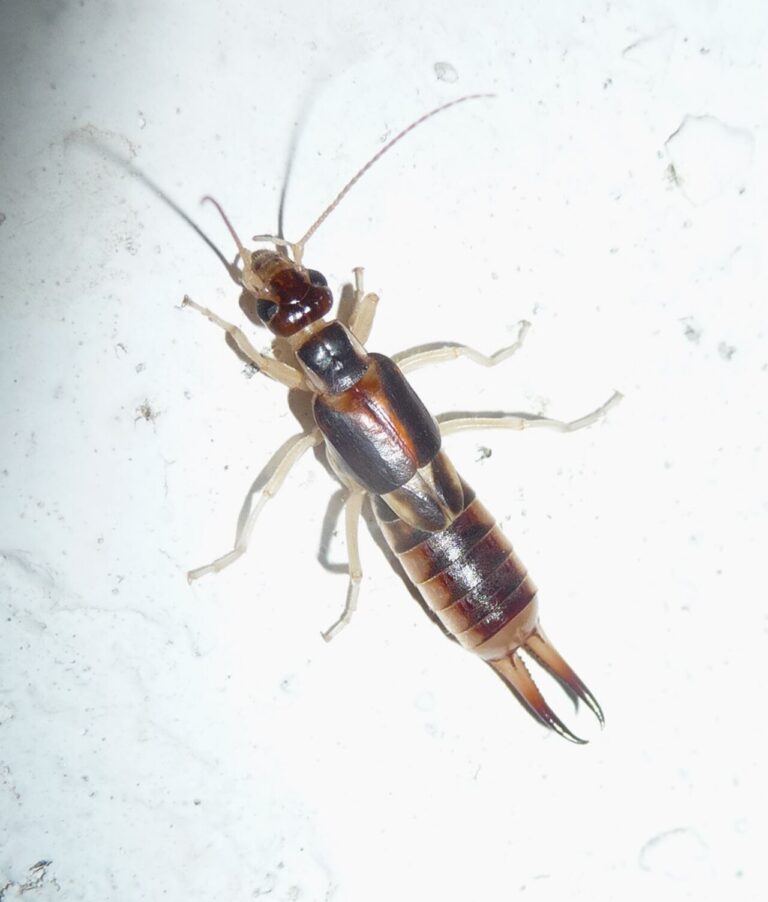
Earwigs belong to the insect order Dermaptera, a group of roughly 2,000 species found on every continent except Antarctica. The one most homeowners in the United States actually encounter is the European earwig, Forficula auricularia, a species that is not native to North America but has spread widely since arriving over a century ago.
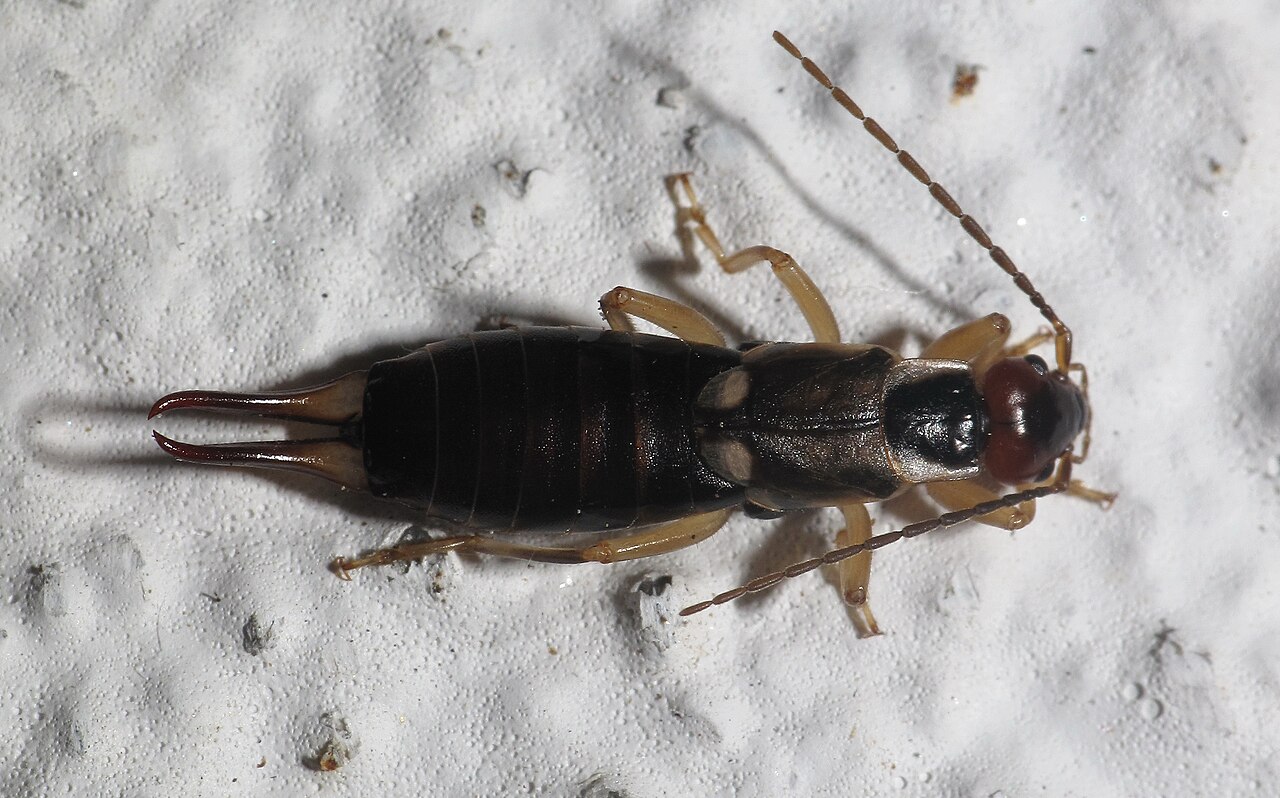
The most recognizable feature is the pair of pincer-like forceps at the tip of the abdomen, which earwigs use for defense, for capturing small prey, and during mating. Despite having folded wings tucked beneath short forewings, earwigs rarely fly and almost always get around on foot, favoring dark, humid places over open, exposed ground.
Adult earwigs are typically reddish brown to black, roughly the size of a small cricket, with a flattened, elongated body built for squeezing into tight cracks and crevices, a silhouette sometimes confused at a glance with a black beetle until the telltale pincers come into view. That same body shape is exactly what allows them to slip through small gaps around doors, windows, and foundations when conditions outside turn too dry, too hot, or too cold for comfort.
Do Earwigs Bite or Sting? Debunking the Ear Myth
The name “earwig” comes from an old folk tale claiming these insects crawl into sleeping people’s ears to lay eggs or feed on the brain, a story with no scientific basis whatsoever. Entomologists at Purdue University describe the earwig’s reputation as largely undeserved, noting that while the pincers have occasionally been used on people, they seldom break the skin and the insects carry no known disease.
What people sometimes call an “earwig bite” is almost always a defensive pinch rather than an actual bite, since earwigs do not have biting mouthparts in the way that term usually implies. A pinch, if it happens at all, typically leaves nothing more than a faint red mark or brief irritation that fades within a day, similar to a light scratch.
Earwigs are not venomous and do not sting, since they lack a stinger entirely. Rare instances of an earwig ending up in someone’s ear canal are almost always accidental, the result of the insect seeking a small, warm, moist space rather than any intent to burrow toward the brain, and even then the insect causes no lasting harm.
Why Earwigs Invade Homes and Gardens
Earwigs are drawn to damp, dark conditions above almost everything else, which is why mulch beds, compost piles, woodpiles, and leaf litter around a garden’s edge so reliably attract them. Indoors, that same preference sends them toward crawl spaces, unfinished basements, garages, and areas near leaky plumbing where humidity stays consistently high.
Seasonal timing plays a role too. As outdoor temperatures swing toward extremes, either the heat of summer or the cold of early winter, earwigs look for the kind of stable, moderate microclimate a house can provide, which is when homeowners typically notice a sudden uptick in sightings near doors, windows, and foundation cracks.
In the garden, earwigs feed on a wide range of organic material, including live seedlings, flower petals, ripening fruit, and corn silk, alongside decaying plant matter and even other small insects. A garden that stays consistently overwatered, heavily mulched, and thick with ground cover essentially rolls out a welcome mat for a growing earwig population.
Signs of an Earwig Infestation
Outdoors, the clearest sign is plant damage: ragged holes chewed into leaves, damaged flower petals, and small dark pits in developing fruit or corn kernels. Unlike the damage left by slugs and snails, earwig feeding does not come with slime trails, which is a useful way to tell the two culprits apart at a glance.
Indoors, seeing individual earwigs in bathrooms, kitchens, or laundry rooms is common even without a true infestation, since a single earwig or two wandering indoors does not necessarily mean a breeding population has moved in. A pinch mark from an earwig can also be confused with other backyard bites, so it helps to know how it compares to bed bug bites or carpet beetle bites, both of which tend to leave more noticeable, itchier marks than an earwig’s brief pinch.
A heavy indoor cluster can also produce a faint, unpleasant odor if disturbed or crushed in large numbers, since earwigs release a defensive secretion when threatened. That smell, combined with visible clusters in damp hiding spots, is usually enough to confirm an infestation rather than a handful of stray wanderers.
How to Get Rid of Earwigs Indoors
Start by vacuuming any visible earwigs along with nearby egg clusters, then immediately empty the vacuum canister or dispose of the bag into sealed outdoor trash rather than leaving it sitting indoors. A simple soapy water spray, made from a few drops of dish soap mixed into warm water, kills earwigs on contact and can be applied directly to any you spot along baseboards or in corners. The same basic approach that works against earwigs also helps with other damp-loving household pests, including the small flying insects covered in our guide to getting rid of gnats.
Reducing indoor humidity is just as important as removing visible bugs. Running a dehumidifier in basements and crawl spaces, fixing any leaky pipes or fixtures, and improving ventilation in consistently damp rooms removes the exact conditions earwigs need to settle in for the long term.
Sealing entry points closes off the routes earwigs use to get inside in the first place. Caulk gaps around doors, windows, foundation cracks, and utility penetrations, and add fine mesh screens to crawl space and basement vents where insects commonly slip through unnoticed.
How to Get Rid of Earwigs Outdoors and in the Garden
A classic homemade trap works well for outdoor populations: bury a small container, such as a cut-down milk carton or tuna can, up to its rim in soil near visible earwig damage, then fill it about halfway with two parts cooking oil to one part soy sauce. Left overnight, this simple trap draws earwigs in and drowns them by morning, often catching dozens at a time in a heavily infested bed.
Rolled-up damp newspaper or short lengths of corrugated cardboard left on the soil overnight offer another low-cost trap, since earwigs seek out these dark, tight spaces to hide in during the day. Simply shake the trap out into a bucket of soapy water each morning and reset it for as long as needed.
Diatomaceous earth sprinkled around known hot spots provides a natural, non-toxic barrier that works through physical rather than chemical means against many soft-bodied insects, including earwigs. For heavier infestations, an insecticide containing an ingredient such as pyrethrins can help, though it should be applied strictly according to label directions and used with extra caution near edible plants.
Natural Predators and Long-Term Prevention
Encouraging natural predators is one of the most sustainable ways to keep earwig numbers in check over time. Birds, toads, frogs, and lizards all feed on earwigs, and in the garden itself, hunters like the jumping spider and the grass spider pick off a share of earwigs and other small pests before they can multiply further.
Long-term prevention comes down to consistently removing the conditions that attract earwigs in the first place. Keep mulch, leaf piles, firewood stacks, and dense ground cover pulled back from the foundation, improve drainage so water does not pool near the house, and trim overhanging branches that give climbing earwigs a bridge onto the roof or siding.
According to entomologists with Purdue University’s Cooperative Extension Service, eliminating hiding places is the single most important step in earwig control, since any other treatment only manages the population temporarily if damp shelter and food sources remain available nearby.
Are Earwigs Actually Beneficial?
It might be surprising, but earwigs are not purely a nuisance. In modest numbers, they act as decomposers that help break down dead plant material, and they also prey on genuine garden pests such as aphids, mites, and the eggs of other insects.
The trouble starts when a population grows large enough that its appetite for live seedlings, flower petals, and ripening fruit outweighs any benefit from the pests it eats elsewhere in the garden. A small, well-balanced earwig population is largely harmless background wildlife, while an unchecked population becomes a genuine problem for a home vegetable patch or flower bed.
Understanding this dual role helps put the whole situation in perspective: the goal of earwig control is rarely to eliminate every single one, but rather to bring an overgrown population back down to a level where its presence does not noticeably damage plants or become an unwelcome indoor guest.
Related reading: how to get rid of fruit flies.
Related reading: how to get rid of voles.
Related reading: how to get rid of ground bees.
Related reading: how to get rid of gophers.
Related reading: how to get rid of stink bugs.
Related reading: Mice in Walls.
Related reading: how to get rid of flying ants.
Related reading: how to get rid of groundhogs.
Related reading: how to get rid of skunks.
Frequently Asked Questions
Do earwigs really crawl into your ears?
No, this is an old folk myth with no scientific basis. Earwigs have no instinct to seek out human ears, and any rare accidental encounter causes no lasting harm.
Can earwig pinches hurt or break skin?
A pinch can occasionally sting briefly and, in rare cases involving a large male’s forceps, may break the skin slightly, but earwigs are not venomous and any mark typically fades quickly with basic first aid like soap and water.
What smell keeps earwigs away?
Earwigs tend to avoid strongly scented substances like soapy water sprays and certain essential oil repellents, though the most reliable long-term deterrent is removing the damp, dark conditions they need rather than relying on scent alone.
Are earwigs harmful to pets?
No, earwigs are not toxic or venomous to cats, dogs, or other household pets, and they generally have no interest in interacting with animals larger than themselves.
Why do I have so many earwigs in my house suddenly?
A sudden increase usually means outdoor temperatures have swung toward an extreme, prompting earwigs to seek the more stable, moist microclimate a home provides, often through unsealed cracks near damp basements or crawl spaces.
Do earwigs fly?
Most earwigs have wings folded beneath short forewings but rarely use them, preferring to travel on foot rather than fly even when they are physically capable of it.
What eats earwigs naturally?
Birds, toads, frogs, and lizards are all natural predators of earwigs, and encouraging these animals in a yard through features like bird baths or natural cover can help keep earwig populations balanced.