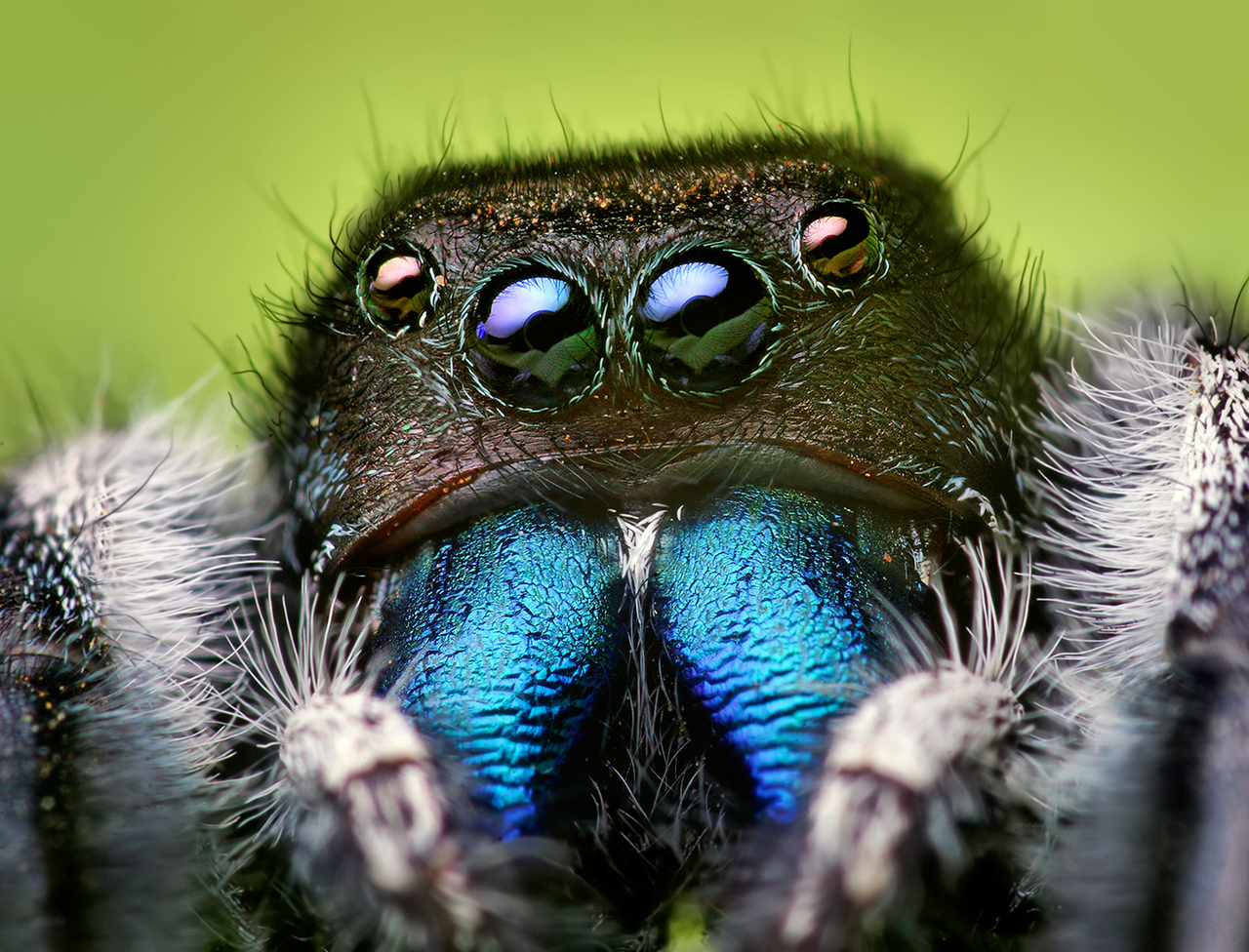
Baby Jumping Spider: Spiderling Growth, Care, and Egg Sacs
A baby jumping spider is called a spiderling, and it hatches as a nearly complete miniature of its parents: eight eyes, fuzzy body, and the same head-tilting curiosity, all packed into a body about the size of a pinhead, 1 to 2 millimeters long. A female jumping spider lays 30 to 170 eggs in a silk sac, guards them until they hatch in 2 to 4 weeks, and within another couple of weeks the spiderlings disperse to live entirely on their own, hunting live prey from day one of independence.
People meet baby jumping spiders in two ways: a tiny fuzzy jumper appearing on a windowsill in spring, or a clutch of spiderlings hatching from an egg sac in a garage, shed, or a pet jumping spider’s enclosure. This guide covers how spiderlings grow, what those tiny hunters eat, whether they are dangerous, and what to do with an egg sac, whether you want the babies gone or you are raising them on purpose.
| Fact | Baby Jumping Spider |
|---|---|
| Name | Spiderling |
| Eggs per sac | 30 to 170 |
| Hatch time | 2 to 4 weeks |
| Size at dispersal | 1 to 2 mm |
| Molts to adulthood | 5 to 8 |
| Time to maturity | Several months to a year |
What Is a Baby Jumping Spider Called?
Baby jumping spiders are spiderlings, or slings in the pet-keeping community, and unlike many insects there is no larval stage in between: a spiderling hatches looking and behaving like a tiny adult. From its first independent days it stalks prey visually, turns its whole body to track movement, and makes the calculated leaps that define the jumping spider family, trailing a silk safety line behind every jump.
The mother is unusually attentive for a spider. She builds a dense silk nest, lays her eggs inside a cushioned sac, and stands guard over it without hunting for weeks, living off her reserves. Many females die shortly after their spiderlings disperse, having spent everything on that single defended clutch, though some species produce two or three sacs in a season.
Newly hatched spiderlings actually stay inside the nest through their first molt, blind and pale, and only emerge once their exoskeleton and eyes are ready. What you see leaving the sac is technically the second stage of their lives, already equipped with the sharp vision that makes jumping spiders the most visually capable spiders on Earth.
The Egg Sac: What You Found in the Corner
A jumping spider egg sac is a white to cream silk cushion, usually 6 to 12 millimeters across, tucked inside a larger woven silk retreat rather than hanging exposed in a web. Favorite spots track exactly where people find them: under windowsills and deck railings, behind shutters, in shed corners, between stacked flowerpots, and along the tops of door frames.
The giveaway that it belongs to a jumping spider is the guard. Peel back a corner of the silk retreat (gently, if you must) and a fuzzy spider with two huge forward-facing eyes will usually be sitting directly on the sac, refusing to flee. Orb weavers and cobweb spiders abandon or hang their sacs in webbing; a jumper mothers hers in a silk sleeping bag.
Timing follows the calendar. Most North American jumpers, including the bold jumper (Phidippus audax) and the regal jumper of the Southeast, mate in spring and guard eggs from late spring into summer, so sacs discovered in May through August are likely active, while silk retreats found in winter more often hold a hibernating adult than eggs.
Growth: Molts, Size, and the Road to Adulthood
Spiders grow in steps, and a spiderling reaches adulthood through 5 to 8 molts, shedding its rigid exoskeleton each time its body outgrows the shell. Between molts, the growth rate depends almost entirely on food and temperature: well-fed spiderlings in a warm summer can mature in a few months, while late-season babies overwinter as juveniles and finish growing the following spring.
Each molt is the most dangerous day of a spiderling’s life. The spider hangs inside a silk hammock, pumps fluid to crack the old shell, and pulls itself free soft and defenseless, staying hidden for a day or two while the new exoskeleton hardens. Pet keepers learn quickly that a spiderling refusing food and sealing itself into a thick web is premolt, not sick.
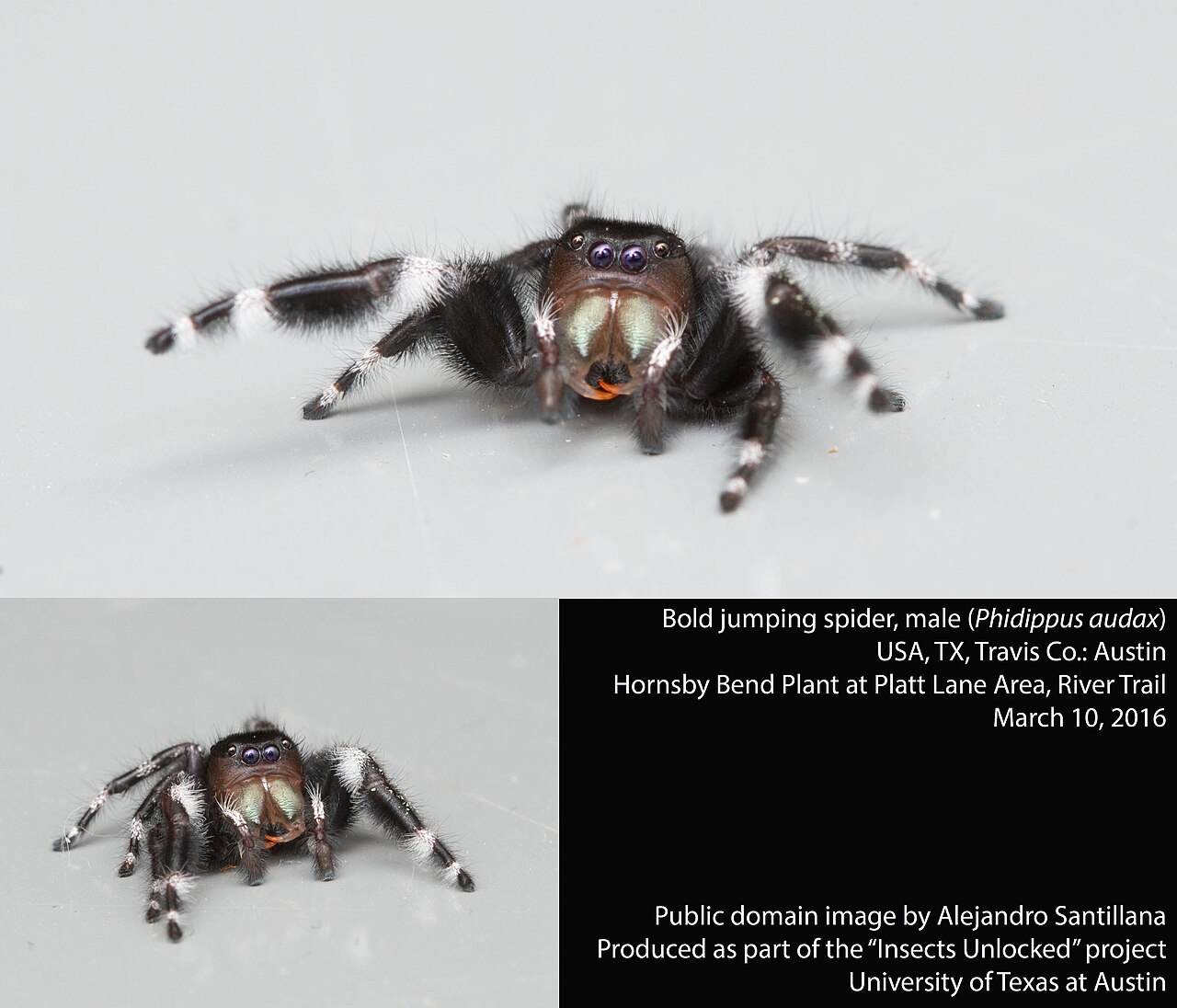
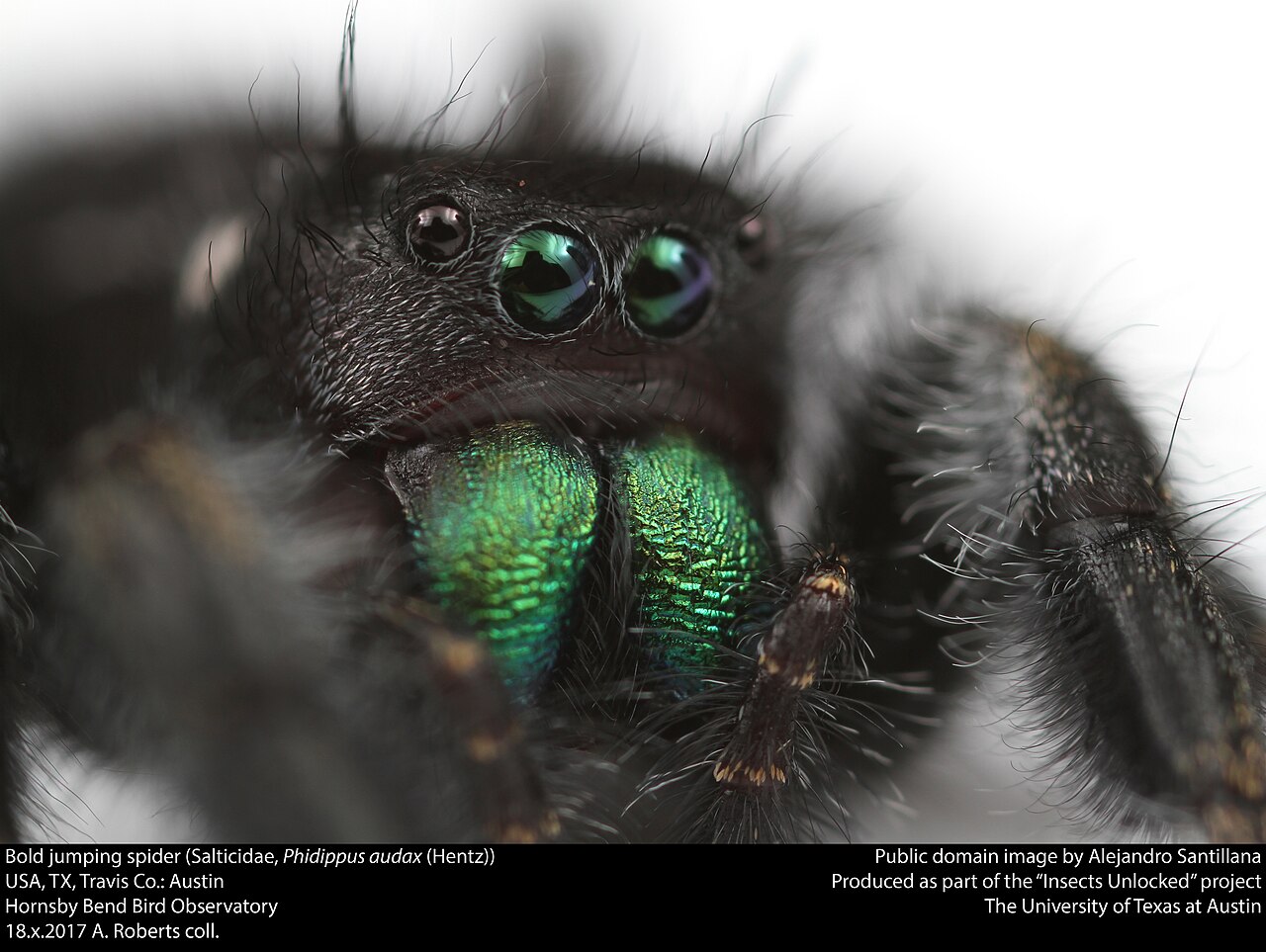
Size mapping helps age a found jumper. A fuzzy jumper under 3 millimeters is an early-stage spiderling, 4 to 7 millimeters marks a juvenile, and species like the bold jumper top out at 8 to 15 millimeters as adults, with females larger than males. Adult coloring, like the bold jumper’s iridescent green chelicerae and crisp white spots, sharpens over the last molts; babies often show orange or muted markings that darken with age.
What Baby Jumping Spiders Eat
Spiderlings are strict live-prey hunters from independence onward, and their menu is simply scaled to their size: springtails, aphids, fruit flies, gnats, mosquito-sized midges, and hatchlings of other spiders such as the grass spider. A spiderling takes prey up to roughly its own body length, stalking cat-like and pouncing rather than trapping, which makes even the babies genuinely useful pest control on houseplants and garden foliage.
They also drink. In the wild, spiderlings sip dew droplets from leaves each morning, and dehydration kills more captive slings than hunger does, which is why keepers mist one wall of an enclosure lightly a few times a week rather than adding a water dish a tiny spider could drown in.
Cannibalism is part of the plan. Sibling spiderlings that stay bunched together after dispersal will eat each other, which is precisely why nature sends them ballooning apart and why pet keepers separate slings into individual containers by their second molt. For the adult version of the menu and hunting style, see what jumping spiders eat.
Ballooning: How Spiderlings Leave Home
Days after leaving the nest, most spiderlings perform one of nature’s stranger commutes: ballooning. The spiderling climbs to a high point, tiptoes with abdomen raised, releases strands of silk into the air, and lets electrostatic charge and breeze lift it off the surface, sailing anywhere from a few yards to, on record-setting days, miles. It is how a species of 2-millimeter babies colonizes new gardens, rooftops, and occasionally ships at sea.
Ballooning explains two common backyard moments. The single tiny jumper that appears on a third-floor window screen did not climb the building; it flew there. And the fine silk strands draped across a lawn on a dewy fall morning, called gossamer, are the leftover flight lines of a mass dispersal event, usually after a warm day following rain.
Not every spiderling balloons; some simply walk to the nearest unoccupied hunting territory. But dispersal of one kind or another is non-negotiable, both to escape hungry siblings and because a jumping spider’s visual hunting style needs exclusive ground. By the time you notice a resident jumper on your fence post, it has likely held that beat against rivals for weeks.
Are Baby Jumping Spiders Dangerous?
No, and it is not close. A spiderling’s fangs are too small to break human skin at all, and even adult jumping spiders bite only when trapped against skin, delivering venom adapted for flies that causes, at worst, a mild bee-sting-like welt in people. Jumping spiders are not on any medical concern list in North America; that list is essentially the brown recluse and widow spiders, which look and behave nothing like a fuzzy jumper.
Confusion with actually significant spiders drives most worry, so learn the frame: jumping spiders are compact, fuzzy, and move in stop-start bursts with two huge headlight eyes; recluses are smooth, uniformly tan, long-legged, and shy. Our comparison of the wolf spider vs brown recluse covers the lookalike logic in detail, and a spiderling-sized anything is harmless while you sort it out.
The realistic risk runs the other direction. Spiderlings are fragile enough that a curious finger can fatally injure one, so observation beats handling at the baby stage. If one must be moved, the cup-and-paper method transfers it without contact, and it will happily relocate to the nearest houseplant and start earning its keep against fungus gnats.
Found an Egg Sac: Keep, Move, or Remove
If the sac is somewhere tolerable, the do-nothing option is genuinely the best pest control deal on the market: 30-plus visual hunters will hatch, disperse within days, and spend the season eating aphids, gnats, and fly larvae around your property. Jumping spiders do not infest houses, build messy webs, or seek indoor living; the babies leave.
If the location will not work, relocation is easy because the sac is attached to a surface, not suspended. Wearing a glove, gently free the whole silk retreat with a putty knife or card and set it in a sheltered outdoor spot: under a deck rail, inside a woodpile gap, or against a shed wall, oriented so rain cannot pool in it. The guarding female usually rides along with her sac.
Only in a genuinely bad spot (inside living space, inside a pet enclosure that houses something that would eat them) does removal make sense, and even then the humane version is moving the sac outdoors rather than destroying it. For keepers who find a surprise sac in a pet jumper’s tank, the practical play is moving the sac to a ventilated deli cup before hatch day, because a jumping spider enclosure sized for one adult becomes a cannibalism arena for 80 siblings.
Raising Spiderlings: The Pet-Keeper Basics
Jumping spiders have become the most popular pet spiders in the world, and raising slings is where most keepers start. The setup is small and simple: an individual ventilated container per spiderling (a 32-ounce deli cup with cross-ventilation works), a stick or fake leaf to climb, and height rather than floor space, since jumpers live vertically and build their sleeping sacs up top.
Feeding scales with molts. Hatchling slings take springtails or flightless fruit flies (Drosophila melanogaster first, the larger hydei after a few molts) every 2 to 3 days, moving to small crickets or house flies as juveniles. Skip any prey longer than the spider, remove uneaten insects the same day, and mist one wall lightly 2 to 3 times a week for drinking droplets; the enclosure itself should stay dry and airy, never swampy.
Expect the quiet weeks. Slings seal into thick silk hammocks to molt and can refuse food for a week or more around each shed, which is normal, and keepers who resist the urge to dig them out see the best survival rates. The reward for a few months of deli-cup husbandry is one of the most engaging invertebrate pets there is: a spider that watches you back. The University of Florida’s entomology department (entnemdept.ufl.edu) notes bold jumpers adapt readily to human presence, which matches every keeper’s experience of a pet that tracks your finger like a cat.
Frequently Asked Questions
What is a baby jumping spider called?
A spiderling, or a sling among pet keepers. It hatches as a 1 to 2 millimeter miniature of the adult and hunts live prey on its own from the moment it disperses.
How many babies does a jumping spider have?
Typically 30 to 170 eggs per silk sac, guarded by the female until they hatch in 2 to 4 weeks. Some species produce two or three sacs in a season.
Are baby jumping spiders dangerous to humans?
No. Spiderling fangs cannot break human skin, and even adult jumping spiders deliver at most a mild, bee-sting-like bite when trapped. They are not medically significant spiders.
What do baby jumping spiders eat?
Tiny live prey: springtails, aphids, fruit flies, gnats, and midges, scaled up with each molt. In captivity, flightless fruit flies every 2 to 3 days are the standard sling diet.
How long does a baby jumping spider take to grow up?
Through 5 to 8 molts over several months to a year, depending on food and temperature. Late-season spiderlings often overwinter as juveniles and mature the next spring.
Should I remove a jumping spider egg sac?
Only if the location is unworkable. The hatchlings disperse within days and provide excellent natural pest control, and an attached sac can be gently relocated outdoors, usually with the guarding mother.
Why is a tiny jumping spider on my upstairs window?
It probably ballooned there: spiderlings release silk strands and ride air currents to disperse, routinely landing on upper floors, rooftops, and window screens far from where they hatched.