Coyote Symbolism: What It Means to See One, by Tradition
Seeing a coyote is widely read as a sign to stop taking a situation at face value, because across the traditions that feature the animal most heavily it stands for the trickster: the figure who exposes self-deception through mischief rather than through warning. In the broad folk reading popular today, coyote spiritual meaning centers on adaptability, humor, survival and the collapse of plans you were too attached to.
The coyote (Canis latrans) carries more recorded symbolism in North America than almost any other mammal, and the meanings are not interchangeable. What follows separates what specific traditions actually teach from the modern spirit animal literature that borrows from them, then works through the situations people most often ask about: a coyote in the yard, at the window, crossing a path, howling at night, appearing repeatedly, found dead, or showing up in a dream.
In most North American Indigenous traditions the coyote is a trickster and a creator figure, so a sighting is commonly interpreted as a prompt toward humility, flexibility and humor about one’s own plans. Modern spirit animal writing adds adaptability, resourcefulness and survival instinct. Biblical and European readings tend toward desolation and cunning. None of these meanings is a documented fact; they are beliefs held within specific traditions.
| Situation | Common interpretation | Tradition it draws from |
|---|---|---|
| Coyote crossing your path | A plan needs rethinking; do not force it | Modern spirit animal writing |
| Coyote in the yard or garden | Boundaries are being tested at home | Contemporary folk reading |
| Coyote at a window | Something deliberately ignored is asking for attention | Contemporary folk reading |
| Howling heard at night | Community, grief or news traveling | Plains and Southwest oral traditions |
| Repeated sightings | Treated as a totem or guide relationship | Modern totem literature |
| Dead coyote found | An old strategy has run its course | Contemporary folk reading |
| Coyote in a dream | Self-deception surfacing, or humor as medicine | Jungian and New Age dream work |
What Does Seeing a Coyote Signify?
Among people who read animal encounters as meaningful, a coyote sighting signifies that cleverness is about to matter more than strength. The animal’s reputation rests on its refusal to be eliminated: coyotes expanded their range across the entire continent during a century of intensive extermination campaigns, reaching cities that never held them before. That biological fact underwrites nearly every symbolic claim attached to them.
The second layer is the uncomfortable one. In the source traditions the trickster is not a flattering mirror. Coyote in those stories is greedy, lustful, impulsive and frequently humiliated by his own scheming. A sighting read within that frame is not a compliment about your resourcefulness; it is closer to a nudge that you may be the one being fooled.
A third reading, common in urban areas, treats the encounter as ordinary. Coyotes now live in Los Angeles, Chicago and New York, and seeing one at dusk in a suburb carries no more special weight than seeing a raccoon. Many people hold the symbolic and the mundane reading at once without conflict.
Coyote Symbolism in Native American Traditions
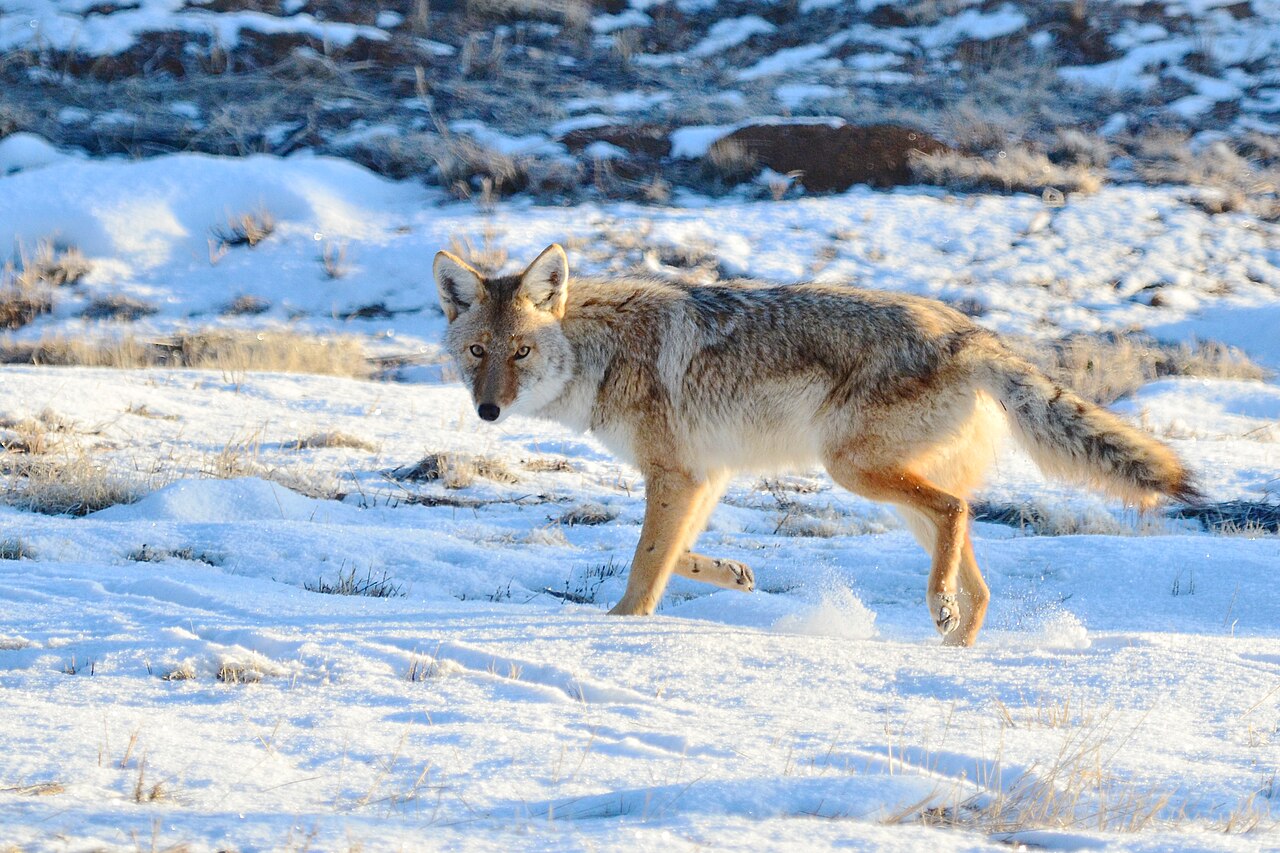
Coyote appears as a central figure in the oral traditions of dozens of distinct nations across the Great Basin, the Plains, the Southwest and California, and the meaning is specific to each. Treating these as one shared belief system flattens real differences, and several of the stories are tied to particular seasons, ceremonies or lineages that outsiders are not meant to retell casually.
What recurs across many of them is a dual role. Coyote helps bring the world into its present form, placing stars, bringing fire or shaping the terms of human life, and in the same cycle he ruins things through appetite and impatience. He is neither a villain nor a hero but the figure through which the consequences of foolishness are taught.
In some traditions Coyote is explicitly associated with death entering the world, having argued that people should not return after dying, then grieving when his own child died. The story is told to explain mortality as a condition Coyote himself talked into existence.
The Navajo and Lakota Accounts
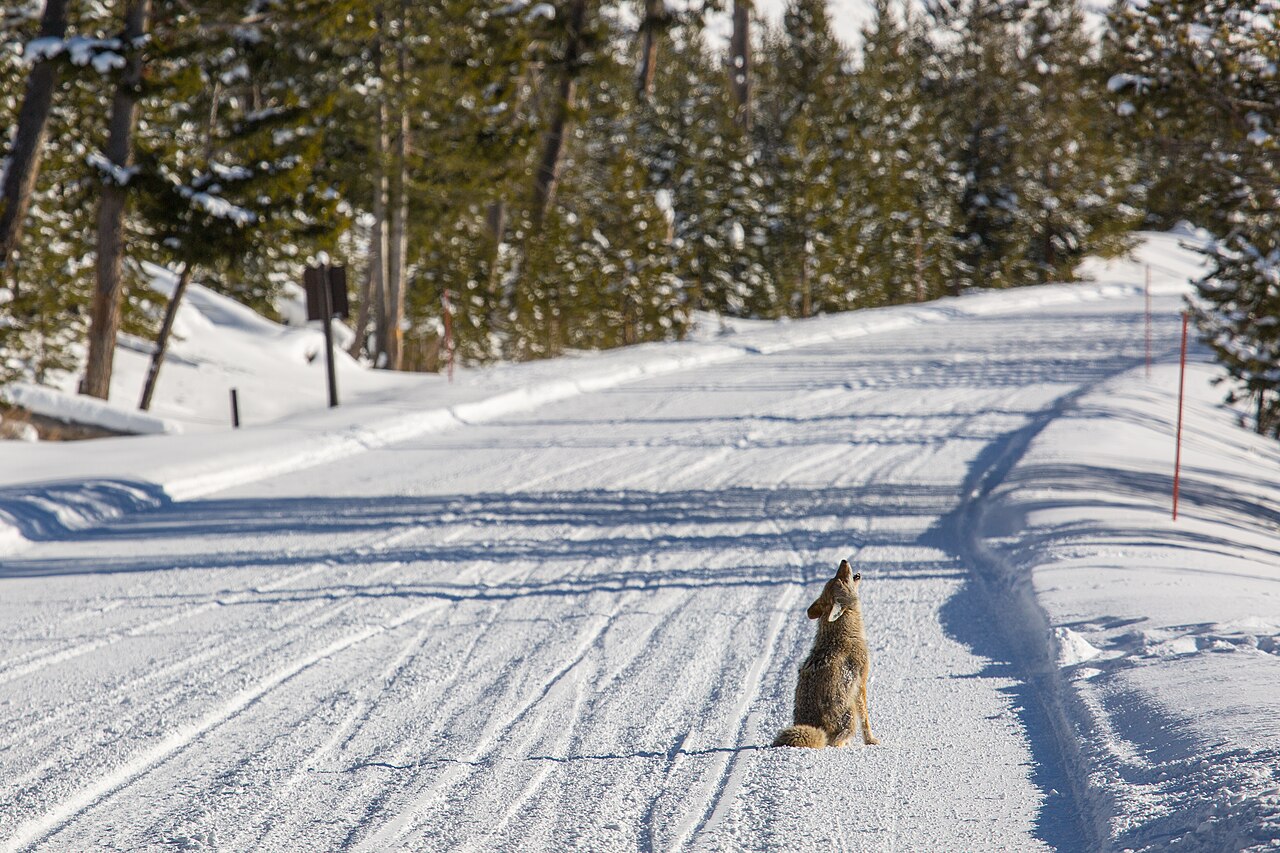
In Navajo tradition, Coyote (Mą’ii) is deeply woven into cosmology and into the Blessingway and other ceremonial contexts. He is linked with disorder and with witchcraft in some tellings, and encountering one crossing a road or a path has historically been taken by some Diné people as a reason to turn back or to postpone a journey. This is a serious belief within a living religious tradition, not a decorative symbol.
Among Lakota and other Plains peoples, the related trickster figures carry comparable weight, and stories involving them are told in particular settings and seasons. The academic literature on Coyote in Navajo religion is substantial; the Smithsonian Institution holds extensive ethnographic collections documenting these traditions.
The practical point for anyone searching this topic: if a specific nation’s teaching is what you want, the accurate source is that nation’s own publications and cultural centers, not a general symbolism page. Much of what circulates online as Native American coyote meaning was written without any connection to the communities involved.
Coyote Meaning in Christian and Biblical Interpretation
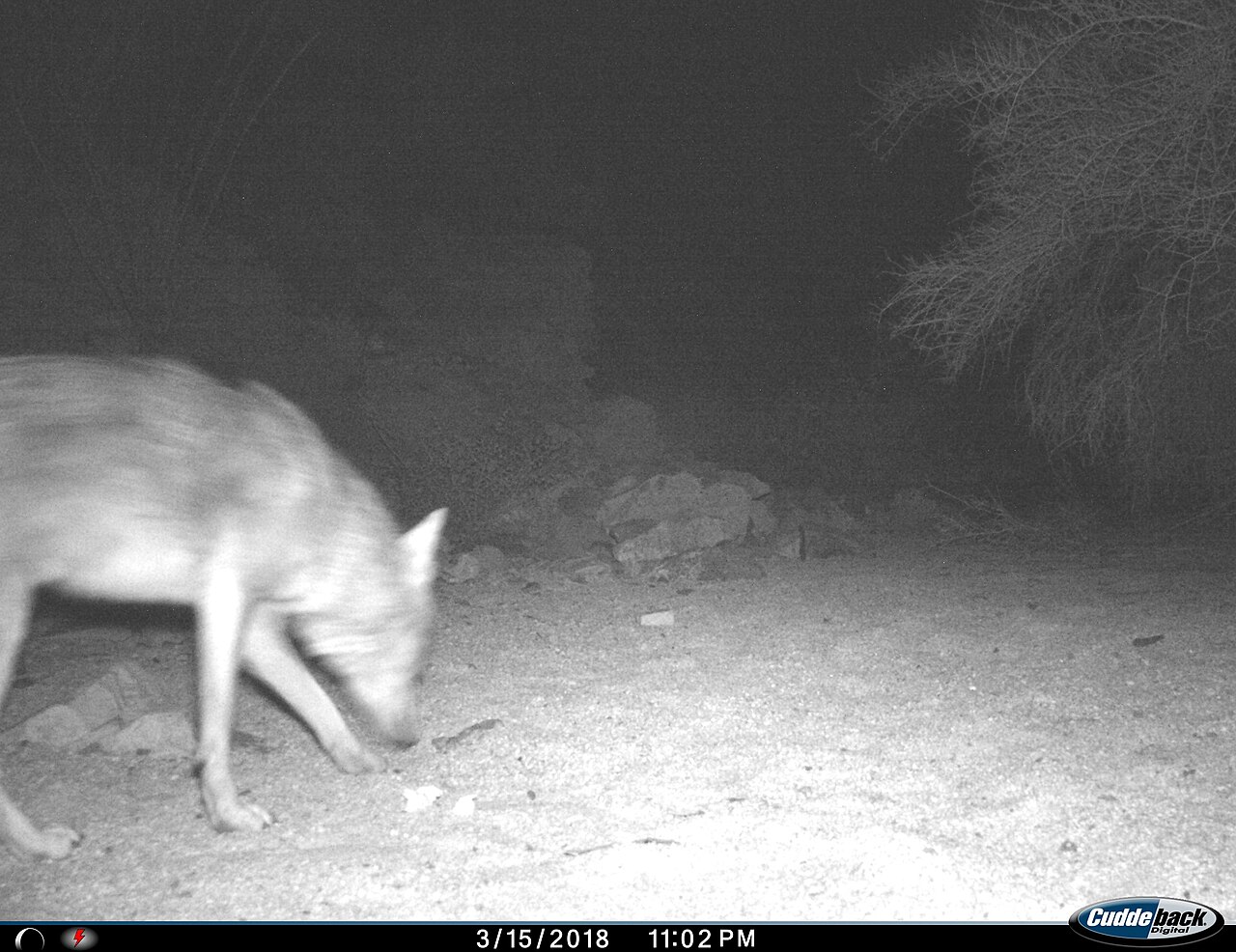
The coyote does not appear in the Bible, which is set in a region where the species never lived. What some English translations render as jackal or wild dog, particularly in prophetic passages about ruined cities, is the closest textual relative, and that imagery is consistently negative: a jackal inhabiting a ruin signals desolation and abandonment.
Christian folk interpretation in the American Southwest and Mexico has sometimes mapped the coyote onto this material, treating it as an emblem of the wilderness beyond the settled and the sanctified. In other local Catholic traditions the animal is read more neutrally, as part of creation with its own place.
Readers who approach sightings through scripture generally land on caution rather than omen. The emphasis falls on discernment, the same theme that attaches to crow symbolism in Christian folk reading, where a scavenger’s presence is taken as a call to attention rather than a prediction. For a closely related question, see our guide to sea turtle symbolism.
Celtic and European Parallels

Celtic tradition has no coyote, so any claim about Celtic coyote meaning is a modern invention. What exists are parallel figures: the fox as a cunning intermediary, and wolves and wild dogs associated with liminal places, battlefields and the boundary between the living and the dead.
In Irish and Welsh material, hounds and wolves accompany otherworldly hunts and appear at transitions. If someone draws a Celtic reading of a coyote encounter, they are almost always transposing fox or wolf symbolism onto a New World animal, which is worth knowing before accepting the interpretation as traditional.
European folklore more broadly treats the cunning canid as a cautionary character: clever, hungry and not to be trusted with the henhouse. That sits close to the trickster, though without the creative role the North American figure holds.
East Asian Views and the Fox Parallel
There is no coyote in Chinese, Japanese or Korean tradition, but the fox occupies a comparable symbolic position and is frequently invoked by writers looking for an East Asian angle. The Japanese kitsune and Chinese húli jīng are shapeshifters: intelligent, long-lived, capable of both guardianship and deception depending on the story.
The key difference matters. Fox spirits in these traditions are often sacred, associated with Inari shrines and with rice and prosperity, and the deception they practice is usually aimed at specific moral ends. Coyote’s foolishness, by contrast, is frequently aimed at himself, and the humor is the lesson.
Anyone offered a coyote meaning sourced to Japan or China is receiving a substitution, not a translation. It can still be a useful lens, as long as it is named for what it is.
Coyote as Spirit Animal, Totem and Power Animal
These three terms are used loosely and often interchangeably in contemporary writing, though they originally meant different things. In modern usage, a spirit animal is a guide that arrives for a season, a totem is a lifelong association often claimed by family or clan, and a power animal is a source of strength called on deliberately.
Coyote as spirit animal is typically described as arriving when someone is taking themselves too seriously, clinging to a collapsing plan, or operating with more pride than evidence. The stated lesson is to laugh, adapt and keep moving. Coyote as totem is described as a lifelong temperament: improvisational, humorous, uncomfortable with rigid structure.
It is worth saying plainly that totem in the anthropological sense belongs to specific societies with specific kinship structures, and that many Indigenous writers object to its casual use. People who find the framework useful can keep it while dropping the borrowed vocabulary, much as readers do with bald eagle spiritual meaning.
Seeing a Coyote in Your Yard or Garden
Symbolically, a coyote inside the boundary of a home is usually read as a question about boundaries themselves: what has been let in, what is being quietly taken, and whether the perimeter you assumed was secure actually is. The domestic setting is what gives the sighting its charge in folk reading.
Practically, a coyote in a yard is drawn by food. Fallen fruit, pet food left outside, unsecured compost, bird seed that attracts rodents and accessible small pets all explain the visit without reference to meaning. Coyotes that find food return, and habituated animals lose their wariness of people.
Both readings point the same direction: look at what is being offered. Remove the attractant, supervise small pets at dawn and dusk, and make the yard boring. Hazing with noise while the animal is still shy is more effective than anything attempted after it has settled in.
A Coyote at Your Window or Crossing Your Path
A coyote appearing at a window is treated in contemporary folk reading as the most pointed version of the encounter: something you have been declining to look at has come to the glass. The window is read as the threshold between the life you have arranged and what you have excluded from it.
A coyote crossing your path is the most searched situation of all, and interpretations split. The modern uplift reading says a plan needs revision and that stubbornness will cost you. The traditional Diné reading, by contrast, treats a coyote crossing a path as a genuine reason for caution, and some people turn back or delay rather than continue.
Color variants attract their own folklore. A dark coyote is read as the unconscious or the hidden, in the same register as black butterfly spiritual meaning, while a pale or white individual is treated as rare and auspicious. Biologically these are coat variation, melanism and occasionally leucism, not separate kinds of animal.
Hearing Coyotes Howl at Night
Night howling carries its own body of meaning, usually tied to community, mourning and the passing of news. Because a pack of three or four can sound like a dozen through the acoustic effect of varied pitches, the chorus has historically been heard as far larger and more significant than it is.
Folk readings of a chorus heard close to the house range from a reminder to call family, to a sign that grief in the area is being voiced, to a simple announcement that the territory is occupied. The last of these is also the biological answer: group yip-howls function as territorial and reunion signals between pack members.
Single howls answered by distant ones are contact calls. Hearing them repeatedly from the same direction over several nights means a resident family group, often a mated pair with that year’s pups, rather than anything unusual.
Repeated Sightings and Finding a Dead Coyote
Repetition is what turns an encounter into a relationship in totem literature. Three or more sightings in a short span, especially in different settings, is the usual threshold people apply before treating coyote as an ongoing guide rather than a single message. The mundane explanation is a territorial animal on a predictable route.
Finding a dead coyote is read as an ending that has already happened: a strategy, a defense or a way of operating that has stopped working. In this reading the message is retrospective rather than predictive. It occupies the same interpretive space as dead bird symbolism, where the emphasis falls on completion instead of threat.
Roadkill is the common reality. Vehicle collisions are a leading cause of death for urban coyotes, and a carcass on a shoulder reflects traffic patterns more than anything else. Reporting it to local animal control is the useful response.
Coyote Dreams and What They Are Said to Mean
Dream interpreters working in a Jungian frame read coyote as the shadow in its playful form: the part of a person that sabotages consciously held goals, surfacing in a shape that is hard to stay angry at. The prescribed response is recognition and humor rather than suppression.
Specific dream scenarios carry standard readings in popular dream dictionaries. A coyote watching from a distance is framed as an invitation to observe your own behavior; being chased is framed as avoidance of something already known; a coyote that speaks is treated as the dreamer’s own unacknowledged judgment. These are interpretive conventions, not findings.
People who track these dreams often record them alongside other recurring animal imagery, since patterns across several nights read more clearly than a single dream. Lighter, transformation-focused imagery such as dragonfly symbolism and the household associations of cardinal symbolism are frequently logged the same way.
Related reading: Bat Symbolism.
Related reading: Snake Symbolism.
Related reading: Fox Symbolism.
Related reading: Squirrel Symbolism.
Related reading: Skunk Symbolism.
Related reading: Alligator Symbolism and Spiritual Meaning.
Related reading: Salamander Symbolism.
Related reading: Bear Symbolism.
Related reading: Turtle Symbolism.
Related reading: Stink Bug Symbolism.
Related reading: Rattlesnake Symbolism.
Related reading: Spider Symbolism.
Related reading: Mouse Symbolism.
Related reading: Axolotl Symbolism.
Related reading: Frog Symbolism.
Related reading: Scorpion Symbolism.
Related reading: Rabbit Symbolism.
Related reading: Cockroach Spiritual Meaning.
Related reading: Centipede Spiritual Meaning.
Related reading: Bison Symbolism.
Related reading: Firefly Symbolism.
Related reading: Python Symbolism.
Related reading: Beaver Spirit Animal.
Related reading: Bobcat Symbolism.
Related reading: Lizard Symbolism.
Related reading: Hare Symbolism.
Related reading: Possum Symbolism.
Related reading: Gecko Symbolism.
Related reading: Raccoon Symbolism.
Related reading: Iguana Symbolism.
Related reading: Elk Symbolism.
Related reading: Hedgehog Symbolism.
Related reading: Porcupine Symbolism.
Related reading: Lynx Symbolism.
Related reading: Groundhog Symbolism.
Frequently Asked Questions
What does seeing a coyote signify?
In most interpretations it signifies adaptability, cleverness and a prompt to stop forcing a plan that is not working. Traditions differ sharply: trickster readings treat it as a lesson in humility, some Diné teaching treats a coyote crossing a path as a reason for caution, and biblical-influenced readings lean toward desolation. All are beliefs rather than established meanings.
How rare is it to see a coyote?
Not rare at all. Coyotes live in all 49 continental U.S. states and in every major metropolitan area including Chicago, Los Angeles and New York. They are most visible at dawn and dusk and during the spring pup-rearing season. A sighting in a suburb is an ordinary event, which is worth weighing against any reading of it as a special sign.
What is a coyote?
The coyote (Canis latrans) is a wild North American canid weighing 20 to 50 lb (9 to 23 kg), smaller than a wolf and larger than a fox. It is an opportunistic omnivore, lives in mated pairs with family groups, and has expanded its range dramatically over the past century despite sustained control efforts.
What does a black or white coyote mean spiritually?
Folk reading treats a dark coyote as the hidden or unconscious and a white one as rare guidance or purity, with red-toned animals linked to vitality. Biologically these are ordinary coat variation, including melanism and occasionally leucism. No tradition with documented continuity assigns distinct meanings by coat color.
Is the coyote always a trickster figure?
No. In several traditions Coyote also acts as a creator or culture-bringer who places stars, steals fire for people or sets the terms of human life. The trickster role dominates popular summaries because those stories are the most widely retold, but the figure is genuinely dual rather than purely mischievous.
Do coyotes recognize people?
Coyotes learn to recognize individual humans, vehicles and routines in areas where they encounter them regularly, and habituated animals lose their natural wariness. That learning is behavioral rather than symbolic. It is also the reason wildlife agencies advise against feeding them, since a coyote that associates people with food becomes a genuine problem.