Hognose Snake
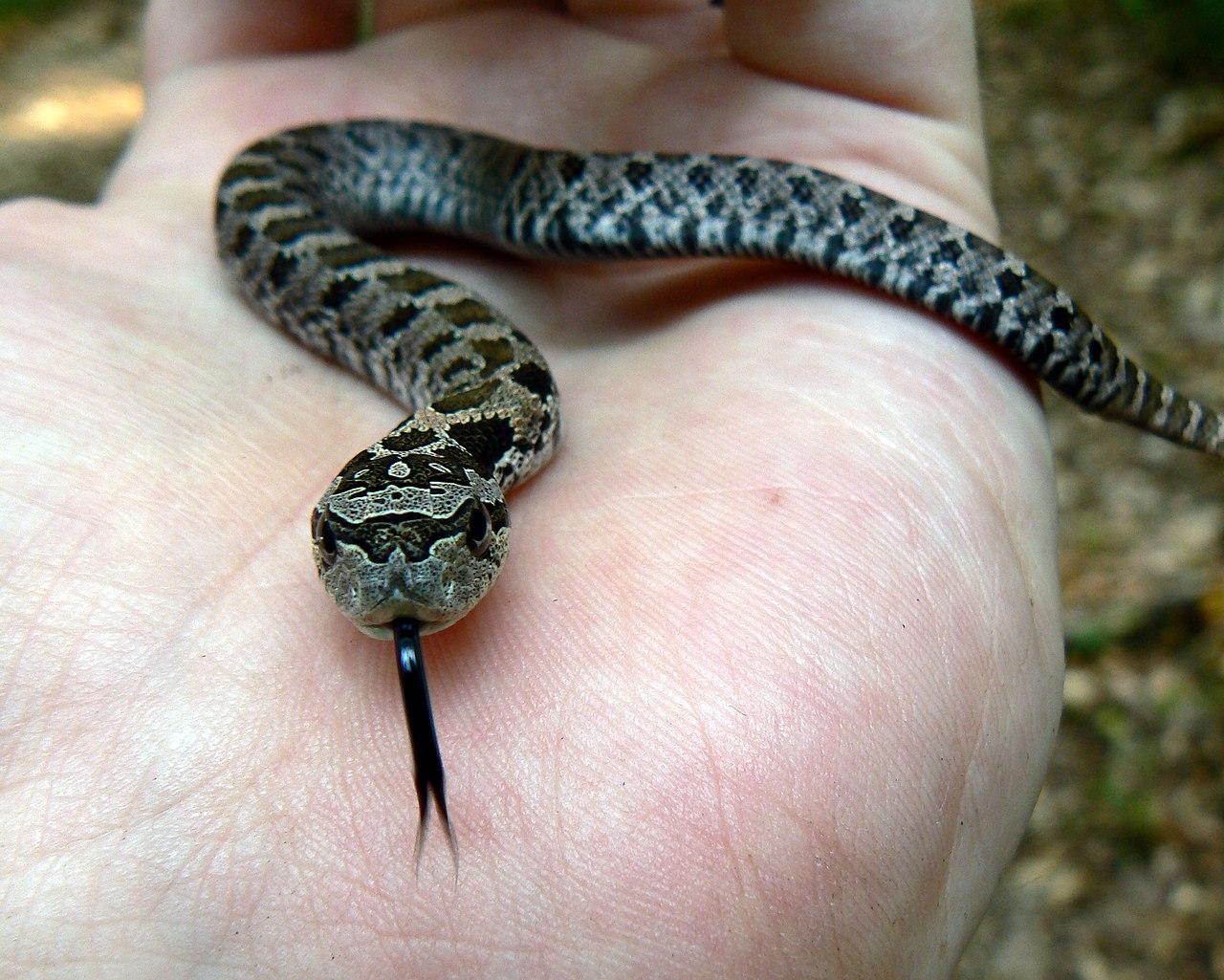
A hognose snake is a small, stout-bodied North American snake best known for its upturned, pig-like snout and its theatrical habit of playing dead when threatened. Instead of fleeing or striking like most snakes, a cornered hognose hisses, flattens its neck into a cobra-like hood, and then flips onto its back with its mouth open and tongue lolling out, feigning death so convincingly that predators lose interest and move on. Five species make up the genus Heterodon, ranging from the widespread Eastern hognose to the increasingly popular pet-trade Western hognose.
Though technically mildly venomous, hognose snakes pose essentially no danger to people, and their odd combination of dramatic bluffing and gentle temperament has made them one of the most beloved backyard reptile encounters in the United States.
| Quick Reference | Detail |
|---|---|
| Scientific Name | Heterodon spp. |
| Common Species | Eastern, Western, Southern, Mexican, and Dusty hognose |
| Adult Size | 14 to 41 inches, depending on species and sex |
| Lifespan | 15 to 20 or more years in captivity |
| Venom | Mildly venomous (Duvernoy’s gland), not dangerous to humans |
| Diet | Toads, frogs, salamanders, small reptiles, and occasionally small mammals |
| Range | Grasslands, sandy soils, and open woodlands across North America |
What Is a Hognose Snake?
The name “hognose” comes from the sharply upturned scale at the tip of the snake’s snout, which looks a bit like a pig’s nose and works exactly like a small shovel. Hognose snakes use this scale to push aside sand, loose soil, and leaf litter as they search for buried toads and other prey, and to bury themselves for shelter during the hottest or coldest parts of the day. The genus name Heterodon literally means “different tooth,” a reference to the snake’s unusual rear teeth, which are enlarged and specially shaped to help it deal with inflated toads.
Body shape is stout and thick relative to length, with keeled scales that give the skin a slightly rough, textured feel rather than the smooth glossy look of many other snake species. Coloring is extremely variable even within a single species and can range from sandy tan, olive, and gray to vivid orange, yellow, or reddish brown, usually broken up by large, irregular dark blotches down the back with smaller blotches along the sides. This variability is part of why hognose snakes are so often mistaken for other, more dangerous species at first glance.
Adult size depends heavily on which of the five Heterodon species you are looking at and on the individual snake’s sex. Females typically grow noticeably larger than males across all hognose species, a pattern seen in many snakes but especially pronounced here, with some Eastern hognose females reaching lengths approaching four feet while males of the same species rarely exceed two and a half feet.
The Five Types of Hognose Snakes
The Eastern hognose (Heterodon platirhinos) is the most widespread species, found in woodlands, fields, and sandy habitats from southern Canada down to Florida. It tends to run larger than its western relative and shows the widest range of color variation of any hognose species, including melanistic (all-black) individuals in some populations.
The Western hognose (Heterodon nasicus) dominates the pet trade thanks to its manageable size, calmer disposition once socialized, and the huge range of captive-bred color morphs now available to hobbyists. It naturally ranges through the Great Plains from southern Canada to central Mexico, favoring drier prairie and semi-desert habitat than its eastern cousin.
The Southern hognose (Heterodon simus) is the smallest and rarest of the group, restricted to sandy coastal plains in the southeastern United States, and its populations have declined so sharply that it has been proposed for federal endangered species protection. The Mexican hognose and Dusty hognose round out the genus, each adapted to specific southwestern desert and scrubland environments and far less commonly encountered or kept as pets than their more famous relatives.
Why Do Hognose Snakes Play Dead?
When bluffing alone does not scare off a predator, a hognose snake commits fully to its most famous trick: thanatosis, or death-feigning. The snake writhes violently as if in pain, opens its mouth, lets its tongue hang out, and finally rolls onto its back and goes completely limp. If a curious predator or a person flips the snake back onto its belly, it will stubbornly roll over again, apparently convinced that a “dead” snake belongs upside down.
The performance often gets messier still. Many hognose snakes release musk from scent glands and sometimes defecate during the display, adding a foul smell that may reinforce the illusion of a diseased or spoiled carcass that most predators would rather avoid eating. Researchers have also proposed that lingering toad toxins from the snake’s diet could contribute to the off-putting scent, though the exact reason predators fall for the trick is still debated among herpetologists.
Baby rattlesnakes rely mainly on rattling and striking, but baby hognose snakes come pre-loaded with the full death-feigning routine from the moment they hatch. No learning or practice is required. Even hatchlings only a few inches long will hiss, hood up, and flop onto their backs the very first time they feel seriously threatened, which shows just how deeply this behavior is wired into the species.
Are Hognose Snakes Dangerous or Venomous to Humans?
Hognose snakes are considered mildly venomous, but that classification is more of a technicality than a real safety concern. Their venom is produced by a Duvernoy’s gland and delivered through enlarged rear teeth rather than true hollow fangs, which means the snake generally has to bite, hold on, and chew for any venom to reach a wound, a very different delivery system from front-fanged venomous snakes. For a closely related question, see our guide to black and yellow snake.
According to the Florida Museum of Natural History at the University of Florida, no human death has ever been attributed to a hognose snake bite, and bites of any kind are extremely rare because these snakes strongly prefer bluffing and death-feigning over actually biting. Most reported bites happen to people who were previously handling frogs, toads, or fish, since the scent apparently triggers a feeding response rather than a defensive one.
People who are bitten sometimes experience localized swelling, redness, or itching that can look alarming but typically resolves without medical treatment. A small number of documented cases describe more significant swelling in someone with a stronger reaction, so a bite that causes spreading pain or swelling is still worth having checked by a doctor, even though there is no record of a hognose bite being life-threatening.
What Do Hognose Snakes Eat?
In the wild, hognose snakes are toad and frog specialists to a degree unusual among North American snakes. Their enlarged rear teeth are specifically shaped to puncture and deflate toads that have inflated themselves with air as a defense against being swallowed, an adaptation that gives hognose snakes access to a prey source most other predators avoid.
This toad-heavy diet comes with a built-in survival tool: many toad species secrete bufotoxin, a chemical strong enough to sicken or kill other predators, yet hognose snakes appear to tolerate it with little apparent effect. Beyond toads and frogs, wild hognose snakes also take salamanders, small lizards, ground-nesting bird eggs, and occasionally small mammals when the opportunity arises.
Captive hognose snakes are usually raised on appropriately sized mice or rats rather than wild-caught amphibians, since rodents are far easier to source safely and provide more complete nutrition over a long captive lifespan. Some hatchlings that were wild-caught or bred from toad-obsessed parents can be stubborn about switching to rodents at first, and breeders often use scenting tricks, such as rubbing a mouse with a bit of toad or fish, to encourage that first captive meal.
Where Do Hognose Snakes Live?
Collectively, hognose snakes occupy an enormous range across North America, but each species sticks to fairly specific terrain. Western hognose snakes favor open prairies, sandy scrubland, and semi-desert country stretching from the southern Canadian provinces down through the Great Plains into central Mexico, while Eastern hognose snakes prefer sandy woodlands, old fields, and river floodplains from southern Canada to Florida.
Southern hognose snakes are restricted to sandy coastal plain habitat in a handful of southeastern states, a narrower range that has made this species far more vulnerable to habitat loss than its widespread relatives. Across all species, loose or sandy soil is the common thread, since hognose snakes rely on being able to burrow and forage for buried prey with that distinctive upturned snout.
These snakes are crepuscular, meaning they are most active around dawn and dusk, and they retreat underground or under cover during the heat of the day and overnight. If you spot fresh burrowing marks, shed skin, or snake droppings in sandy garden soil during warm months, a resident hognose snake quietly hunting toads is one likely explanation.
Keeping a Hognose Snake as a Pet
Western hognose snakes in particular have become one of the most popular intermediate pet snakes, occupying a comfortable middle ground between beginner-friendly species and more demanding exotics. Their manageable adult size, striking range of captive-bred color morphs, and generally calm temperament once accustomed to handling all add to their appeal, and their theatrical bluffing displays make them a genuine conversation piece rather than a liability.
A single adult typically does well in an enclosure of roughly 36 by 18 by 18 inches, though hatchlings start much smaller and are moved up gradually as they grow. With attentive care, a hognose snake can easily live 15 to 20 years or more, a commitment worth weighing seriously before bringing one home, and legality varies by state, so prospective owners should check local regulations before acquiring one.
Handling is generally straightforward once a hognose snake settles in, though owners should watch for the telltale milky blue-gray eyes that signal an approaching shed, a period when the snake may be more irritable and is best left undisturbed. Compared to other small, low-maintenance reptiles people often keep alongside a hognose, such as crested geckos or blue-tailed skinks, hognose snakes need a somewhat larger footprint but reward owners with far more visible, interactive behavior.
Hognose Snake vs. Look-Alikes: How to Tell Them Apart
Because hognose snakes flatten their necks into a hood and hiss loudly when startled, they are frequently mistaken for cobras, copperheads, or rattlesnakes, especially by people encountering one for the first time in a garden. The upturned, shovel-like snout is the fastest reliable giveaway, since none of North America’s venomous pit vipers share that feature, and neither do harmless species such as rat snakes, which have a more tapered, uniform head shape.
True rattlesnakes and copperheads also have a triangular, blocky head shape driven by large venom glands, heat-sensing pits between the eye and nostril, and vertical pupils, none of which a hognose snake possesses despite its cobra-style bluffing act. A hognose has no rattle at all, so any buzzing sound is coming from something else, and its round pupils and lack of facial pits are further confirmation that the dramatic hood display is exactly that: a bluff, not a warning from a genuinely dangerous snake.
When in doubt, distance and observation are always safer than close inspection. Most confusion clears up quickly once you know to check for the upturned snout, the absence of a rattle, and the round pupils, features that separate a harmless, theatrical hognose from the venomous species it is imitating.
Related reading: Rat Snake.
Related reading: Milk Snake.
Related reading: Texas Rat Snake.
Related reading: Black and White Snake.
Related reading: King Snake.
Related reading: Ring Neck Snake.
Related reading: Garter Snake Bite.
Related reading: Bull Snake.
Related reading: Rough Green Snake.
Frequently Asked Questions
Do hognose snakes bite humans?
Bites are rare because hognose snakes strongly prefer bluffing, hissing, and playing dead over actually biting. Most documented bites happened to people who had recently handled frogs, toads, or fish, and even then the mild venom typically causes only local swelling rather than serious harm.
Can you keep a hognose snake as a pet legally?
In most US states, yes, and Western hognose snakes in particular are widely bred and sold in the pet trade. Rules do vary by state and even by city, so it is worth checking local exotic pet regulations before buying one.
How long do hognose snakes live?
With attentive captive care, most hognose snakes live 15 to 20 years, and some individuals have lived even longer, so bringing one home is a long-term commitment similar to adopting a small dog.
Why do hognose snakes flatten their necks like a cobra?
Flattening the neck into a hood and hissing loudly is a bluffing display meant to make the snake look larger and more dangerous than it actually is, borrowing a page from far more venomous species in the hope that a predator backs off before any contact is needed.
Do baby hognose snakes play dead too?
Yes, playing dead is an instinctive behavior present from hatching, and hatchlings only a few inches long will hiss, hood up, and flip onto their backs the first time they feel seriously threatened, without ever having been taught to do so.
What is the difference between an Eastern and a Western hognose snake?
Eastern hognose snakes tend to grow larger, live in woodland and sandy field habitat from Canada to Florida, and show the widest color variation of the group, while Western hognose snakes are smaller, favor prairie and semi-desert terrain from the Great Plains into Mexico, and are the species most commonly bred for the pet trade.
Are hognose snakes rare or endangered?
Eastern and Western hognose snakes remain common across much of their range, but the Southern hognose snake has declined sharply due to habitat loss and has been proposed for federal endangered species protection in parts of the southeastern United States.