Owl Sounds: How to Identify 8 Common Owl Calls
Owl sounds are easier to identify than most people expect, because each North American species has a signature call that repeats in a predictable pattern. The deep, stuttering hoot in your backyard is almost always a Great Horned Owl, the rhythmic “who cooks for you” phrase belongs to the Barred Owl, a soft descending whinny points to the tiny Eastern Screech-Owl, and a harsh, raspy scream in the dark is the Barn Owl. Once you learn those four templates, you can name the owl behind most night sounds in the United States without ever seeing the bird.
This guide walks through the eight owl sounds you are most likely to hear, what each call means, when owls are most vocal, and which non-owl night sounds fool people again and again. Keep in mind that owls call most reliably in late winter and early spring, when courtship and territory defense peak, so a quiet summer yard does not mean your owls have left.
| Owl | Signature Sound |
|---|---|
| Great Horned Owl | Deep, soft “hoo-h’HOO-hoo-hoo” in a stuttering rhythm |
| Barred Owl | “Who cooks for you? Who cooks for you-all?” |
| Eastern Screech-Owl | Descending whinny and a low, even trill |
| Barn Owl | Long, harsh, hissing scream, no hooting at all |
| Northern Saw-whet Owl | Endless “too-too-too” toots, like a truck backing up |
| Burrowing Owl | Two-note “coo-cooo” plus rattlesnake-like chatter |
The Classic Hoot: Great Horned Owl
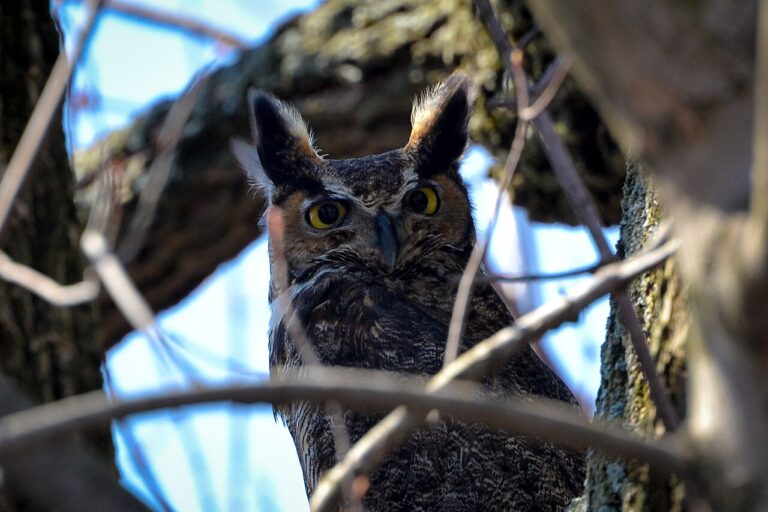
When people imagine a generic owl sound, they are almost always thinking of the Great Horned Owl. Its territorial hoot is a deep, muffled series that follows a stuttering rhythm, usually written as “hoo-h’HOO-hoo-hoo.” The call carries a long way on still nights, often more than a mile, and it has a soft, foghorn quality rather than a sharp edge. Males and females frequently duet, and you can tell them apart by pitch: the female is the larger bird, but her voice is noticeably higher than the male’s.
Great Horned Owls are among the earliest nesters in North America, so their hooting season starts when most other birds are silent. Listen from late fall through winter, with a peak in December and January as pairs court and claim territory. A back-and-forth hooting session between two birds in the middle of a cold night is usually a mated pair reinforcing their bond, not two rivals fighting.
Beyond the famous hoot, this species produces screams, barks, and bill-clapping when threatened, and juveniles beg with raspy shrieks in early summer. If you hear a chilling scream in July near a known nest area, an immature Great Horned Owl demanding food is a far more likely source than anything sinister. Our full guide to Great Horned Owl sounds breaks down each call with the situations that trigger it.
Who Cooks for You: Barred Owl
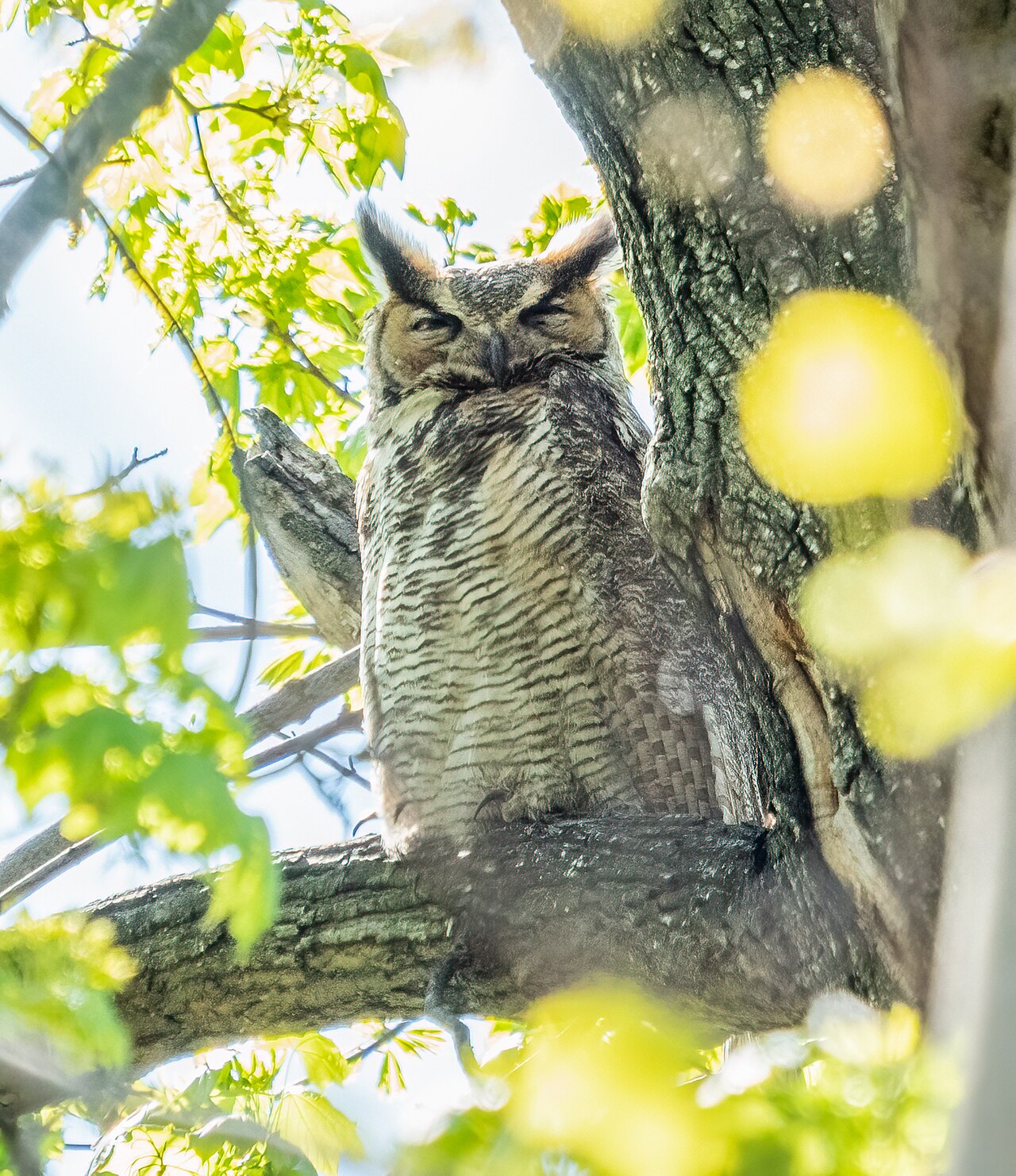
The Barred Owl owns the most quotable phrase in American birding. Its main call is an eight or nine note phrase that sounds remarkably like “Who cooks for you? Who cooks for you-all?” with a drawled ending that trails downward. The voice is rich and emphatic, less muffled than a Great Horned Owl and much more rhythmic. Once you attach the phrase to the sound, you will never mistake it again.
Barred Owls are also famous for caterwauling, a chaotic duet between mates that mixes hoots, cackles, gurgles, and laughing sounds. A pair in full caterwaul can sound like a troop of monkeys arguing in the treetops, and it startles homeowners every spring. This racket peaks during courtship in late winter and again when pairs reunite on territory.
Unlike many owls, Barred Owls call readily in daylight, especially on overcast days, so a midday “who cooks for you” from deep woods is normal. They favor mature forests near water and have expanded their range dramatically over the past century. The dedicated Barred Owl sounds guide covers the full repertoire, including the begging calls of juveniles.
The Whinny and Trill: Eastern Screech-Owl
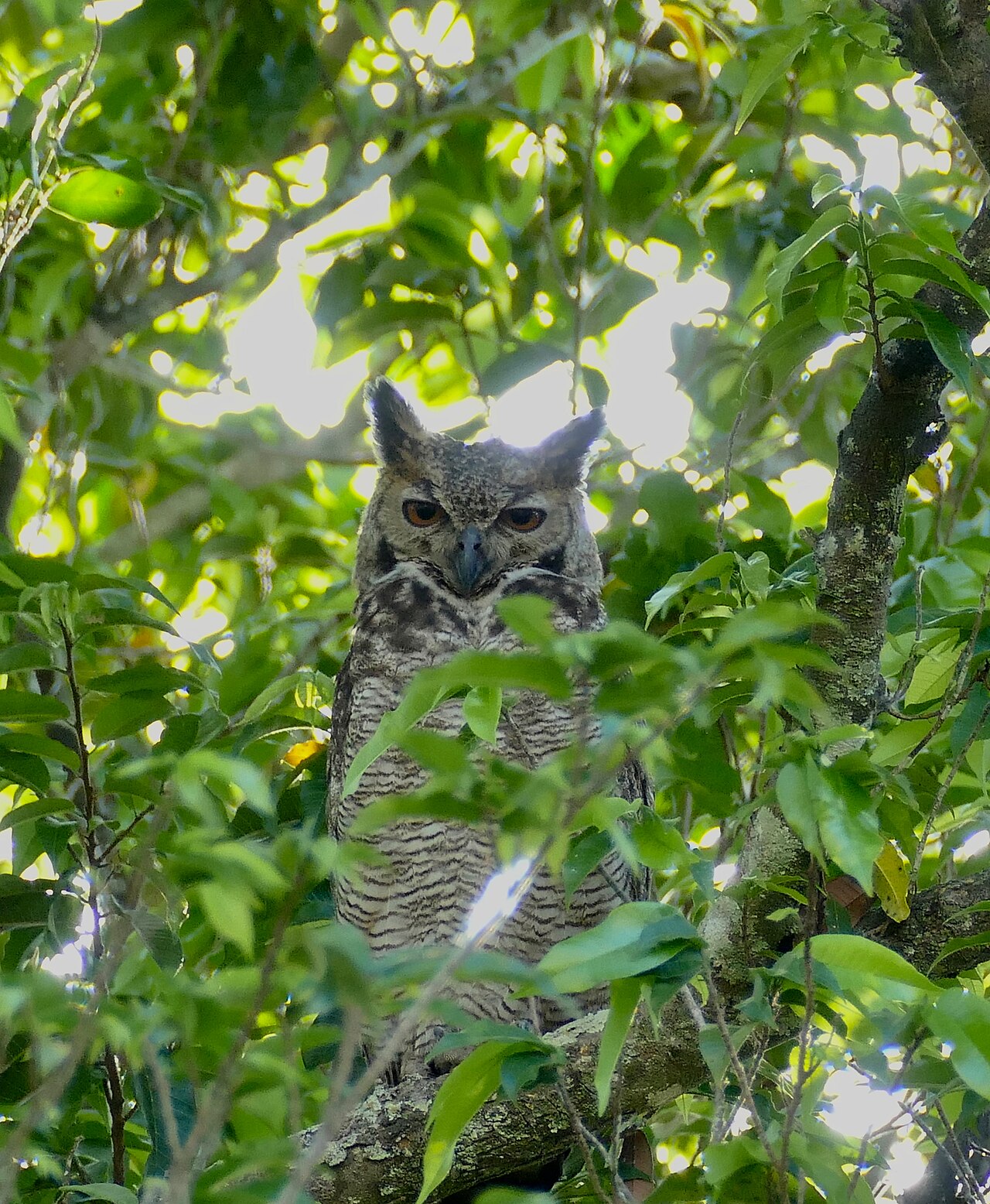
The Eastern Screech-Owl has one of the most misleading names in birding, because it rarely screeches. Its two main sounds are a descending whinny, which drops in pitch like a tiny horse neighing, and a long, even trill on one pitch, sometimes called a tremolo. Both are soft, mellow, and easy to miss under traffic noise, which is remarkable for a bird that thrives in suburban neighborhoods.
The whinny is mostly territorial, while the monotone trill is used between mates and family members, often when a pair is coordinating around the nest cavity. These little owls respond strongly to each other, so one calling bird often triggers a neighbor, letting you map how many territories your street actually holds. Many people discover they have lived beside screech-owls for years without knowing it.
Screech-owls are cavity nesters that readily accept nest boxes, and a box placed on a mature tree is one of the most reliable ways to bring their calls into your yard. If you hear the trill right at dusk near a wooded lot, scan tree cavities and box entrances at last light. The complete Eastern Screech-Owl sounds guide includes tips for telling the two calls apart by context.
The Scream in the Dark: Barn Owl
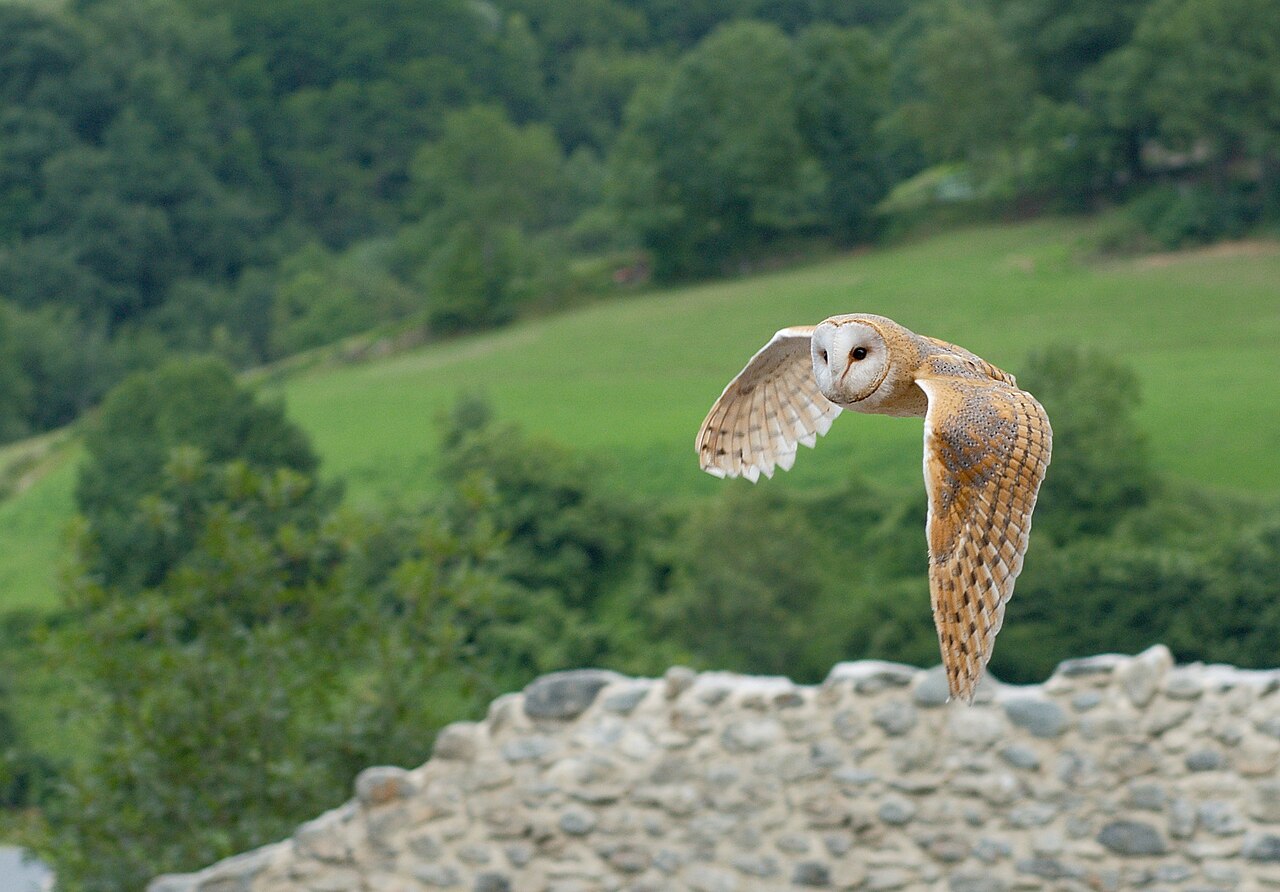
The Barn Owl does not hoot at all, and that single fact solves a lot of nighttime mysteries. Its signature sound is a long, harsh, hissing scream, usually given in flight, that lasts around two seconds and sounds genuinely unsettling the first time you hear it. Add a ghostly white face and silent flight, and it is no surprise this species sits behind many haunted-barn stories.
Besides the scream, Barn Owls produce sustained defensive hisses, snores from roosting birds and begging young, and sharp bill snaps when cornered. A barn, silo, or dense conifer that emits rhythmic snoring sounds by day very likely hosts roosting Barn Owls or a brood of chicks. These sounds are most common near open farmland, grasslands, and marsh edges where the owls hunt rodents.
Because the scream is so unlike a classic hoot, people often blame foxes, fishers, or even mountain lions for it. Location is your best clue: a screaming call moving smoothly across open country at night is far more likely a hunting Barn Owl than a mammal. Our Barn Owl sounds guide plays through each vocalization and what it signals.
Other Owl Sounds Worth Knowing
The Northern Saw-whet Owl, barely bigger than a soda can, gives an endless series of evenly spaced “too-too-too” notes, around two notes per second, that can continue for minutes without a break. Many listeners compare it to a truck backing up in the forest. Saw-whets are winter visitors across much of the United States, and their tooting peaks on late winter nights in dense conifers.
The Long-eared Owl gives widely spaced, low “whoo” notes, one every few seconds, that are easy to dismiss as a distant Great Horned Owl until you notice the single-note pattern. The Short-eared Owl, a bird of open grasslands often active at dusk, is mostly quiet away from breeding grounds but produces raspy barks and a wing-clapping display in flight. Both species are irregular in most backyards, so treat their sounds as a bonus rather than an expectation.
In the West and Florida, the Burrowing Owl adds a two-note “coo-cooo” that recalls a dove, plus a remarkable defensive chatter that imitates a rattlesnake’s rattle from inside its burrow, a trick documented by the Cornell Lab of Ornithology (allaboutbirds.org). Snowy Owls, mostly silent on their wintering grounds, round out the list with hoarse barks you will rarely hear south of the Arctic.
Why Owls Call at Night
Owl sounds concentrate after dark for a simple reason: sound is how nocturnal birds advertise territory and find mates when visual displays are useless. Calling peaks in the first two hours after sunset and again before dawn, when the air is calm and sound carries farthest. A still, moonlit night in late winter is the single best listening window of the entire year.
Season matters as much as hour. Great Horned Owls hoot most from November through February, Barred Owls caterwaul from February into April, and screech-owls trill through spring. By midsummer most territorial calling fades, replaced by the raspy begging of fledged juveniles, which is why “scary screams” spike in neighborhood groups every June and July.
Weather shapes the schedule too. Owls call less in wind and rain, since both muffle their voices and their hearing, and they often compensate with a burst of calling on the first calm night after a storm. If you strike out one evening, try again after the next weather front passes rather than assuming the owls are gone.
How to Tell Owl Sounds Apart
The fastest method is to anchor each species to a phrase or image. “Who cooks for you” locks in the Barred Owl, a stuttering foghorn marks the Great Horned Owl, a sad little horse whinny means Eastern Screech-Owl, a truck backing up is the saw-whet, and a scream with no hoot anywhere in it points to the Barn Owl. Writing owl sounds in words like this is exactly how field guides teach them, and it works because rhythm is more distinctive than pitch.
Next, use structure. Count the notes, note whether the series is even or stuttering, and listen for whether the pitch rises, falls, or holds steady. A phrase that ends with a drawled downward note is Barred; an even monotone series is screech-owl trill or saw-whet toots, separated by tempo; widely spaced single hoots suggest Long-eared.
Finally, confirm with habitat and range. Barred Owls stick to mature woods near water, Barn Owls to open farmland, Burrowing Owls to treeless ground in the West and Florida. A recording app on your phone helps you compare your clip against references later, and even a rough capture is usually enough to settle an ID.
Night Sounds Commonly Mistaken for Owls
The most common false owl in America is the Mourning Dove. Its soft, mournful “coo-OO-oo-oo” drifts through mornings and evenings and is pitched so low that many people assume an owl is calling from the roofline. The giveaway is timing: doves call in daylight and go quiet at night, the reverse of most owls. Our Mourning Dove sounds guide plays the two side by side.
Red foxes produce a raspy, repeated scream during their winter breeding season that gets blamed on owls and worse, and raccoons add growls, chittering, and whistles that carry surprisingly well. A screaming sound that moves along the ground, pauses, and resumes from a nearby spot is usually a mammal; owl sounds tend to come from elevated, fixed perches or glide smoothly overhead.
Two birds round out the list of impostors. The Common Nighthawk gives a nasal “peent” over summer neighborhoods at dusk, and the Chuck-will’s-widow and Whip-poor-will chant their own names for hours, all frequently reported as owls. None of them hoot, which brings you back to the core rule of this guide: match the rhythm first, and the mystery caller usually names itself. Owls showing up around your home also carry a rich folklore tradition, which we unpack in what an owl visit means.
Related reading: Blue Jay Sounds.
Related reading: Mockingbird Sounds.
Related reading: Cardinal Sounds.
Related reading: Turkey Sounds.
Related reading: Raven Sounds.
Related reading: Peacock Sounds.
Related reading: Sandhill Crane Sounds.
Related reading: Pigeon Sounds.
Related reading: Robin Sounds.
Related reading: Seagull Sounds.
Related reading: Chickadee Sounds.
Related reading: Starling Sounds.
Related reading: Woodpecker Sounds.
Frequently Asked Questions
What owl makes the classic hoo hoo sound?
The Great Horned Owl. Its deep, stuttering “hoo-h’HOO-hoo-hoo” is the standard owl sound in movies and the most common true hoot in North American backyards, especially from November through February.
What does it mean when you hear an owl at night?
Biologically it means an owl is defending territory or courting a mate, most often in late winter. Calling is normal, healthy behavior and usually signals your area has good habitat and plenty of rodents.
Which owl sounds like it is saying who cooks for you?
The Barred Owl. Its eight or nine note phrase is traditionally written as “Who cooks for you? Who cooks for you-all?” and is one of the easiest owl sounds in the country to memorize.
What owl screams instead of hooting?
The Barn Owl. It never hoots; its main call is a long, harsh, hissing scream usually given in flight. Red foxes also scream at night, so a moving, ground-level source may be a mammal instead.
Why do I hear owls in the daytime?
Barred Owls regularly call on overcast days, and any owl may vocalize when disturbed at a roost. Daytime calling alone does not mean the bird is sick or in trouble.
What owl sounds like a horse whinny?
The Eastern Screech-Owl. Its descending whinny sounds like a tiny horse, and its second call is a long, even trill on one pitch, often heard right at dusk in suburban yards.
What time of year are owls most vocal?
Late winter into early spring, when courtship and territory defense peak. Great Horned Owls start as early as November, Barred Owls peak in February through April, and most species quiet down by midsummer.