Red Wasp: Identification, Sting, and Nest Removal
The red wasp is a reddish-brown paper wasp common across the southeastern United States, best known for its slender body, long dangling legs, and a sting that ranks among the more painful of any North American wasp. Red wasps build open, umbrella-shaped paper nests under eaves, in sheds, and in shrubs, and while they are not out to get you, they defend those nests fiercely. Most encounters end without a sting if you keep your distance and avoid disturbing the colony.
This guide covers what a red wasp is, how to identify one, how much its sting hurts, whether red wasps are aggressive, where they nest, the good they do in the garden, and how to remove a problem nest safely. It also clears up how red wasps differ from other paper wasps and hornets.
| Feature | Detail |
|---|---|
| Common name | Red wasp, red paper wasp |
| Scientific name | Polistes carolina and Polistes rubiginosus |
| Size | About 1 in long, slender |
| Color | Reddish-brown body, dark smoky wings |
| Range | Southeastern and eastern US |
| Nest | Open umbrella-shaped paper comb |
| Sting | Painful, defensive, not usually dangerous |
What Is a Red Wasp?
A red wasp is a type of paper wasp, a group of social wasps in the genus Polistes that build the familiar open, honeycomb-style nests hanging from a single stalk. The two species most people call red wasps, Polistes carolina and Polistes rubiginosus, are among the largest paper wasps in the United States and are colored a rich rusty red that sets them apart from the more common brown and yellow paper wasps.
Red wasps are social insects that live in small colonies founded each spring by an overwintered queen. The colony grows through summer as workers raise new brood, and by late summer it may hold dozens of adults. Unlike honey bees, paper wasps do not store honey, and the whole colony dies off in fall except for the next year’s queens.
These wasps are native and play a real role in the ecosystem, hunting caterpillars and other soft insects to feed their larvae. That makes them a natural form of pest control in gardens, even if their nests in the wrong place are unwelcome. Understanding what they are is the first step to deciding whether a nest needs to go or can simply be left alone.
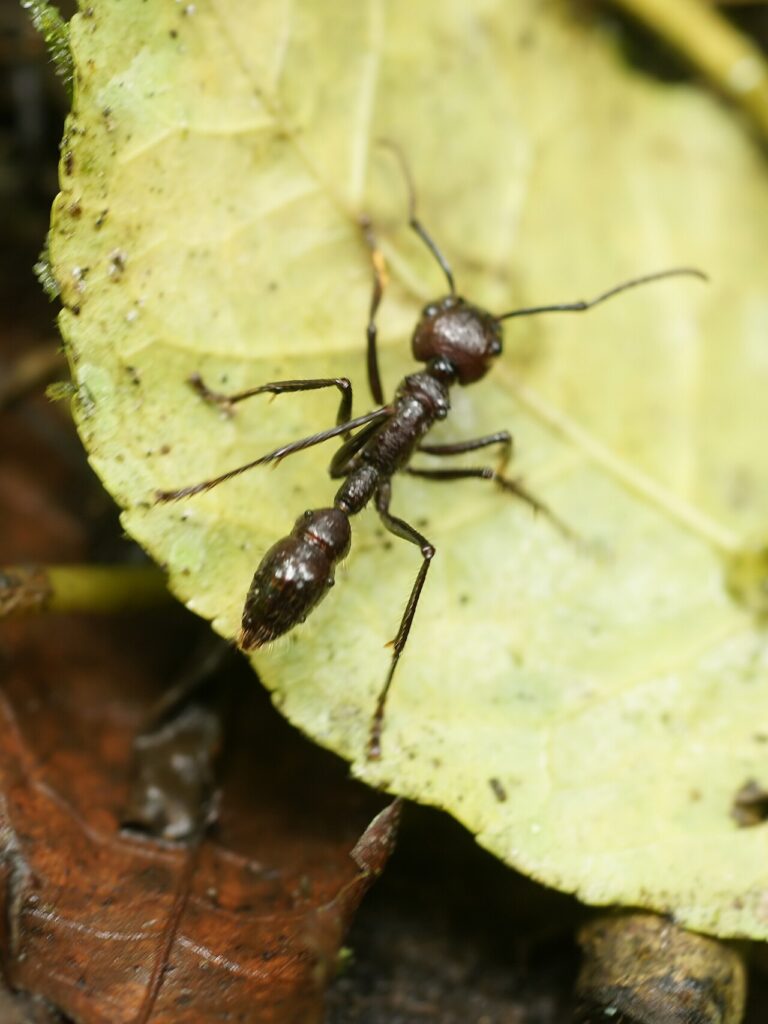
A red wasp sting is painful, but it does not come close to the most painful insect sting ever documented; see our guide to the bullet ant for the science behind that title.
A red wasp is a true wasp rather than a hornet; see our guide to hornet vs wasp for the size, nest, and behavior differences that separate the two.
How to Identify a Red Wasp
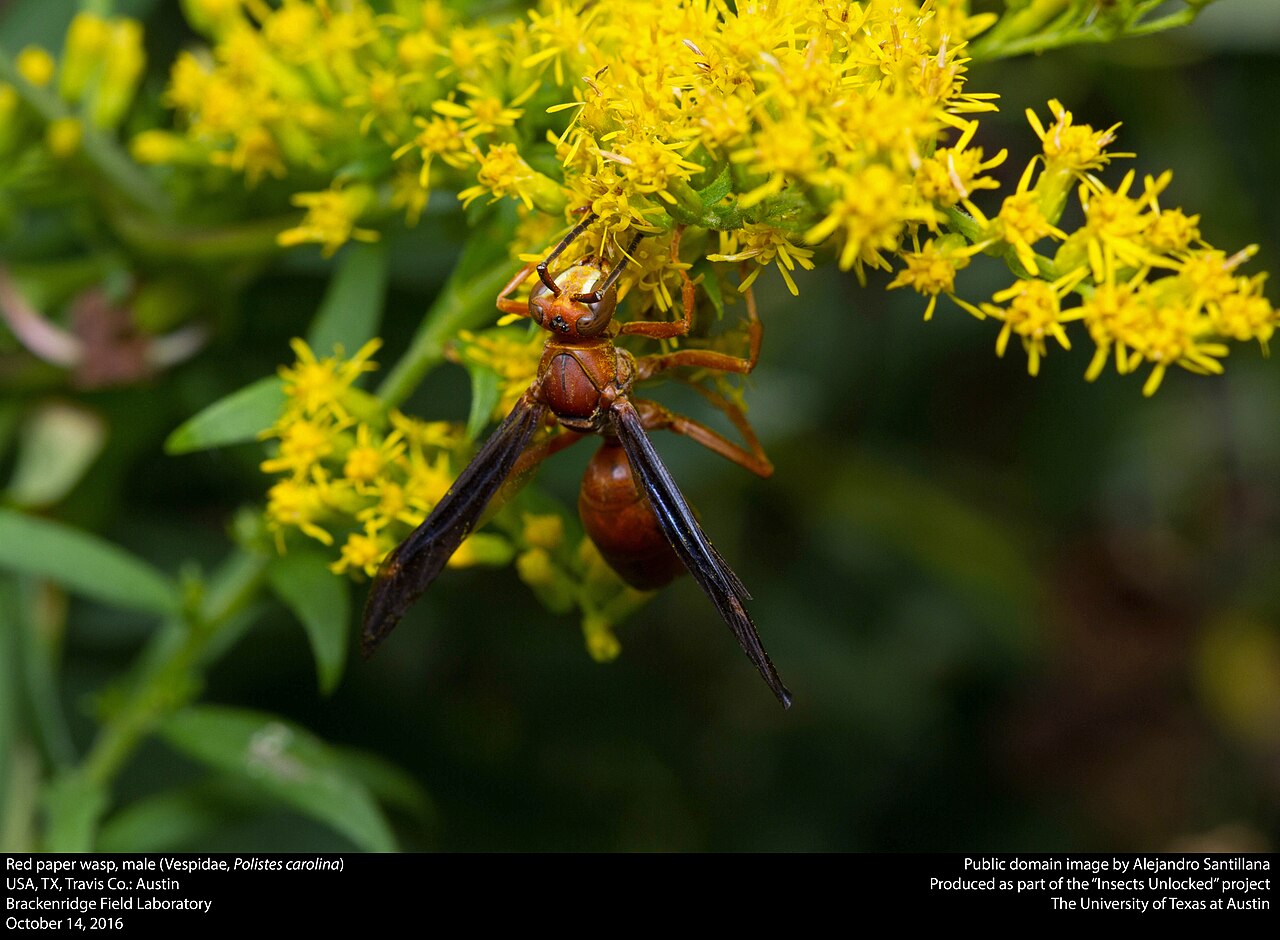
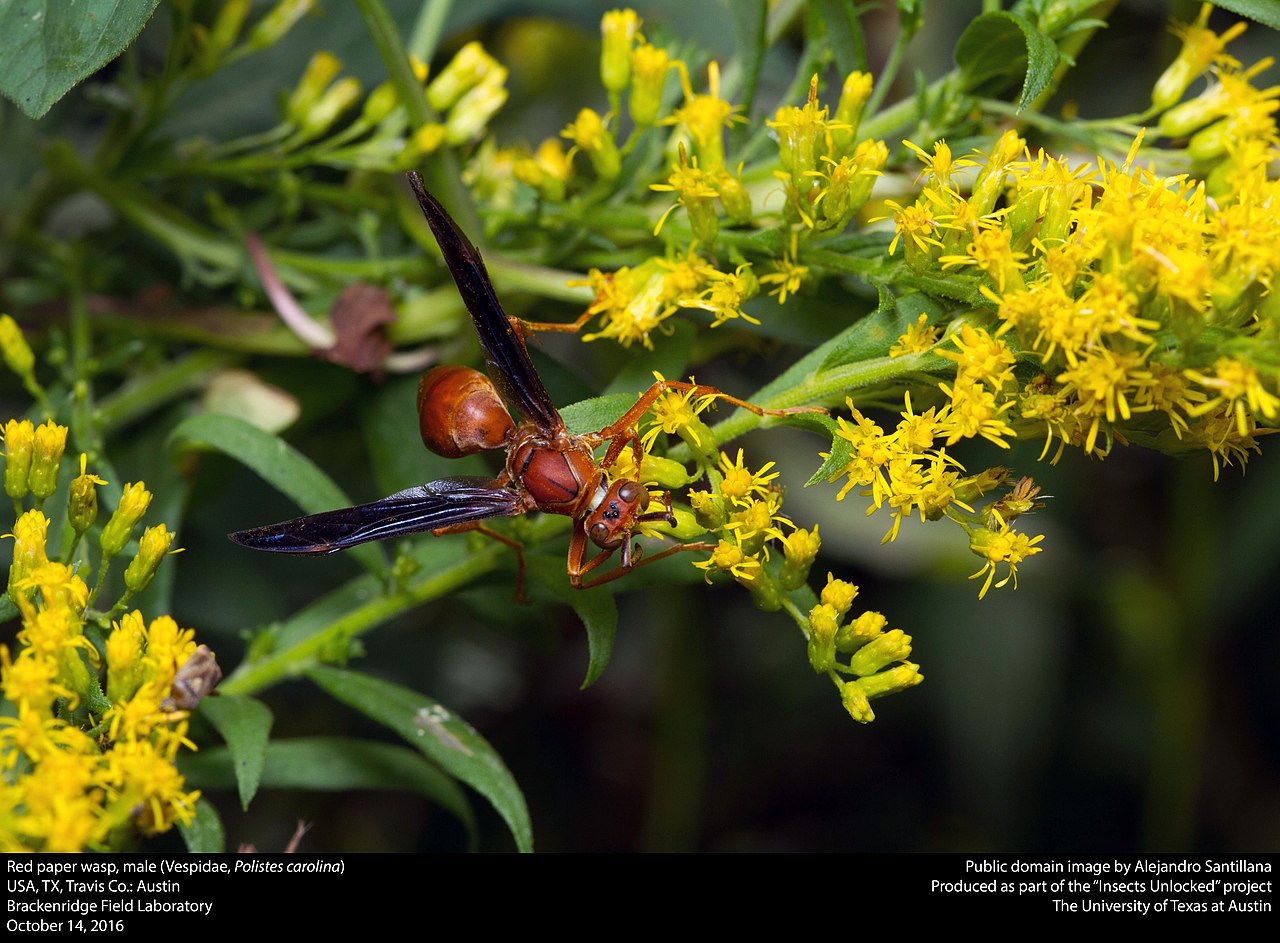
Red wasps are easy to recognize once you know the marks. The body is slender and roughly an inch long, colored a reddish-brown to rusty orange, often with darker markings toward the rear. The wings are dark and smoky, and in flight the long back legs dangle beneath the body in the loose, drooping way that is typical of all paper wasps.
The rusty red color is the quickest field mark. Common eastern paper wasps are mostly brown with yellow bands, while red wasps read as distinctly reddish, especially the head and thorax. They are noticeably larger and more slender than yellowjackets, which are shorter, stouter, and boldly banded black and yellow.
Behavior helps too. A red wasp cruising slowly around eaves and shrubs, landing to chew wood fiber or hunt caterpillars, and returning to an open papery comb is following the classic paper wasp pattern. If the nest is a large enclosed ball or is underground, you are dealing with hornets or yellowjackets instead, not red wasps.
How Painful Is a Red Wasp Sting?
The red wasp sting is genuinely painful and is often described as sharper and longer-lasting than that of many other wasps. The venom produces immediate burning pain, redness, and swelling at the site, and the ache can linger for hours. On sting-pain scales studied by university extension entomologists, red paper wasps sit near the top for North American species that people commonly encounter.
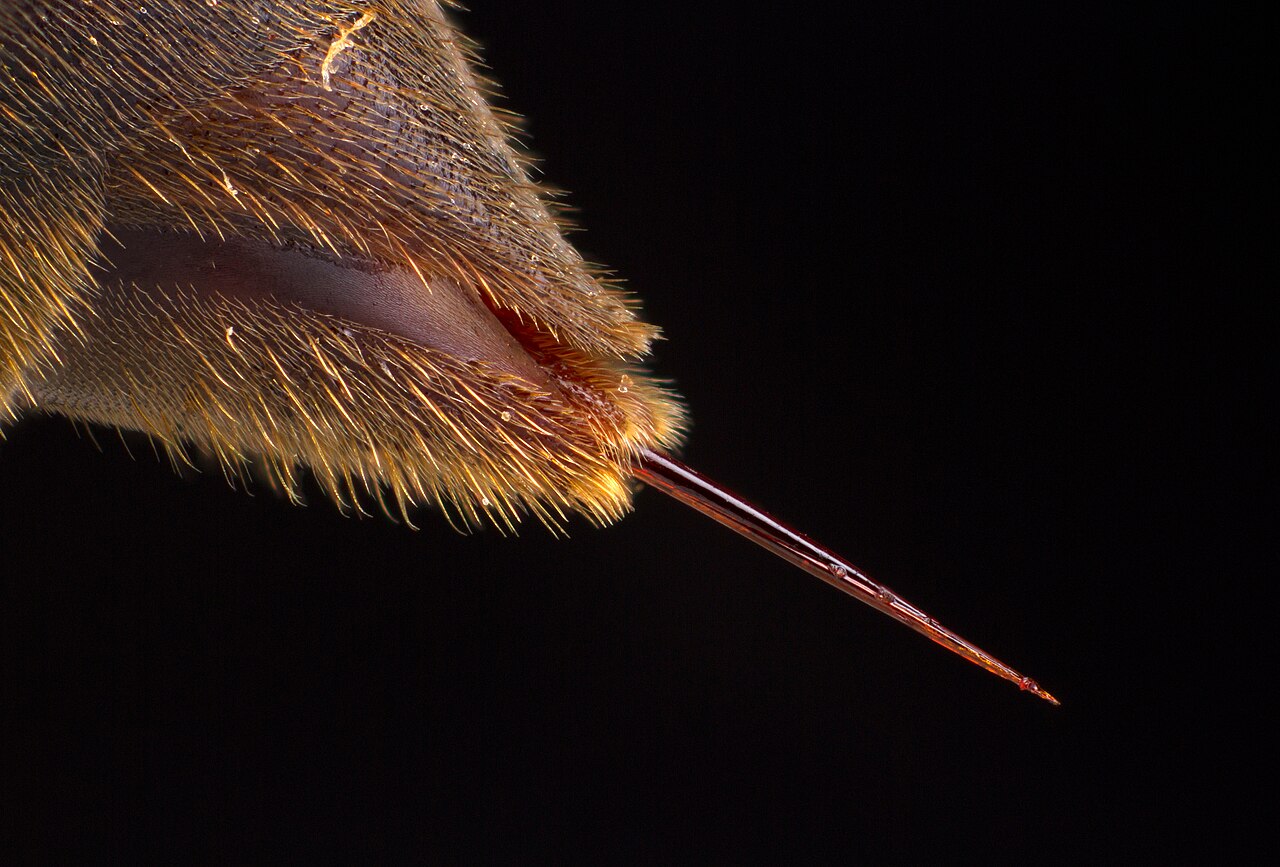
For most people the sting, while very unpleasant, is not dangerous. A normal reaction is local pain and swelling that fades within a day or two, eased by washing the area, a cold pack, and an antihistamine. Unlike honey bees, wasps do not leave the stinger behind, so there is nothing to scrape out, and a single wasp can sting more than once.
The real risk is an allergic reaction. A small number of people are allergic to wasp venom and can develop a severe, whole-body response called anaphylaxis, with swelling beyond the sting site, difficulty breathing, or dizziness. Anyone with those symptoms needs emergency care immediately, and people with known wasp allergies should carry prescribed epinephrine.
Are Red Wasps Aggressive?
Red wasps have a reputation for being feisty, and it is partly deserved, but the aggression is defensive rather than random. Away from the nest, a foraging red wasp has little interest in people and will usually ignore you as it hunts insects or gathers wood fiber. Swatting at one, though, invites a sting, so calm stillness is the safer response to a wasp nearby.
Close to the nest the story changes. Red wasps defend their colony vigorously, and vibrations, sudden movements, or a direct approach within a few feet can trigger guards to attack. Because they nest around porches, doorframes, and sheds, people often stumble into this defensive zone without realizing a nest is there, which is where most stings happen.
The practical takeaway is to give nests a wide berth and to watch for wasp traffic around eaves before working in an area. A nest tucked in a quiet corner far from foot traffic can often be left in place for the season, since the wasps will not bother you if you do not bother them. Nests over doorways or play areas are the ones worth removing.
Where Do Red Wasps Nest?
Red wasps build the open, umbrella-shaped paper nests that hang downward from a single narrow stalk, with the cells visible from below. They favor sheltered spots that stay dry, so nests turn up under eaves and porch ceilings, inside sheds and barns, under deck railings, in door frames, and among dense shrubs and vine tangles.
The nest starts small in spring, often no bigger than a coin when the founding queen begins it, and grows through summer as workers add cells. A mature nest may hold several dozen cells and adults by late summer. The gray papery material is made from chewed wood fiber mixed with saliva, the same process that gives all paper wasps their name.
Because they seek dry, protected overhangs, red wasps often choose the exact spots humans use, which is why nests appear around homes so reliably. Checking porches, sheds, and eaves for small new nests in late spring, when colonies are tiny and easy to remove, prevents the much harder problem of a large, well-defended nest later in the season.
Are Red Wasps Beneficial?
Despite their painful sting, red wasps do real good in a yard and garden. The adults hunt caterpillars, beetle larvae, and other soft-bodied insects to feed their growing brood, which makes them effective natural predators of many plant pests. A paper wasp colony can remove a large number of caterpillars from a garden over a summer.
Adult wasps also visit flowers for nectar and, in doing so, provide a modest amount of pollination as they move from bloom to bloom. While they are not as important as bees for pollination, they are part of the web of insects that keeps a garden functioning, and they compete with and control other pests.
This is why removal should be a considered decision rather than a reflex. A nest in a far corner of the yard is quietly working in your favor, taking the same caterpillars that insect-eating birds and garden spiders also hunt. Reserving removal for nests that genuinely threaten people preserves the pest control the colony provides.
How to Get Rid of a Red Wasp Nest Safely
If a nest must go because it sits over a doorway, walkway, or play area, timing and caution matter. Treat the nest after dark or in the cool early morning when the wasps are least active and nearly all of them are home. Wear long sleeves, long pants, and closed shoes, and plan an escape path before you start.
Use a wasp and hornet spray that shoots a stream from several feet away, aiming for the base of the nest where it attaches, then leave the area promptly. Do not stand directly beneath the nest, and never seal a nest inside a wall void without killing the colony first, since trapped wasps may chew into living space. After a day, confirm there is no activity before removing the nest.
For large nests, nests in awkward or high spots, or anyone with a wasp allergy, hiring a pest professional is the safer choice. To prevent new nests, knock down small starter nests in spring before colonies establish, and check the same sheltered spots each year. The same tidy, low-clutter approach that discourages other household pests makes a yard less inviting to nesting wasps.
Red Wasps vs Other Wasps and Hornets
Red wasps are paper wasps, and separating them from their relatives comes down to color, shape, and nest. Compared with the common eastern paper wasp, which is brown with yellow markings, the red wasp is larger and distinctly rusty red. Both build the same open, downward-facing comb, so the nest alone will not tell paper wasp species apart, but color will.
Yellowjackets are a different animal despite often being called wasps loosely. They are shorter and stockier, boldly banded black and yellow, and they nest in enclosed cavities, frequently underground or inside wall voids, with a papery envelope hiding the comb. Yellowjackets are also far more likely to scavenge at picnics and trash, something red wasps rarely do.
Hornets, including the bald-faced hornet, are larger still and build big enclosed football-shaped nests hanging in trees or on structures. If the nest is a fully enclosed ball rather than an open comb, you are not looking at red wasps. These distinctions matter because the safest removal method differs between the groups, much as it does among the spiders people lump together by nickname. Knowing which insect you face lets you leave a helpful colony alone or remove a genuine hazard, alongside the other beneficial insects and the birds you attract to control pests.
Related reading: Banana Spider.
Related reading: Banana Spider.
Related reading: Banana Spider.
Related reading: Banana Spider.
Related reading: Banana Spider.
Related reading: Banana Spider.
Related reading: Banana Spider.
Related reading: Banana Spider.
Related reading: Banana Spider.
Related reading: Banana Spider.
Related reading: Banana Spider.
Related reading: Banana Spider.
Related reading: Banana Spider.
Related reading: Banana Spider.
Related reading: Banana Spider.
Related reading: Banana Spider.
Related reading: Banana Spider.
Related reading: Purple Butterfly.
Related reading: Hornet Nest vs Wasp Nest.
Related reading: Red-Spotted Purple Butterfly.
Related reading: Black Wasp.
Frequently Asked Questions
How painful is a red wasp sting?
A red wasp sting is quite painful, often described as sharper and longer-lasting than many other wasp stings, with burning pain, redness, and swelling that can last hours. For most people it is not dangerous, but anyone with a wasp allergy can have a severe reaction and needs emergency care.
Are red wasps aggressive?
Red wasps are defensive rather than aggressive. Away from the nest they mostly ignore people, but they defend their colony vigorously and will sting if you approach within a few feet or disturb the nest. Giving nests a wide berth prevents most stings.
What attracts red wasps to my house?
Red wasps are drawn to dry, sheltered overhangs for nesting, such as eaves, porches, sheds, and door frames, and to gardens full of the caterpillars and insects they hunt. Flowering plants and sources of wood fiber for nest building also draw them in.
Where do red wasps build their nests?
They build open, umbrella-shaped paper nests hanging from a single stalk in protected, dry spots, including under eaves and porch ceilings, inside sheds and barns, under railings, and in dense shrubs. The cells are visible from below, unlike the enclosed nests of hornets.
Are red wasps beneficial?
Yes. Red wasps hunt caterpillars and other soft-bodied insects to feed their larvae, providing natural pest control, and adults offer minor pollination while visiting flowers. A nest far from foot traffic quietly benefits a garden and is often best left alone.
Do red wasps die after stinging?
No. Unlike honey bees, red wasps do not leave the stinger behind and do not die after stinging, so a single wasp can sting multiple times. There is no stinger to scrape out of the skin after a wasp sting.
How do I tell a red wasp from a yellowjacket?
Red wasps are slender, about an inch long, rusty red, with long dangling legs and an open hanging comb. Yellowjackets are shorter and stockier, boldly banded black and yellow, and nest in enclosed cavities, often underground, and scavenge at food and trash.