Baby Snapping Turtle: Size, Diet, Care, and What to Do
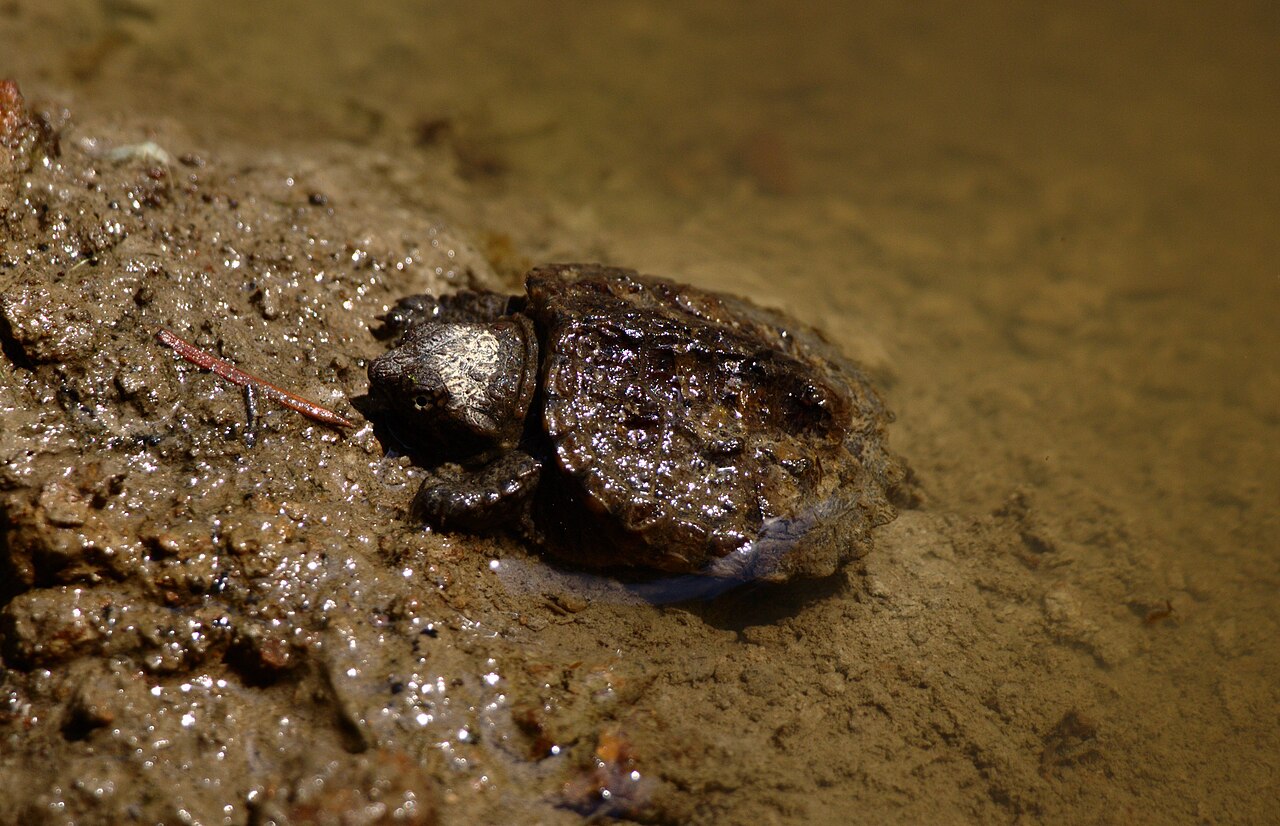
A baby snapping turtle is about 1 to 1.5 in long at hatching, roughly the size of a quarter, with a rough dark shell carrying three raised ridges and a tail nearly as long as its body. Hatchlings emerge from underground nests in late summer and early autumn, and they head for water immediately, guided by light and slope rather than by any parent, since the female leaves after laying and never returns.
They look almost nothing like the 30 lb adults they may become. The juvenile shell is rougher and more sculptured, the proportions are different, and the famous defensive snap, while present from day one, cannot do any real damage yet. This guide covers identification, hatching and nest biology, diet, growth, what to do if you find one, and why keeping one is both legally restricted and a decades-long commitment.
| Quick Facts | Baby Snapping Turtle |
|---|---|
| Hatchling size | 1 to 1.5 in shell length |
| Clutch size | 20 to 40 eggs, occasionally up to 80 |
| Incubation | 75 to 125 days, temperature dependent |
| Sex determination | Set by nest temperature, not genetics |
| Adult size | 8 to 18 in shell, 10 to 35 lb |
| Lifespan | 30 to 50 years in the wild, longer in captivity |
What a Baby Snapping Turtle Looks Like
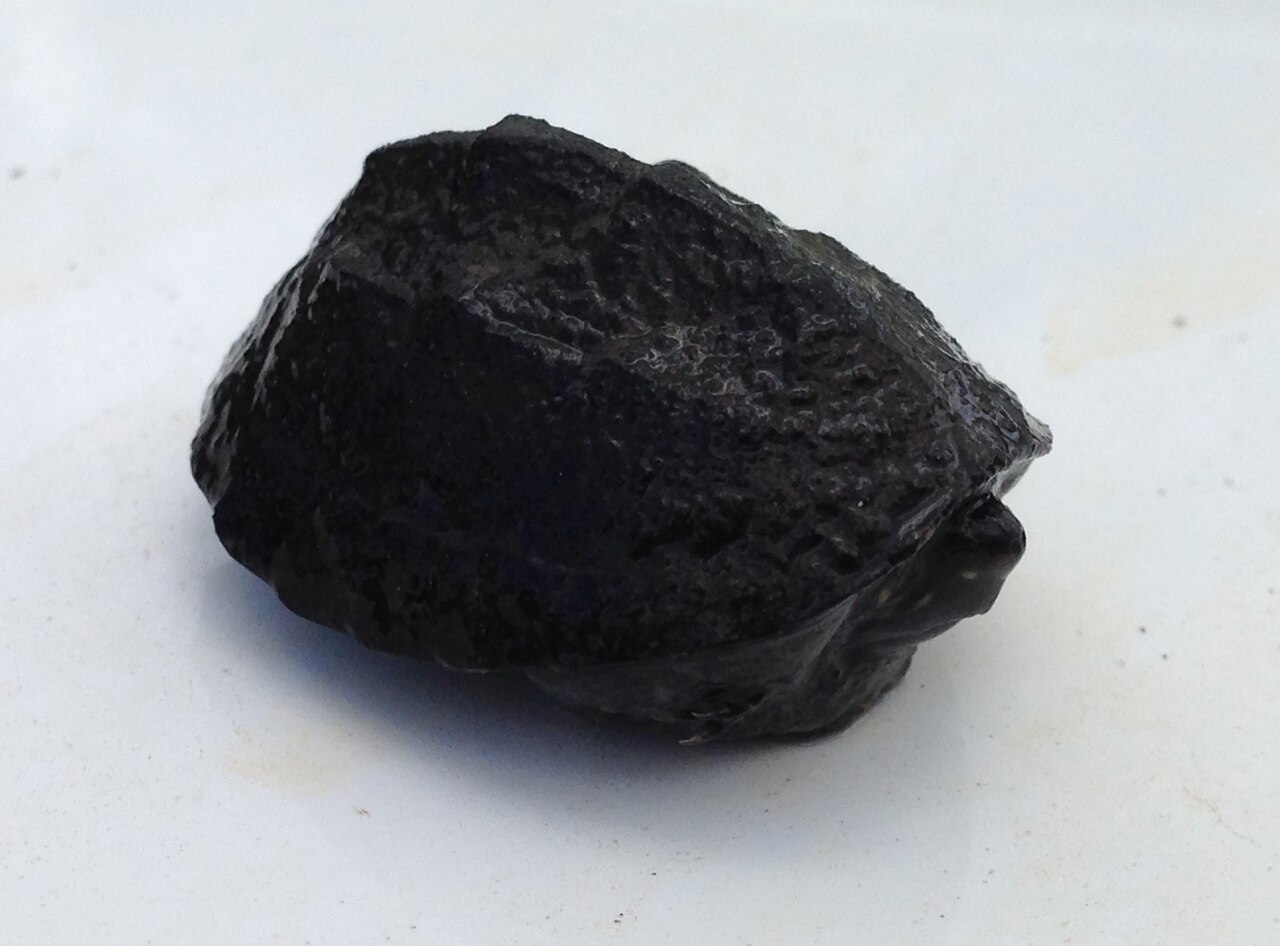
A hatchling common snapping turtle (Chelydra serpentina) has a shell 1 to 1.5 in long, dark brown to nearly black, with a noticeably rough texture and three prominent ridges, called keels, running front to back. Those keels are far more pronounced in juveniles than in adults, where they wear down and often disappear entirely.
The tail is the most distinctive feature and the fastest way to identify one. It runs nearly the length of the shell and carries a row of raised scales along the top, giving it a saw-toothed appearance that no other North American turtle shows. The head is large relative to the body, with a hooked beak and small eyes set well forward.
The plastron, meaning the underside, is small and cross-shaped, leaving the legs, neck, and tail substantially exposed. That reduced plastron is why snapping turtles cannot withdraw into their shells the way a box turtle or a painted turtle can, and it is the direct reason they are aggressive on land. The contrast is clear against the species covered in our guide to the painted turtle, which can seal itself away and therefore does not need to fight.
Hatching: Nests, Eggs, and Timing
Females leave the water in late spring and early summer, sometimes traveling considerable distances overland to find sandy or loose soil in an open sunny spot. She digs a flask-shaped chamber with her hind legs, lays 20 to 40 spherical eggs about the size of ping pong balls, covers the nest, and departs. There is no parental care of any kind.
Incubation runs 75 to 125 days depending on temperature, with warmer nests hatching faster. Most hatchlings emerge in late August through early October, and they dig upward together, which helps them break through compacted soil. In cooler northern regions some clutches overwinter in the nest and emerge the following spring.
Nest predation is severe. Raccoons, skunks, foxes, and opossums dig up a large share of nests, often within the first 48 hours while the disturbed soil still carries scent, and studies routinely find that the majority of nests in a given area are destroyed. Combined with predation on hatchlings during the walk to water, the survival odds for any individual egg are very low, which is why females lay so many. The predators involved are covered in our guide to possum droppings and the sign they leave behind.
Temperature Decides the Sex
Snapping turtles have no sex chromosomes. Sex is determined by the temperature the eggs experience during the middle third of incubation, a system called temperature-dependent sex determination that occurs across turtles, crocodilians, and some lizards.
The pattern in snapping turtles is unusual because it runs in both directions. Cool nests around 68 F and hot nests above roughly 86 F both produce mostly females, while intermediate temperatures near 73 to 82 F produce mostly males. A single nest can therefore produce different ratios at the top and bottom, since the eggs nearest the surface run warmer.
This is why climate warming is a genuine conservation concern for the species rather than an abstract one. Shifting average nest temperatures skews sex ratios, and a population producing overwhelmingly one sex has a reproductive problem that takes decades to become visible in an animal that lives 30 to 50 years and matures slowly.
What Do Baby Snapping Turtles Eat?
Hatchlings are heavily carnivorous, more so than adults. They eat aquatic insects and their larvae, small crustaceans, worms, snails, tadpoles, small fish, and carrion, hunting in shallow water among vegetation where they can ambush prey and stay hidden from predators.
Plant material becomes more important with age. Adult snapping turtles are genuine omnivores, and vegetation can make up a substantial share of the adult diet, including aquatic plants and algae. The shift is gradual, and a first-year turtle takes very little plant matter.
Feeding happens in water. Snapping turtles cannot swallow on land, because they rely on water to move food down the throat, so a hatchling out of water will not eat regardless of what is offered. The prey species they depend on are covered in our guide to what fish eat, which describes the same shallow-water food web from another angle.
How Fast Do They Grow?
Growth is slow and stretched over decades. A hatchling at 1 to 1.5 in may reach 2 to 3 in by the end of its first year in favorable conditions, and growth continues at a few inches per year through the juvenile stage before slowing considerably.
Sexual maturity arrives late, typically at 8 to 12 years in southern populations and as late as 15 to 20 years in northern ones, where the shorter active season limits feeding time. Adults reach 8 to 18 in of shell length and 10 to 35 lb, with exceptional wild individuals passing 45 lb and captive animals considerably more.
Longevity follows from the slow schedule. Wild snapping turtles commonly live 30 to 50 years, and captive individuals have exceeded 70. That combination of late maturity and long life makes populations extremely vulnerable to adult mortality, since losing a breeding adult removes decades of future reproduction that a high hatch rate cannot replace.
Common vs Alligator Snapping Turtle Hatchlings
Two species get called snapping turtles in the United States and they are not interchangeable. The common snapping turtle ranges across most of the eastern and central country, while the alligator snapping turtle (Macrochelys temminckii) is restricted to river systems of the southeastern states draining into the Gulf.
Hatchlings differ in the head and shell. Alligator snapper hatchlings have three prominent rows of spiked ridges that persist into adulthood, a more sharply hooked beak, and eyes set on the sides of the head rather than facing forward. Common snapper keels fade with age, and their eyes are visible from above.
Adult size diverges enormously. Alligator snapping turtles are the largest freshwater turtle in North America, with males reaching well over 100 lb and occasionally exceeding 200. They also hunt differently, lying motionless on the bottom and wiggling a pink worm-like appendage on the tongue to lure fish into the mouth. The species is protected across much of its range and cannot be legally collected in most states.
Found a Baby Snapping Turtle? What to Do
Usually nothing. A hatchling walking across a yard or road in September is doing exactly what it should, moving from the nest to water, and it does not need rescuing. Interference reduces its chances more often than it helps.
If it is crossing a road, move it in the direction it was already heading and set it down off the shoulder. Never turn it around, because a turtle taken back where it came from simply attempts the crossing again. For a hatchling, cupping it in both hands is fine. For anything larger, hold the back of the shell above the rear legs or slide a flat object underneath, and never lift a snapping turtle by the tail, which can dislocate vertebrae and cause permanent injury.
Do not put it in a random pond or take it home. Moving turtles between water bodies spreads disease and drops the animal into unfamiliar territory, and taking one from the wild is illegal in many states. If a hatchling is genuinely injured, contact a licensed wildlife rehabilitator or your state wildlife agency rather than attempting treatment. Judging when a young animal actually needs help is a recurring question, as our guides to the baby rattlesnake and the crested gecko both address for reptiles.
Can You Keep a Baby Snapping Turtle as a Pet?
Legally, often not, and practically, rarely a good idea. A federal FDA rule dating to 1975 prohibits the sale of turtles with shells under 4 in in the United States, adopted after small turtles were linked to widespread Salmonella infections in children. That rule makes commercial sale of hatchlings illegal regardless of species.
State law adds another layer. Collecting native turtles from the wild is restricted or prohibited in many states, permits are required in others, and alligator snapping turtles are protected across most of their range. Anyone considering one needs to check current state regulations first rather than assume.
The husbandry reality deters most people once they understand it. A cute 1.5 in hatchling becomes a 30 lb animal needing a tank of several hundred gallons or an outdoor pond, powerful filtration, UVB lighting, and a diet of live and prepared foods, and it may outlive the person who acquired it. Snapping turtles do not become tame, they cannot be safely handled as adults, and rescues are full of surrendered ones. Salmonella risk is real for any turtle household, particularly with children under five, and hand washing after any contact with the animal or its water is non-negotiable.
Related reading: Baby Snake.
Related reading: Snapping Turtle Bite.
Related reading: Baby Frog.
Related reading: Baby Rat Snake.
Related reading: Baby Komodo Dragon.
Related reading: Baby Box Turtle.
Related reading: Baby Painted Turtle.
Related reading: Baby Iguana.
Related reading: Baby Turtle.
Related reading: Baby Alligator Snapping Turtle.
Related reading: Baby Sea Turtle.
Related reading: Softshell Turtle.
Frequently Asked Questions
How big is a baby snapping turtle?
About 1 to 1.5 in of shell length at hatching, roughly the size of a quarter, with a tail nearly as long as the shell. They reach 2 to 3 in by the end of the first year and take 8 to 20 years to mature, eventually reaching 8 to 18 in and 10 to 35 lb.
What do baby snapping turtles eat?
Mostly animal prey: aquatic insects and larvae, worms, snails, small crustaceans, tadpoles, small fish, and carrion. Plant material becomes more important as they grow. They cannot swallow on land, so all feeding happens in water.
Do baby snapping turtles bite?
Yes, they snap defensively from the day they hatch, but a hatchling cannot break skin meaningfully. The behavior exists because their small cross-shaped plastron leaves the neck and legs exposed and they cannot withdraw into the shell like other turtles. Adults can inflict serious injury.
What should I do if I find a baby snapping turtle?
Usually leave it alone, since a hatchling crossing ground in late summer is traveling from nest to water normally. If it is on a road, move it to the side it was already heading toward. Never turn it around, never lift a snapping turtle by the tail, and do not relocate it to a different water body.
How do you tell a common from an alligator snapping turtle hatchling?
Alligator snapper hatchlings have three rows of prominent spiked ridges that persist into adulthood, a sharply hooked beak, and eyes on the sides of the head. Common snapper keels fade with age and their eyes are visible from directly above. Alligator snappers occur only in southeastern Gulf drainages.
Can you keep a baby snapping turtle as a pet?
Selling turtles with shells under 4 in has been prohibited in the United States since a 1975 FDA rule adopted over Salmonella risk, and many states restrict or prohibit collecting native turtles. Beyond legality, a hatchling grows into a 30 lb animal needing hundreds of gallons of water and may outlive its owner.
How does temperature determine a snapping turtle’s sex?
Snapping turtles have no sex chromosomes, and sex is set by nest temperature during the middle third of incubation. Both cool nests near 68 F and hot nests above 86 F produce mostly females, while intermediate temperatures near 73 to 82 F produce mostly males, which makes warming climates a real conservation concern.